


SpaceX Schedules Crucial Starship Flight to Deploy First Starlink V3 Satellites
SpaceX is gearing up for a pivotal moment in its ambitious Starship program, with the thirteenth integrated flight test now slated for July 24, 2026. This mission holds immense significance as it aims to mark the inaugural deployment of the next-generation Starlink V3 satellites, a crucial step in expanding and upgrading the company's global satellite internet constellation. The flight represents a convergence of SpaceX's two most audacious projects: the fully reusable Starship transport system and its rapidly growing internet service. A successful deployment would not only validate critical aspects of Starship's operational capabilities but also pave the way for a more robust and advanced Starlink network, impacting global connectivity on an unprecedented scale.
The Starship program itself is a cornerstone of SpaceX's long-term vision, designed to eventually transport humans and cargo to the Moon and Mars. Comprising the Starship spacecraft and the Super Heavy booster, the system is engineered for rapid reusability, a principle Elon Musk views as essential for making space travel routine and affordable. Its development has been characterized by an iterative, high-cadence test flight approach, pushing the boundaries of rocket science and manufacturing. Previous test flights, while providing invaluable data and demonstrating increasingly complex maneuvers, have highlighted the formidable engineering challenges involved in perfecting a launch system of this magnitude. Each successive flight has brought SpaceX closer to its goal of a fully operational, reusable space transport system, and this upcoming mission is intended to push those capabilities further by demonstrating a critical payload deployment.
The payload for this thirteenth flight is equally transformative: the first batch of Starlink V3 satellites. These third-generation satellites are expected to feature substantial upgrades over their predecessors, including enhanced throughput, reduced latency, and greater capacity, vital for serving a burgeoning user base and reaching remote areas worldwide. While specific technical details are often guarded, industry analysts anticipate improvements in antenna technology, inter-satellite laser links, and overall power efficiency. The transition to V3 satellites is not merely an incremental upgrade but a necessary evolution to meet the escalating demands on the Starlink network, which currently provides internet service to millions across dozens of countries. Successfully integrating and deploying these larger, more capable satellites from Starship is essential for maximizing the constellation's performance and longevity.
The challenges inherent in this mission are multifaceted. Starship's orbital deployment mechanism must function flawlessly, releasing the satellites into their precise trajectories. Moreover, the reliability and performance of both the Super Heavy booster and the Starship upper stage will be under intense scrutiny, particularly as the system moves closer to regular operational missions. A successful flight would significantly de-risk future Starship missions, including those contracted for NASA's Artemis lunar program, where Starship is slated to serve as the Human Landing System. The stakes extend beyond technical validation; a smooth launch and deployment would reinforce investor confidence, demonstrate progress to regulatory bodies, and solidify SpaceX's leadership in both reusable rocketry and satellite internet. Any significant anomaly, conversely, could lead to further delays in the Starship development timeline and impact Starlink's aggressive deployment schedule.
The successful deployment of Starlink V3 satellites via Starship would mark a significant inflection point for SpaceX, demonstrating its ability to rapidly iterate on its space infrastructure and deploy advanced payloads at scale. This capability is paramount not only for Starlink's continued expansion but also for other proposed mega-constellations and commercial endeavors that seek to leverage Starship's unparalleled payload capacity. It underscores the potential for Starship to revolutionize access to space, making large-scale deployments, deep-space missions, and potentially lunar and Martian colonization more feasible. As the July 2026 date approaches, the global aerospace community will be watching closely, recognizing this flight as a key indicator of the future trajectory of private space exploration and global satellite communications.
Stay Informed. Act Smarter.
Get weekly highlights, major headlines, and expert insights — then put your knowledge to work in our live prediction markets.
Related News
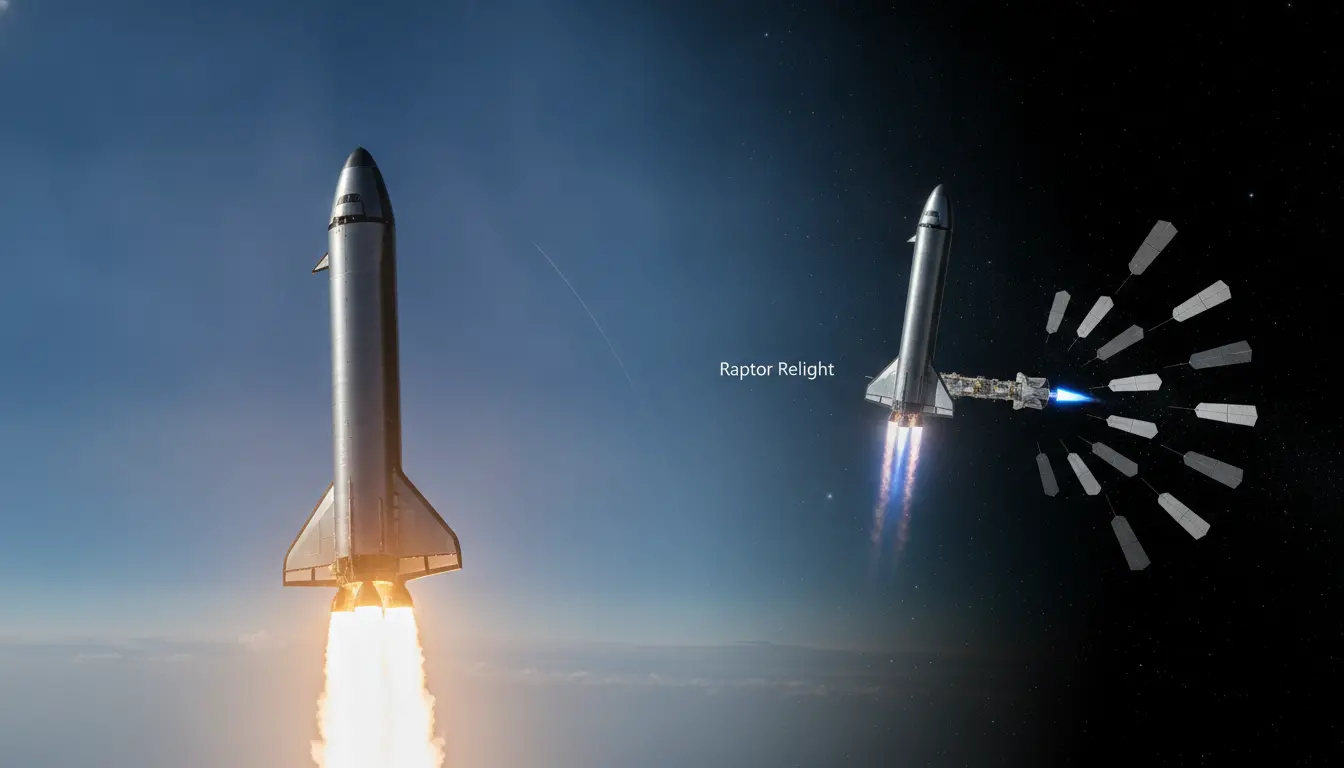
SpaceX Gears Up for Pivotal Starship Flight Targeting In-Orbit Raptor Relight and Starlink V3 Deployment
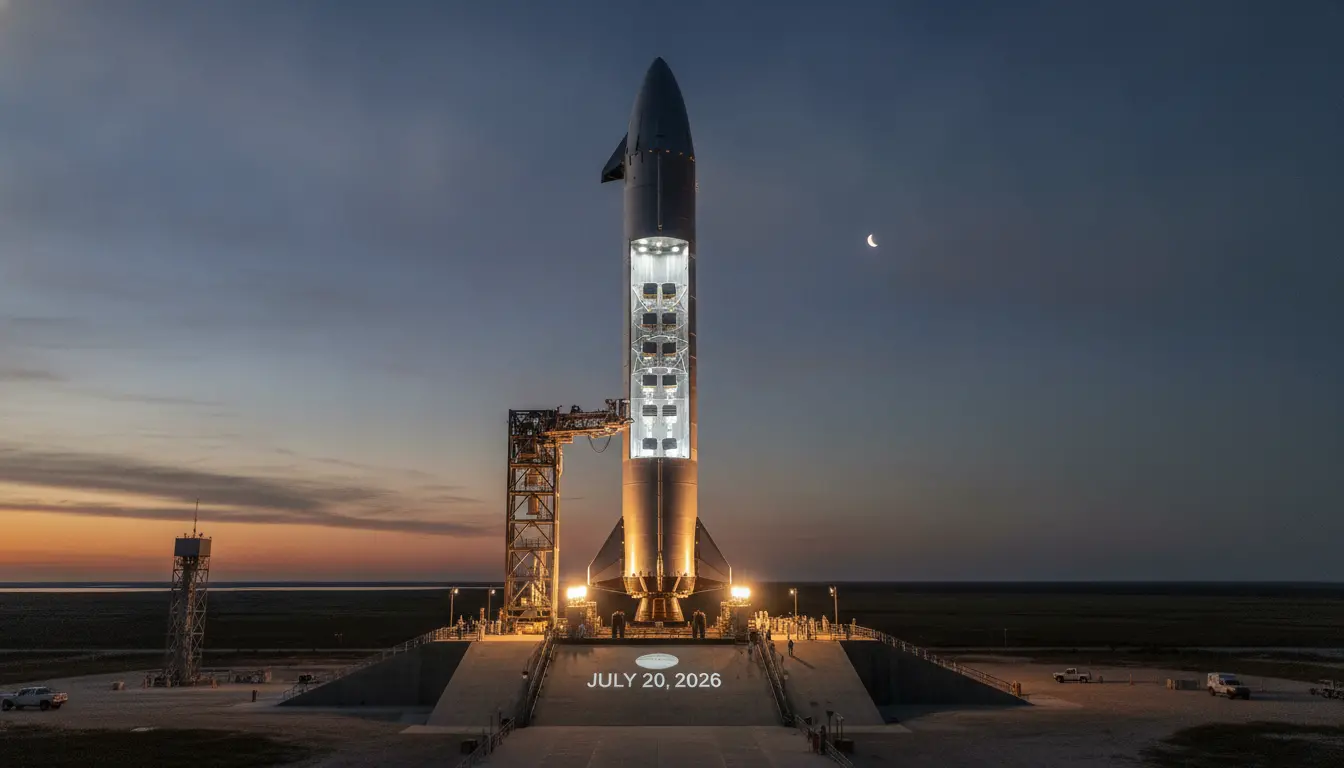
SpaceX Prepares Starship for First Satellite Deployment Attempt During 13th Flight Test in Mid-2026
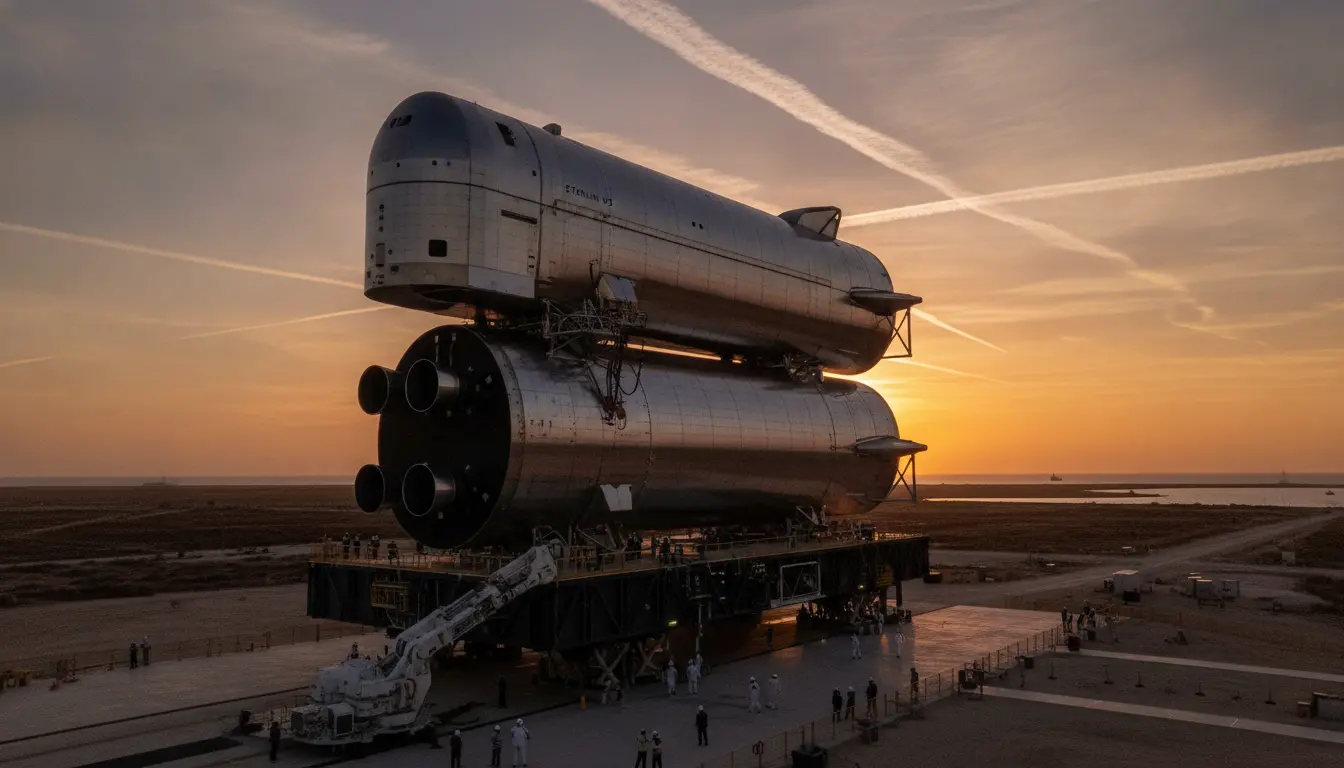
SpaceX Prepares for Crucial Starship Flight 13, Targeting Starlink V3 Deployment and Booster Recovery
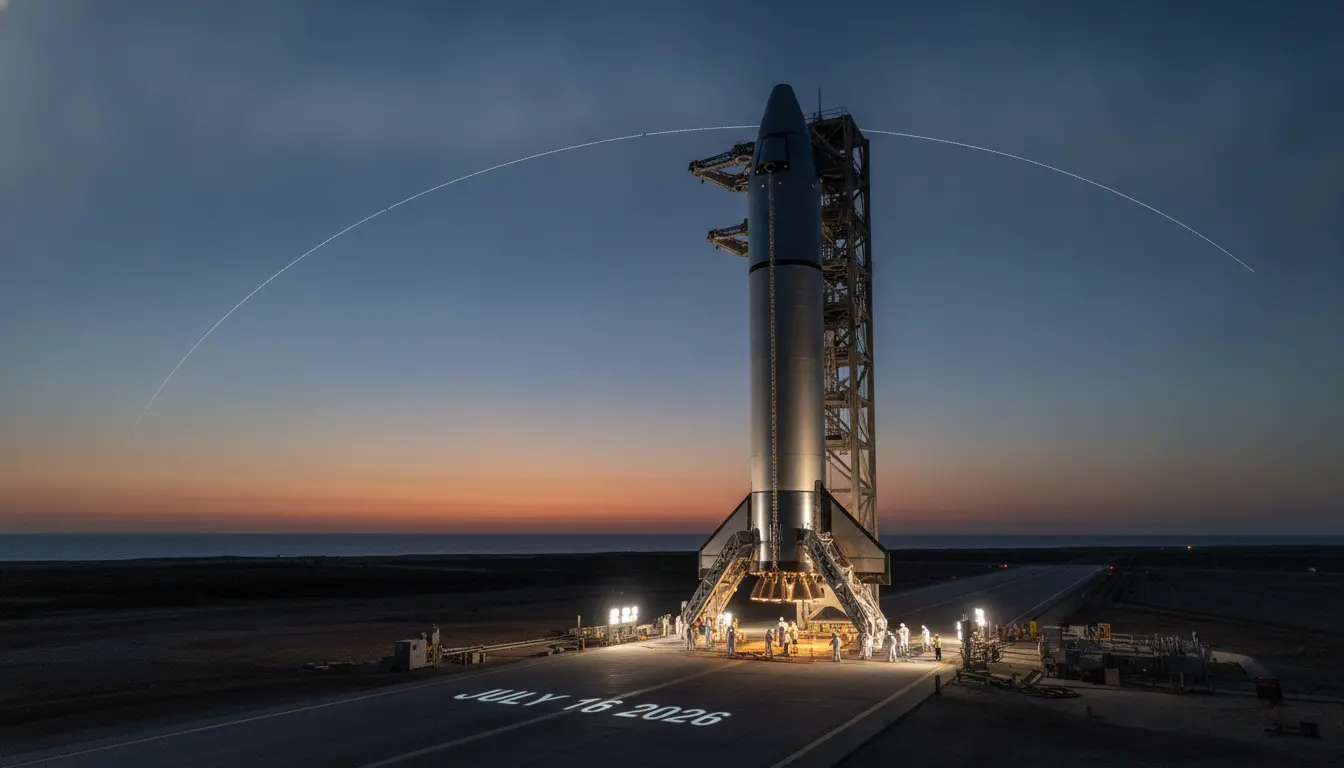
SpaceX Readies Starship for Thirteenth Orbital Test Flight, Eyes Critical Re-entry and Satellite Deployment Milestones

SpaceX Targets August 2026 for Critical Starship Orbital Test, Eyeing First Starlink Satellite Deployment
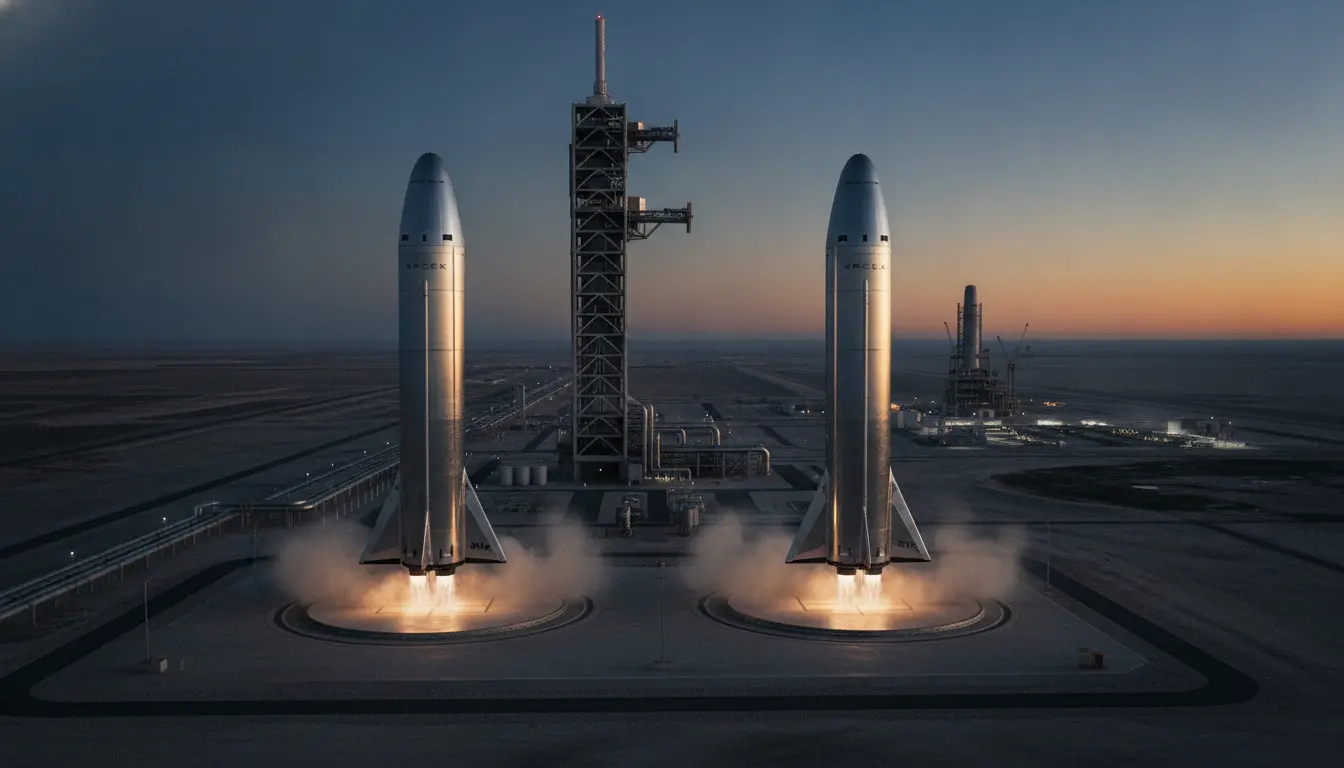
SpaceX Eyes Comprehensive Starship Orbital Test Flight and Dual Landing in Late 2026

SpaceX Accelerates Starship Development Toward Fully Successful Orbital Flight with Intact Landing by 2026
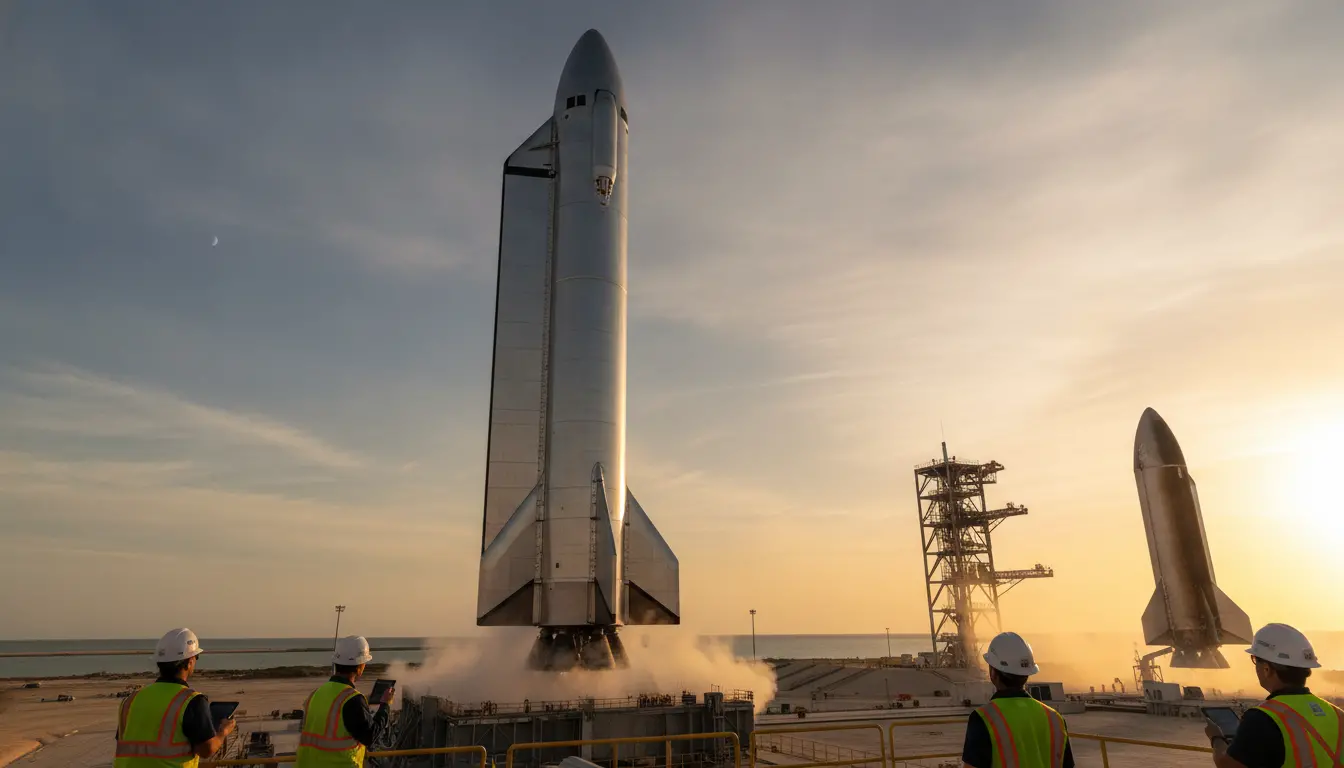
SpaceX Advances Starship Block 3 Design Amidst Rigorous Testing Campaigns

SpaceX Starship Flight Test 13 Aims for Simultaneous Booster and Ship Controlled Landings
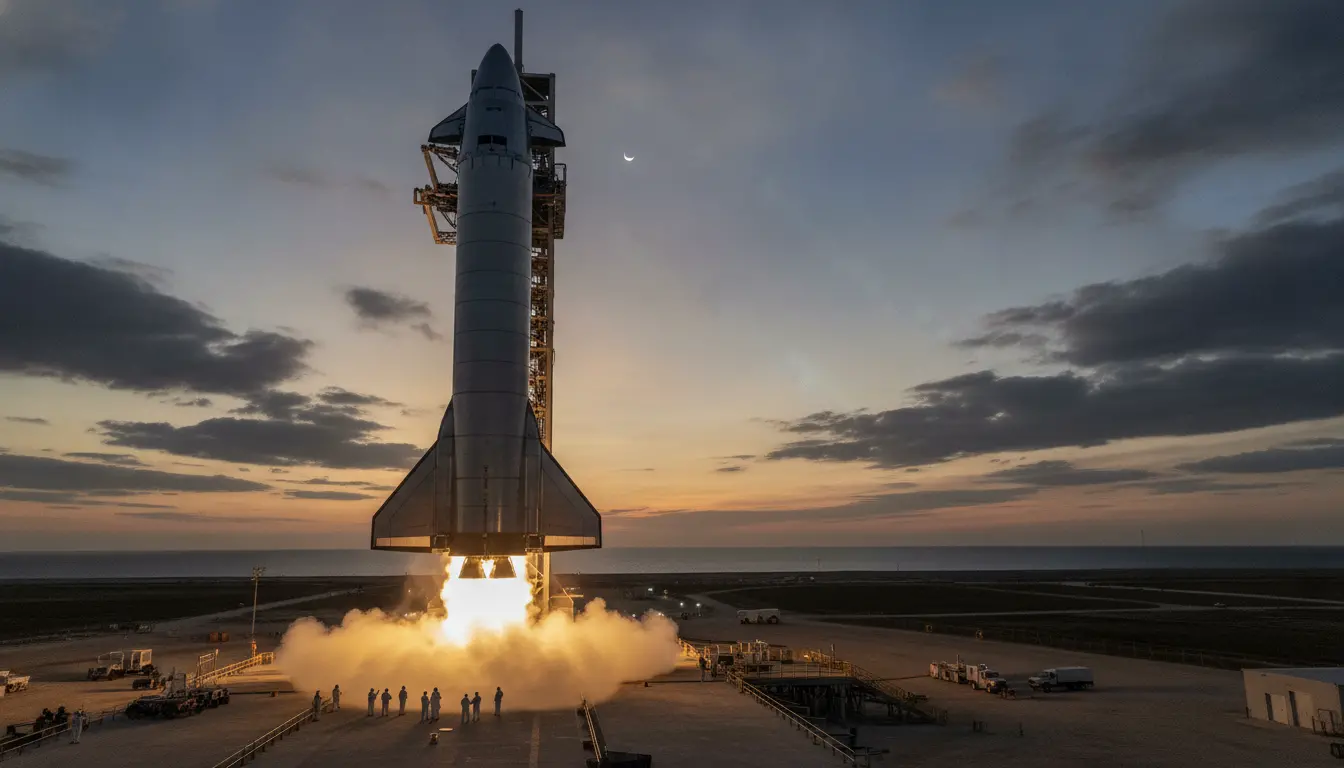
SpaceX Prepares Starship for Critical Orbital Flight Test to Advance Reusability Goals