

- News
- Science
- SpaceX Prepares Starship for First Satellite Deployment Attempt During 13th Flight Test in Mid-2026
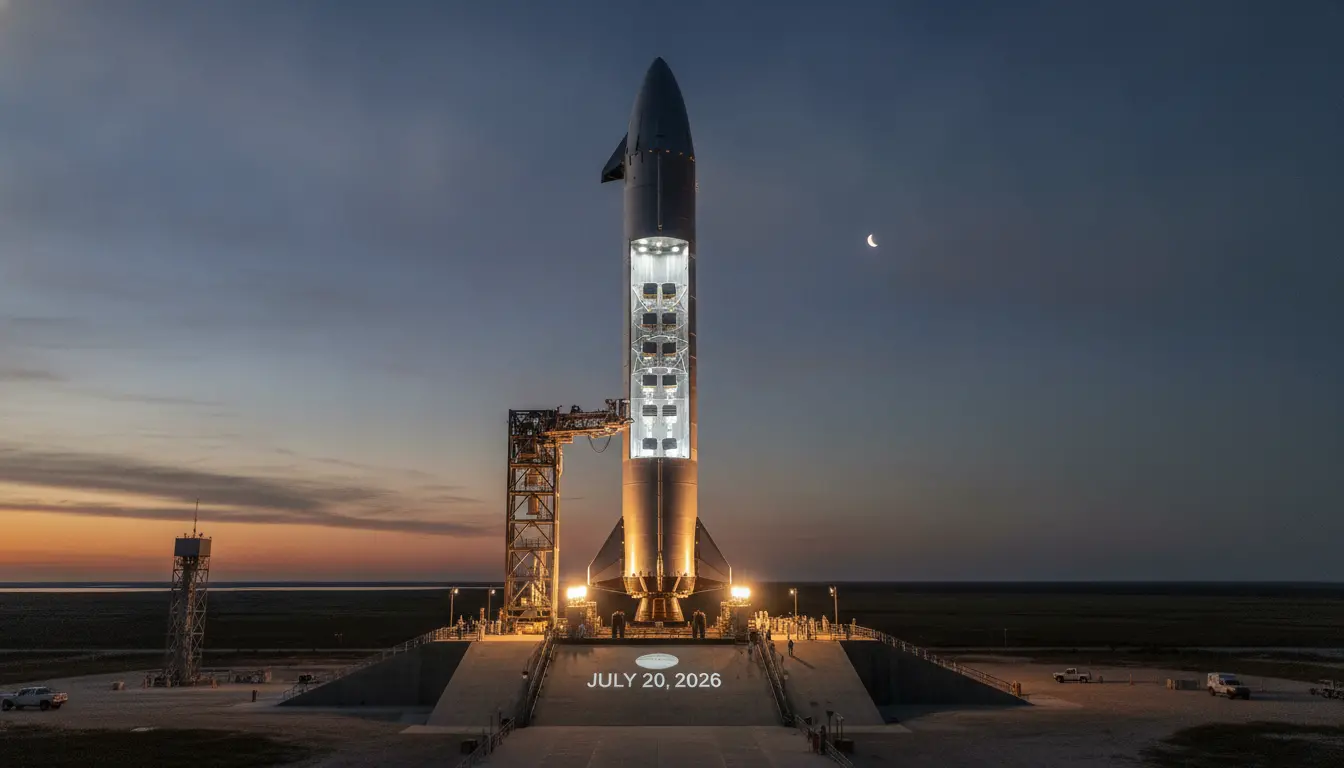
SpaceX Prepares Starship for First Satellite Deployment Attempt During 13th Flight Test in Mid-2026
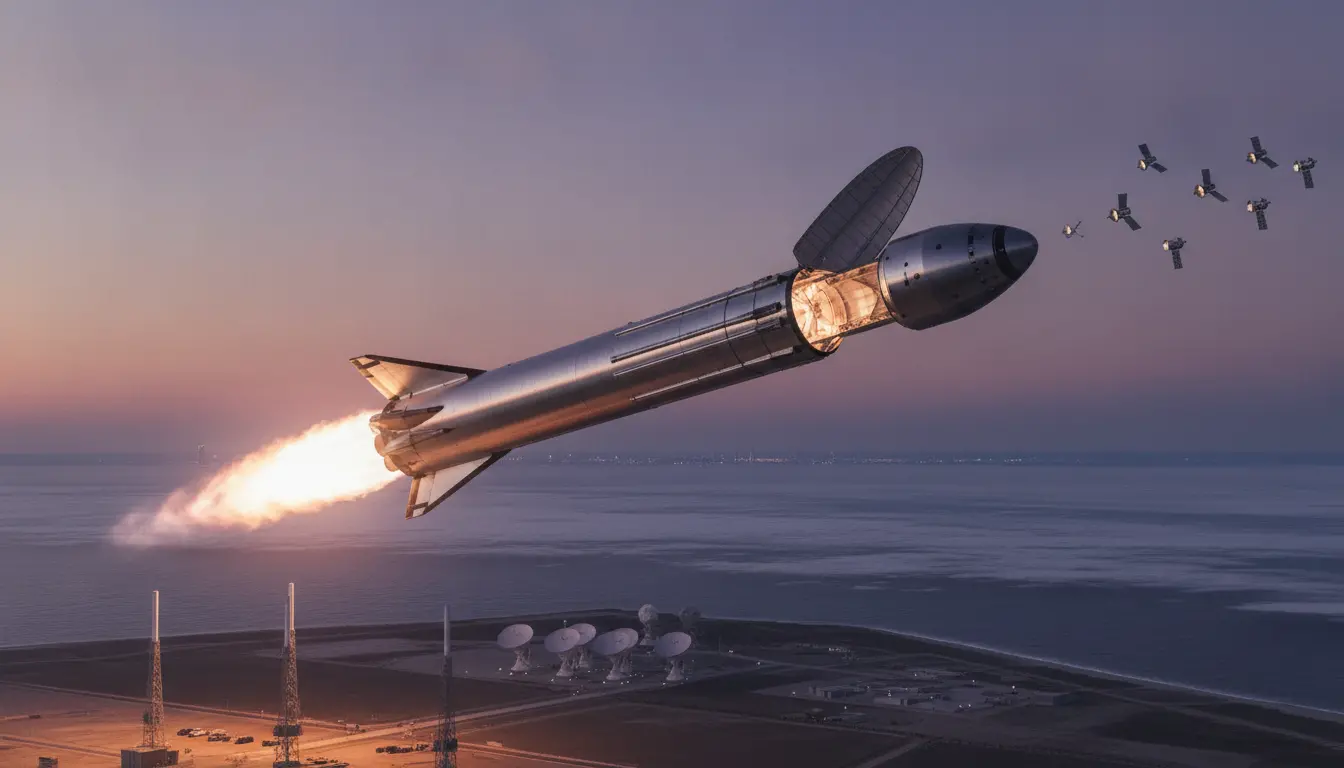
SpaceX is gearing up for a pivotal moment in its Starship development program, with the 13th flight test slated for July 20, 2026. This upcoming mission represents a significant leap forward, as it aims to achieve two critical objectives: the first-ever deployment of satellites to orbit by Starship and the demonstration of key re-entry capabilities. The test will be a crucial benchmark in validating Starship's potential as a fully reusable super heavy-lift launch system, central to humanity's ambitions for deep space exploration and commercial space operations.
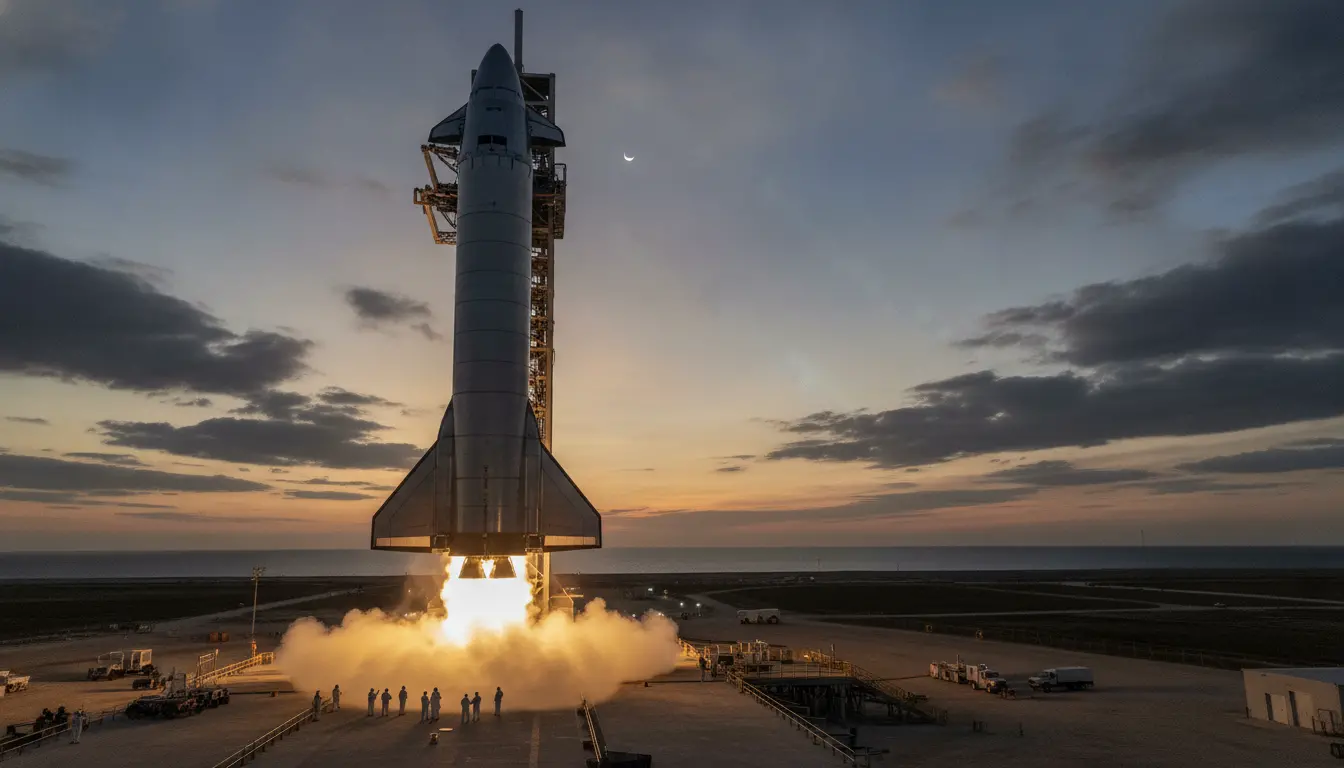
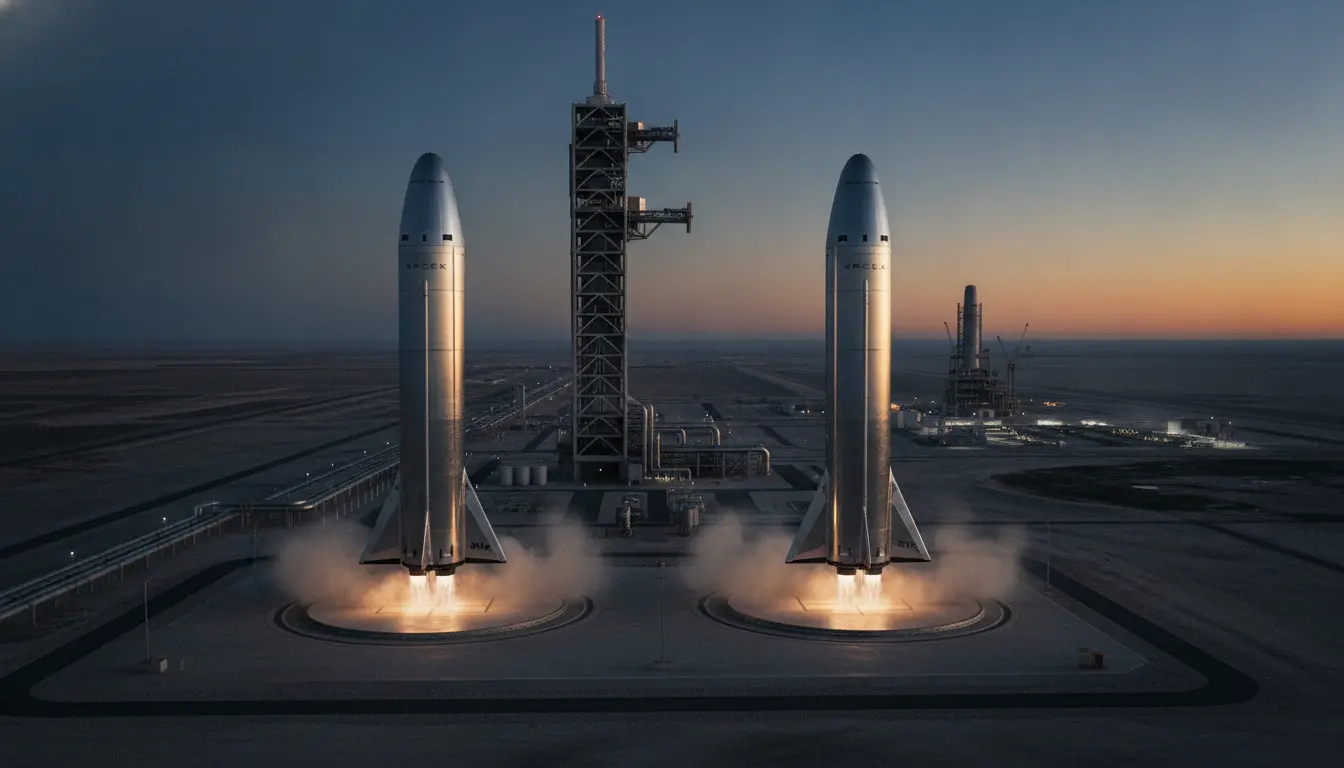
The Starship program, headquartered at SpaceX's Starbase facility in Boca Chica, Texas, envisions a future where routine, affordable access to space becomes a reality. Designed to transport both cargo and crew to the Moon, Mars, and beyond, Starship is fundamentally altering the landscape of aerospace engineering. Its fully reusable architecture, encompassing both the Starship spacecraft and its Super Heavy booster, promises to dramatically reduce the cost per launch, a factor critical for establishing permanent bases on other celestial bodies and facilitating large-scale satellite constellations. This 13th flight test is thus not just another development step, but a direct validation of the economic and operational feasibility that underpins SpaceX's long-term vision.
The journey to this point has been characterized by an iterative and ambitious testing regimen. Early prototypes underwent a series of high-altitude suborbital hops, demonstrating vertical takeoff and landing capabilities. More recently, integrated orbital flight tests have focused on the complex interplay between the Super Heavy booster and the Starship upper stage, as well as the intricate re-entry maneuvers required for reusability. Each test, regardless of its outcome, has provided invaluable data, allowing engineers to refine designs, troubleshoot systems, and incrementally advance towards the ultimate goal of routine spaceflight. This 13th flight builds directly on these preceding efforts, applying lessons learned to tackle increasingly complex operational scenarios.
Successfully deploying satellites to orbit would be a transformative achievement for Starship. It would prove the vehicle's capacity not just to reach orbit, but to accurately and reliably place payloads into their intended operational trajectories. This capability is paramount for various commercial and governmental applications, including the expansion of SpaceX's own Starlink internet constellation, launching Earth observation satellites, and potentially even components for future lunar or Martian missions. Precise orbital insertion requires meticulous control over propulsion, guidance, and navigation systems – a challenge that Starship, with its unprecedented size and capabilities, is engineered to meet.
Beyond satellite deployment, the mission will also rigorously test Starship's re-entry objectives. The integrity of its heat shield and the execution of its unique aerodynamic 'belly flop' maneuver are vital for achieving full reusability. A controlled descent and soft landing are essential not only for recovering the vehicle but also for minimizing refurbishment time and costs between flights. The ability to bring Starship back safely to Earth for rapid turnaround is the cornerstone of its economic model, promising a radical shift from the disposable rockets of previous eras to a sustainable, frequent flight schedule. This aspect of the mission will be closely watched by the aerospace community, as it represents a significant engineering hurdle.
The implications of a successful 13th flight test stretch far beyond SpaceX. It would further solidify the commercial space industry's role in driving innovation and expanding human presence in space. Validation of Starship’s satellite deployment and re-entry capabilities would accelerate timelines for lunar lander missions under NASA’s Artemis program, pave the way for more efficient space tourism, and foster an environment ripe for new orbital businesses. Conversely, any significant setbacks would prompt further engineering adjustments and potentially shift timelines, though SpaceX has consistently demonstrated resilience and adaptability in its pursuit of ambitious goals. The world will be watching closely as Starship continues its audacious journey, pushing the boundaries of what is possible in space transportation.
Ultimately, this forthcoming flight test in mid-2026 represents a critical chapter in the story of Starship. It will be a testament to years of dedicated engineering, persistent iteration, and a bold vision for the future of space travel. The successful deployment of satellites and the demonstration of full reusability would not only validate SpaceX’s strategic direction but also usher in a new era of access to Earth orbit and beyond, setting the stage for humanity's next giant leaps into the cosmos.
Stay Informed. Act Smarter.
Get weekly highlights, major headlines, and expert insights — then put your knowledge to work in our live prediction markets.
Related News
SpaceX Readies Starship for Thirteenth Orbital Test Flight, Eyes Critical Re-entry and Satellite Deployment Milestones
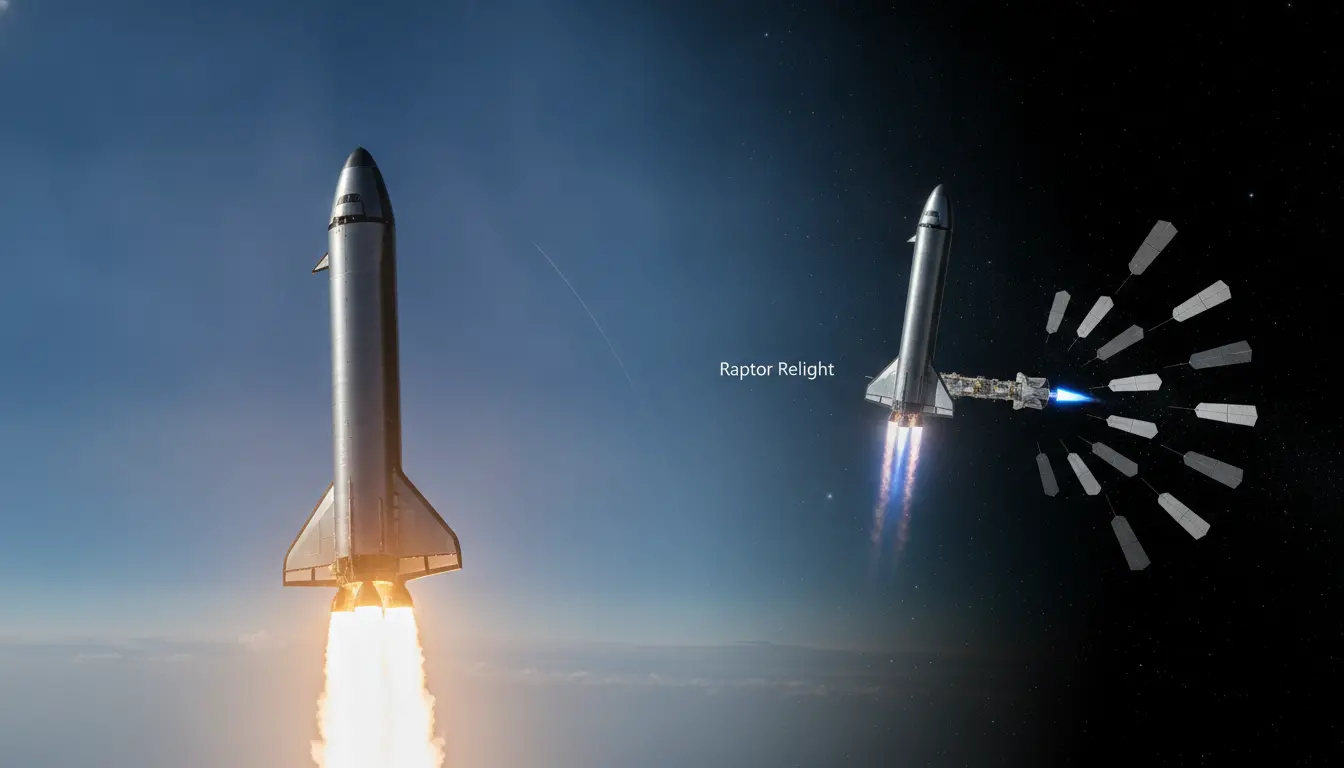
SpaceX Gears Up for Pivotal Starship Flight Targeting In-Orbit Raptor Relight and Starlink V3 Deployment

SpaceX Schedules Crucial Starship Flight to Deploy First Starlink V3 Satellites

SpaceX Targets August 2026 for Critical Starship Orbital Test, Eyeing First Starlink Satellite Deployment
SpaceX Prepares for Crucial Starship Flight 13, Targeting Starlink V3 Deployment and Booster Recovery

SpaceX Starship Flight Test 13 Aims for Simultaneous Booster and Ship Controlled Landings
SpaceX Starship Aims for Milestone 14th Flight Test, Targeting Satellite Deployment and Controlled Landing
SpaceX Prepares Starship for Critical Orbital Flight Test to Advance Reusability Goals

SpaceX Accelerates Starship Development Toward Fully Successful Orbital Flight with Intact Landing by 2026
SpaceX Eyes Comprehensive Starship Orbital Test Flight and Dual Landing in Late 2026