

- News
- Science
- SpaceX Gears Up for Pivotal Starship Flight Targeting In-Orbit Raptor Relight and Starlink V3 Deployment
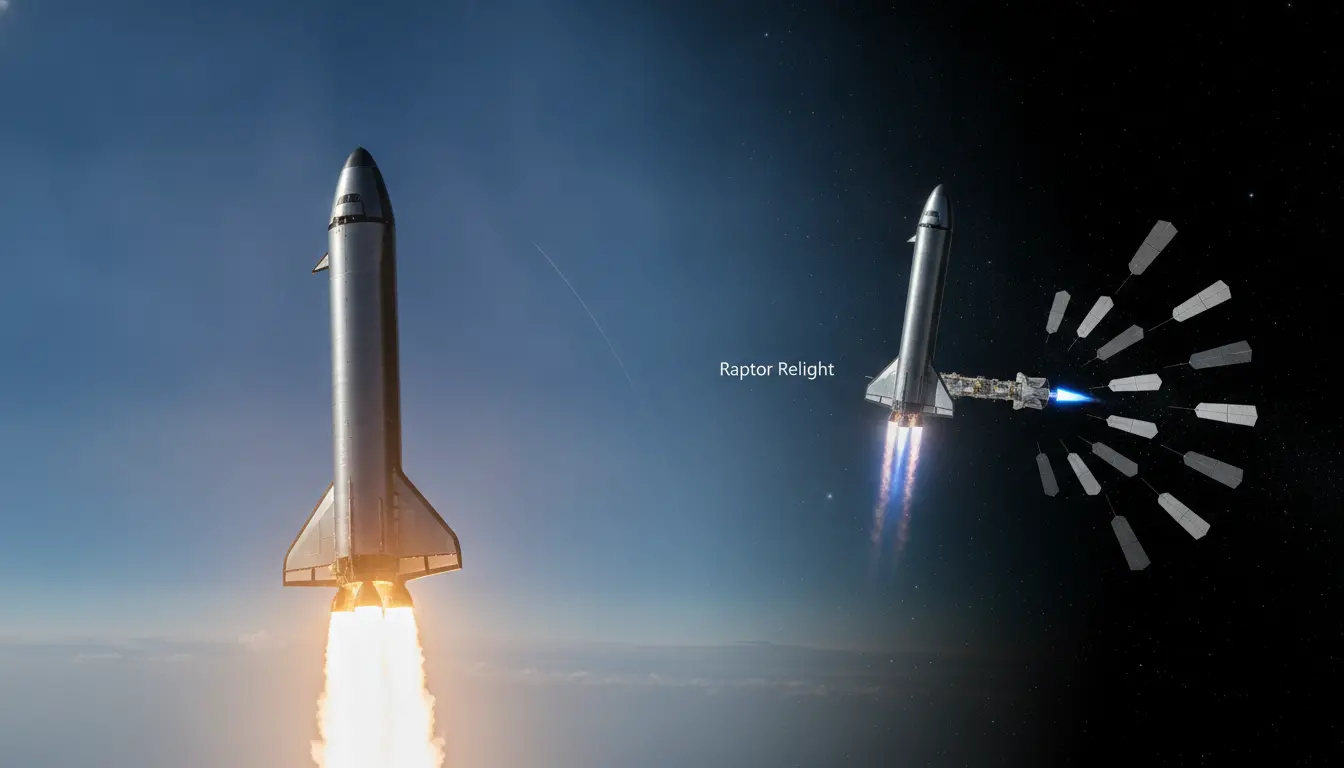
SpaceX Gears Up for Pivotal Starship Flight Targeting In-Orbit Raptor Relight and Starlink V3 Deployment
SpaceX's next Starship test flight, designated Flight 13, is poised to mark critical milestones in its ambitious development program. The mission's primary objectives include demonstrating an in-space relight of its Raptor engines and deploying the next generation of Starlink V3 satellites. These dual feats are crucial for validating Starship's capabilities not just as an interplanetary transport system but also as a workhorse for deploying SpaceX's expanding satellite internet constellation. A successful outcome would significantly advance the program, moving closer to operational readiness for lunar missions under NASA's Artemis program and ultimately, human voyages to Mars. The upcoming flight represents another step in SpaceX's rapid, iterative development approach, pushing the boundaries of reusable rocketry and space infrastructure.
Starship, a fully reusable two-stage super heavy-lift launch vehicle, is central to Elon Musk's long-term vision of making humanity a multi-planetary species. Comprising the Starship spacecraft and the Super Heavy booster, the system is designed to transport both crew and cargo to Earth orbit, the Moon, and Mars. Over the past few years, SpaceX has conducted numerous test flights from its Starbase facility in Boca Chica, Texas, steadily progressing through complex ascent, orbital, and re-entry maneuvers. Each flight, whether fully successful or not, has provided invaluable data, informing design improvements and operational procedures. The development path has been characterized by spectacular failures and incremental successes, all part of an aggressive testing regimen aimed at accelerating development and innovation in spaceflight. This iterative process allows engineers to quickly identify and address issues, a stark contrast to traditional aerospace development cycles.
One of the most technically demanding aspects of the upcoming flight is the in-space relight of the Raptor engines. While Raptor engines have proven their power and reliability during atmospheric flight and ascent, restarting them in the vacuum of space presents unique engineering challenges. Factors such as propellant settling, ignition sequence in zero gravity, thermal management, and robust restart mechanisms must all function flawlessly. The ability to relight engines in orbit is fundamental for maneuvering the Starship spacecraft, performing orbital transfers, deorbit burns, and ultimately, precision landings on other celestial bodies. Without this capability, Starship cannot fulfill its design purpose as a versatile deep-space vehicle. This demonstration is therefore not merely a test of a specific engine function but a critical validation of Starship's fundamental operational flexibility in the orbital environment.
The other major objective involves the deployment of Starlink V3 satellites. Starlink, SpaceX's broadband internet constellation, currently relies on Falcon 9 launches for its existing V1.0 and V2 Mini satellites. The V3 generation represents a significant leap in satellite technology, designed to be larger, more powerful, and potentially capable of direct-to-cell service, expanding global connectivity. Deploying these larger satellites from Starship would demonstrate the vehicle's capacity as a high-volume, low-cost launcher for Starlink, which is essential for scaling up the constellation to meet its ambitious service goals. A successful deployment would not only validate Starship's payload integration and release mechanisms but also solidify its role as the primary deployment vehicle for future Starlink expansions, freeing up Falcon 9 for other missions. This transition is crucial for the economic viability and rapid growth of the Starlink network.
The success of Flight 13 carries immense implications for SpaceX and the broader space industry. For SpaceX, it would de-risk several key technologies vital for its future aspirations, including NASA's Human Landing System (HLS) contract for Artemis III and IV, which hinges on Starship's ability to land astronauts on the Moon. Beyond government contracts, the commercial viability of Starship for satellite deployment, space tourism, and point-to-point terrestrial travel also depends on these foundational demonstrations. A successful mission would bolster confidence in the timeline for Starship's operational deployment, potentially accelerating critical initiatives. Conversely, significant anomalies would necessitate further testing and redesigns, adding to the already substantial development costs and potentially delaying future missions. The world will be watching closely as SpaceX aims to further prove the capabilities of its next-generation space vehicle, reinforcing its position at the forefront of space innovation.
Stay Informed. Act Smarter.
Get weekly highlights, major headlines, and expert insights — then put your knowledge to work in our live prediction markets.
Related News
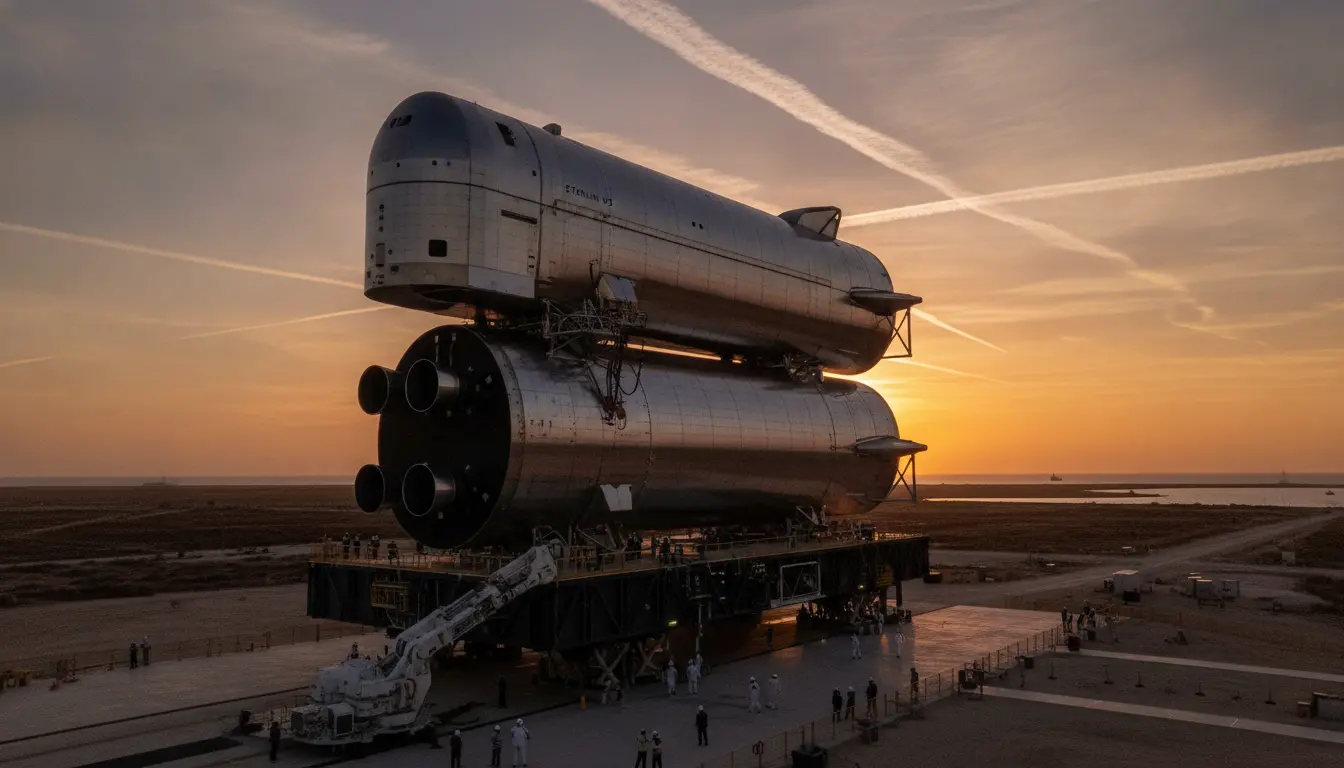
SpaceX Prepares for Crucial Starship Flight 13, Targeting Starlink V3 Deployment and Booster Recovery
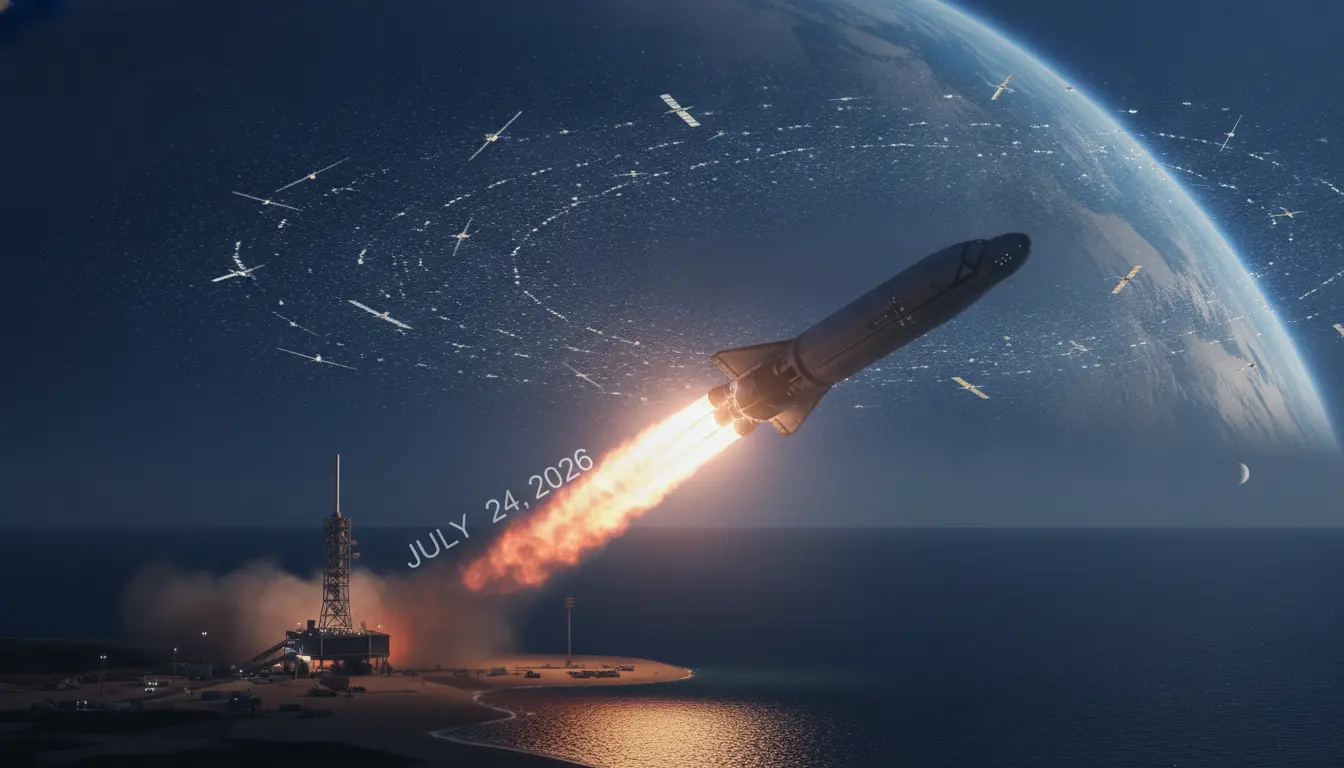
SpaceX Schedules Crucial Starship Flight to Deploy First Starlink V3 Satellites
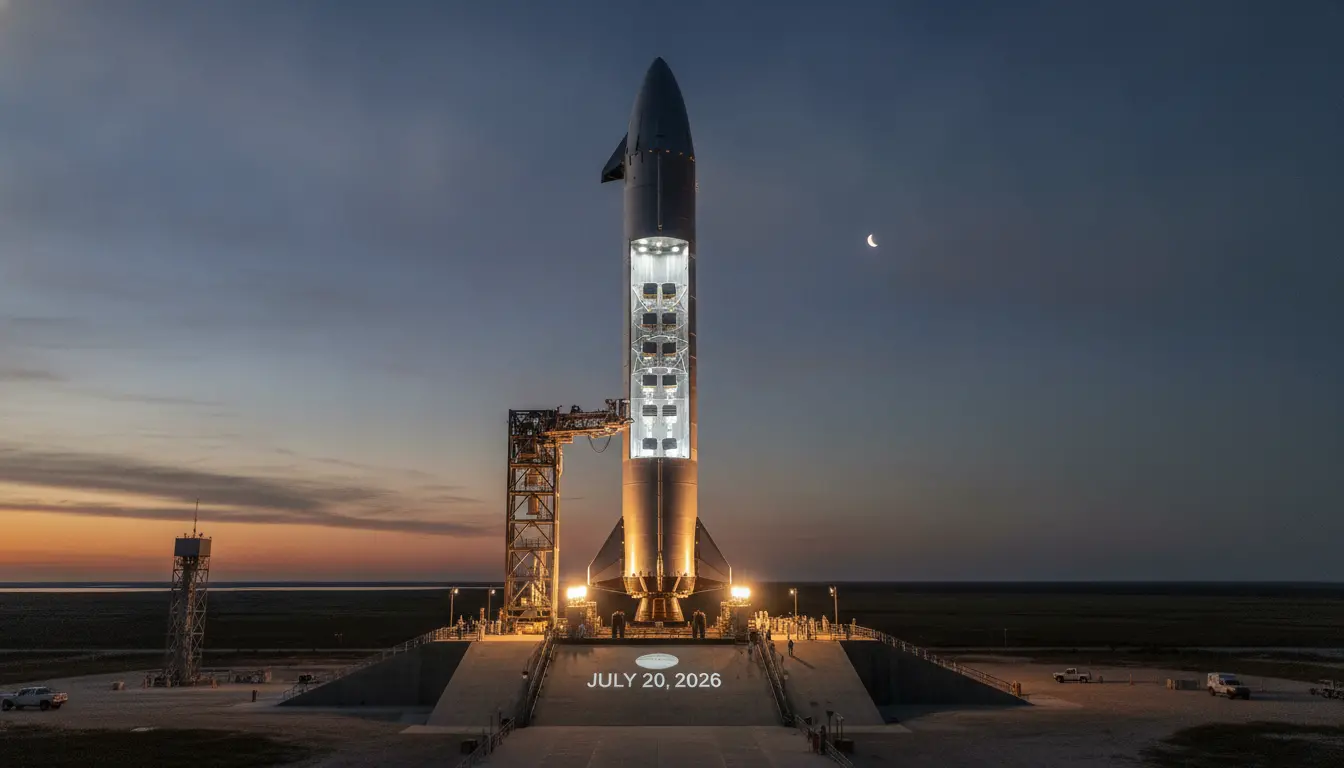
SpaceX Prepares Starship for First Satellite Deployment Attempt During 13th Flight Test in Mid-2026
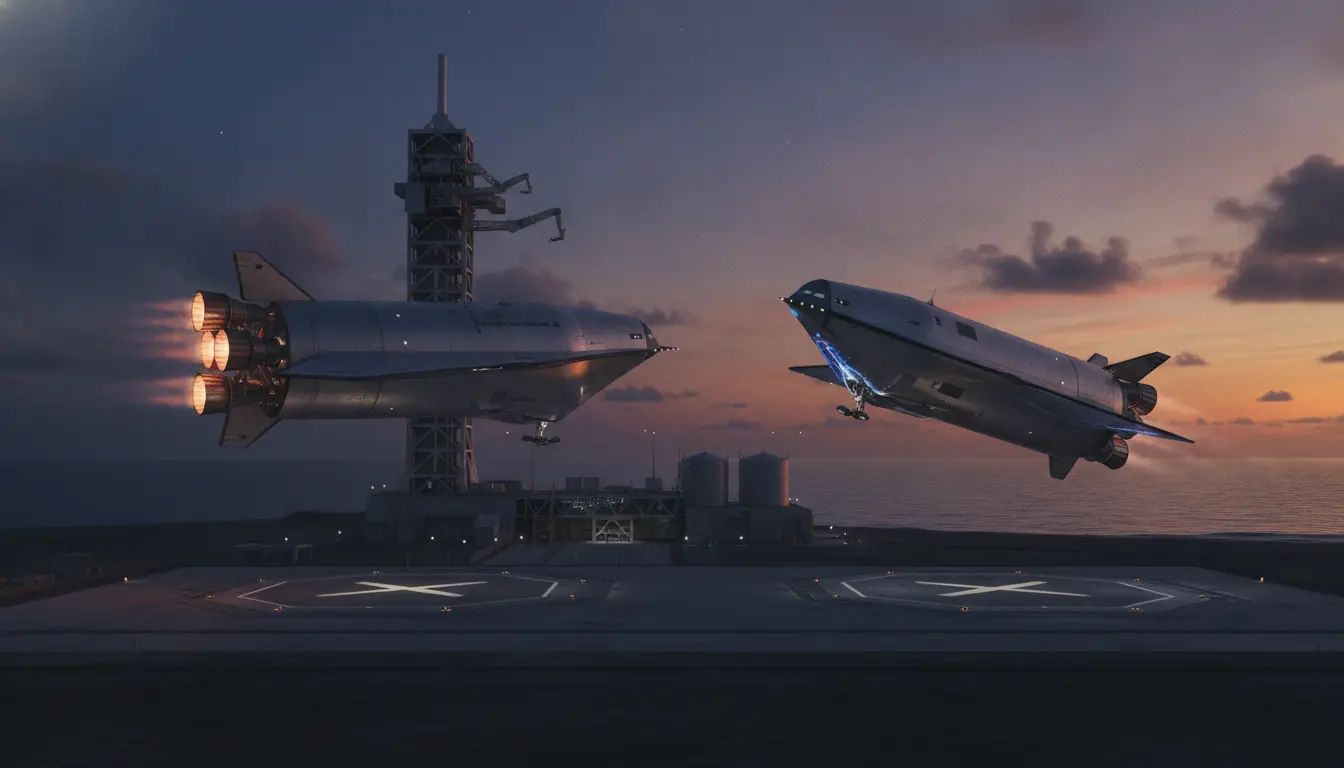
SpaceX Starship Flight Test 13 Aims for Simultaneous Booster and Ship Controlled Landings
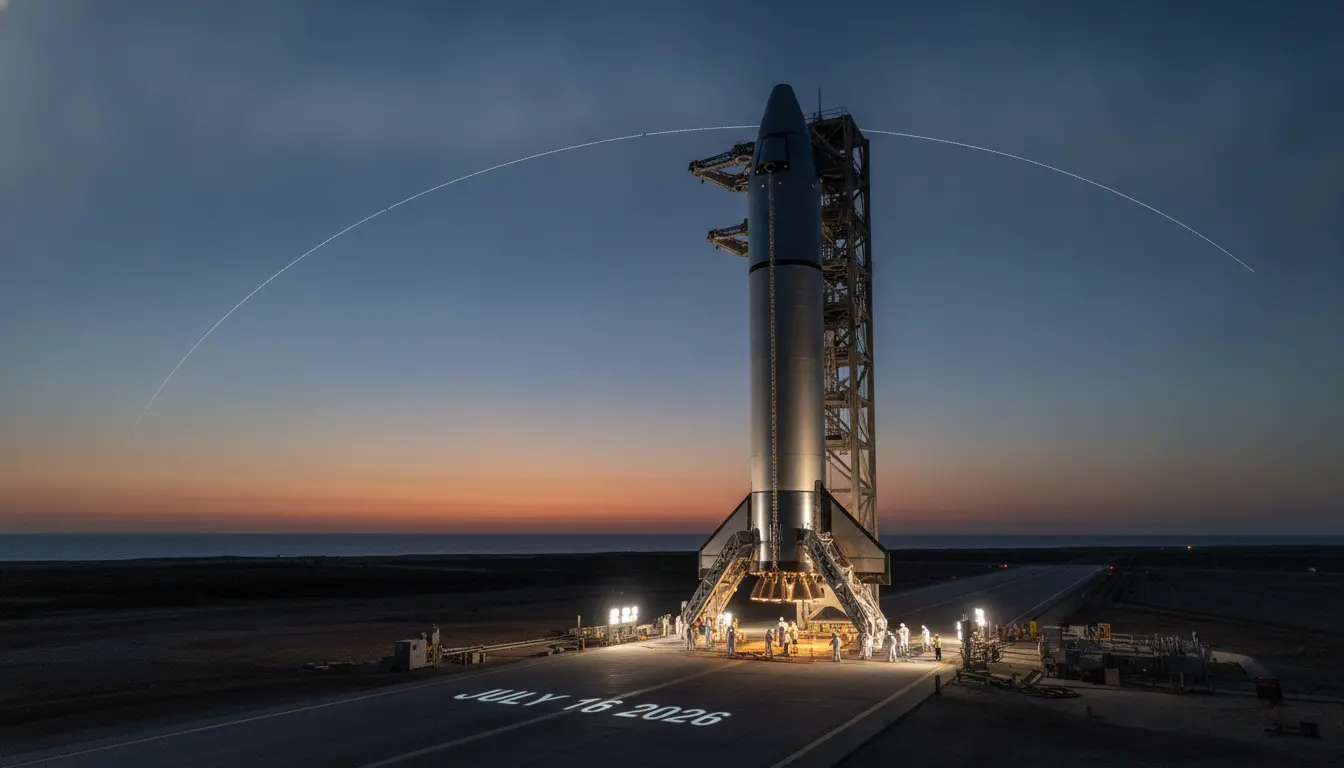
SpaceX Readies Starship for Thirteenth Orbital Test Flight, Eyes Critical Re-entry and Satellite Deployment Milestones
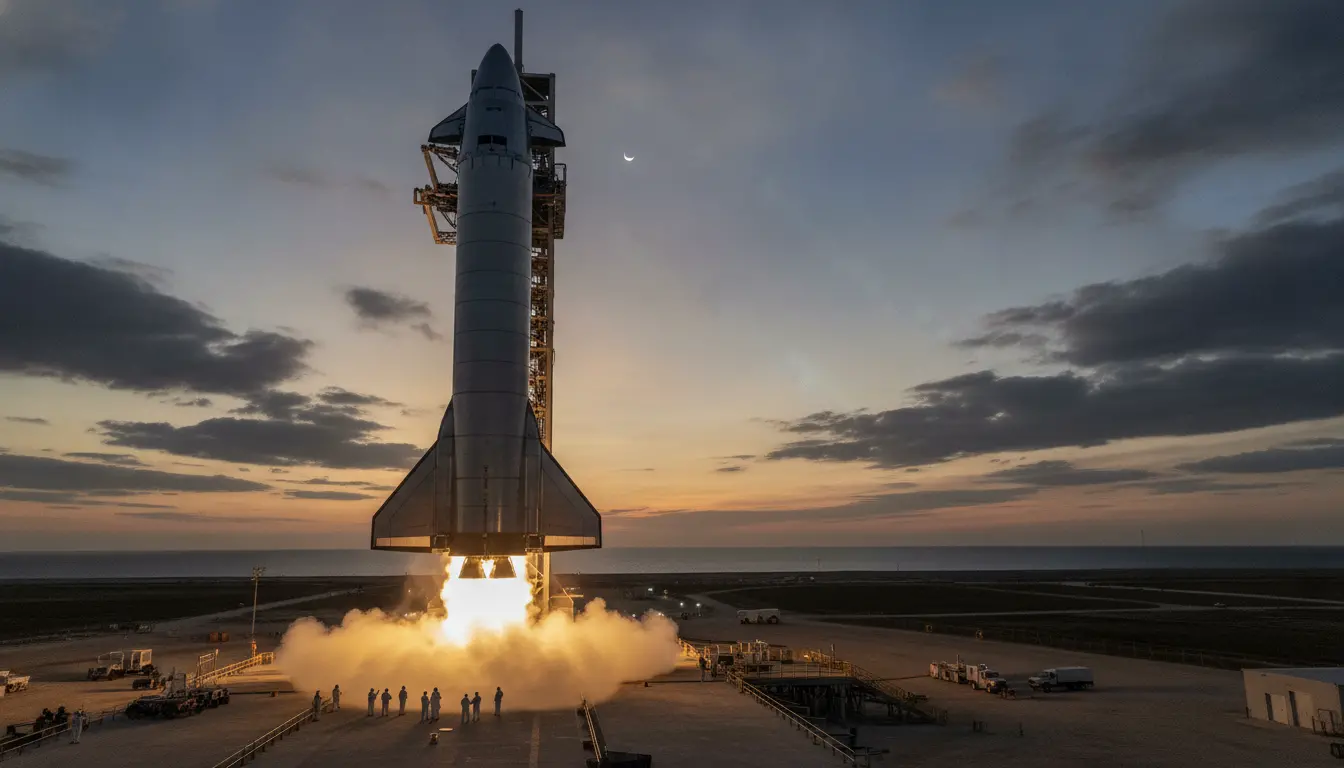
SpaceX Prepares Starship for Critical Orbital Flight Test to Advance Reusability Goals
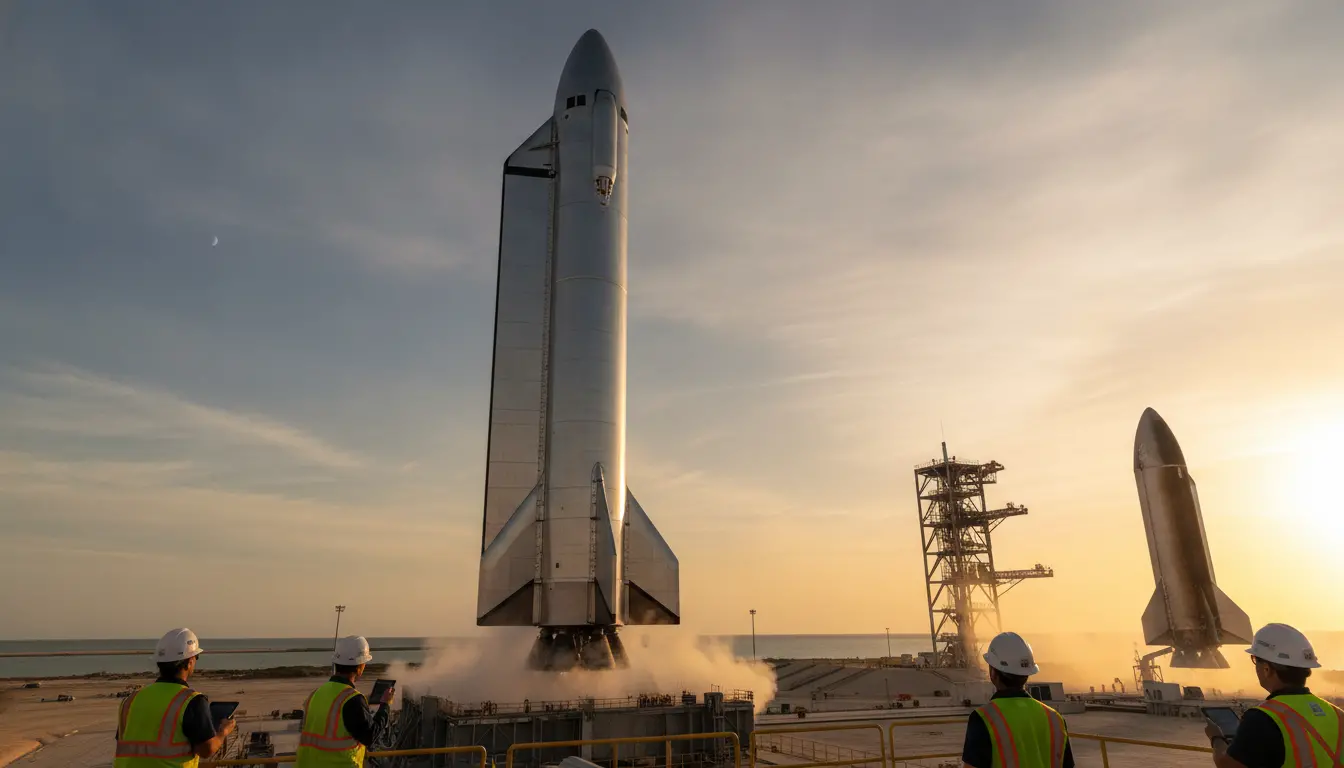
SpaceX Advances Starship Block 3 Design Amidst Rigorous Testing Campaigns
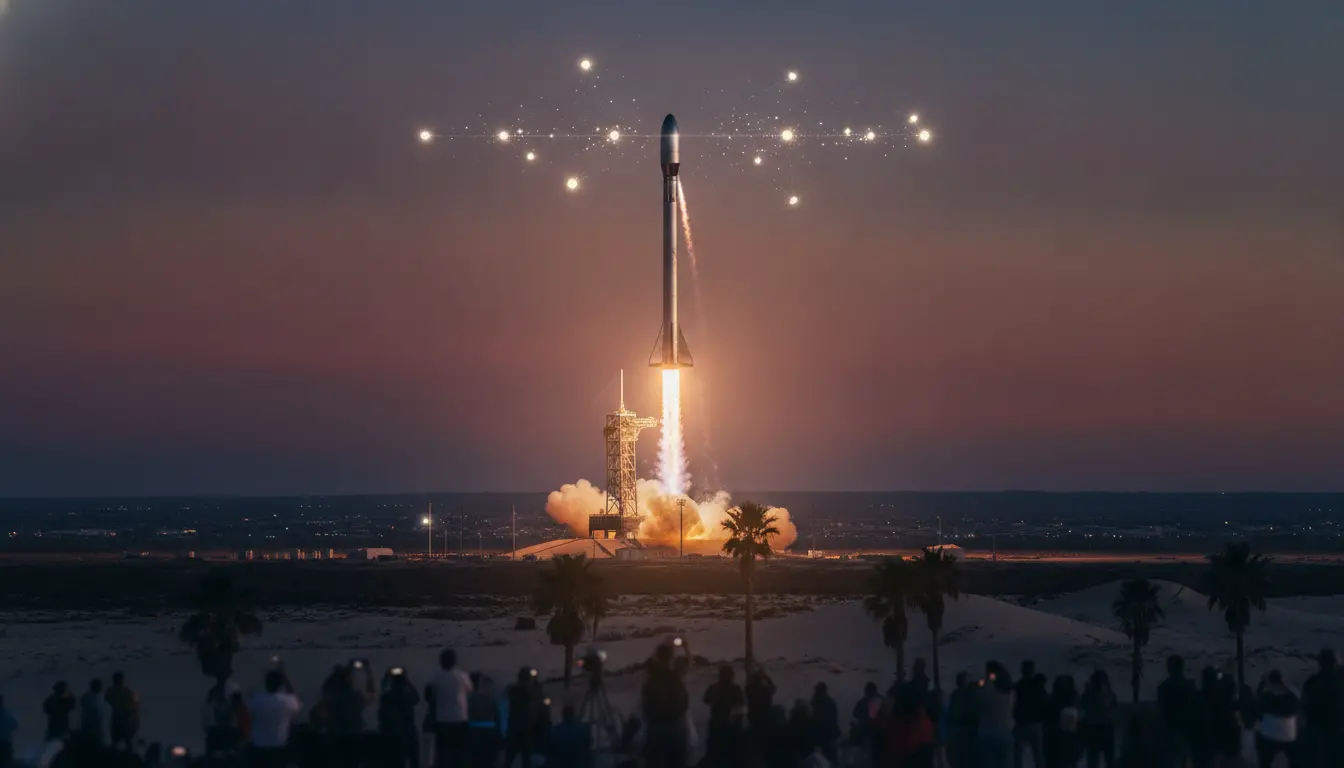
SpaceX Targets August 2026 for Critical Starship Orbital Test, Eyeing First Starlink Satellite Deployment
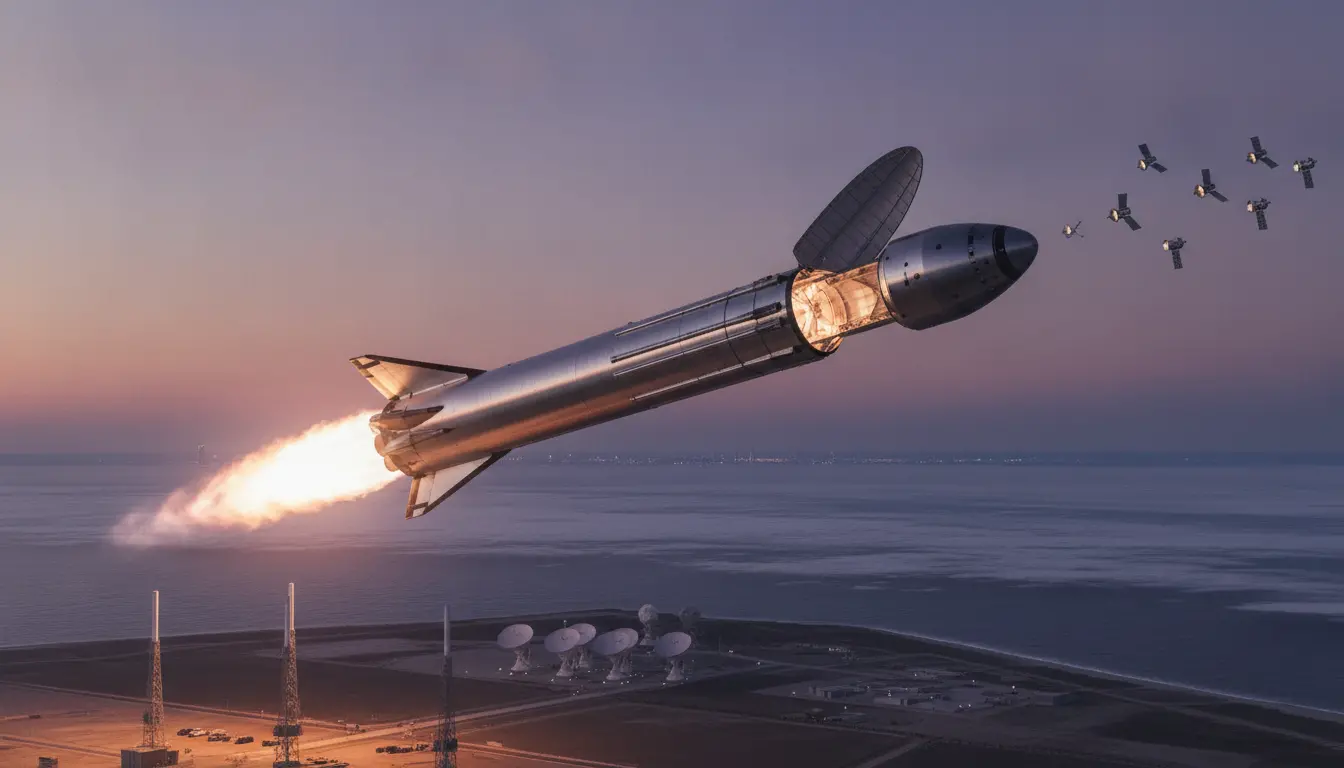
SpaceX Starship Aims for Milestone 14th Flight Test, Targeting Satellite Deployment and Controlled Landing
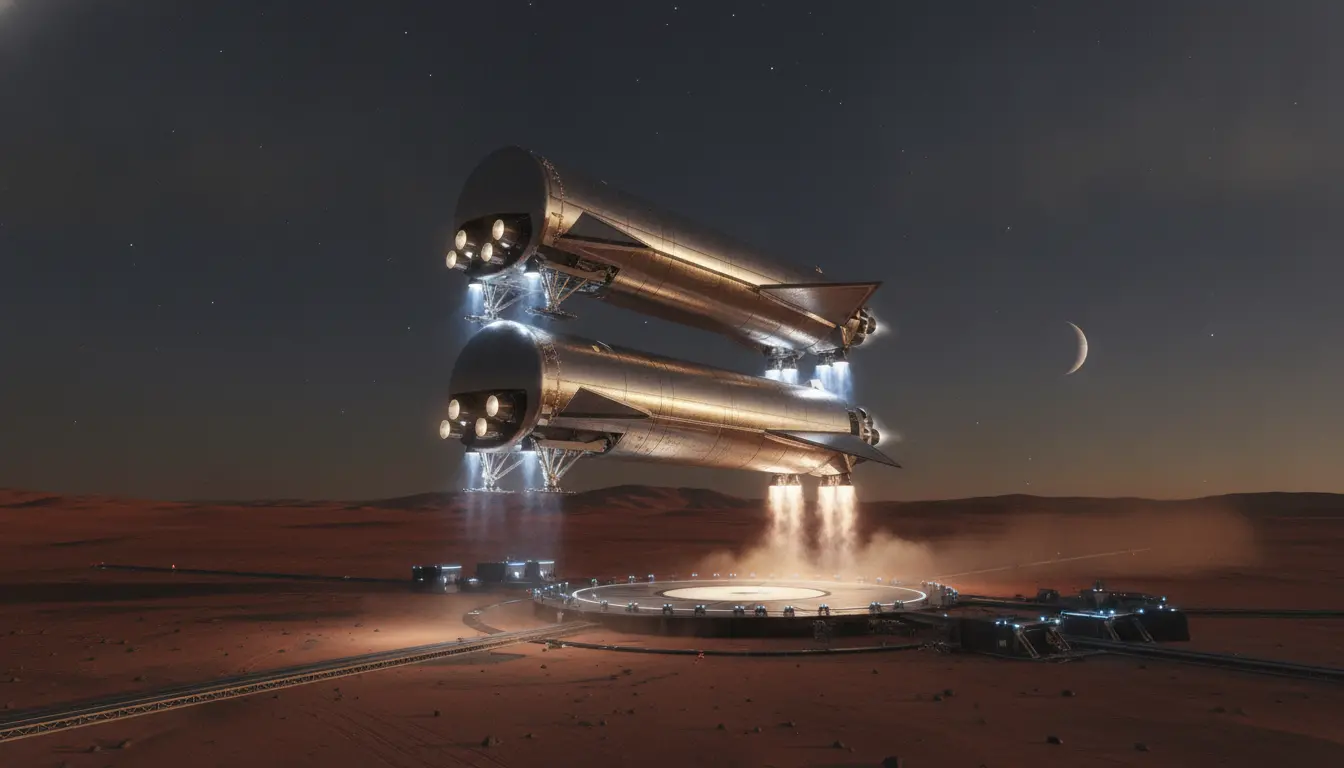
SpaceX Accelerates Starship Development Toward Fully Successful Orbital Flight with Intact Landing by 2026