

- News
- Science
- SpaceX Targets August 2026 for Critical Starship Orbital Test, Eyeing First Starlink Satellite Deployment

SpaceX Targets August 2026 for Critical Starship Orbital Test, Eyeing First Starlink Satellite Deployment
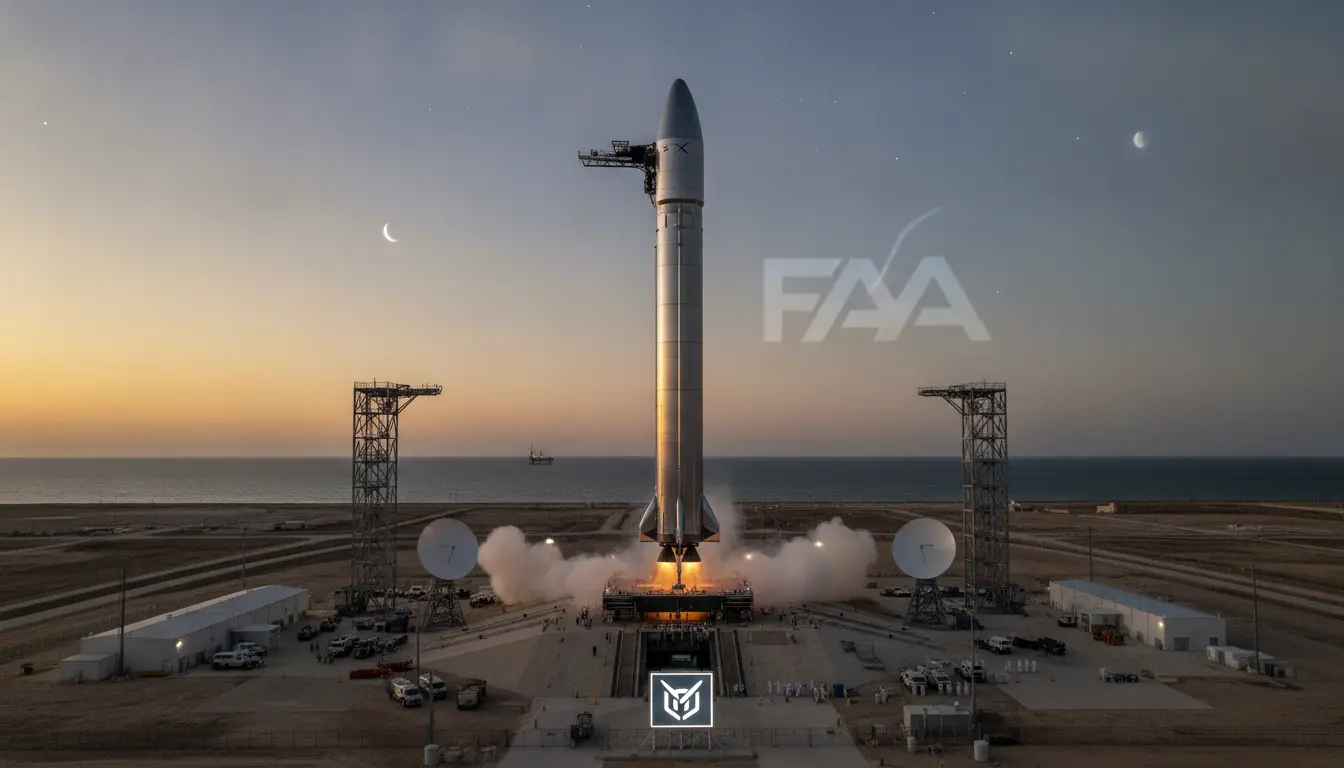
SpaceX is setting its sights on August 2026 for a pivotal milestone in its ambitious Starship program: Flight 14, an orbital test mission that aims not only to achieve sustained orbit but also to deploy a batch of Starlink satellites for the first time. This upcoming flight represents a critical step in the development of the company's fully reusable super heavy-lift launch system, which Elon Musk envisions as the primary vehicle for human missions to the Moon and Mars, as well as a revolutionary platform for terrestrial point-to-point travel and satellite deployment.
Starship's journey has been one of iterative development and high-profile testing at SpaceX's Starbase facility in Boca Chica, Texas. Over the past several years, the program has seen numerous prototypes undergo ground tests, static fire tests, and suborbital flight attempts, gradually pushing the envelope of engineering capabilities. These early flights, while often ending in dramatic rapid unscheduled disassemblies, provided invaluable data for design refinements, engine development, and operational procedures. The transition from suborbital hops to full-stack orbital attempts has been particularly challenging, requiring the complex integration of the Starship upper stage with the colossal Super Heavy booster, both powered by SpaceX's cutting-edge Raptor engines.
Flight 14’s objectives are multifaceted and highly ambitious. The primary goal is for the integrated Starship and Super Heavy stack to successfully launch, execute a hot-staging maneuver where the upper stage separates and ignites its engines while still attached to the booster, and then achieve a stable orbital trajectory. Crucially, this flight is slated to demonstrate Starship’s capability as a satellite dispenser, deploying Starlink internet satellites into their operational orbits. This particular aspect marks a significant expansion of Starship’s utility beyond just exploration, directly linking it to SpaceX's primary revenue-generating constellation and showcasing its potential to launch future generations of larger, more advanced Starlink spacecraft.
Achieving orbital velocity and sustained flight is a prerequisite for all of Starship’s grander aspirations. A successful orbital test would de-risk future missions, including those under NASA's Artemis program, where Starship is slated to serve as the Human Landing System for returning astronauts to the lunar surface. Beyond the Moon, it is the cornerstone of Musk’s vision for establishing a self-sustaining human presence on Mars. The engineering challenges are immense, encompassing the reliability of over 30 Raptor engines across both stages, the structural integrity of the stainless-steel vehicle during ascent and re-entry, and the precise choreography of in-flight maneuvers.
Regulatory approvals from the Federal Aviation Administration (FAA) also play a critical role in the Starship program's cadence. Each test flight requires extensive environmental reviews and safety assessments, a process that has previously caused delays. For Flight 14, securing all necessary clearances will be as crucial as the technical readiness of the vehicle itself. The sheer scale and power of the Starship system necessitate rigorous oversight, ensuring public safety and environmental protection are paramount during launch and landing operations.
Should Flight 14 succeed in its orbital and deployment goals, it would profoundly impact the global space industry. Starship promises to dramatically lower the cost per launch to orbit, enabling an unprecedented volume of payloads and potentially ushering in a new era of space commercialization and exploration. Its fully reusable design and immense payload capacity could reshape the market for satellite launches, deep-space probes, and even orbital infrastructure development, providing a paradigm shift from the expendable rocket era. The implications for science, industry, and humanity's long-term future in space are vast, making the August 2026 attempt one of the most anticipated events in modern aerospace history.
Ultimately, Starship Flight 14 is more than just another test; it is a testament to an audacious engineering philosophy and a potential turning point for humanity's expansion beyond Earth. Its outcome will not only validate years of development but also lay the groundwork for a future where space travel is routine and multi-planetary existence becomes a tangible reality.
Stay Informed. Act Smarter.
Get weekly highlights, major headlines, and expert insights — then put your knowledge to work in our live prediction markets.
Related News
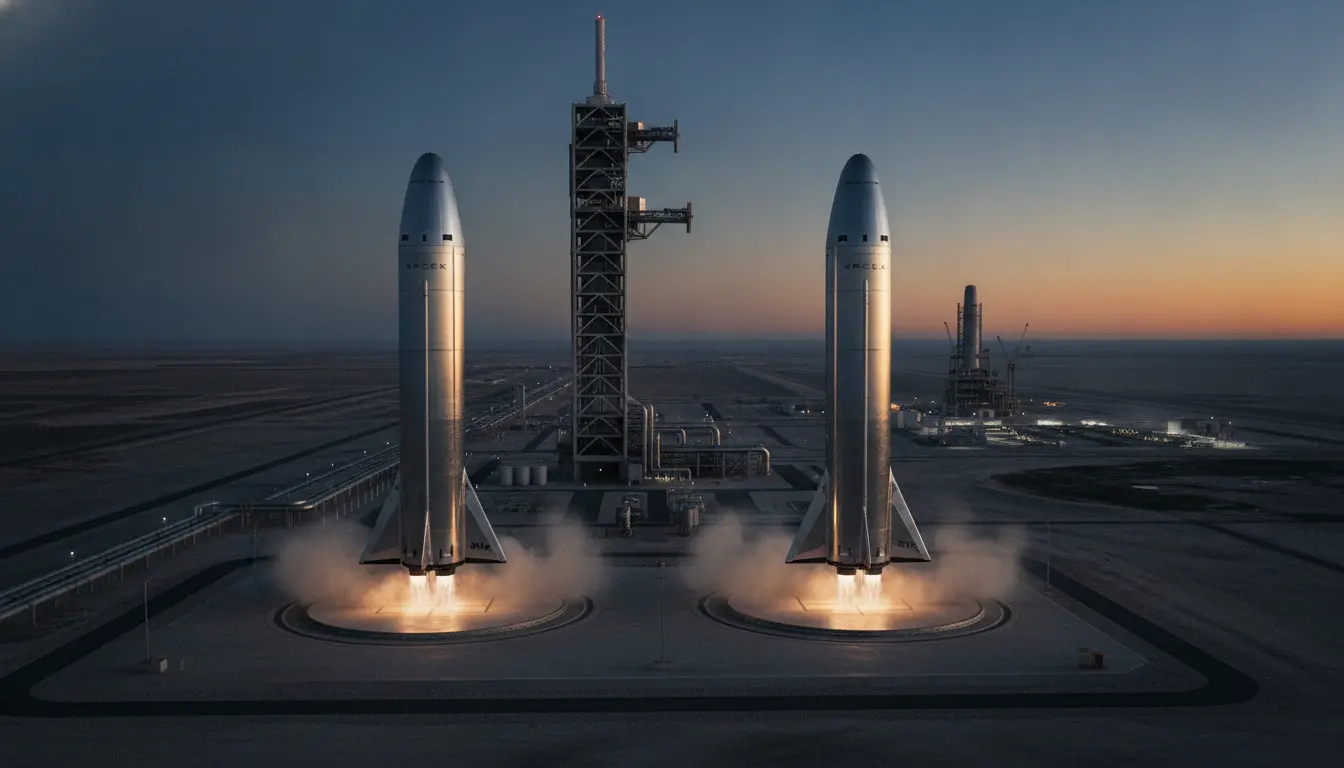
SpaceX Eyes Comprehensive Starship Orbital Test Flight and Dual Landing in Late 2026
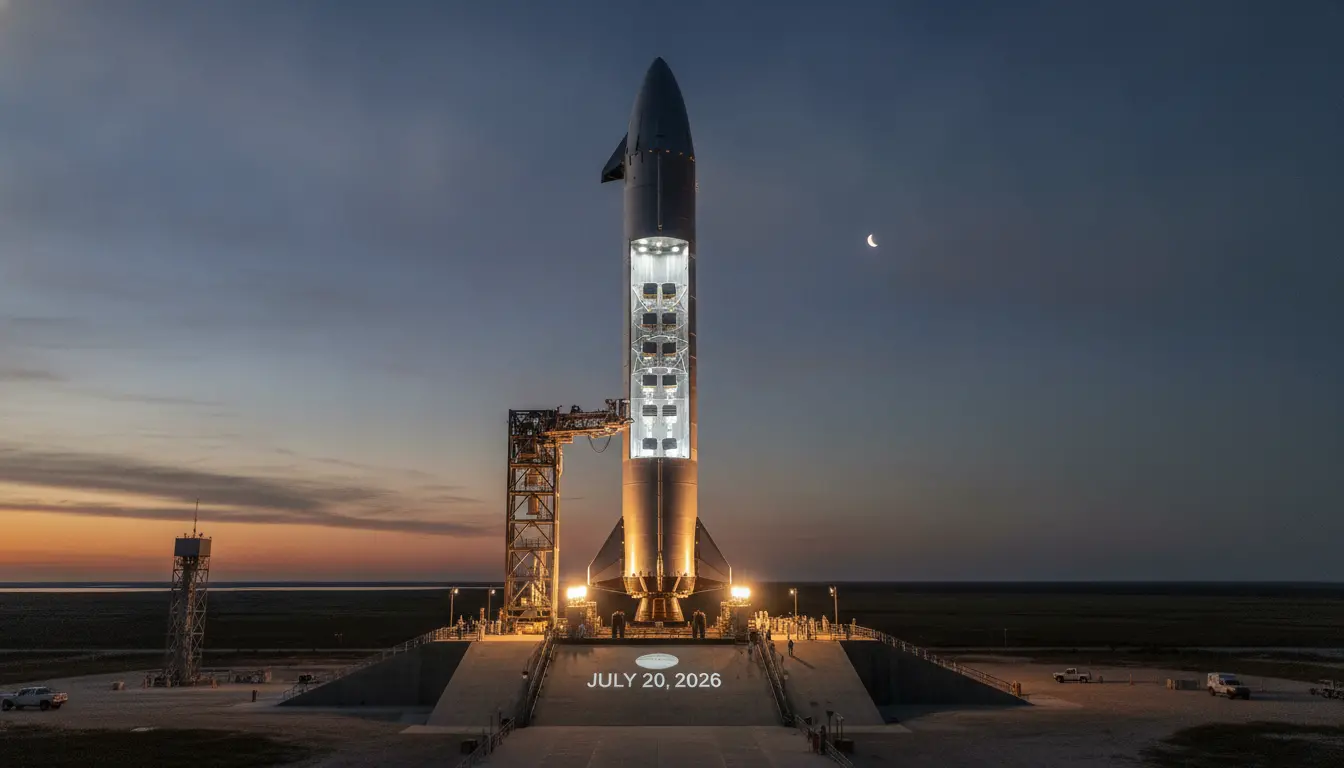
SpaceX Prepares Starship for First Satellite Deployment Attempt During 13th Flight Test in Mid-2026
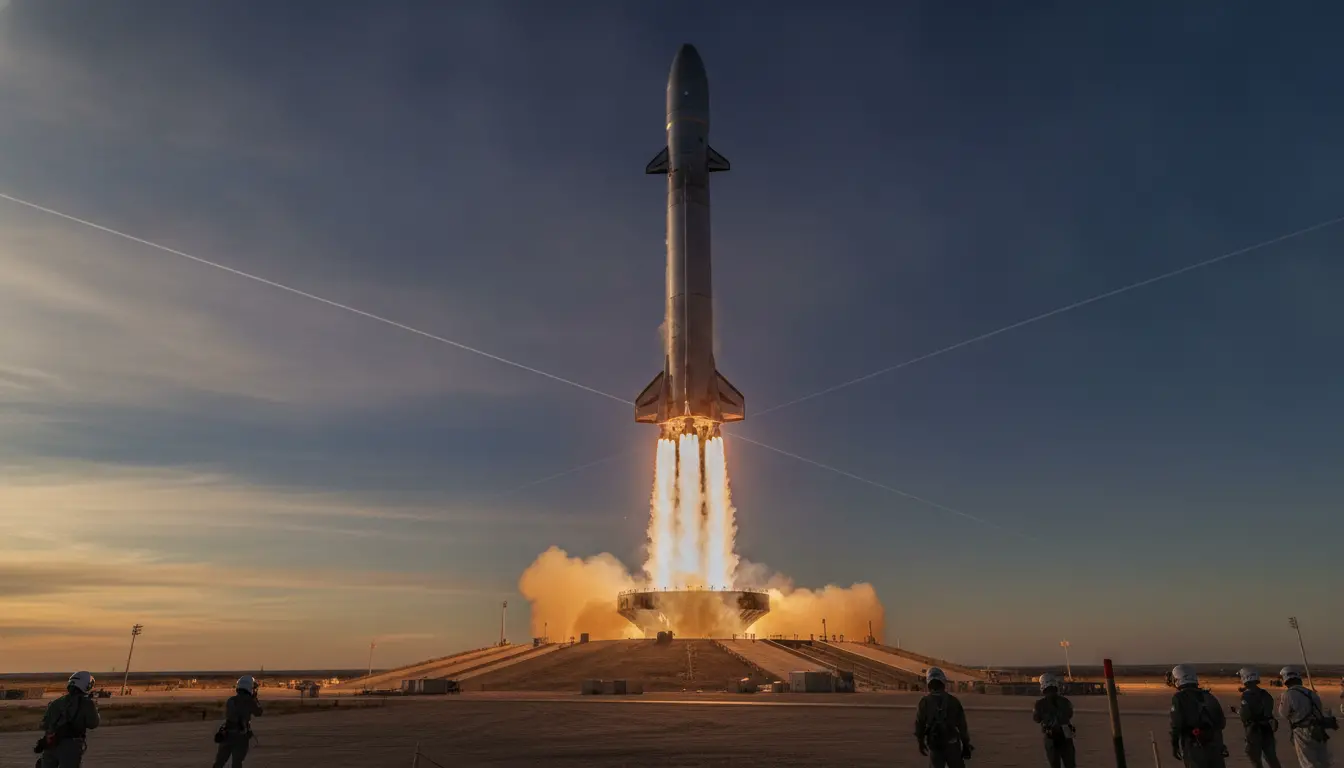
SpaceX's Starship Orbital Flight 14 Targets Key Milestones: Orbital Velocity and Full Stack Reusability
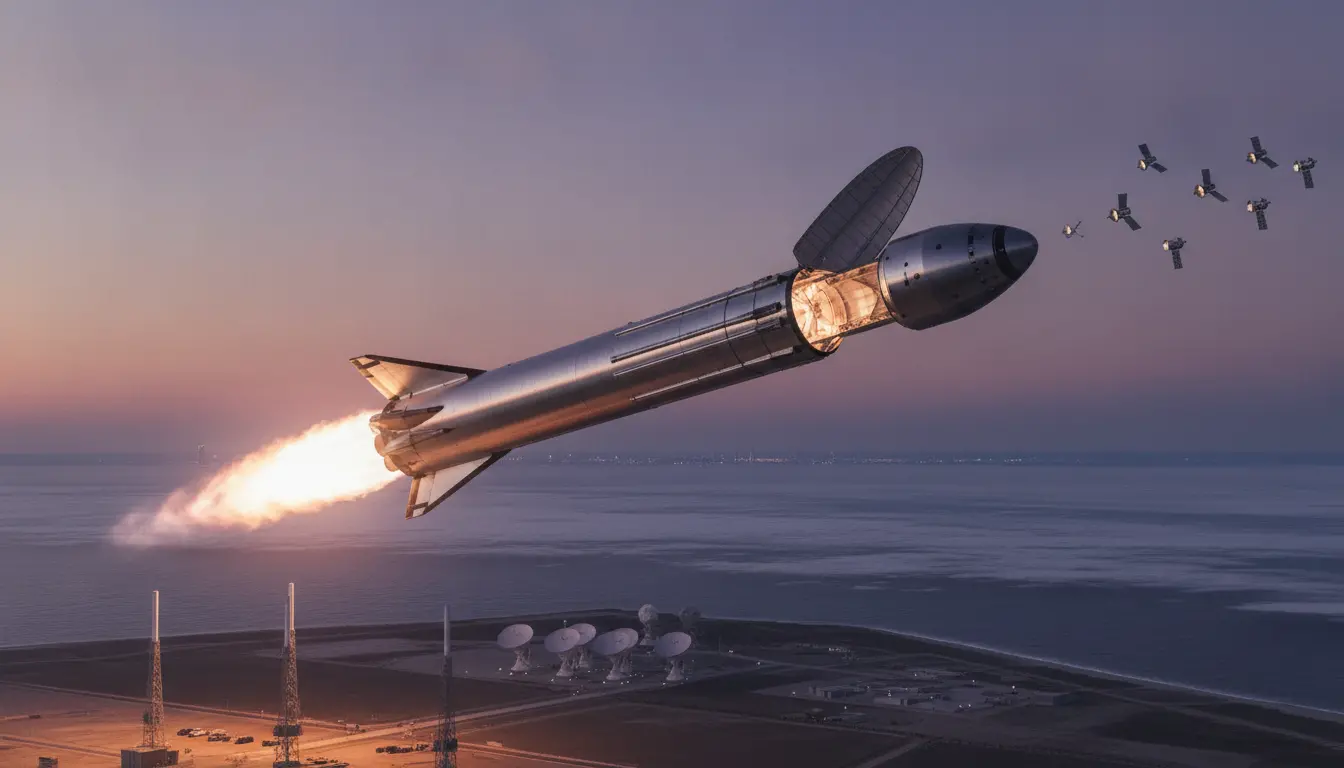
SpaceX Starship Aims for Milestone 14th Flight Test, Targeting Satellite Deployment and Controlled Landing

SpaceX Accelerates Starship Development Toward Fully Successful Orbital Flight with Intact Landing by 2026
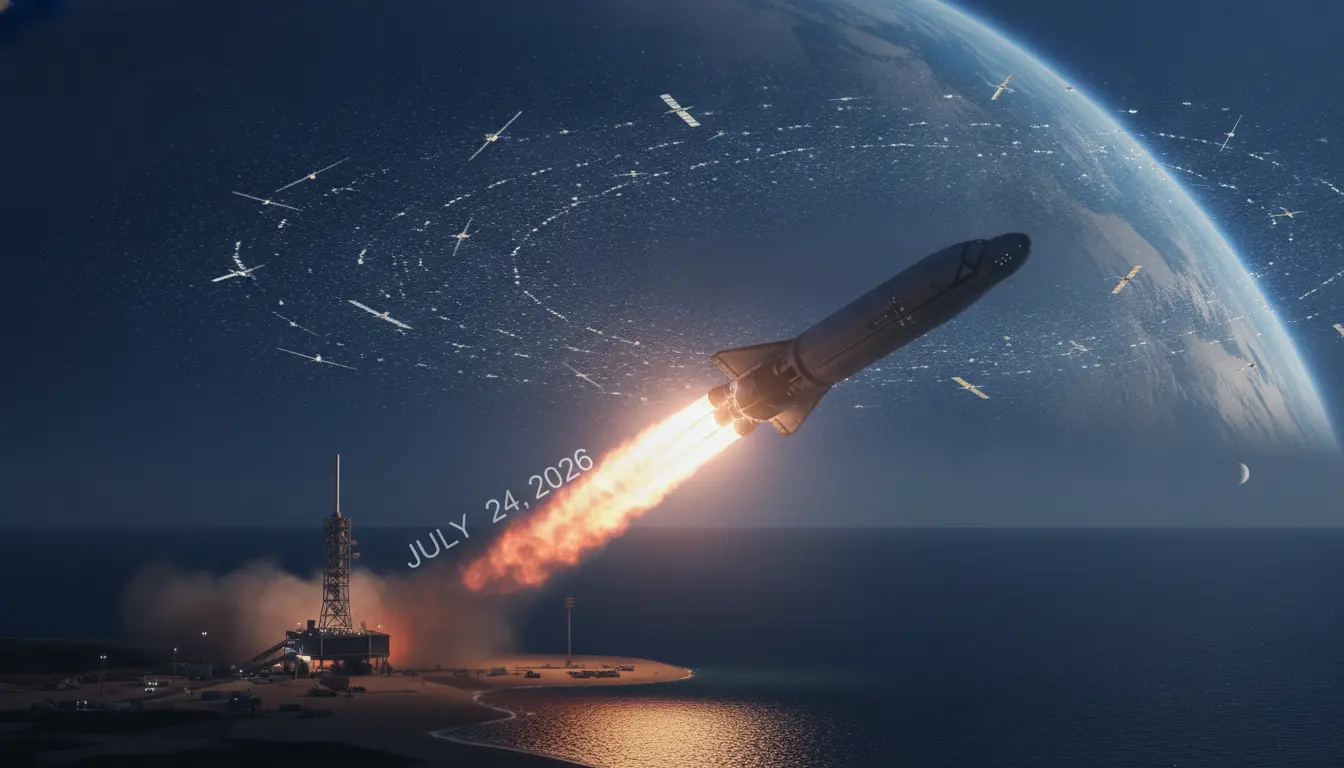
SpaceX Schedules Crucial Starship Flight to Deploy First Starlink V3 Satellites
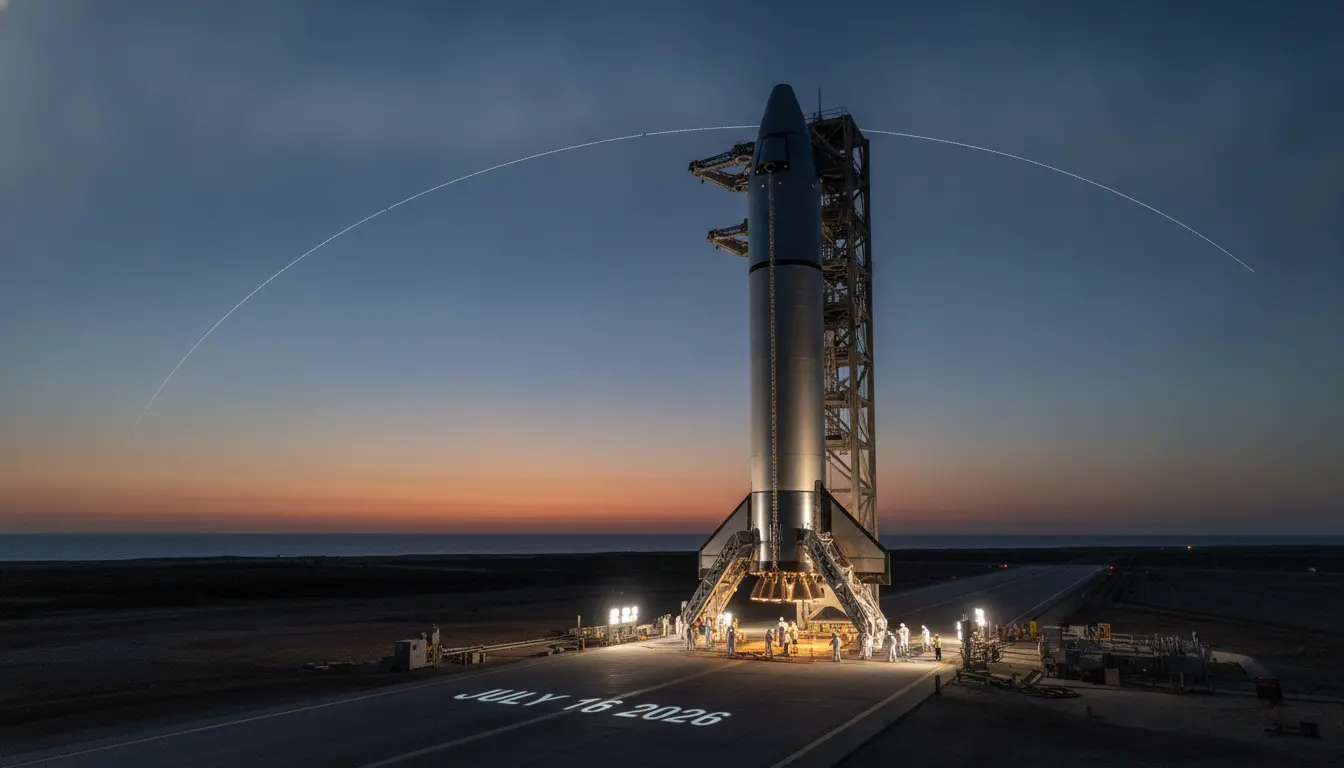
SpaceX Readies Starship for Thirteenth Orbital Test Flight, Eyes Critical Re-entry and Satellite Deployment Milestones
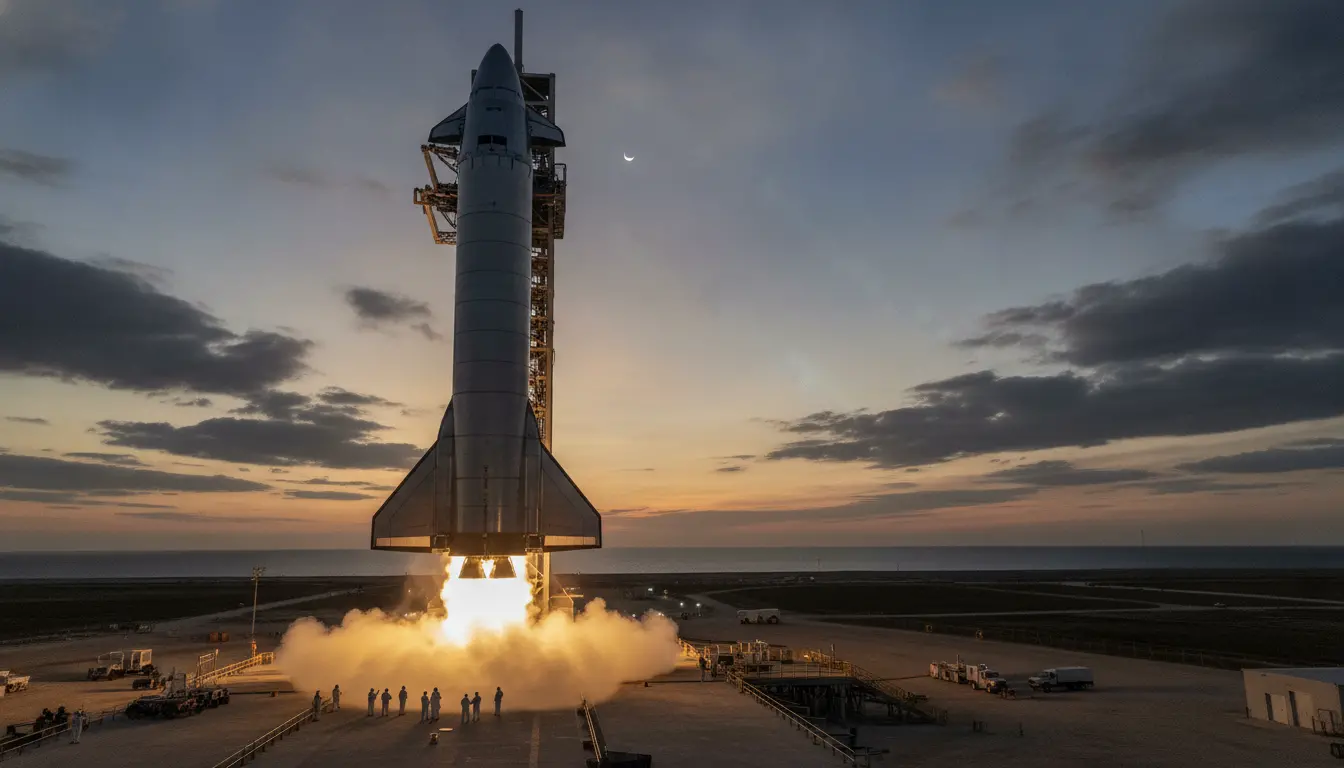
SpaceX Prepares Starship for Critical Orbital Flight Test to Advance Reusability Goals
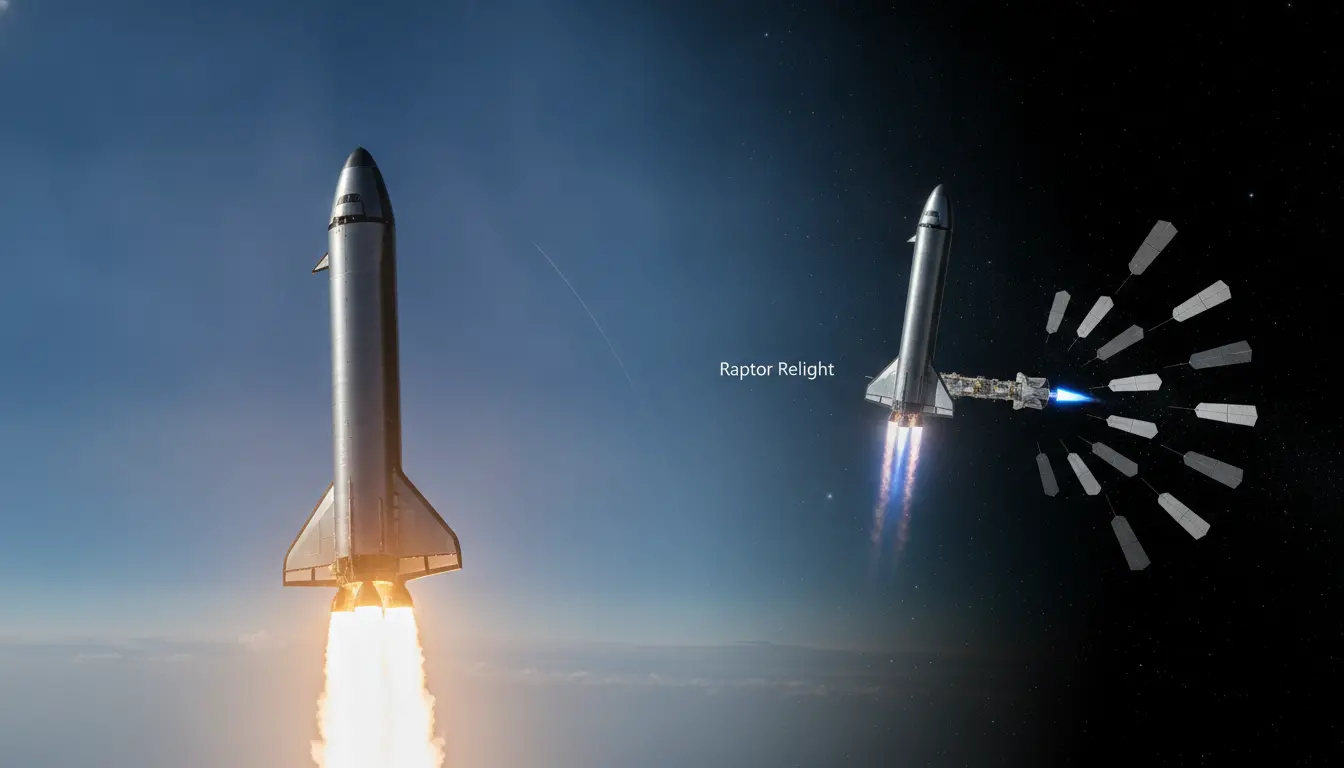
SpaceX Gears Up for Pivotal Starship Flight Targeting In-Orbit Raptor Relight and Starlink V3 Deployment
SpaceX Prepares for Starship V3 Flight 14 Amid Ongoing FAA Regulatory Review