

- News
- Science
- SpaceX Starship Aims for Milestone 14th Flight Test, Targeting Satellite Deployment and Controlled Landing

SpaceX Starship Aims for Milestone 14th Flight Test, Targeting Satellite Deployment and Controlled Landing
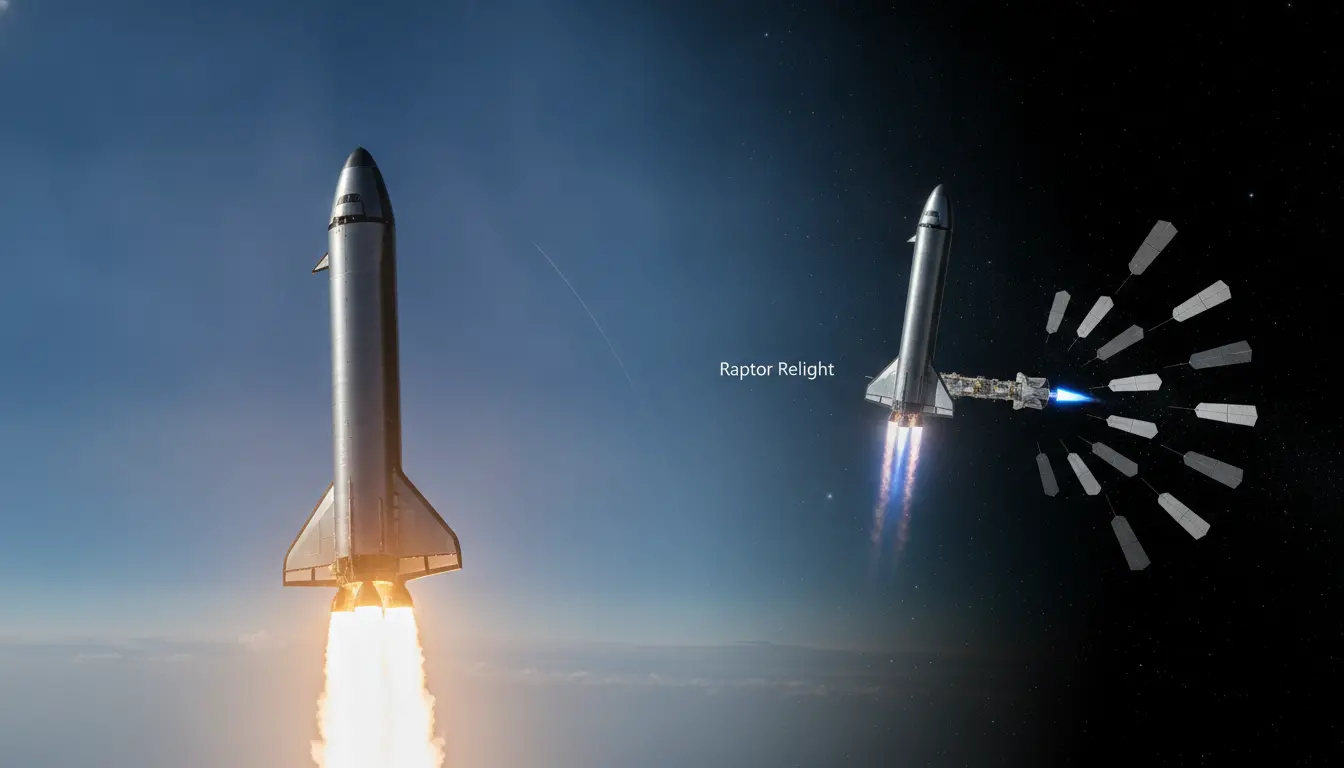
SpaceX is gearing up for the 14th integrated flight test of its colossal Starship rocket, a pivotal mission poised to push the boundaries of reusable space transport. This upcoming flight is not merely another launch; it represents a critical step in the iterative development of a vehicle central to humanity's ambitions of returning to the Moon and eventually colonizing Mars. The test profile for Flight 14 is particularly ambitious, reportedly including the deployment of a test satellite payload and a complex controlled landing sequence, both of which are crucial elements for the full operational capability of Starship.
Since its inception, Starship has been envisioned as a fully reusable, two-stage-to-orbit super heavy-lift launch vehicle designed to transport both crew and cargo to Earth orbit, the Moon, Mars, and beyond. Its development at SpaceX's Starbase facility in Boca Chica, Texas, has been characterized by rapid prototyping and a “fail fast, learn faster” philosophy, leading to a series of high-profile test flights, some of which ended in spectacular explosions, while others demonstrated increasing levels of control and performance. Each flight, regardless of its ultimate outcome, has provided invaluable data, informing design changes and operational procedures for subsequent iterations. This iterative approach underscores the formidable engineering challenges involved in building a vehicle of Starship's scale and capability.
The inclusion of satellite deployment in this test flight marks a significant evolution in Starship's testing regime. While specific details about the satellite itself remain under wraps, it is widely expected to be a test mass or a demonstrator payload, designed to validate the vehicle's ability to safely and accurately deploy objects into orbit. This capability is paramount for Starship's future role, not only in deploying SpaceX's own Starlink internet satellites but also in servicing commercial and governmental customers. Successfully demonstrating this function would signify a major stride towards Starship fulfilling its promise as a versatile launch platform, capable of carrying payloads far exceeding the capacity of most conventional rockets.
Equally critical is the planned controlled landing attempt. Full reusability, particularly of the Super Heavy booster and the Starship upper stage, is the cornerstone of SpaceX's business model and its vision for affordable, frequent space travel. Previous high-altitude test flights have demonstrated impressive belly-flop maneuvers and propulsive landings, but integrating these complex sequences into an orbital flight profile, especially after a simulated payload deployment, presents a different set of challenges. A successful soft landing of both stages would not only validate the intricate propulsion and control systems but also dramatically lower the cost of accessing space, fundamentally altering the economics of space exploration and utilization.
The stakes for Flight 14 are exceptionally high. Starship is not just a commercial venture for SpaceX; it has been selected by NASA as the Human Landing System (HLS) for the Artemis program, tasked with returning astronauts to the lunar surface. Progress on Starship is therefore directly linked to NASA's timelines for lunar missions. Beyond governmental contracts, Starship's ability to transport hundreds of Starlink satellites in a single launch could revolutionize global internet connectivity, while its long-term potential for interplanetary travel remains the ultimate prize.
Engineers at Starbase have been diligently working on system refinements, including enhanced heat shielding, optimized engine performance, and improved landing leg mechanisms, all informed by data from prior tests. The regulatory process, overseen by the Federal Aviation Administration (FAA), also plays a crucial role in determining the launch schedule, with environmental reviews and safety assessments ensuring public and operational safety. As the world watches, the upcoming flight test will provide crucial insights into whether Starship is on track to achieve its ambitious goals, marking a significant chapter in the ongoing quest to make humanity a multi-planetary species.
Ultimately, the success or failure of individual test objectives on Flight 14 will contribute to a larger, iterative process aimed at perfecting a vehicle unlike any other. Each flight test is a data-gathering exercise, propelling the program forward, refining designs, and overcoming the myriad challenges inherent in pioneering advanced spaceflight capabilities. The global space community will be keenly observing this next phase of Starship’s development, understanding that its performance could reshape the future of space exploration and commerce for decades to come.
Stay Informed. Act Smarter.
Get weekly highlights, major headlines, and expert insights — then put your knowledge to work in our live prediction markets.
Related News
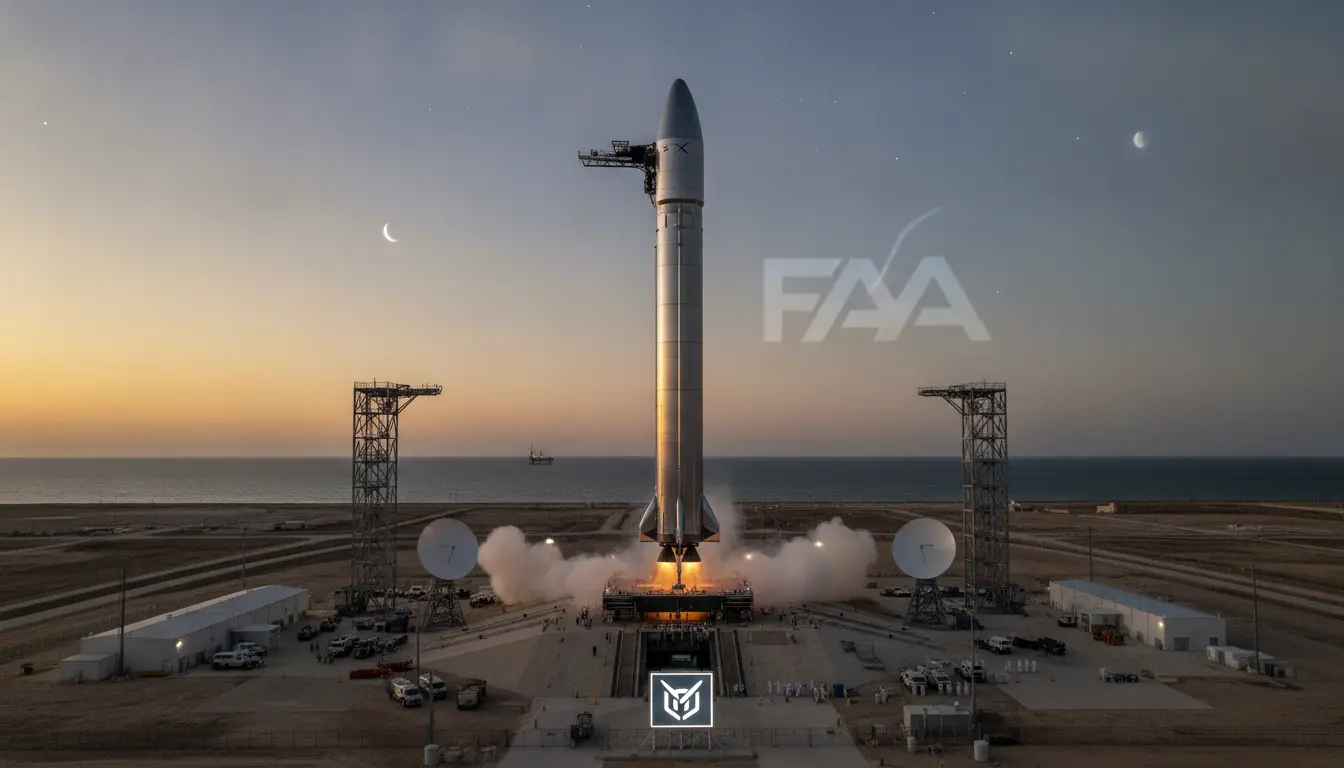
SpaceX Prepares for Starship V3 Flight 14 Amid Ongoing FAA Regulatory Review
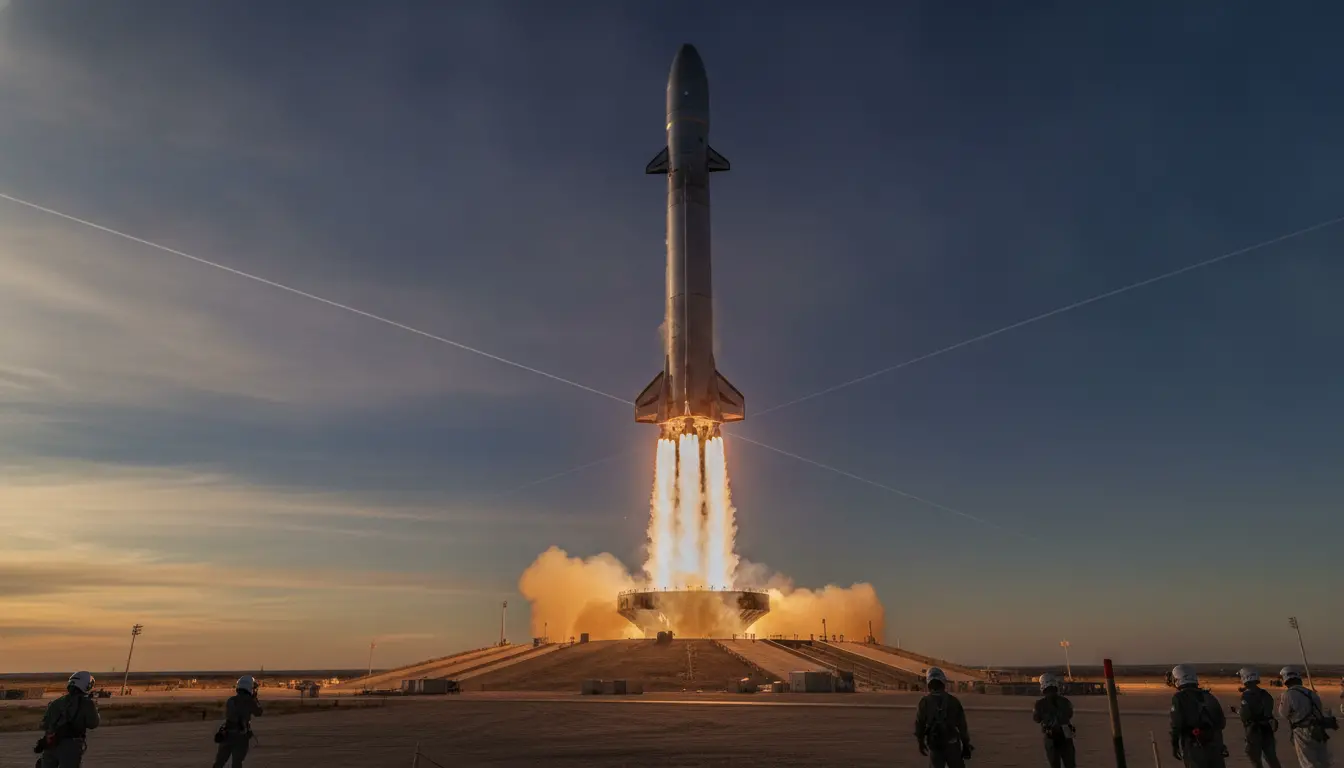
SpaceX's Starship Orbital Flight 14 Targets Key Milestones: Orbital Velocity and Full Stack Reusability
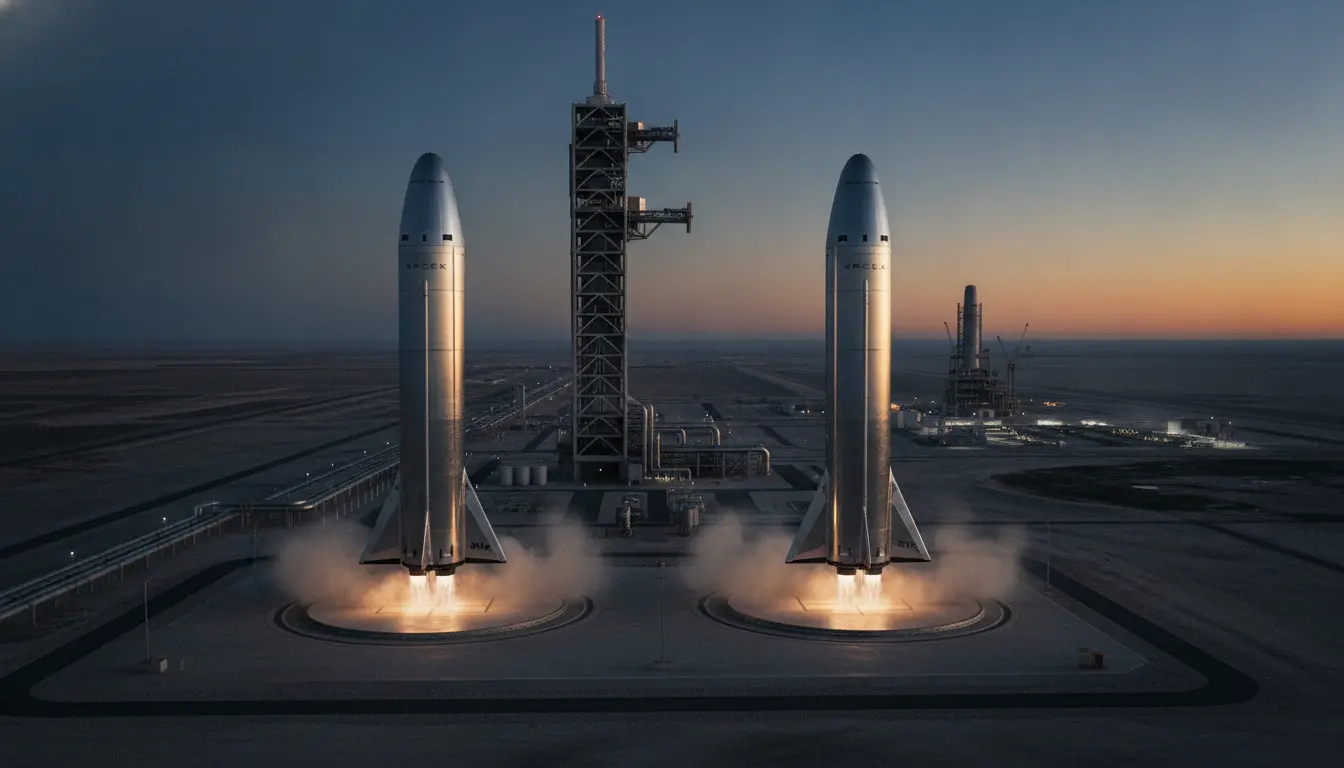
SpaceX Eyes Comprehensive Starship Orbital Test Flight and Dual Landing in Late 2026
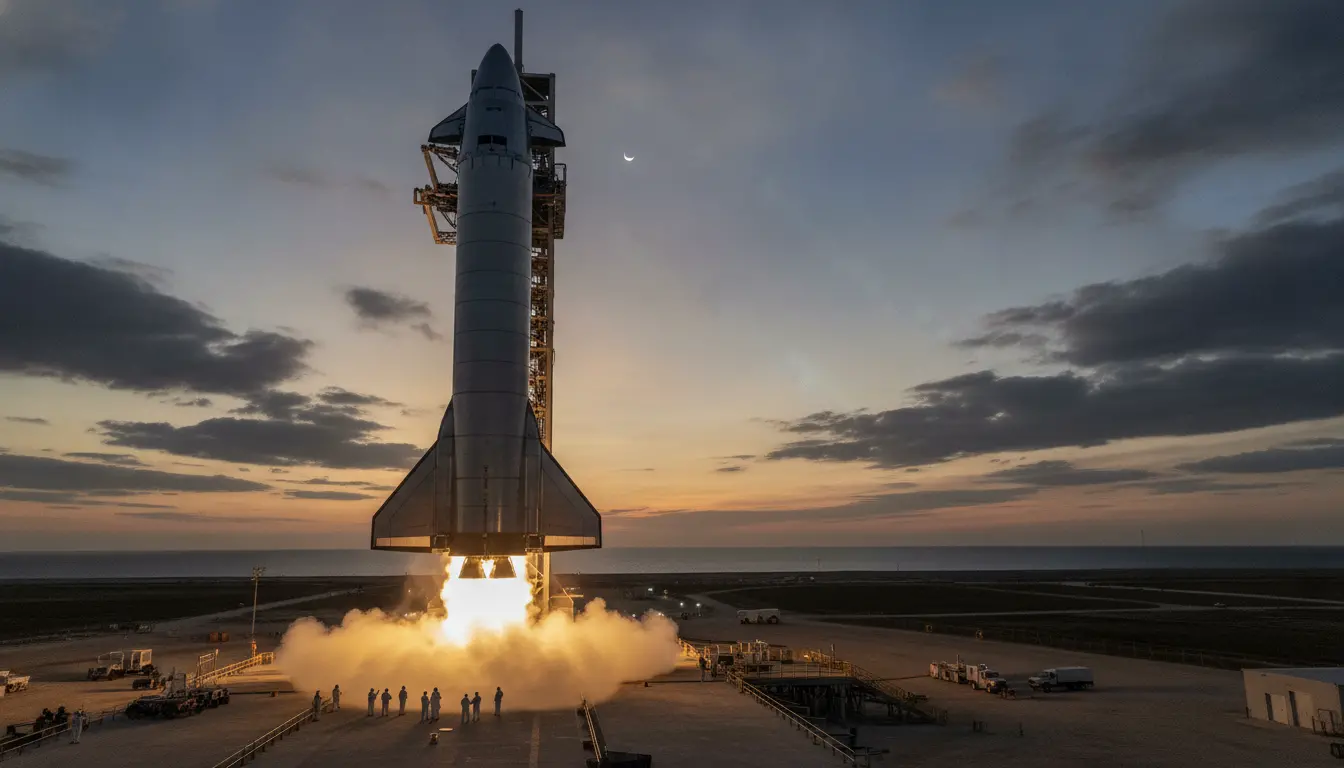
SpaceX Prepares Starship for Critical Orbital Flight Test to Advance Reusability Goals
SpaceX Starship Flight Test 13 Aims for Simultaneous Booster and Ship Controlled Landings
SpaceX Prepares for Crucial Starship Flight 13, Targeting Starlink V3 Deployment and Booster Recovery

SpaceX Targets August 2026 for Critical Starship Orbital Test, Eyeing First Starlink Satellite Deployment
SpaceX Readies Starship for Thirteenth Orbital Test Flight, Eyes Critical Re-entry and Satellite Deployment Milestones
SpaceX Prepares Starship for First Satellite Deployment Attempt During 13th Flight Test in Mid-2026
SpaceX Gears Up for Pivotal Starship Flight Targeting In-Orbit Raptor Relight and Starlink V3 Deployment