

- News
- Science
- SpaceX Readies Starship for Thirteenth Orbital Test Flight, Eyes Critical Re-entry and Satellite Deployment Milestones
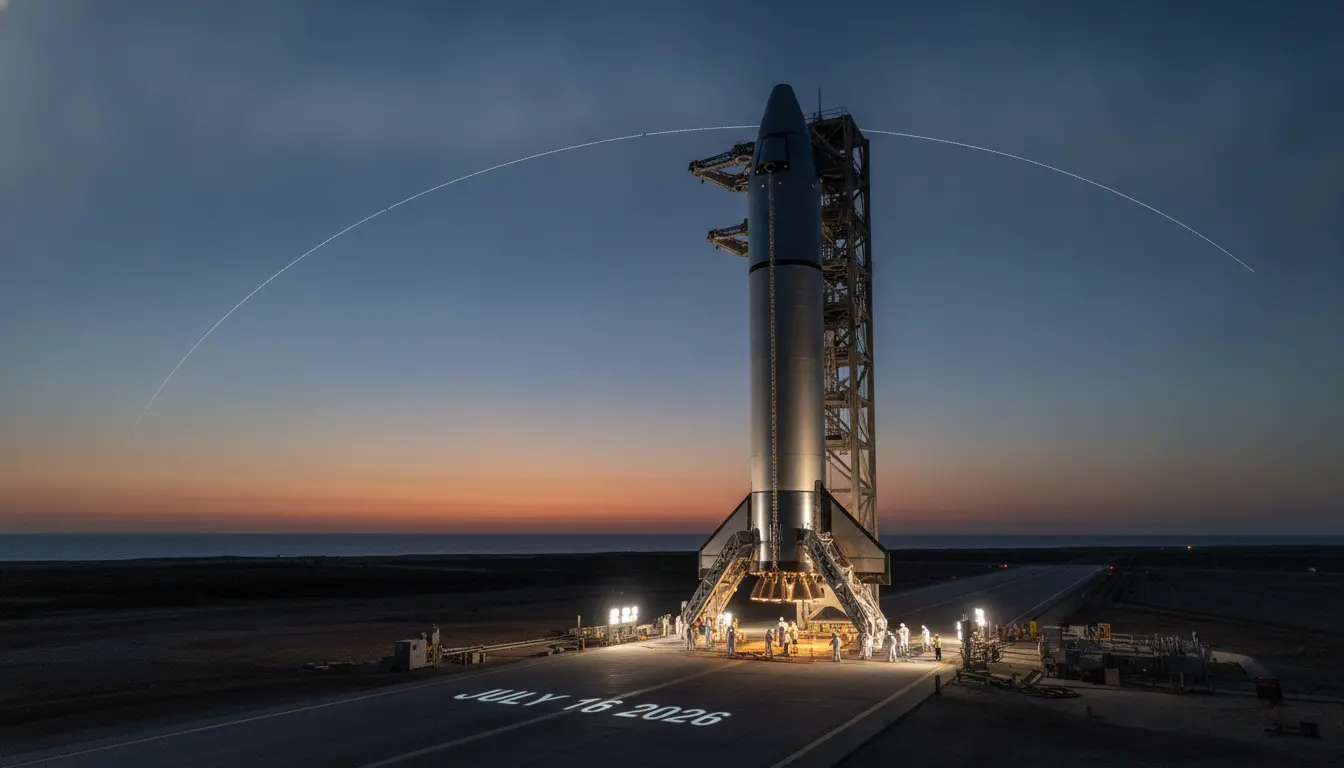
SpaceX Readies Starship for Thirteenth Orbital Test Flight, Eyes Critical Re-entry and Satellite Deployment Milestones
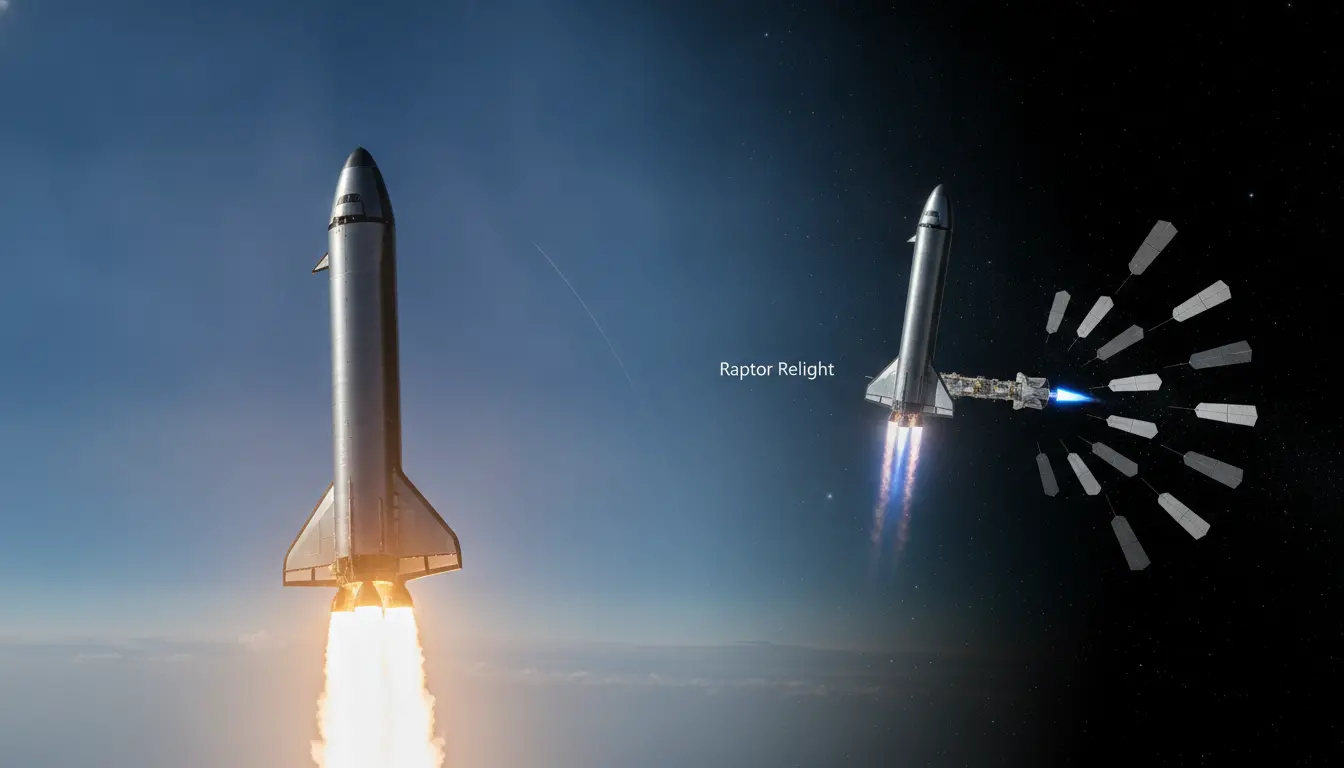
SpaceX is making final preparations for the thirteenth integrated flight test of its colossal Starship system, a mission slated for July 16, 2026. This pivotal test aims to push the boundaries of orbital flight, focusing on the system's ability to achieve stable orbit and execute controlled re-entry and splashdowns for both the Super Heavy booster and the Starship upper stage. The flight represents a crucial step in the iterative development of a fully reusable super heavy-lift launch vehicle, essential for SpaceX's ambitious plans for lunar missions, Mars colonization, and the deployment of next-generation Starlink satellites.
Since its inception, the Starship program has been characterized by an aggressive, iterative development and testing approach, with each flight building upon lessons learned from its predecessors. Earlier integrated tests have demonstrated significant progress, including successful staging events, initial orbital insertion attempts, and increasingly complex maneuvers. However, the ultimate goal of full mission success—delivering a payload to orbit and safely recovering both stages for rapid reuse—remains the ultimate benchmark. This thirteenth flight is designed to validate critical subsystems under operational conditions, ranging from engine performance during ascent to the thermal protection system during atmospheric re-entry, and the complex synchronized landing burns required for controlled splashdowns in designated areas.
The Starship system, comprising the Super Heavy first stage and the Starship upper stage, stands as the most powerful rocket ever built, designed for unprecedented payload capacity and, crucially, full reusability. The ability to rapidly and reliably re-fly both stages is central to SpaceX's vision for dramatically reducing the cost of space access. This specific test flight also includes an objective to deliver satellites to orbit, a critical demonstration of its operational capabilities beyond mere technology proving. Successful satellite deployment would mark a significant turning point, illustrating Starship's potential to become a workhorse for deploying massive constellations like Starlink V2, which requires substantially larger and heavier satellites than previous versions, as well as for various government and commercial payloads.
The complexity of achieving controlled re-entry and splashdown for both stages cannot be overstated. The Super Heavy booster must perform a ‘boostback’ burn, flip, and land vertically, similar to the Falcon 9, but on a much grander scale. The Starship upper stage, after achieving orbit and potentially deploying its payload, must endure the intense heat of atmospheric re-entry, stabilize its descent, and execute a precise ‘belly flop’ maneuver before igniting its engines for a controlled vertical landing (or, in this test's case, a controlled splashdown). Each of these phases presents formidable engineering challenges, and consistent success is vital for progressing toward regular, operational flights.
Beyond the immediate technical objectives, the stakes for this flight are immense. Consistent success with Starship is paramount for NASA’s Artemis program, where a variant of Starship has been selected as the Human Landing System (HLS) for returning astronauts to the Moon. Delays or setbacks in Starship’s development directly impact the timeline for humanity’s sustained presence on the lunar surface. Furthermore, Starship is the cornerstone of SpaceX's long-term goal of making humanity a multi-planetary species, with Mars colonization as the ultimate horizon. The data gathered from this thirteenth flight will be instrumental in refining design, operations, and safety protocols, pushing the entire program closer to routine spaceflight operations. The aerospace community watches with anticipation as SpaceX continues its bold trajectory, aiming to redefine the future of space travel and exploration.
The regulatory landscape surrounding Starship’s testing, primarily managed by the Federal Aviation Administration (FAA), remains a critical factor. Each flight test requires extensive environmental reviews and safety assessments, processes that underscore the immense power and potential risks associated with launching such a large vehicle. Achieving the targeted objectives on July 16, 2026, would not only represent a major engineering triumph for SpaceX but also instill greater confidence among regulators and international partners, paving the way for a more rapid expansion of Starship’s flight cadence and its eventual operational deployment across a spectrum of space missions.
Stay Informed. Act Smarter.
Get weekly highlights, major headlines, and expert insights — then put your knowledge to work in our live prediction markets.
Related News
SpaceX Prepares Starship for First Satellite Deployment Attempt During 13th Flight Test in Mid-2026
SpaceX Prepares Starship for Critical Orbital Flight Test to Advance Reusability Goals

SpaceX Prepares for Crucial Starship Flight 13, Targeting Starlink V3 Deployment and Booster Recovery
SpaceX Starship Aims for Milestone 14th Flight Test, Targeting Satellite Deployment and Controlled Landing

SpaceX Starship Flight Test 13 Aims for Simultaneous Booster and Ship Controlled Landings

SpaceX Schedules Crucial Starship Flight to Deploy First Starlink V3 Satellites
SpaceX Gears Up for Pivotal Starship Flight Targeting In-Orbit Raptor Relight and Starlink V3 Deployment
SpaceX Eyes Comprehensive Starship Orbital Test Flight and Dual Landing in Late 2026

SpaceX Targets August 2026 for Critical Starship Orbital Test, Eyeing First Starlink Satellite Deployment
SpaceX's Starship Orbital Flight 14 Targets Key Milestones: Orbital Velocity and Full Stack Reusability