

- News
- Science
- SpaceX Accelerates Development of Starship Orbital Propellant Transfer for Lunar and Martian Ambitions
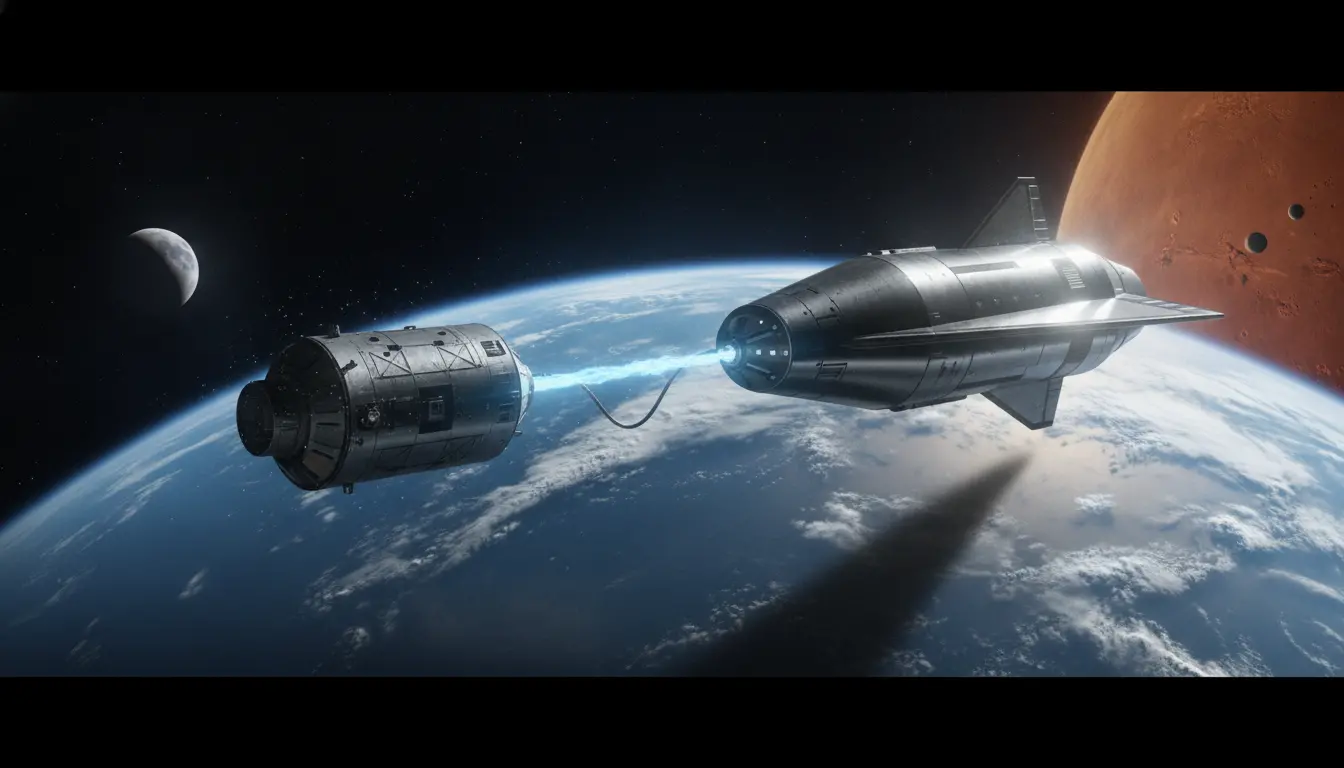
SpaceX Accelerates Development of Starship Orbital Propellant Transfer for Lunar and Martian Ambitions
SpaceX is making significant strides in the development of its Starship program, with a crucial focus on mastering orbital propellant transfer by the end of 2026. This complex engineering feat is not merely an incremental upgrade but a foundational capability deemed essential for realizing the company's ambitious goals of sustained human presence on the Moon and, ultimately, the colonization of Mars. The ability to refuel Starship in orbit dramatically expands its payload capacity and range, transforming it from a powerful launch vehicle into a true deep-space transport system.
At its core, orbital refueling addresses a fundamental challenge of spaceflight: the tyranny of the rocket equation. To launch a massive spacecraft like Starship directly from Earth with enough fuel for a round trip to the Moon or Mars, along with substantial cargo, would require an impossibly large and inefficient vehicle. By breaking the journey into segments – launching Starship empty or partially fueled, then topping it off with propellant from multiple tanker Starships launched into the same orbit – SpaceX aims to circumvent these constraints. This ‘gas station in space’ concept is a critical enabler for the Artemis program, particularly for the Human Landing System (HLS) contract awarded to SpaceX, which envisions Starship carrying astronauts from lunar orbit down to the Moon's surface.
The technical hurdles involved in orbital propellant transfer are immense. It requires precisely docking two massive Starship vehicles in orbit and then safely transferring vast quantities of super-chilled cryogenic propellants – liquid oxygen and liquid methane – through plumbing connecting the two spacecraft. Maintaining these propellants at extremely low temperatures (LOX at -183°C and methane at -162°C) in the vacuum of space, preventing boil-off, and managing fluid dynamics in zero-gravity are significant challenges. NASA has conducted experiments on cryogenic fluid management, but the scale and operational tempo envisioned by SpaceX are unprecedented. The process must be highly reliable and automated to ensure crew safety and mission success for future deep-space voyages.
SpaceX has been progressively testing elements of Starship, conducting numerous high-altitude flight tests and, more recently, integrated flight tests of the full Starship and Super Heavy booster stack. While these tests have focused on launch, ascent, atmospheric re-entry, and landing maneuvers, the company is concurrently developing and iterating on the hardware and software necessary for orbital rendezvous and propellant transfer. These efforts include developing sophisticated navigation and docking systems, as well as robust cryogenic transfer lines and seals capable of handling the extreme temperatures and pressures. The 2026 timeline represents an aggressive but potentially achievable target given SpaceX's rapid development pace.
The successful demonstration of orbital propellant transfer would mark a pivotal moment in human space exploration. It would unlock Starship's full potential, allowing it to deliver not only astronauts but also massive amounts of infrastructure, habitats, and supplies to lunar bases and Martian outposts. This capability is not just about transportation; it's about enabling a sustained, economically viable presence beyond Earth. The ability to move large payloads efficiently could accelerate scientific research, resource utilization, and the establishment of self-sufficient off-world communities, dramatically reshaping humanity's future in the cosmos.
Should SpaceX meet its ambitious goal, the implications extend far beyond governmental space agencies. A proven orbital refueling capability would significantly reduce the cost and complexity of launching commercial satellites, supporting future space tourism endeavors, and facilitating advanced in-orbit servicing and manufacturing. It would solidify Starship's role as a versatile platform for a new era of space development, transitioning from episodic exploration to regular, routine access to the inner solar system, fundamentally altering humanity's relationship with space.
The coming years will be critical for SpaceX as it navigates the remaining technical challenges and regulatory hurdles. The eyes of the global space community are firmly fixed on Boca Chica, Texas, awaiting the demonstrations that could herald a new chapter in our journey beyond Earth. The successful execution of orbital propellant transfer by Starship is not merely a technical achievement; it is the lynchpin for truly transformative deep-space exploration.
Stay Informed. Act Smarter.
Get weekly highlights, major headlines, and expert insights — then put your knowledge to work in our live prediction markets.
Related News
SpaceX Accelerates Starship Development Toward Fully Successful Orbital Flight with Intact Landing by 2026
SpaceX Targets August 2026 for Critical Starship Orbital Test, Eyeing First Starlink Satellite Deployment
SpaceX Prepares Starship for First Satellite Deployment Attempt During 13th Flight Test in Mid-2026
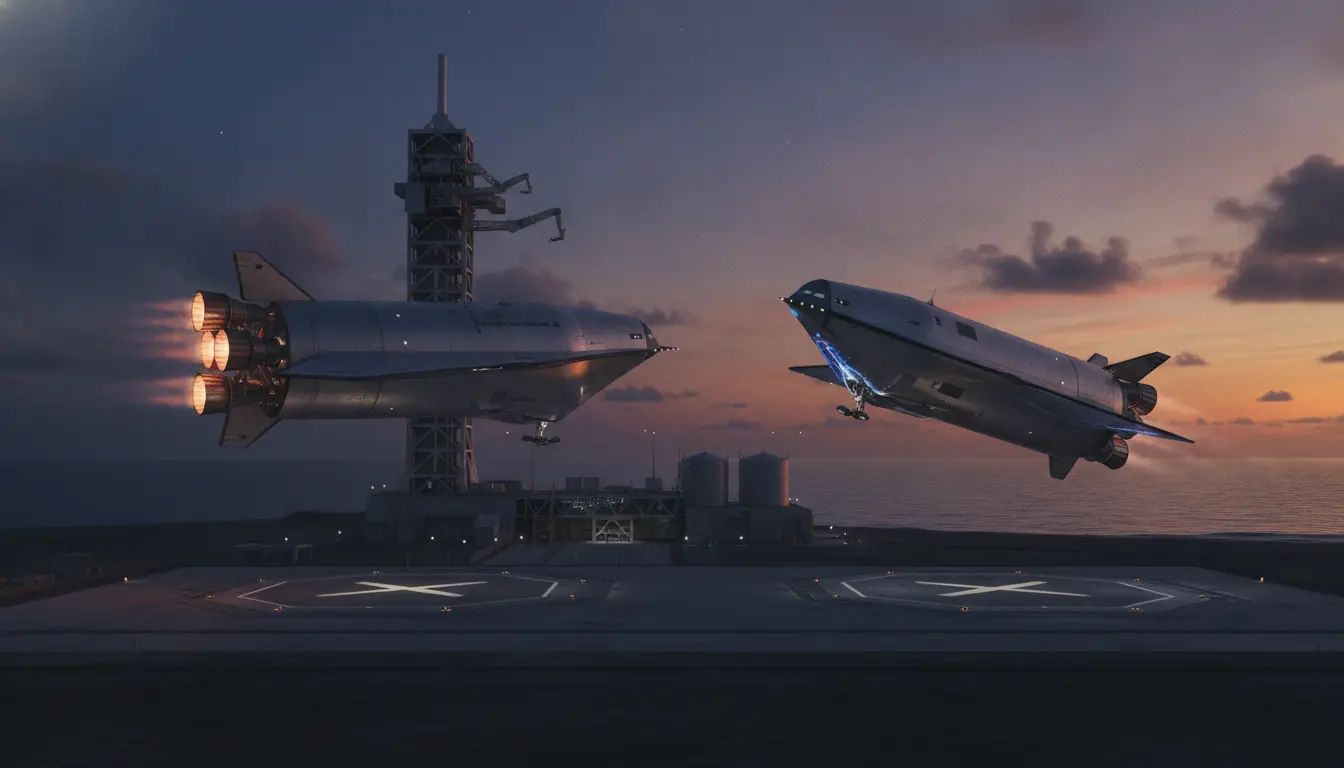
SpaceX Starship Flight Test 13 Aims for Simultaneous Booster and Ship Controlled Landings
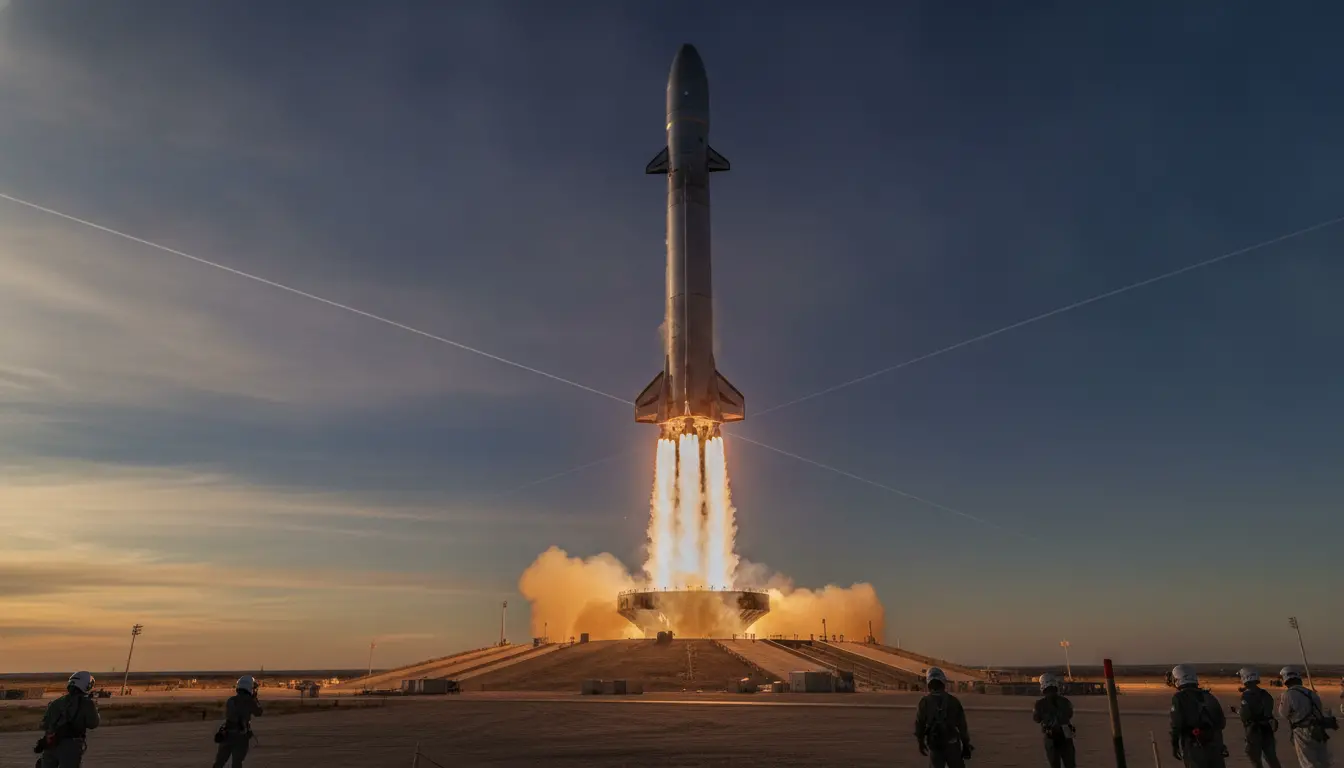
SpaceX's Starship Orbital Flight 14 Targets Key Milestones: Orbital Velocity and Full Stack Reusability
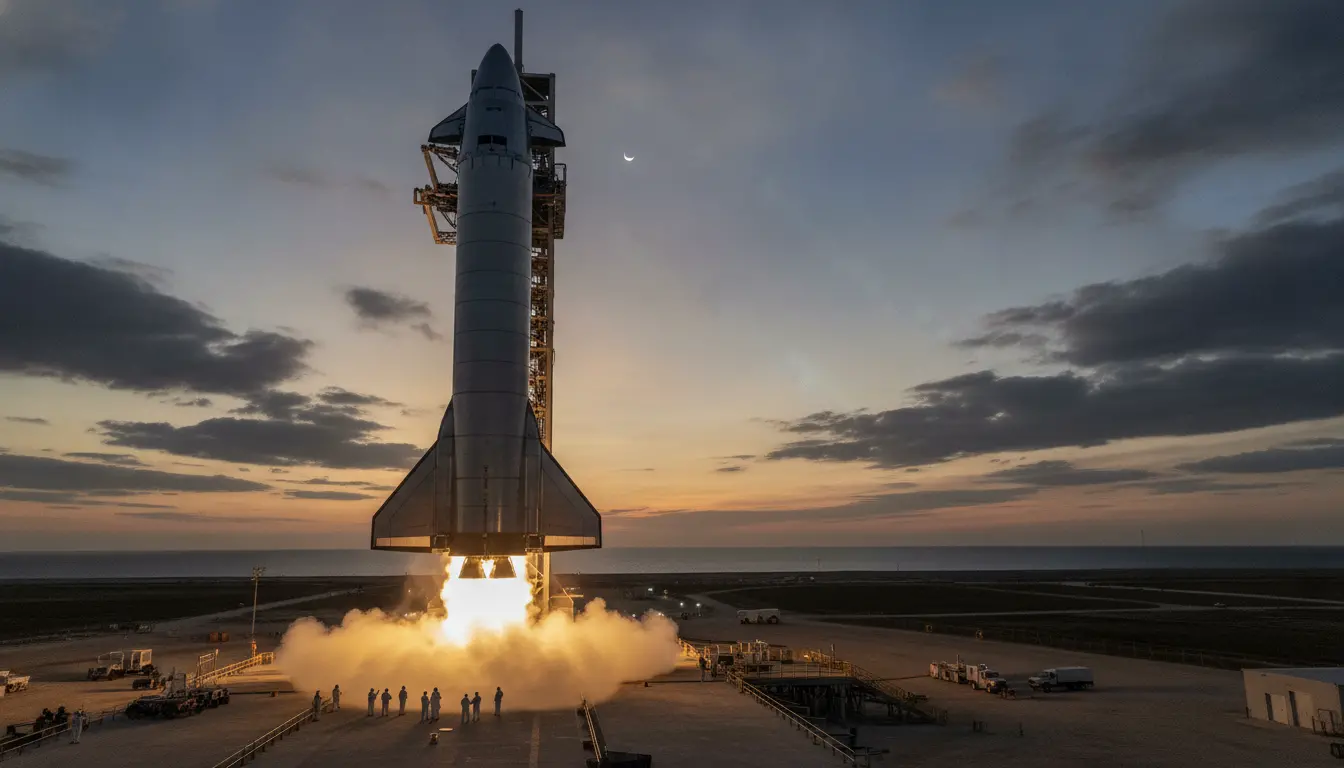
SpaceX Prepares Starship for Critical Orbital Flight Test to Advance Reusability Goals
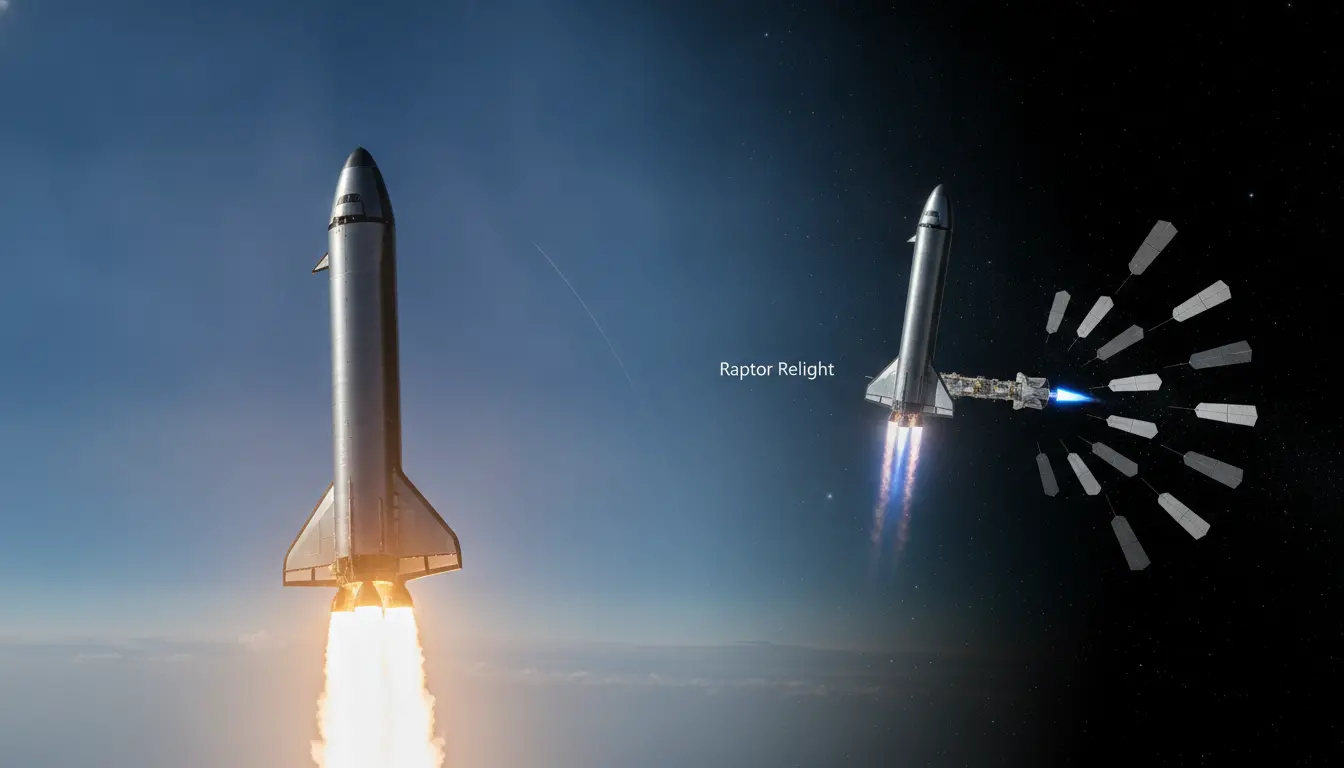
SpaceX Gears Up for Pivotal Starship Flight Targeting In-Orbit Raptor Relight and Starlink V3 Deployment
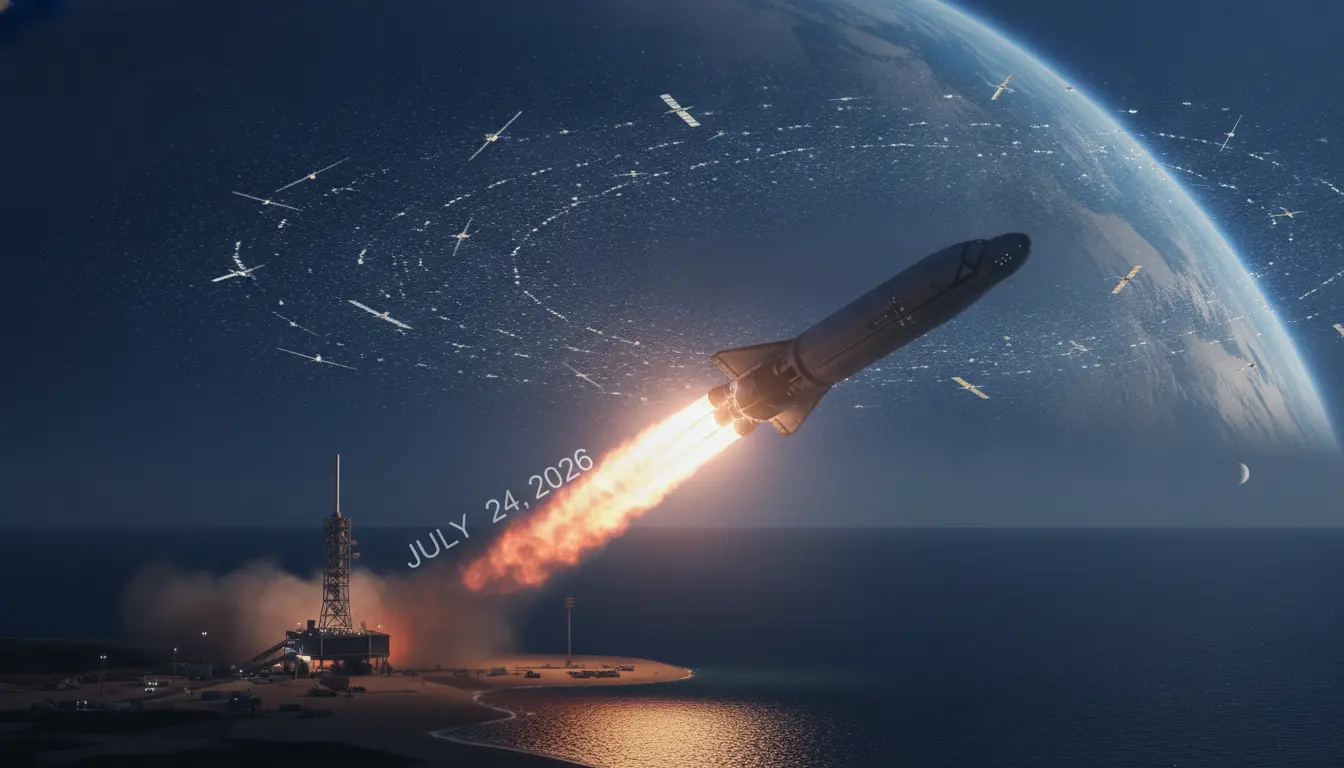
SpaceX Schedules Crucial Starship Flight to Deploy First Starlink V3 Satellites
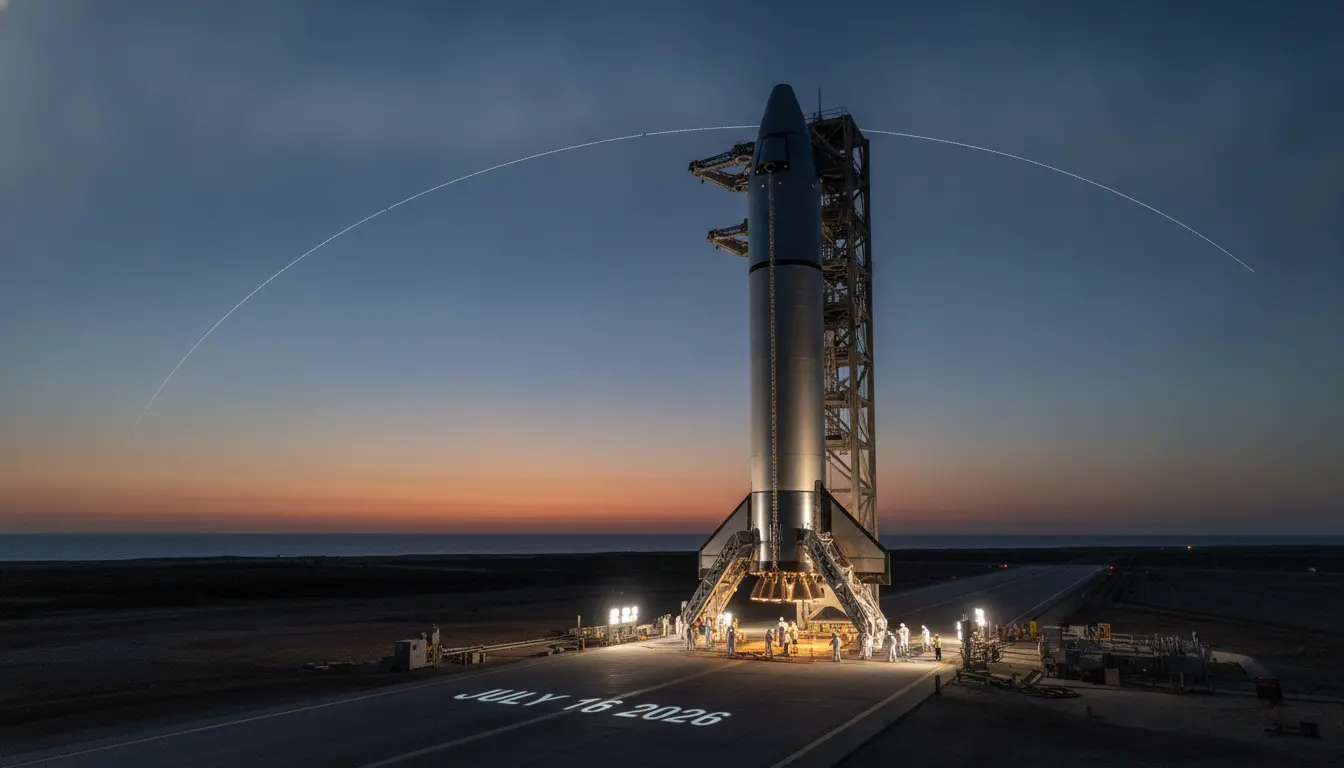
SpaceX Readies Starship for Thirteenth Orbital Test Flight, Eyes Critical Re-entry and Satellite Deployment Milestones
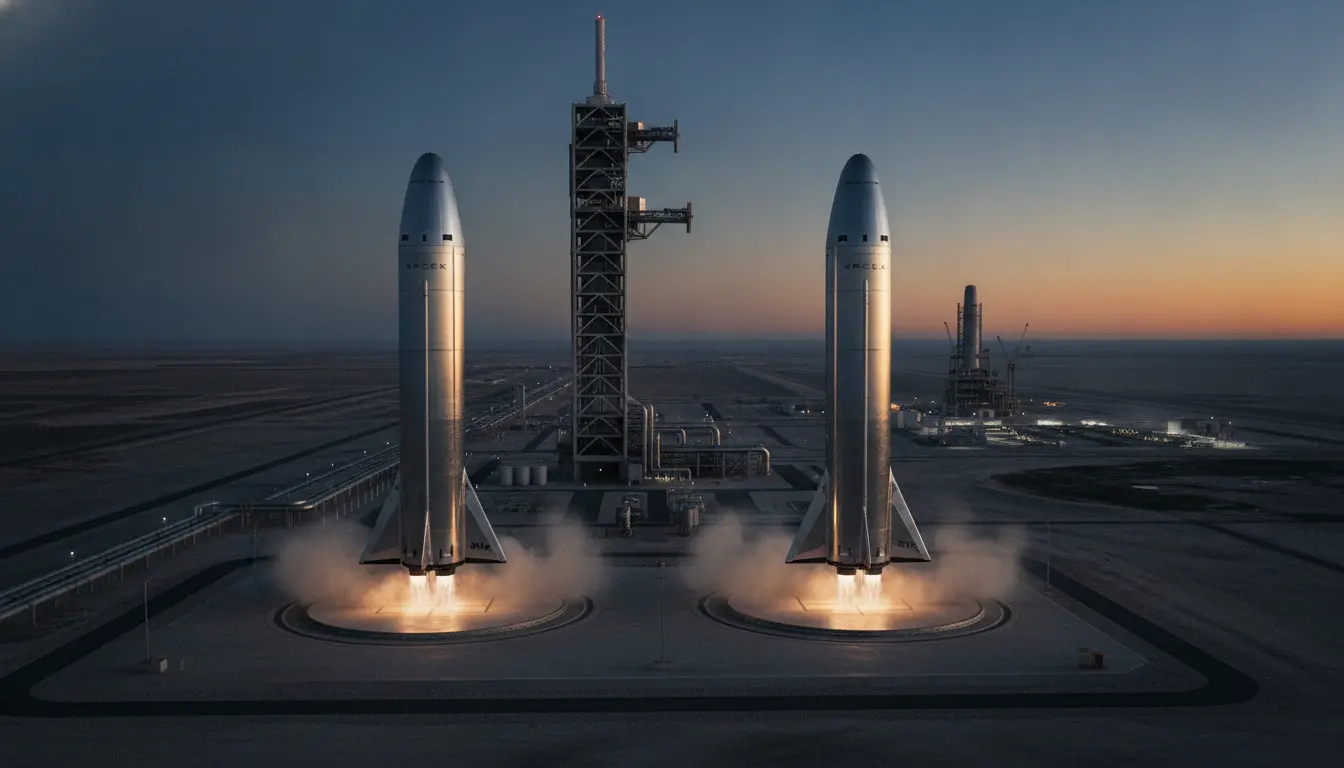
SpaceX Eyes Comprehensive Starship Orbital Test Flight and Dual Landing in Late 2026