

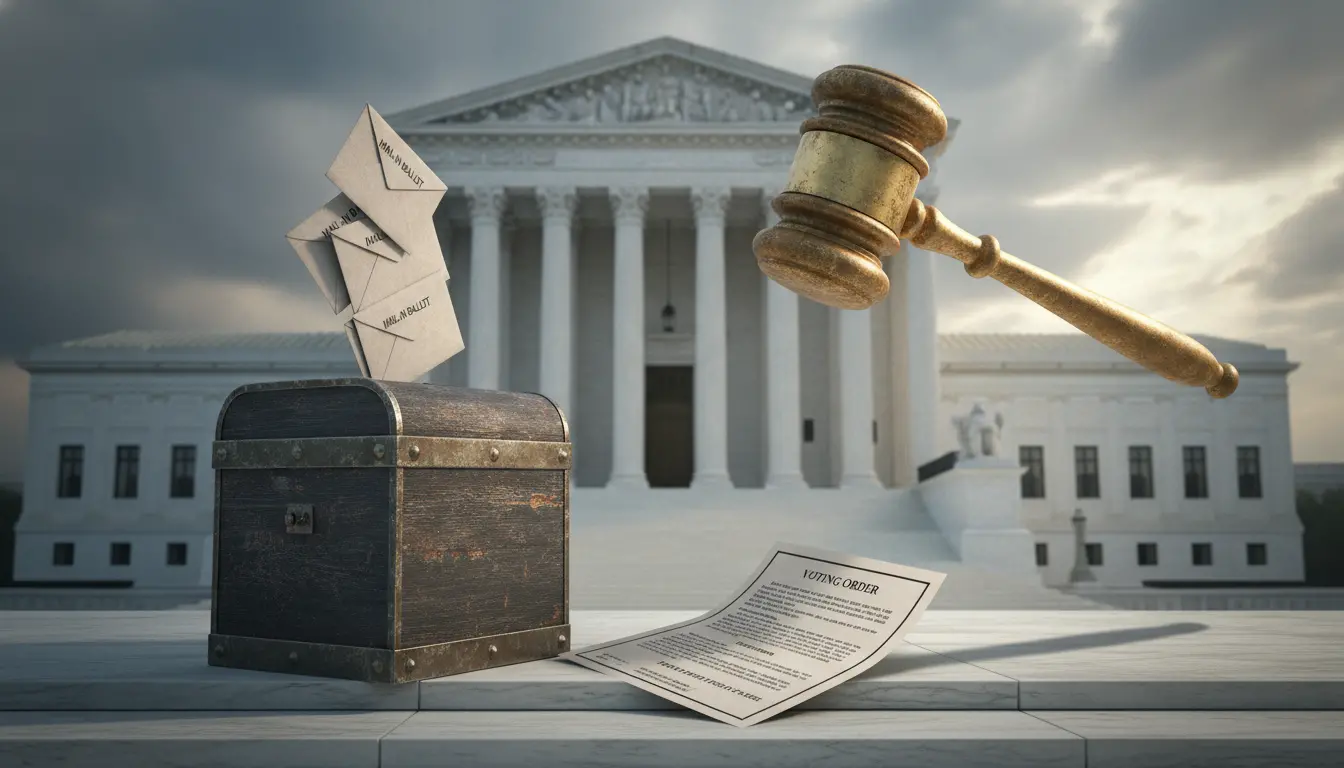
Supreme Court Considers Trump-Era Mail-In Voting Order Amidst Looming Election Cycle
The United States Supreme Court is facing a critical juncture as it weighs the legal challenges surrounding an executive order issued by former President Donald Trump concerning mail-in voting practices. This litigation carries significant implications for the administration of future elections, potentially shaping voter access and the integrity of the electoral process well beyond the immediate term, with its shadow cast particularly over the 2026 midterm elections and subsequent cycles. The Court's eventual decision will not only establish a precedent for federal involvement in state-level election procedures but also re-ignite intense debates over voting methods that became highly politicized in recent years.
At the heart of the matter is an executive order from the Trump administration that sought to influence various aspects of mail-in voting, particularly during the onset of the COVID-19 pandemic. While proponents argued the order aimed to secure elections against potential fraud, critics countered that it introduced unnecessary barriers to voting, especially for vulnerable populations, and overstepped federal authority into areas traditionally managed by individual states. The differing state approaches to mail-in ballots, ranging from universal mail-in voting in some states to strict absentee requirements in others, have created a complex legal landscape. Federal courts have been grappling with these issues since 2020, with various rulings and appeals ultimately pushing the disputes toward the nation's highest judicial body.
The specific legal questions before the Supreme Court revolve around the scope of presidential power to dictate election procedures and the balance of authority between federal and state governments in electoral administration. Challengers argue that the former president's order infringed upon states' constitutional rights to manage their own elections, as enshrined in Article I, Section 4 of the Constitution, which grants state legislatures the power to prescribe the "times, places, and manner of holding elections for Senators and Representatives." Conversely, defenders of the order contend that it was a legitimate exercise of executive authority aimed at ensuring national election security and preventing voter fraud, citing the broader federal interest in fair and legitimate elections. The intricacies of these arguments require the justices to navigate a delicate path between federal oversight and states' rights.
Legal experts are closely watching the proceedings, anticipating that a ruling, irrespective of its direction, will have far-reaching consequences. A decision upholding the executive order could empower future administrations to exert greater control over voting mechanisms, potentially leading to more centralized election policies. Conversely, a ruling against the order could reinforce states' autonomy, solidifying their role as the primary arbiters of election laws and procedures. Beyond the immediate legal impact, the case carries substantial political weight. Mail-in voting, widely expanded during the pandemic, remains a contentious issue, deeply divided along partisan lines. Democrats generally advocate for expanded mail-in options as a means of increasing voter participation, while many Republicans express concerns about its security and potential for abuse.
The timeline for the Supreme Court's deliberations is also a crucial factor. Given the complexities of the case and the potential for extensive oral arguments and internal debate among the justices, a definitive ruling could take many months. The timing of this decision will critically influence how states prepare for upcoming electoral contests, particularly the 2026 midterm elections. Any significant change to voting regulations, whether imposed or prevented by the Court, requires substantial lead time for states to implement new procedures, update voter rolls, and educate the public. The prospect of such a ruling nearing election season could lead to administrative chaos and further fuel partisan disputes over voting access and election legitimacy.
Ultimately, the Supreme Court's involvement underscores the continuing national debate over the future of voting in America. The justices are not merely interpreting a specific executive order; they are, by extension, confronting fundamental questions about democratic governance, the balance of power, and the mechanisms by which citizens cast their ballots. The outcome will inevitably shape voter confidence, influence campaign strategies, and leave an indelible mark on the landscape of American electoral politics for years to come, long after the specific executive order fades from public memory.
Stay Informed. Act Smarter.
Get weekly highlights, major headlines, and expert insights — then put your knowledge to work in our live prediction markets.
Related News
US Supreme Court Poised to Review Political Parties' Access to Discounted TV Ad Rates
Proposed SAVE Act to Mandate Citizenship Proof for Federal Voters Sparks US House Battle
Federal Appeals Court Weighs Challenge to Trump Administration's Use of Alien Enemies Act
Supreme Court Weighs Presidential Power to Remove Federal Reserve Governors
Trump's Primetime Address on Election Integrity Expected to Reignite 2020 Fraud Claims
Supreme Court Examines Presidential Authority Over Federal Reserve Governor Removals
Donald Trump's Extensive Legal Battles Face Critical Junctures Ahead of 2026 Midterm Elections
Supreme Court Deliberates Presidential Authority to Remove Federal Reserve Governors
U.S. Supreme Court Deliberates Sweeping Presidential Immunity Claims Amidst Landmark Case
Supreme Court Poised to Redefine Presidential Authority Over Federal Reserve Governors