

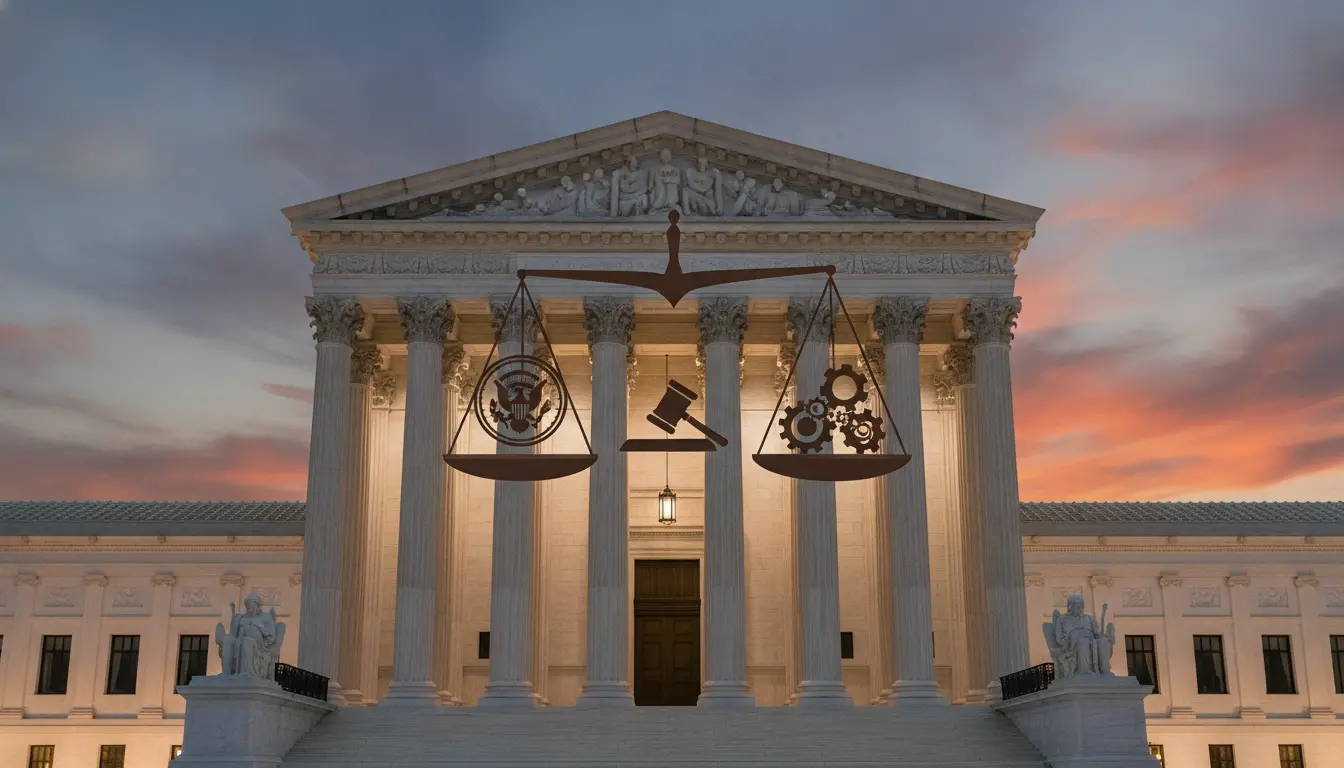
Supreme Court Deliberates Presidential Authority to Remove Federal Reserve Governors
The United States Supreme Court is currently weighing a pivotal case that could fundamentally reshape the balance of power between the executive branch and independent federal agencies, specifically addressing the President's authority to dismiss a Federal Reserve Governor without cause. The outcome of this deliberation, anticipated in the coming months, carries profound implications not only for the operational independence of the nation's central bank but also for the broader framework of American governance and economic stability.
The genesis of this legal challenge lies in a long-standing constitutional debate over the President's removal powers. Historically, Congress has established independent agencies like the Federal Reserve to operate with a degree of insulation from direct political pressure, a design intended to ensure decisions are based on expertise and long-term public interest rather than fleeting political whims. The Federal Reserve, tasked with managing monetary policy, interest rates, and financial stability, is particularly vital to this principle. Its independence is largely enshrined through staggered terms for its governors and the legal requirement that a President can only remove them "for cause" – a high bar typically involving malfeasance or neglect of duty, rather than policy disagreement.
This legal precedent stems significantly from the 1935 Supreme Court case Humphrey's Executor v. United States, which affirmed Congress's power to limit the President's ability to remove officials of independent regulatory agencies. The Court then distinguished between purely executive officials, whom the President can remove at will, and those exercising quasi-legislative or quasi-judicial functions, who enjoy greater protection. The current case compels the justices to re-examine this distinction within the context of modern governance, scrutinizing whether a Federal Reserve Governor falls into the category of an official that Congress can protect from at-will presidential dismissal. Arguments center on the Appointments Clause, Article II's vesting of executive power, and the separation of powers doctrine.
Proponents of expanded presidential removal power argue that such restrictions infringe upon the executive's constitutional duty to oversee and ensure the effective functioning of the federal government. They contend that a president, as the chief executive, must have the ultimate authority to implement policy and manage personnel, and that an inability to remove key officials like Fed governors could hamstring their administration's economic agenda. Conversely, advocates for maintaining the Fed's current independence stress that it is precisely this insulation from political pressure that allows the central bank to make difficult, often unpopular, decisions necessary for long-term economic health, such as raising interest rates to combat inflation even in the face of presidential disapproval.
The stakes are undeniably high. A ruling empowering the President to fire Federal Reserve Governors at will could dramatically politicize monetary policy, potentially leading to decisions influenced more by electoral cycles than by economic fundamentals. Such a shift could erode investor confidence, introduce greater volatility into financial markets, and complicate the Fed's ability to effectively manage inflation and employment. Furthermore, it could set a precedent for other independent agencies, from the Federal Trade Commission to the Securities and Exchange Commission, potentially subjecting a broad swath of government regulation to greater executive control.
Observers across political and economic sectors are closely watching the proceedings, understanding that the Court's decision will reverberate far beyond the confines of the Federal Reserve. It will undoubtedly redefine the boundaries of presidential authority, the resilience of independent agencies, and the foundational principles of checks and balances that underpin the American system of government. The potential for a sweeping reinterpretation of removal power represents one of the most significant constitutional questions before the High Court in recent memory, with ramifications that could shape governance for decades to come.
Stay Informed. Act Smarter.
Get weekly highlights, major headlines, and expert insights — then put your knowledge to work in our live prediction markets.
Related News
Supreme Court Weighs Presidential Power to Remove Federal Reserve Governors
Supreme Court Poised to Redefine Presidential Authority Over Federal Reserve Governors
Supreme Court Poised to Redefine Presidential Authority Over Federal Reserve Leadership
Supreme Court Examines Presidential Authority Over Federal Reserve Governor Removals
Supreme Court Set to Deliver Landmark Ruling on Presidential Authority Over Federal Reserve Governors
Supreme Court Weighs President's Power to Fire Federal Reserve Governors
Supreme Court Expands Presidential Authority to Remove Independent Agency Heads, Redefining Executive Control
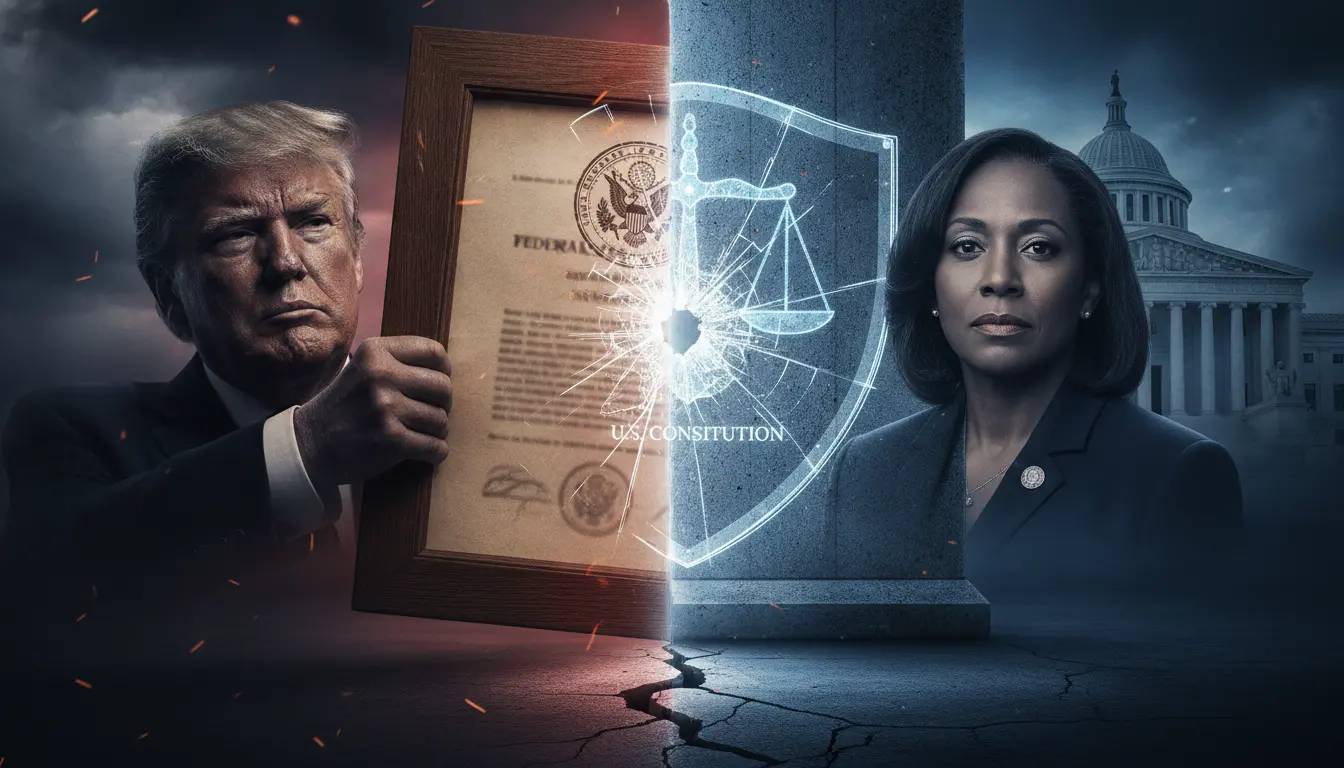
Trump Reportedly Renews Push to Remove Federal Reserve Governor Lisa Cook, Setting Stage for Constitutional Clash
Supreme Court Rulings Ignite Debate Over Presidential Authority to Challenge FCC Leadership
U.S. Supreme Court Deliberates Sweeping Presidential Immunity Claims Amidst Landmark Case