

Supreme Court Examines Presidential Authority Over Federal Reserve Governor Removals
The United States Supreme Court is poised to consider a pivotal case that could fundamentally reshape the balance of power between the presidency and the nation's independent agencies, specifically scrutinizing the President's ability to remove Federal Reserve governors without cause. This looming decision carries significant implications for the institutional autonomy of the central bank and, by extension, the stability and impartiality of U.S. monetary policy. Legal experts and policymakers are closely watching as the Court deliberates, recognizing that a ruling could either reinforce or dismantle decades of established precedent designed to insulate key economic functions from direct political interference.
At the heart of the matter lies the Federal Reserve’s carefully constructed independence, a cornerstone of its operational effectiveness since its establishment in 1913. The Fed's governors are appointed to 14-year terms, deliberately staggered and lengthy to shield them from the whims of short-term political cycles. This structure, coupled with the statutory requirement that governors can only be removed “for cause” (a legal term implying gross misconduct or dereliction of duty, not policy disagreement), ensures that decisions on interest rates, inflation targets, and financial regulation are made on economic merits rather than political expediency. This insulation is widely seen as crucial for maintaining public and market confidence, preventing boom-bust cycles driven by political calendars, and ensuring credibility on the global financial stage.
The current challenge, though not explicitly named in public discourse regarding a specific case per se at this moment, mirrors broader legal arguments championed by proponents of the "unitary executive theory." This theory posits that the President possesses inherent and sweeping authority over all executive branch officials, regardless of their agency's statutory independence. Under this interpretation, any congressional attempt to limit the President's removal power over officials, even those at ostensibly independent agencies like the Federal Reserve, is unconstitutional. This directly clashes with long-standing Supreme Court precedents, such as the 1935 Humphrey’s Executor case, which affirmed Congress's power to create independent agencies whose leaders are protected from at-will presidential removal. The current judicial landscape, however, has seen a renewed scrutiny of the administrative state, fueling speculation that established doctrines protecting agency independence could be revisited.
Should the Supreme Court rule in favor of an unfettered presidential removal power over Federal Reserve governors, the ramifications for monetary policy would be profound. Such a decision could open the door to a more politicized central bank, where governors might be pressured to align monetary policy with the President's short-term economic or electoral agenda, rather than focusing on long-term price stability and maximum employment. For instance, a President seeking re-election might demand lower interest rates, regardless of inflationary pressures, knowing they could dismiss any governor who resisted. This scenario could erode the Fed's credibility, introduce greater volatility into financial markets, and potentially lead to economic instability, domestically and internationally. The specter of such intervention could also undermine global trust in the dollar as the world's reserve currency.
Beyond the Federal Reserve, a ruling affirming the President's at-will removal power could set a far-reaching precedent for numerous other independent agencies critical to American governance. Bodies like the Federal Trade Commission (FTC), the Securities and Exchange Commission (SEC), the Federal Communications Commission (FCC), and the National Labor Relations Board (NLRB) operate with similar statutory protections against arbitrary presidential dismissal. Stripping these protections could effectively transform these regulatory bodies into extensions of the executive branch, subject to immediate political direction rather than independent oversight within their specific mandates. This would represent a fundamental shift in the American system of checks and balances, consolidating unprecedented power in the hands of the President and challenging the very concept of an administrative state designed to operate impartially.
Ultimately, the Supreme Court's impending deliberations on this issue are more than a legal technicality; they represent a critical juncture for the architecture of U.S. governance and economic stability. The decision will determine the extent to which independent institutions can continue to operate free from political coercion, influencing everything from the cost of borrowing to the integrity of regulatory enforcement. Its outcome will reverberate through the halls of Washington and across global financial markets, redefining the boundaries of presidential power and the future of America's independent agencies for generations to come.
Stay Informed. Act Smarter.
Get weekly highlights, major headlines, and expert insights — then put your knowledge to work in our live prediction markets.
Related News
Supreme Court Poised to Redefine Presidential Authority Over Federal Reserve Leadership
Supreme Court Weighs Presidential Power to Remove Federal Reserve Governors
Supreme Court Deliberates Presidential Authority to Remove Federal Reserve Governors
Supreme Court Poised to Redefine Presidential Authority Over Federal Reserve Governors
Supreme Court Set to Deliver Landmark Ruling on Presidential Authority Over Federal Reserve Governors
Supreme Court Weighs President's Power to Fire Federal Reserve Governors
Supreme Court Expands Presidential Authority to Remove Independent Agency Heads, Redefining Executive Control
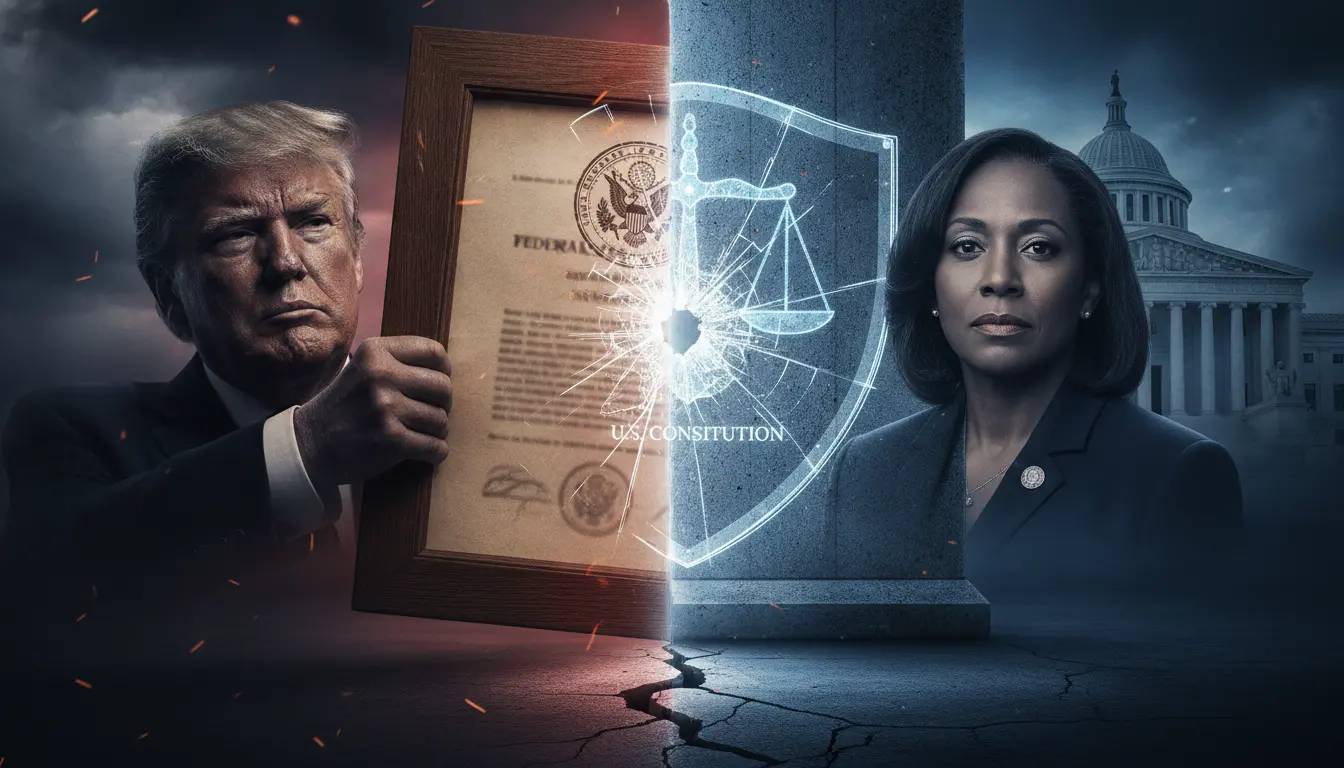
Trump Reportedly Renews Push to Remove Federal Reserve Governor Lisa Cook, Setting Stage for Constitutional Clash
Supreme Court Rulings Ignite Debate Over Presidential Authority to Challenge FCC Leadership
Kevin Warsh Faces Mounting Pressure as Fed Chair Amid Political Storm