

- News
- Politics
- Proposed SAVE Act to Mandate Citizenship Proof for Federal Voters Sparks US House Battle

Proposed SAVE Act to Mandate Citizenship Proof for Federal Voters Sparks US House Battle
A contentious legislative proposal, the Safeguard American Voter Eligibility (SAVE) Act, has emerged as a flashpoint in the U.S. House of Representatives, intensifying the national debate over election integrity and voter access. The bill, which seeks to require proof of U.S. citizenship for voter registration in federal elections, is positioned to become a central issue as Congress grapples with its legislative agenda leading into the crucial 2026 midterm cycle. Proponents argue the measure is vital for safeguarding the electoral process, while opponents warn it could disenfranchise millions of eligible citizens.
Historically, voter registration requirements in the United States have largely been the purview of individual states, leading to a patchwork of regulations across the country. While federal law, through the National Voter Registration Act of 1993 (NVRA), mandates that states accept a simple affirmation of citizenship on registration forms, the SAVE Act aims to significantly alter this framework. This move comes amidst a prolonged national discussion, often sharply partisan, concerning the balance between ensuring the security of ballots and preserving broad voter participation. Past efforts to tighten voter eligibility at both state and federal levels have frequently been met with legal challenges and passionate public discourse, underscoring the deep ideological divisions that such legislation inevitably exposes.
Specifically, the SAVE Act proposes to amend the NVRA to mandate that states require documentary proof of citizenship for all new voter registrations for federal elections. The precise forms of acceptable documentation are expected to be detailed within the bill, potentially including passports, birth certificates, or naturalization papers. Furthermore, the legislation could empower states to review existing voter rolls to identify and remove individuals for whom proof of citizenship is not on file. This would represent a dramatic shift from the current system, where the onus is generally on election officials to verify eligibility through existing databases rather than placing a universal documentation burden on voters at the point of registration.
Supporters of the SAVE Act, primarily within the Republican Party and allied conservative groups, frame the bill as a common-sense measure essential for upholding the sanctity of the ballot box. They contend that the current system is vulnerable to exploitation by non-citizens, potentially undermining election results and public confidence. Advocates argue that requiring proof of citizenship is a fundamental step to ensure only eligible individuals participate in federal elections, likening it to other routine administrative requirements for government services. They emphasize that the integrity of democratic processes hinges on accurate and secure voter rolls, and that the bill would restore trust in the system.
However, the legislation faces fierce opposition from Democrats, civil rights organizations, and voting rights advocates, who vociferously argue that the SAVE Act is a thinly veiled attempt at voter suppression. Critics point out that millions of eligible citizens, particularly minorities, the elderly, low-income individuals, and those who have moved frequently, may not readily possess the required documents or could face significant hurdles and costs in obtaining them. They contend that such requirements would disproportionately impact specific demographic groups and create unnecessary barriers to voting, thereby disenfranchising lawful citizens rather than preventing illegal votes, which they argue are exceedingly rare. Moreover, they raise concerns about the administrative burden on state election offices, which would have to overhaul their registration systems.
As the SAVE Act navigates the legislative labyrinth of the U.S. House, its path to passage is fraught with political challenges. Given the current narrow margins in Congress, any highly partisan bill faces an uphill battle. Should it clear the House, its prospects in the Senate would be even more uncertain, where a higher threshold for passage typically applies. The intense rhetoric surrounding the bill is also intrinsically linked to the upcoming 2026 midterm elections, as both parties seek to mobilize their bases around issues of election reform and voting access. The debate is less about technical adjustments and more about fundamental questions of democratic participation.
Ultimately, the deliberation over the SAVE Act transcends mere legislative text; it encapsulates a broader ideological struggle over the identity and future of American democracy. With significant implications for how millions of Americans participate in their federal elections, the bill has not only reignited long-standing debates but also serves as a potent symbol of the ongoing national tension between security measures and accessibility rights in the electoral process. The outcome of this legislative battle will undoubtedly shape the landscape of voting in the United States for years to come.
Stay Informed. Act Smarter.
Get weekly highlights, major headlines, and expert insights — then put your knowledge to work in our live prediction markets.
Related News
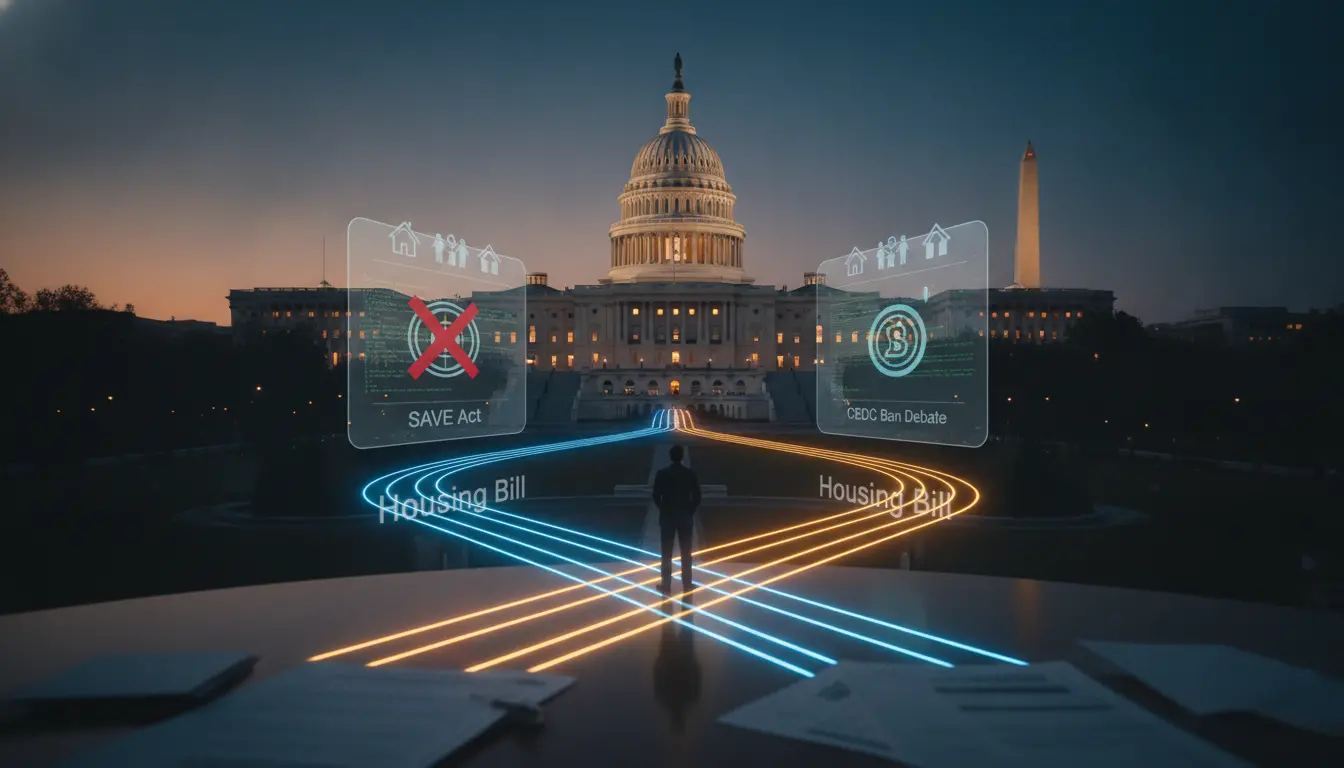
US 'SAVE Act' Housing Bill Navigates Path to Law Amidst Presidential Opposition and CBDC Ban Debate
Supreme Court Considers Trump-Era Mail-In Voting Order Amidst Looming Election Cycle

Trump-Backed 'SAVE America Act' Stalls in House Amid Deepening GOP Fractures
Democrats Face Uphill Battle to Maintain Senate Majority in 2026 Midterm Elections

Ideological Clash Looms in Michigan's 13th Congressional Democratic Primary

Strategic Battle Lines Drawn for Control of U.S. Senate Ahead of 2026 Elections
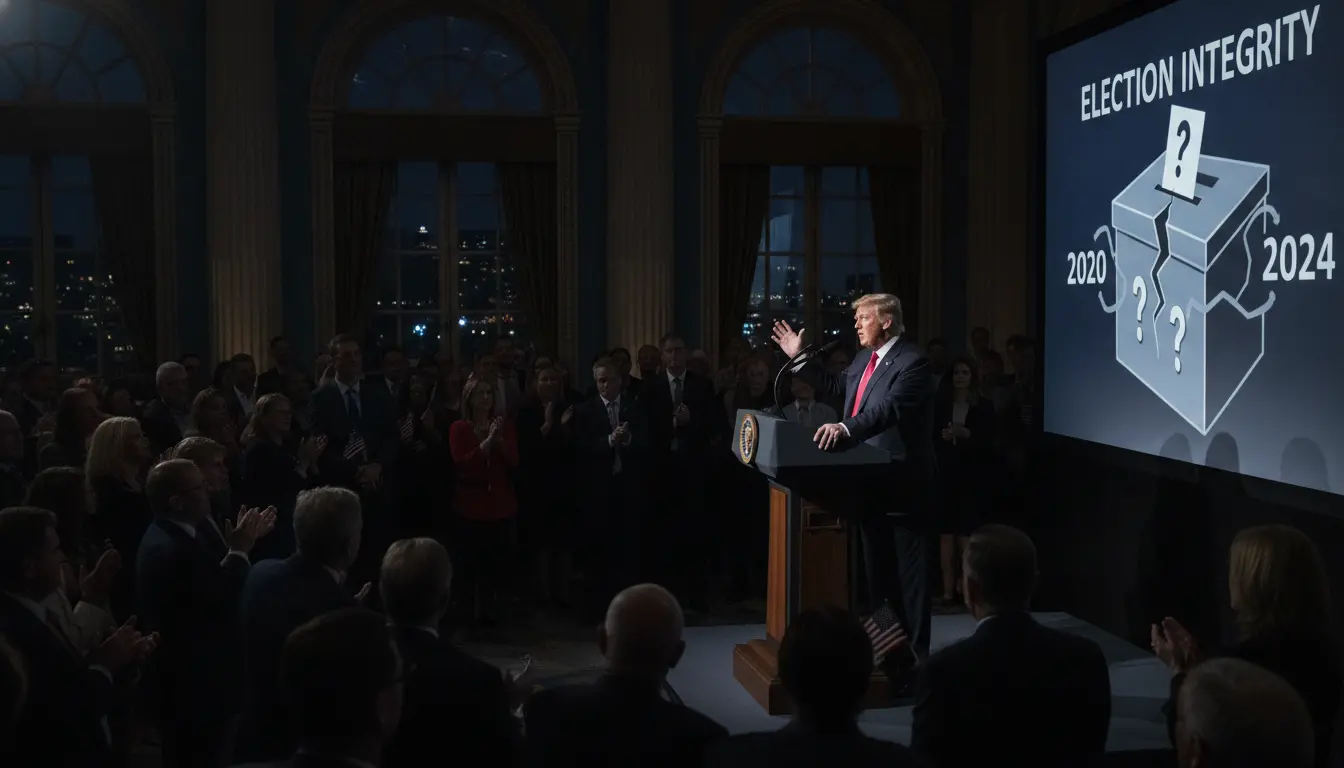
Trump's Primetime Address on Election Integrity Expected to Reignite 2020 Fraud Claims
US Congressional Measure Seeks to Block Federal Reserve From Issuing Digital Currency
Control of US Senate Hangs in Balance as 2026 Midterm Elections Loom
U.S. Lawmakers Face Mounting Pressure to Address Social Security's Solvency Before 2027