


Strategic Battle Lines Drawn for Control of U.S. Senate Ahead of 2026 Elections
The political landscape is already taking shape for the 2026 U.S. Senate elections, which promise a high-stakes battle for control of the chamber. With the current Senate operating on razor-thin margins, the outcome of these contests will profoundly influence the legislative agenda, judicial appointments, and the overall trajectory of national policy for the latter half of the decade. Both major parties are gearing up for what is anticipated to be a fiercely contested cycle, with strategists meticulously analyzing demographics, incumbent vulnerabilities, and national political winds.
Historically, midterm elections often present a formidable challenge for the party occupying the White House, frequently resulting in losses in Congress. While 2026 is not a midterm year in the traditional sense, it will follow the critical 2024 presidential election, meaning the presidential coattail effect, or lack thereof, will play a significant role. The class of senators up for re-election in 2026 includes those who first won their seats in the 2020 cycle. This particular group features a disproportionate number of Republican-held seats, putting the GOP on the defensive in more states than their Democratic counterparts. This dynamic sets the stage for a demanding cycle for Republicans aiming to retain their majority.
Republicans will be defending approximately 20 of the 33 seats up for grabs, including several in states that have shown a tendency to swing between parties or where specific incumbents could face tough re-election bids. Key battlegrounds are expected to emerge across various regions, from states with rapidly changing voter demographics to those where popular incumbents are nearing retirement, creating open-seat races that are notoriously difficult to predict. The party’s strategy will likely focus on leveraging national conservative messaging, emphasizing economic stability, and rallying their base, while also aiming to recruit strong, locally resonant candidates capable of appealing to independent voters.
On the Democratic side, the fewer seats they are defending, roughly 13, theoretically allows them to concentrate resources more effectively on a smaller number of competitive races and target Republican-held seats. Democrats see opportunities in states where Republican incumbents may be vulnerable due to shifting state electorates or where the party’s national platform on issues like healthcare, climate change, and social policy could resonate with a broader coalition of voters. Their efforts will involve robust fundraising, intensive grassroots organizing, and tailoring messages that highlight specific legislative achievements and contrast sharply with their opponents' positions.
Beyond individual races, the national political climate leading up to 2026 will be paramount. Economic conditions, approval ratings of the incoming presidential administration, and major domestic or international events could all swing public sentiment. Issues such as inflation, immigration, energy policy, and the ongoing culture wars are likely to dominate political discourse and serve as flashpoints in campaign advertisements and debates. The ability of each party to frame these issues to their advantage and energize their respective bases will be critical.
Fundraising will undoubtedly be a central component of the 2026 Senate campaigns. With the costs of modern elections continuing to escalate, the capacity to raise significant capital early will be crucial for candidate recruitment, building campaign infrastructure, and saturating airwaves with messaging. Outside spending by super PACs and other advocacy groups will also amplify the intensity of these contests, often introducing highly charged narratives that can shape perceptions and turnout. The ability to harness digital campaign strategies and engage voters through social media will further define the competitive landscape.
Ultimately, the 2026 Senate elections are not just about individual victories but about the fundamental balance of power in Washington. Control of the Senate determines which party can confirm presidential nominees to the federal judiciary and executive branch, pass or block legislation, and shape the nation’s policy direction. For Republicans, retaining control would solidify their influence, while a Democratic takeover would fundamentally alter the legislative chessboard, setting the stage for potentially significant policy shifts. The coming years will see an intensifying strategic contest, laying the groundwork for what promises to be one of the most consequential election cycles in recent memory.
Stay Informed. Act Smarter.
Get weekly highlights, major headlines, and expert insights — then put your knowledge to work in our live prediction markets.
Related News

Democrats Face Uphill Battle to Maintain Senate Majority in 2026 Midterm Elections
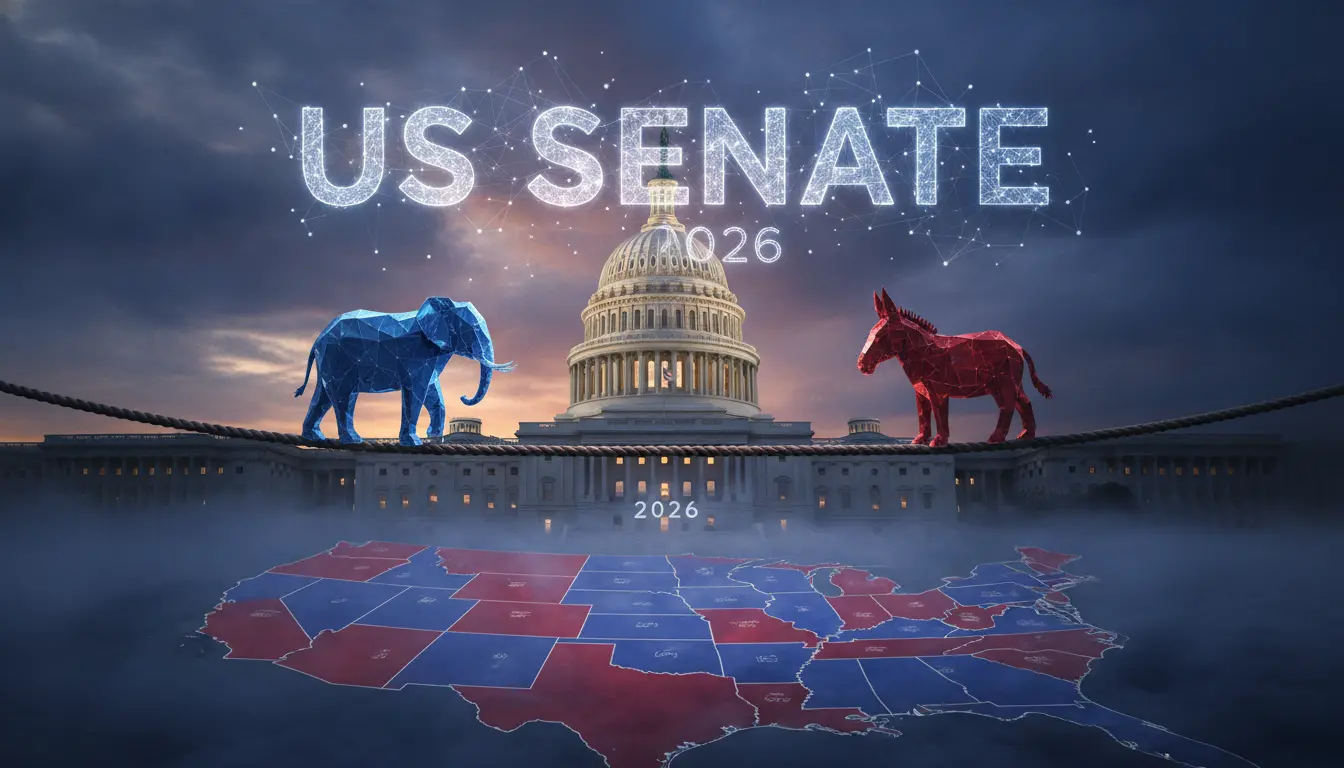
Control of US Senate Hangs in Balance as 2026 Midterm Elections Loom

Donald Trump's Endorsement Power Faces Pivotal Test in 2026 Midterm Elections
Supreme Court Vacancy Speculation Intensifies as 2026 Midterms Approach

Senate Republicans Grapple With Leadership Uncertainty Amid McConnell's Extended Absence

Wisconsin's 2026 Gubernatorial Race Heats Up as David Crowley Enters Field with Evers' Endorsement

McConnell's Health Sparks Renewed Scrutiny of His Role as Senate Minority Leader

Swedish Political Blocs Intensify Preparations Ahead of Pivotal 2026 General Election

Israel Gears Up for Pivotal 2026 General Election Amid Deepening Political Cracks

Colorado Prepares for Open Gubernatorial Race in 2026 as Polis Term Nears End