

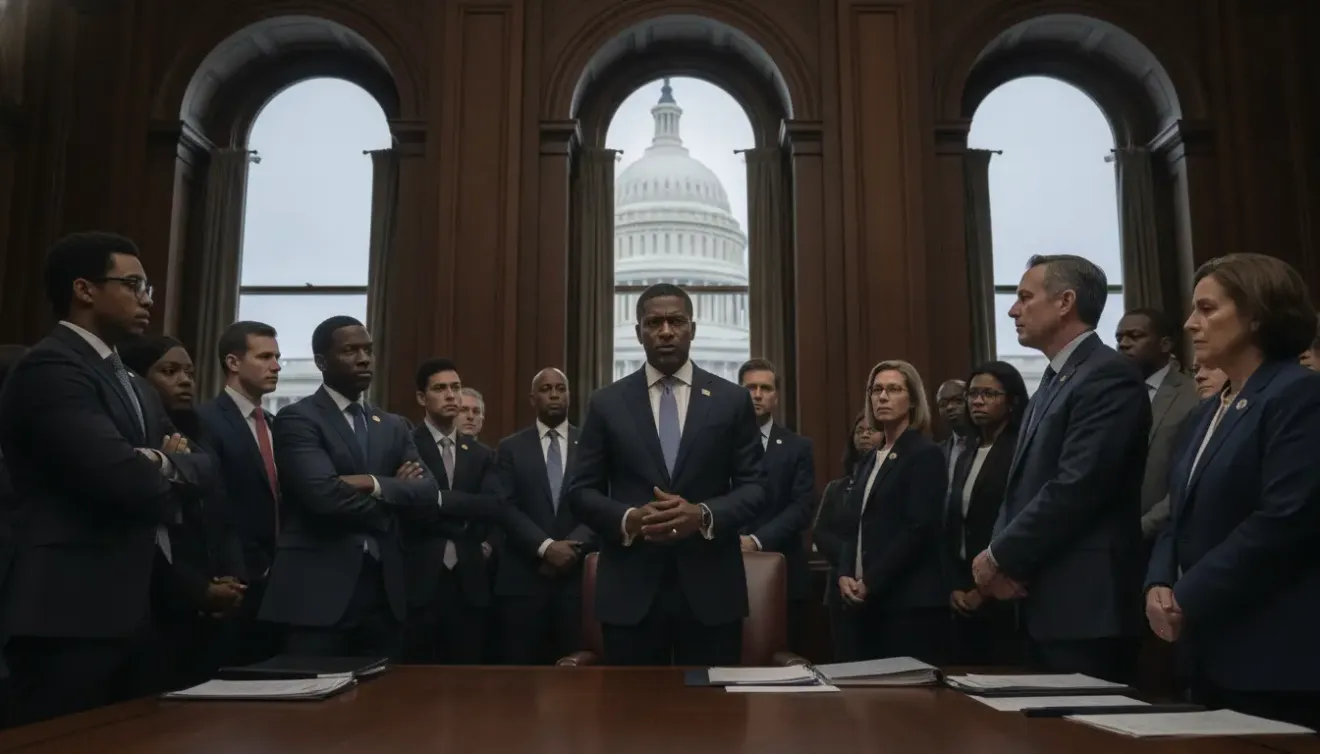
Democrats Face Leadership Test as Jeffries' Speaker Bid Navigates Party Factions
WASHINGTON – Fresh off a hard-won victory in the 2026 midterm elections that delivered them a narrow majority, Democrats in the House of Representatives are now turning to the urgent and delicate task of selecting the next Speaker. House Minority Leader Hakeem Jeffries of New York is the undisputed frontrunner to claim the gavel, but his path is not without challenges. As the party prepares to govern, Jeffries must navigate a complex landscape of internal demands from both progressive and moderate factions, each eager to see its priorities reflected in the 120th Congress's legislative agenda. The outcome of these closed-door negotiations will not only determine the House's leadership but will also set the tone for the final two years of the presidential term and the Democrats' ability to legislate effectively.
The shift in power comes after a tumultuous two years under Republican control, which was often marked by intra-party strife and legislative gridlock. By retaking the House, Democrats have gained control over the legislative calendar, committee chairmanships, and subpoena power. The Speaker of the House, a position third in the line of presidential succession, wields immense institutional power, shaping which bills reach the floor for a vote and acting as the chief negotiator with the Senate and the White House. For Democrats, the speakership represents a critical opportunity to advance their platform on issues ranging from healthcare and climate change to voting rights, but their slim majority means party unity will be paramount.
At the center of the leadership contest is Hakeem Jeffries, who made history in 2023 by becoming the first Black American to lead a party in Congress. Since succeeding Nancy Pelosi, he has earned a reputation as a strategic and disciplined leader, capable of holding a diverse caucus together in the minority. His supporters view him as a pragmatic unifier, a bridge between the party's establishment wing and its more activist base. Allies project confidence that he will secure the necessary votes, arguing that his steady hand is precisely what is needed to transition from opposition to governance. They point to his track record of successfully messaging the party's accomplishments and drawing sharp contrasts with Republican policies as evidence of his readiness for the top job.
However, the progressive wing of the party is signaling it will not be a rubber stamp for the new leadership. The Congressional Progressive Caucus (CPC), which represents a significant bloc of votes, is expected to leverage its influence to secure policy commitments and key committee assignments. While a direct challenge to Jeffries' speakership is considered unlikely, progressive leaders are reportedly drafting a list of demands focused on aggressive climate action, expanding the social safety net, and exercising robust oversight of corporate power. Their goal is to ensure that the priorities that energized their base during the midterms are not sidelined in favor of a more centrist agenda. How Jeffries manages these expectations will be his first major test.
Simultaneously, Jeffries must also assuage the concerns of the party's moderate members, particularly those who won in competitive swing districts. The New Democrat Coalition and the Blue Dog Coalition are cautioning against a legislative overreach that could alienate independent voters and jeopardize their own re-election prospects in 2028. These members are advocating for a focus on economic stability, bipartisan cooperation where possible, and tangible results that resonate with voters in the political center. For them, a successful majority is one that demonstrates competence and an ability to solve problems, not one that is defined by ideological battles. This places Jeffries in the classic Speaker's bind: caught between the energy of his base and the electoral realities of his most vulnerable members.
The formal process will begin with an internal Democratic Caucus election, where Jeffries is expected to be nominated for Speaker. The real drama, however, will unfold on the House floor in early January 2027. To be elected Speaker, a candidate must receive a majority of the votes cast by the full House. With a razor-thin majority, Jeffries can afford only a handful of defections. This mathematical reality gives immense power to small groups of members who could, in theory, withhold their votes to extract concessions. The coming weeks will be filled with intense negotiations as the Jeffries leadership team works to shore up support, ensuring that when the official roll call vote is taken, the party presents a united front to the nation.
Stay Informed. Act Smarter.
Get weekly highlights, major headlines, and expert insights — then put your knowledge to work in our live prediction markets.
Related News

Democrats Prepare Impeachment Push Against Defense Secretary Pete Hegseth

Democrats Face Uphill Battle to Maintain Senate Majority in 2026 Midterm Elections

Parties Gird for Intense Battle Over US House Control in 2026 Midterm Elections

Ideological Clash Looms in Michigan's 13th Congressional Democratic Primary

Control of US Senate Hangs in Balance as 2026 Midterm Elections Loom

Strategic Battle Lines Drawn for Control of U.S. Senate Ahead of 2026 Elections

UK Labour Party Poised for Leadership Transition as 2026 Ballot Deadline Approaches

Senate Passes Stopgap Funding Bill, but Long-Term Budget Deal Remains Elusive Ahead of October 1 Deadline

Intensifying Political and Legal Battles Renew Impeachment Speculation for Donald Trump

Melat Kiros Sets Sights on 2026 Re-election Bid After Landmark Primary Victory in Colorado's 1st Congressional District