

- News
- Politics
- Senate Passes Stopgap Funding Bill, but Long-Term Budget Deal Remains Elusive Ahead of October 1 Deadline
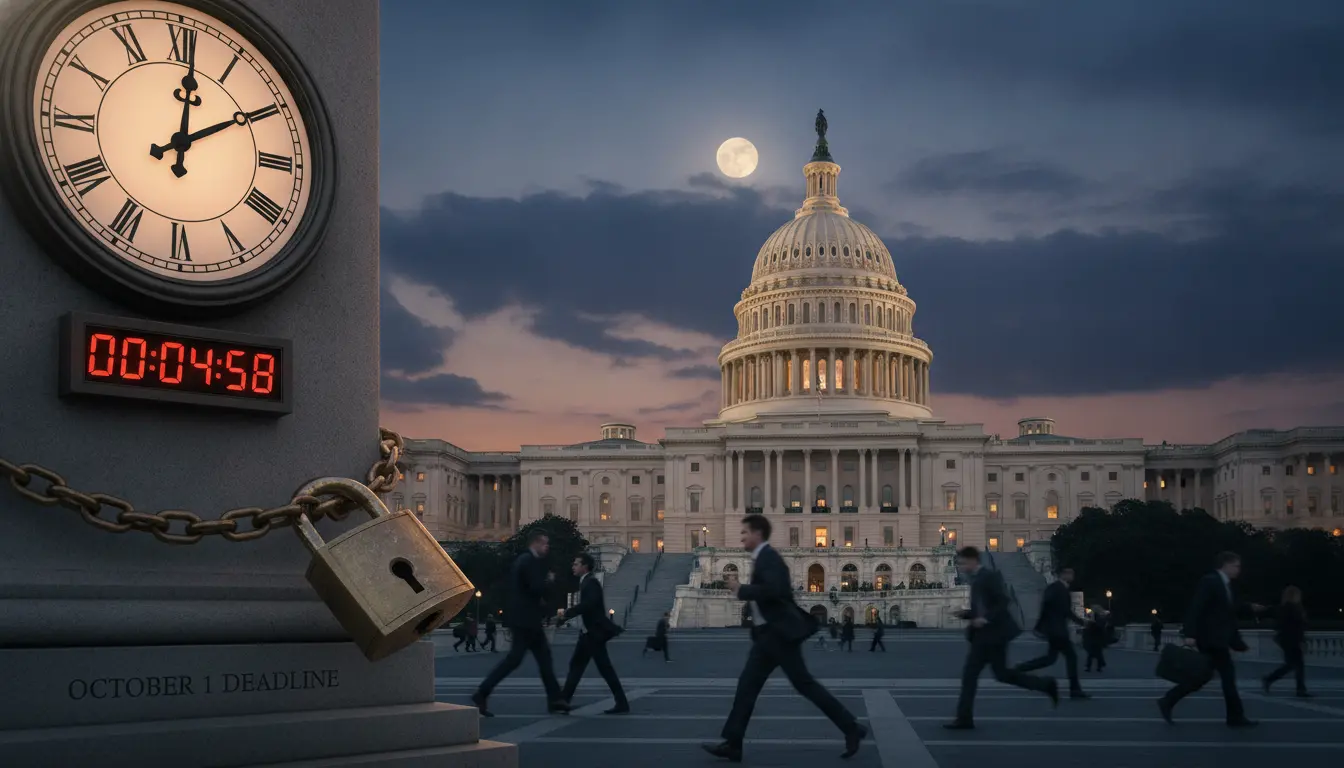
Senate Passes Stopgap Funding Bill, but Long-Term Budget Deal Remains Elusive Ahead of October 1 Deadline
The United States Senate on Wednesday approved a short-term continuing resolution to keep the federal government funded through early December, narrowly averting a shutdown that would have taken effect at midnight on October 1. The measure, passed with bipartisan support, buys lawmakers additional time to negotiate a full-year appropriations package. However, with the new fiscal year looming and deep partisan divisions over spending levels and policy riders, the threat of a shutdown has not fully dissipated, and congressional leaders face a tight calendar to reach a durable agreement.
The stopgap bill, which passed by a vote of 82 to 15, funds the government at current levels and includes emergency disaster relief and aid for Ukraine. Senate Majority Leader Chuck Schumer hailed the vote as a victory for pragmatism, noting that both parties recognized the severe consequences of a shutdown, including disrupted federal services, furloughed workers, and economic uncertainty. The House is expected to take up the measure later this week, and President Biden has indicated he will sign it into law. Yet the continuing resolution is only a temporary patch, and the underlying disputes that have plagued budget negotiations for months remain unresolved.
At the heart of the standoff is a fundamental disagreement over discretionary spending for fiscal year 2026. House Republicans, led by Speaker Mike Johnson, have pushed for deeper cuts to domestic programs and have attached conservative policy provisions, including border security measures and restrictions on federal diversity initiatives. Senate Democrats, meanwhile, insist on protecting social safety net programs and funding for climate initiatives, and they have rejected what they characterize as ideological poison pills. The result has been a stalemate, with each chamber passing its own spending blueprint and little progress in reconciling the two.
The stakes are high. A prolonged shutdown would have wide-ranging impacts, from delayed paychecks for millions of federal employees and contractors to the suspension of non-essential government services, including national parks, passport processing, and small business loans. Economists warn that even a brief shutdown could shave a few tenths of a percentage point off quarterly GDP growth, and a longer impasse could rattle financial markets. Moreover, the political fallout could be severe, with voters already expressing frustration over Washington's dysfunction. Polls show that a majority of Americans disapprove of Congress's handling of budget matters, and both parties are wary of being blamed for a lapse in funding.
Negotiators have identified several potential pathways to a long-term deal. One option is to adopt an omnibus appropriations package that bundles all twelve spending bills, a move that would require significant compromise on both sides. Another is to pass a series of smaller minibus bills, which could allow for more targeted negotiations. Some lawmakers have floated the idea of setting overall spending caps for two years, similar to the budget deal struck in 2023, which would provide stability and reduce the need for repeated continuing resolutions. However, any such agreement would require the president and congressional leaders to make politically difficult concessions, and the current polarized climate makes such a compromise far from certain.
The clock is ticking. The continuing resolution funds the government only until December 3, and if no long-term deal is reached by then, the country will face another shutdown threat just weeks before the holiday season. Some lawmakers have suggested that the December deadline could be used as leverage to force a comprehensive agreement, but others worry that it simply postpones the inevitable crisis. With the midterm elections now less than a year away, both parties are calculating how best to position themselves with voters, and the budget fight has become a proxy for broader ideological battles over the size and role of government.
In the meantime, federal agencies are preparing for the possibility of a shutdown, updating contingency plans and identifying essential personnel who would remain on duty. The Office of Management and Budget has issued guidance to departments, and federal employee unions have urged Congress to act swiftly. The last government shutdown, which lasted 35 days from December 2018 to January 2019, was the longest in U.S. history and cost an estimated $11 billion, according to the Congressional Budget Office. That experience remains fresh in the minds of many lawmakers, and it may ultimately serve as a deterrent against allowing another lapse.
As the fiscal year draws to a close, the path forward remains uncertain. The passage of the stopgap bill is a temporary reprieve, but it does not resolve the fundamental fiscal questions facing the nation. Lawmakers will return to Washington after the Thanksgiving recess with a narrow window to craft a long-term spending agreement. Whether they can overcome their differences and deliver a budget that serves the American people will be a defining test of this Congress's ability to govern.
Stay Informed. Act Smarter.
Get weekly highlights, major headlines, and expert insights — then put your knowledge to work in our live prediction markets.
Related News
Outpoll Weekly Recap: Politics (August 3 – 9, 2026)
Democrats Face Uphill Battle to Maintain Senate Majority in 2026 Midterm Elections
U.S. Lawmakers Face Mounting Pressure to Address Social Security's Solvency Before 2027

US-Iran Interim Agreement Faces Uphill Battle for Senate Ratification
Control of US Senate Hangs in Balance as 2026 Midterm Elections Loom

US and Iran Agree to Extend Ceasefire Until August 2026 Amid Persistent Tensions

Senate Passes Bipartisan Housing Bill With Four-Year Ban on Federal Reserve Digital Currency
Strategic Battle Lines Drawn for Control of U.S. Senate Ahead of 2026 Elections

Senate Republicans Grapple With Leadership Uncertainty Amid McConnell's Extended Absence

US and China Navigate Complex Trade Impasse as Pressure Mounts for New Comprehensive Agreement by 2026