

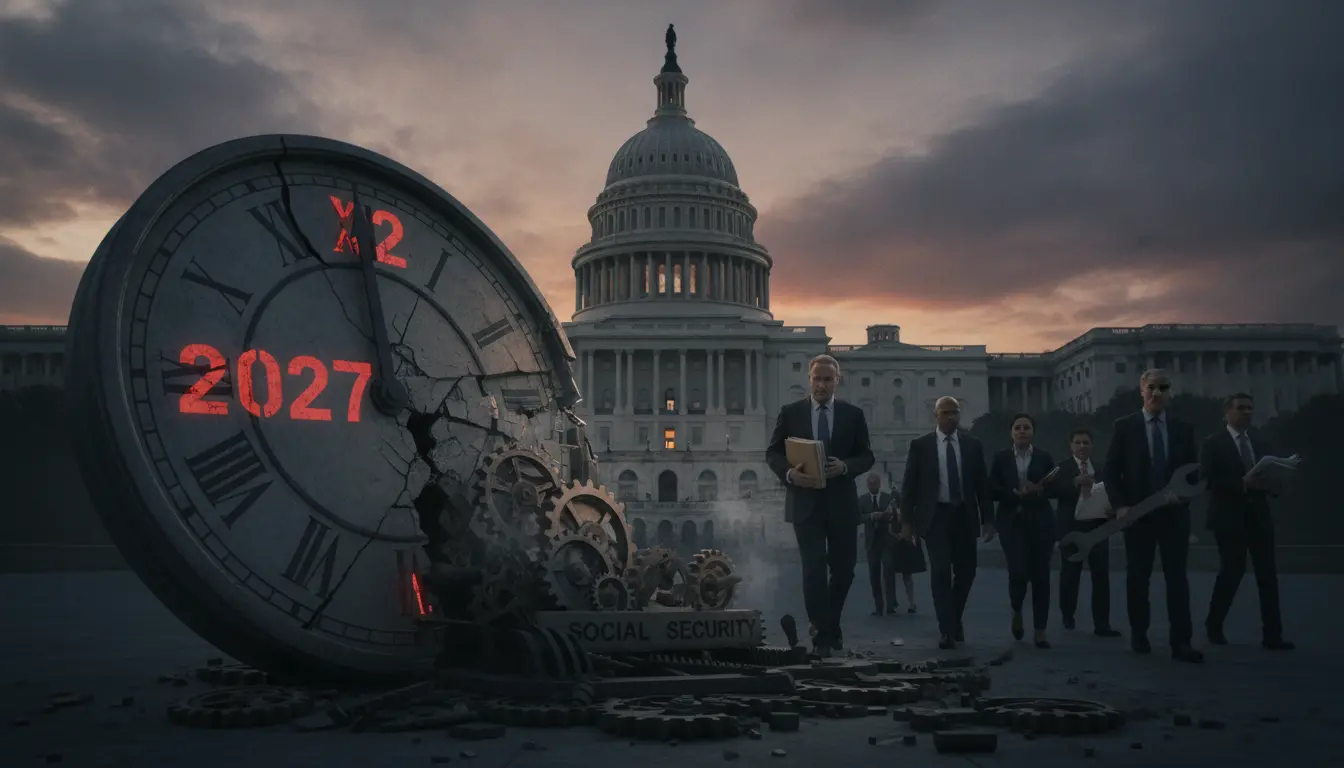
U.S. Lawmakers Face Mounting Pressure to Address Social Security's Solvency Before 2027
The United States Social Security system is hurtling towards a critical fiscal juncture, intensifying pressure on Congress and the executive branch to enact significant reforms by the end of 2026. Experts and policymakers alike warn that delaying action on the program's long-term solvency only exacerbates the challenge, potentially leading to automatic benefit cuts for millions of Americans if legislative solutions are not found. The urgency stems from projections by the Social Security Trustees, which indicate that the Old-Age and Survivors Insurance (OASI) Trust Fund will be depleted within the next decade, at which point Social Security would be able to pay only about 80% of scheduled benefits without congressional intervention.
The impending crisis is primarily a demographic one, driven by an aging population and declining birth rates. The baby-boomer generation is moving into retirement, increasing the number of beneficiaries relative to the number of workers paying into the system. In 1960, there were 5.1 workers for every Social Security beneficiary; today, that ratio has fallen to approximately 2.7. This shift strains the pay-as-you-go system, where current workers' payroll taxes fund current retirees' benefits. Without adjustments, the revenue collected will soon be insufficient to cover promised payouts, necessitating a fundamental rethinking of the program's structure and funding mechanisms.
Various reform proposals have been floated over the years, broadly falling into three categories: increasing revenue, decreasing expenditures, or a combination of both. Revenue-side solutions include raising the Social Security payroll tax rate, increasing the cap on earnings subject to Social Security taxes (currently $168,600), or introducing new funding sources. On the expenditure side, options range from gradually raising the full retirement age beyond 67, adjusting the formula used to calculate annual cost-of-living adjustments (COLAs), or means-testing benefits for wealthier retirees. Each of these options carries significant political baggage, as they would either require Americans to pay more, receive less, or work longer, making bipartisan consensus exceedingly difficult to achieve.
The political landscape further complicates the path to reform. With a deeply divided Congress and upcoming election cycles, the incentive to tackle such an unpopular yet necessary issue is often outweighed by the fear of alienating voters. Historically, significant Social Security reforms, such as those enacted in 1983 under President Reagan, have required rare moments of bipartisan cooperation and political courage. Those reforms included a gradual increase in the full retirement age and subjecting a portion of Social Security benefits to income tax for higher earners, staving off insolvency for decades. The challenge now is to find a similar political will amidst an even more polarized environment.
Stakeholders across the political spectrum acknowledge the problem, but their proposed solutions remain far apart. Democrats often emphasize increasing revenue by raising taxes on high earners, while Republicans frequently advocate for benefit adjustments, such as raising the retirement age or modifying COLA calculations. The Biden administration has indicated a commitment to protecting Social Security, vowing not to cut benefits and suggesting that reforms should focus on ensuring the wealthy pay their fair share. However, a concrete legislative framework with bipartisan support has yet to materialize, leaving millions of current and future beneficiaries in a state of uncertainty.
Failure to act by the projected trust fund depletion date would trigger an automatic reduction in benefits across the board, impacting millions of retirees, disabled individuals, and survivors who rely on Social Security for a substantial portion of their income. Such a scenario would have profound economic and social consequences, potentially plunging many elderly Americans into poverty and creating significant instability. The window for proactive, measured adjustments is rapidly closing, placing immense pressure on U.S. lawmakers to forge a compromise that secures the future of this vital program for generations to come.
Stay Informed. Act Smarter.
Get weekly highlights, major headlines, and expert insights — then put your knowledge to work in our live prediction markets.
Related News

Will the US Congress enact legislation to prevent the Social Security OASI Trust Fund depletion by December 31, 2031?

Will the 2027 Social Security Trustees' Report project a later OASI depletion date than the 2026 report?

US National Debt Surpasses $40 Trillion Mark, Fiscal Sustainability Concerns Mount

Senate Passes Stopgap Funding Bill, but Long-Term Budget Deal Remains Elusive Ahead of October 1 Deadline

Democrats Face Uphill Battle to Maintain Senate Majority in 2026 Midterm Elections

Economists Intensify Debate on US Recession Risk Through 2026 Amid Fed's Inflation Fight

Strategic Battle Lines Drawn for Control of U.S. Senate Ahead of 2026 Elections

Federal Reserve's Long-Term Strategy Under Scrutiny as Analysts Project Path to 2026 Rate Decisions

US Economic Outlook for 2026 Hinges on Inflation Control and Productivity Revival
Control of US Senate Hangs in Balance as 2026 Midterm Elections Loom