

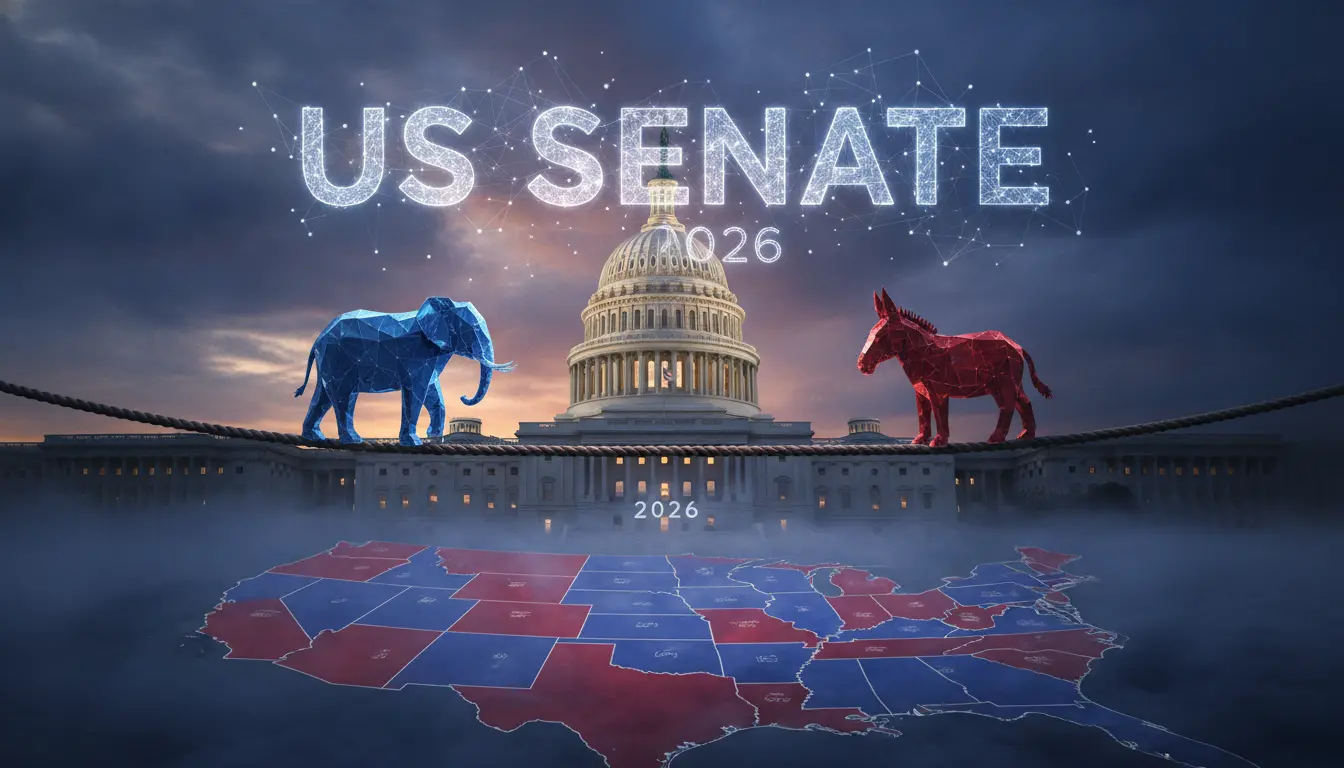
Control of US Senate Hangs in Balance as 2026 Midterm Elections Loom
The political landscape is already shifting as strategists and political parties begin to lay the groundwork for the pivotal 2026 midterm elections, which will determine the balance of power in the United States Senate. With just under two years until voters head to the polls, the stakes are exceptionally high, as control of the legislative agenda, judicial appointments, and the nation's policy direction will hinge on the outcome of these crucial contests. The upcoming cycle presents a formidable challenge for the Democratic Party, which is currently navigating a narrow majority, facing a difficult map with a disproportionate number of their incumbents defending seats in competitive or traditionally Republican-leaning states.
Historically, midterm elections often serve as a referendum on the sitting president and the party in power, frequently resulting in gains for the opposition. The 2026 cycle is no exception, with Republicans eying a prime opportunity to flip the Senate. Of the 34 seats up for grabs, a challenging 23 are currently held by Democrats or independents who caucus with them, while only 11 are held by Republicans. This asymmetry means Democrats will be forced to play defense across a wide swath of the country, stretching their resources and attention to retain their slim advantage. Key battleground states like Montana, Ohio, Pennsylvania, Arizona, Nevada, and Michigan are expected to draw significant national attention and campaign spending, alongside the open seat in West Virginia, where Senator Joe Manchin's retirement leaves a critical vulnerability for Democrats in a state that overwhelmingly favors Republicans.
The current composition of the Senate, with a 51-49 Democratic-led majority (including three independents), underscores the fragility of the political equilibrium. A shift of just two seats could hand control to the Republican Party, potentially gridlocking the legislative process for the final two years of a presidential term, or empowering a Republican president with a unified Congress. The national political environment, including the state of the economy, foreign policy developments, and the approval rating of the eventual presidential incumbent, will undoubtedly shape voter sentiment. Both parties are keenly aware that early candidate recruitment, robust fundraising, and the crafting of compelling messages will be vital in these closely watched races, especially in states where voter preferences are often split.
Beyond the raw numbers, the ideological leanings and demographic shifts within these states will play a significant role. Republicans are poised to capitalize on conservative strongholds where Democrats have managed to eke out wins in recent cycles, while Democrats will focus on shoring up support among key demographic groups and mobilizing their base. The electoral performance of the eventual presidential candidates in 2024 will also cast a long shadow over the Senate races, influencing down-ballot contests and overall voter engagement. The outcomes will not only determine legislative priorities but also the trajectory of judicial appointments, executive branch oversight, and the ability of either party to enact its broader policy agenda.
What is at stake in the 2026 midterms extends far beyond mere partisan control. The Senate serves as a critical check on the executive branch and plays a central role in confirming presidential appointments, including cabinet secretaries, ambassadors, and federal judges. A change in Senate leadership could significantly alter the speed and nature of these confirmations, impacting the administration's ability to govern effectively. Furthermore, key legislative initiatives, ranging from climate change policy and healthcare reform to taxation and national security, could either advance or stall depending on which party holds the majority. The implications for the economy, social policy, and America's standing on the global stage are profound.
The path to a majority is fraught with challenges for both sides. Republicans must avoid complacency and ensure they nominate electable candidates who can appeal to swing voters, while Democrats face the arduous task of defending a disproportionate number of seats in increasingly tough political terrain. The campaign will undoubtedly be characterized by intense advertising, sophisticated data analytics, and grassroots organizing efforts across the country. As the 2026 midterm elections draw closer, every state, every candidate, and every policy debate will contribute to a narrative that culminates in a defining moment for American politics, with the ultimate control of the US Senate hanging precariously in the balance.
Stay Informed. Act Smarter.
Get weekly highlights, major headlines, and expert insights — then put your knowledge to work in our live prediction markets.
Related News

Democrats Face Uphill Battle to Maintain Senate Majority in 2026 Midterm Elections

Strategic Battle Lines Drawn for Control of U.S. Senate Ahead of 2026 Elections

Donald Trump's Endorsement Power Faces Pivotal Test in 2026 Midterm Elections
Supreme Court Vacancy Speculation Intensifies as 2026 Midterms Approach
Outpoll Weekly Recap: Politics (August 3 – 9, 2026)

Senate Republicans Grapple With Leadership Uncertainty Amid McConnell's Extended Absence

McConnell's Health Sparks Renewed Scrutiny of His Role as Senate Minority Leader
Donald Trump's Extensive Legal Battles Face Critical Junctures Ahead of 2026 Midterm Elections

Mallory McMorrow's Endorsement Poised to Shape Michigan's 2026 Democratic Senate Primary

Colorado Prepares for Open Gubernatorial Race in 2026 as Polis Term Nears End