


Democrats Face Uphill Battle to Maintain Senate Majority in 2026 Midterm Elections
The political landscape is already shaping up for a high-stakes showdown in the 2026 U.S. midterm elections, with control of the Senate hanging precariously in the balance. The Democratic Party, currently holding a razor-thin majority, faces a particularly challenging electoral map that could see their grip on power tested rigorously. With 35 Senate seats scheduled to be contested, the outcome will dictate the legislative agenda, judicial appointments, and overall direction of the country for the latter half of the decade.
The current composition of the Senate underscores the Democrats' vulnerable position. Their narrow lead means that even a slight shift in voter sentiment or a few unfavorable state-level outcomes could flip control to the Republican Party. Historically, midterm elections often present a difficult terrain for the party in the White House, frequently resulting in losses in Congress. This pattern, combined with the specific states where Democratic incumbents are up for re-election, sets the stage for a bruising two-year campaign cycle where every seat will be fiercely contested. A confluence of factors, including presidential approval ratings, the state of the economy, and evolving national issues, will inevitably play a significant role in voter behavior.
Key battleground states will emerge as central to the Democrats' defense strategy. Several incumbents will be forced to campaign in states that lean Republican or have a history of swinging between parties. Senators in states like Montana, Ohio, West Virginia, and Arizona, among others, will likely face formidable challenges from well-funded Republican challengers. These races often come down to the strength of individual candidates, their ability to connect with diverse voter bases, and their effectiveness in fundraising. Republicans, on the other hand, will eye these seats as prime opportunities to capitalize on national political currents and local grievances, seeking to flip them to their column and secure a majority.
Beyond individual races, broader political dynamics will exert considerable influence. Economic concerns, such as inflation and employment, are perennial motivators for voters, as are hot-button cultural issues. The effectiveness of the sitting presidential administration's policies and its public perception will inevitably cast a long shadow over down-ballot races. Both parties will also be acutely focused on voter registration efforts and grassroots mobilization, recognizing that turnout, especially in a midterm year, can be a decisive factor. The ability to articulate a clear and compelling vision for the future, while effectively contrasting with the opposition, will be paramount.
Republicans are poised to launch an aggressive campaign, fueled by a strong desire to regain control of Congress. Their strategy will likely involve highlighting perceived failures of the current administration, focusing on fiscal responsibility, national security, and conservative judicial appointments. The party is expected to invest heavily in identifying and supporting candidates who can appeal to swing voters while energizing their base. The race for Senate majority leader within the Republican ranks will also set the tone for their campaigning efforts, with new leadership potentially bringing fresh strategies and a renewed focus on specific legislative priorities should they win control.
What is at stake in 2026 is nothing less than the legislative direction of the United States. A Republican-controlled Senate could significantly impede a Democratic president's agenda, blocking judicial nominations, cabinet appointments, and key legislative initiatives. Conversely, a continued Democratic majority would provide critical support for their policy priorities. The financial investment required for these campaigns will be astronomical, drawing national attention and resources to these pivotal races. The 2026 midterms are shaping up to be a defining moment for both parties, with the ultimate control of one of America's most powerful legislative bodies hanging in the balance, promising a long and arduous political fight.
Stay Informed. Act Smarter.
Get weekly highlights, major headlines, and expert insights — then put your knowledge to work in our live prediction markets.
Related News
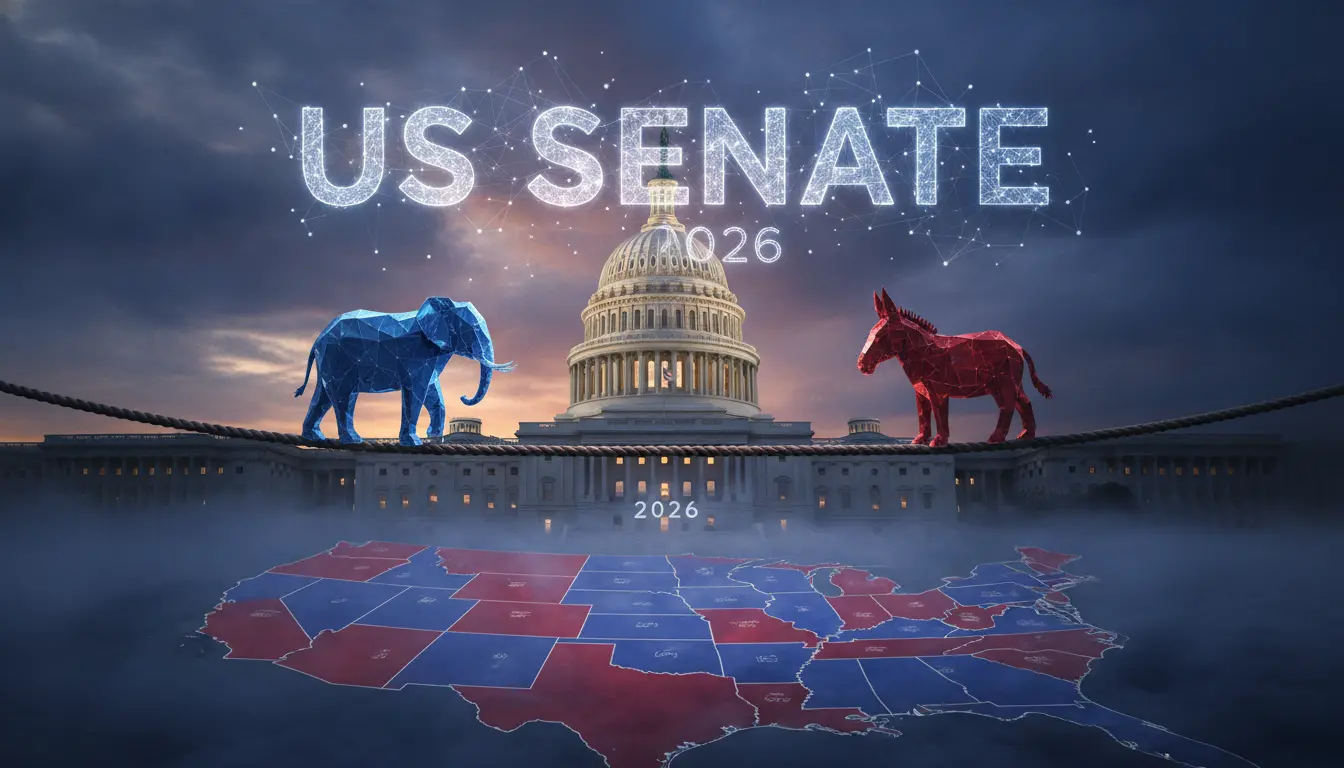
Control of US Senate Hangs in Balance as 2026 Midterm Elections Loom

Strategic Battle Lines Drawn for Control of U.S. Senate Ahead of 2026 Elections

Donald Trump's Endorsement Power Faces Pivotal Test in 2026 Midterm Elections
Supreme Court Vacancy Speculation Intensifies as 2026 Midterms Approach

Senate Republicans Grapple With Leadership Uncertainty Amid McConnell's Extended Absence
Donald Trump's Extensive Legal Battles Face Critical Junctures Ahead of 2026 Midterm Elections

Wisconsin's 2026 Gubernatorial Race Heats Up as David Crowley Enters Field with Evers' Endorsement
Outpoll Weekly Recap: Politics (August 3 – 9, 2026)
Donald Trump's Approval Ratings Face Key Test Following High-Profile Public Engagements Ahead of Mid-2026 Assessment

McConnell's Health Sparks Renewed Scrutiny of His Role as Senate Minority Leader