

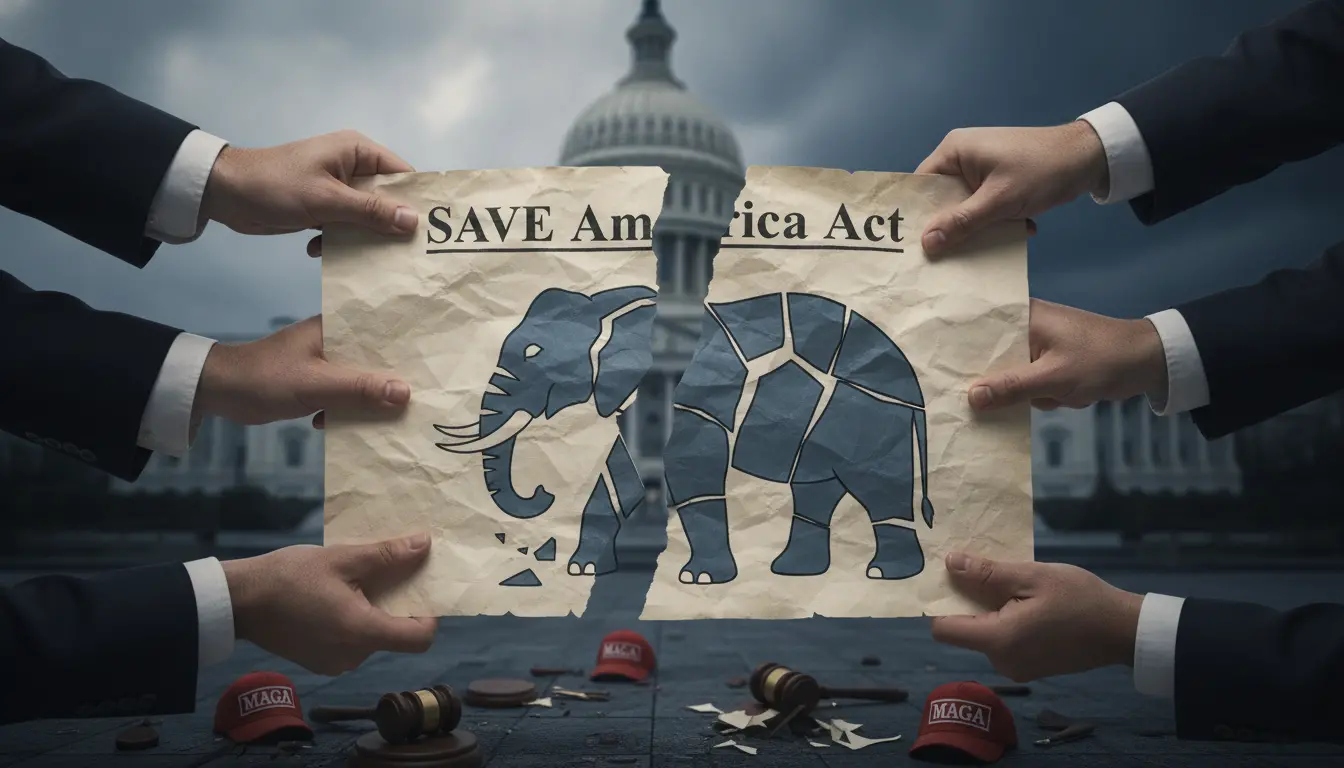
Trump-Backed 'SAVE America Act' Stalls in House Amid Deepening GOP Fractures
WASHINGTON – A signature piece of tax legislation backed by former President Donald Trump, the “SAVE America Act,” has become the latest casualty of the Republican party’s internal strife, grinding to a halt in the House of Representatives. The bill, which aims to address the controversial cap on state and local tax (SALT) deductions, is now mired in the same legislative paralysis that has defined much of the current congressional session, highlighting the profound challenge Speaker Mike Johnson faces in uniting his fractured caucus.
The impasse underscores the deep ideological divisions within the GOP, which have rendered its razor-thin majority nearly unworkable. Hardline conservatives and more moderate members remain at odds over fiscal policy, legislative priorities, and party strategy, turning routine governance into a constant battle. For the SAVE America Act, this internal conflict has proven insurmountable, effectively shelving a bill that its proponents, including a contingent of Republicans from high-tax states, argue is crucial for economic fairness for their constituents.
The legislation at the heart of the dispute, H.R.7833, seeks to alter or eliminate the $10,000 cap on the SALT deduction imposed by the Tax Cuts and Jobs Act of 2017 (TCJA), a landmark achievement of the Trump administration. That cap disproportionately impacted taxpayers in states with high income and property taxes, such as New York, New Jersey, and California. While these are predominantly Democratic states, several Republican-held districts within them feel the sting of the limitation, creating a pocket of bipartisan and cross-factional support for its repeal. These GOP members argue that the cap unfairly penalizes their middle-class constituents and represents a form of federal overreach into local tax policy.
However, this view clashes sharply with the fiscal doctrine of the party's conservative wing. For members of the House Freedom Caucus and other fiscal hawks, raising the SALT cap is a non-starter. They argue that it primarily benefits wealthy individuals in blue states and would amount to a massive, unpaid-for tax cut that would further bloat the national deficit. These members contend that any tax relief should be broader and not targeted at undoing a key provision of the TCJA, which they view as a core conservative victory. This ideological stalemate places Speaker Johnson in an impossible position, caught between members demanding relief for their districts and a powerful bloc capable of derailing any legislation they oppose.
The backing of the bill by former President Trump adds another layer of complexity to the political stalemate. Typically, a Trump endorsement serves as a powerful rallying cry for the Republican base and its elected officials. In this case, however, his support has failed to break the logjam. This suggests that the internal divisions in the House GOP may now be running deeper than loyalty to the party's de facto leader. The inability to advance a Trump-backed bill demonstrates the extent to which procedural power has been decentralized to the party's fringes, allowing small groups of dissenters to exercise effective veto power over the entire legislative agenda.
With the House paralyzed by this infighting, the prospects for the SAVE America Act passing before the end of the current Congress appear increasingly dim. The legislative calendar is crowded, and controversial bills without broad consensus are easily pushed aside. The broader implications are significant, casting serious doubt on the Republican party’s ability to govern effectively should it retain control of the House or win other branches of government in the upcoming elections. The fate of the bill now likely rests on the outcome of the November elections and whether the next Congress can forge a new consensus on tax policy, particularly as many of the TCJA’s individual provisions, including the SALT cap, are set to expire at the end of 2025, forcing the issue back to the forefront of the national debate.
Stay Informed. Act Smarter.
Get weekly highlights, major headlines, and expert insights — then put your knowledge to work in our live prediction markets.
Related News

US 'SAVE Act' Housing Bill Navigates Path to Law Amidst Presidential Opposition and CBDC Ban Debate
Proposed SAVE Act to Mandate Citizenship Proof for Federal Voters Sparks US House Battle
Senate Passes Stopgap Funding Bill, but Long-Term Budget Deal Remains Elusive Ahead of October 1 Deadline

Sweeping Bipartisan Housing Bill Heads to Trump's Desk for Final Approval
Trump's Initial Iran Memorandum of Understanding Ignites Bipartisan Congressional Scrutiny
Intensifying Political and Legal Battles Renew Impeachment Speculation for Donald Trump
U.S. Lawmakers Face Mounting Pressure to Address Social Security's Solvency Before 2027

Donald Trump's Endorsement Power Faces Pivotal Test in 2026 Midterm Elections

Trump-Backed Venezuela Oil Agreement Faces Stiff Congressional Resistance

Trump Vows 100% Tariffs on Europe Over Digital Taxes, Threatening New Trade War