

- News
- Politics
- US 'SAVE Act' Housing Bill Navigates Path to Law Amidst Presidential Opposition and CBDC Ban Debate
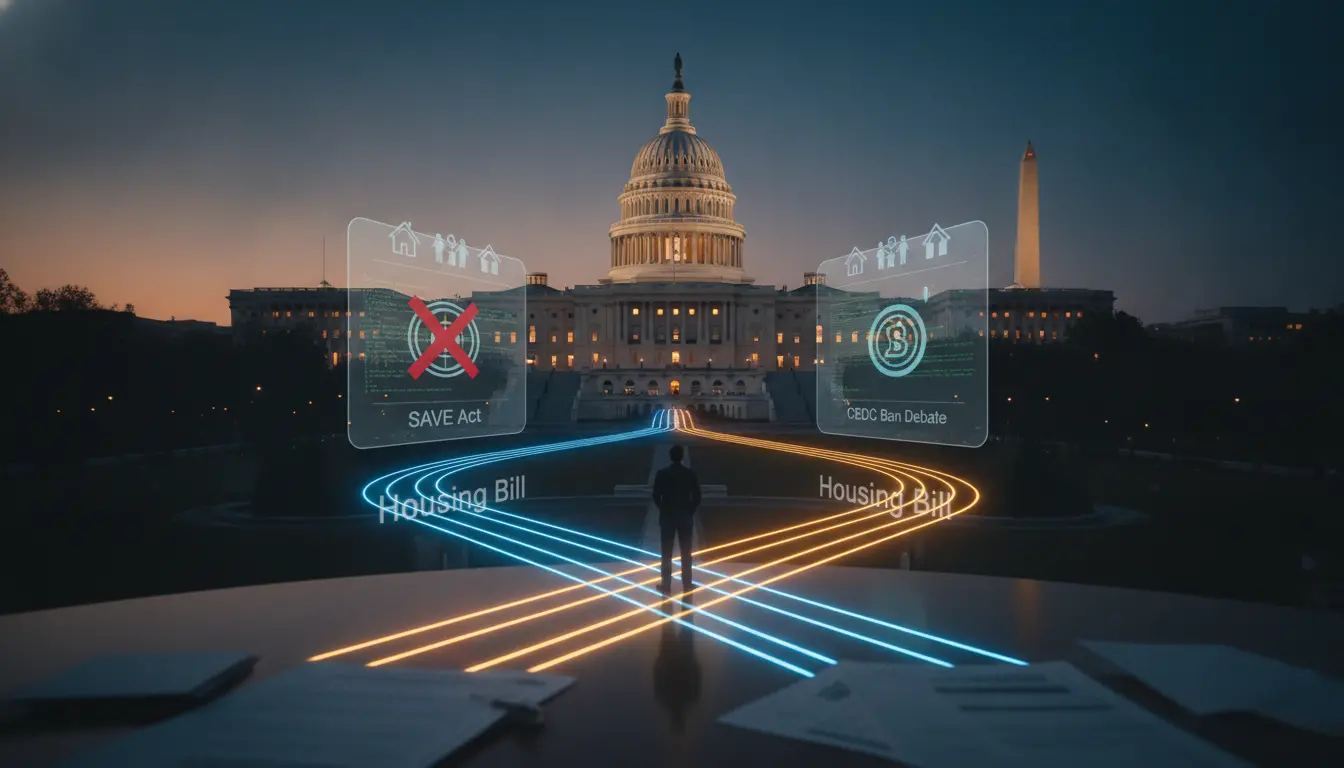
US 'SAVE Act' Housing Bill Navigates Path to Law Amidst Presidential Opposition and CBDC Ban Debate
A significant legislative battle is brewing in Washington over the proposed "SAVE Act," a major housing bill that has garnered attention not only for its ambitious provisions addressing the nation's housing crisis but also for an unexpected and highly controversial inclusion: a ban on central bank digital currencies (CBDCs). The bill's future has been further complicated by former President Donald Trump's public declaration that he would refuse to sign the legislation, setting the stage for a high-stakes showdown that could redefine both housing policy and the trajectory of digital finance in the United States.
The SAVE Act, still in its legislative journey, is framed by its proponents as a crucial step towards alleviating soaring housing costs and increasing housing supply across the country. While specific details of its housing-related initiatives are subject to ongoing debate and refinement within Congress, the underlying objective is widely understood to target affordability challenges that plague many American families. However, the unexpected inclusion of a provision prohibiting the creation of a US CBDC has injected a potent dose of partisan and ideological fervor into discussions. This element appeals strongly to a segment of the Republican base concerned about government overreach and surveillance inherent in government-backed digital currencies, aligning with a broader skepticism of digital assets perceived to threaten financial privacy.
President Trump's outspoken opposition adds a formidable hurdle. His public vow not to sign the bill underscores the deep ideological divide it has exposed. Should he return to office, such a pre-emptive declaration would signal a direct challenge to Congress, forcing lawmakers to consider alternative pathways for the bill to become law. The legislative process, however, offers routes around a presidential signature. Under constitutional provisions, a bill can become law without the President's explicit approval if it is presented to them and they fail to veto it and return it to Congress within 10 days (excluding Sundays). This scenario, often referred to as a "pocket veto" if Congress adjourns during this period, or simply becoming law by inaction if Congress remains in session, creates a complex dynamic for the SAVE Act as it progresses toward a potential July 2026 deadline for enactment.
The debate over a potential US CBDC has been simmering for years, pitting proponents who see it as a tool for financial inclusion and payment system modernization against critics who warn of privacy infringements and potential governmental control over individual finances. By coupling this issue with housing, the SAVE Act has created an unusual coalition of supporters and detractors. Housing advocates, typically focused on economic and social policies, find themselves navigating complex debates on monetary policy and digital rights. Conversely, digital privacy advocates and certain financial conservatives might find themselves supporting a housing bill solely for its CBDC-banning clause, even if they disagree with other aspects of the legislation.
The legislative landscape for the SAVE Act remains fluid, heavily influenced by the shifting political currents ahead of future election cycles. The timeline extending to mid-2026 suggests that the bill’s fate could hinge on the composition of Congress and the occupant of the White House following the next presidential election. Should a future Congress be sufficiently united in its support for the SAVE Act, and potentially hold a veto-proof majority, it could override a presidential veto, making the bill law despite executive branch opposition. The strategic positioning of the CBDC ban within a broader housing package might be an attempt to garner wider support, but it simultaneously makes the bill a larger, more contentious target.
What is at stake is substantial. For millions of Americans grappling with housing unaffordability, the SAVE Act represents a potential lifeline, offering solutions to a crisis that impacts quality of life and economic stability. For advocates of financial privacy and those wary of government expansion into digital currency, the CBDC ban is a critical firewall against what they perceive as an encroaching digital authoritarianism. The legislative maneuvering around President Trump's declared refusal to sign highlights the delicate balance of power between the executive and legislative branches, and the intricate constitutional mechanisms that dictate how policy is shaped. The coming months and years will undoubtedly see intense lobbying, political strategizing, and public debate as the SAVE Act navigates this perilous path to potential enactment, with profound implications for both the housing market and the future of digital money.
Ultimately, the path of the SAVE Act underscores the increasing complexity of modern legislative efforts, where diverse policy objectives are often bundled, leading to unexpected alliances and formidable opposition. The interplay between pressing social needs, technological innovation, and deeply held political philosophies is creating a unique challenge for lawmakers. The outcome of this legislative saga will not only determine the fate of a major housing initiative but also signal the direction of the United States' approach to digital currencies and presidential authority in the years to come.
Stay Informed. Act Smarter.
Get weekly highlights, major headlines, and expert insights — then put your knowledge to work in our live prediction markets.
Related News
US Congressional Measure Seeks to Block Federal Reserve From Issuing Digital Currency
Senate Passes Bipartisan Housing Bill With Four-Year Ban on Federal Reserve Digital Currency
US Federal Ban on Central Bank Digital Currency Development Becomes Law

Sweeping Bipartisan Housing Bill Heads to Trump's Desk for Final Approval
Proposed SAVE Act to Mandate Citizenship Proof for Federal Voters Sparks US House Battle
Trump-Backed 'SAVE America Act' Stalls in House Amid Deepening GOP Fractures

Trump-Backed Venezuela Oil Agreement Faces Stiff Congressional Resistance
Congressional Push to Ban TikTok Gains Momentum Amid Data Security Concerns
Trump Reportedly Renews Push to Remove Federal Reserve Governor Lisa Cook, Setting Stage for Constitutional Clash
Kevin Warsh Faces Mounting Pressure as Fed Chair Amid Political Storm