

US Congressional Measure Seeks to Block Federal Reserve From Issuing Digital Currency
A significant housing bill making its way through the U.S. Congress has become an unexpected battleground for the future of the nation’s financial system, as it includes a pivotal provision aimed at banning the creation of a U.S. Central Bank Digital Currency (CBDC). This legislative maneuver reflects a growing sentiment among lawmakers to preemptively halt any efforts by the Federal Reserve to issue a digital dollar, raising profound questions about financial innovation, individual privacy, and the regulatory landscape for digital assets.
The debate over a CBDC in the United States has intensified in recent years, pitting proponents who envision a more efficient, inclusive, and globally competitive financial system against critics who raise concerns about privacy, potential government overreach, and the implications for commercial banking. A CBDC, unlike decentralized cryptocurrencies such as Bitcoin, would be a digital form of the U.S. dollar, issued and backed by the Federal Reserve. Advocates argue it could streamline payments, reduce transaction costs, and provide banking services to unbanked populations. However, a coalition of privacy advocates, some financial institutions, and a significant bloc of conservative lawmakers view a government-controlled digital currency as a slippery slope toward surveillance and an erosion of financial freedom.
While the Federal Reserve has been exploring the feasibility and implications of a digital dollar, it has repeatedly stated that no decision has been made regarding its issuance and that any move would require clear congressional authorization. This latest legislative push, embedded within a broader housing package, demonstrates a proactive — and somewhat aggressive — approach by Congress to define those boundaries. The inclusion of such a consequential financial policy within a seemingly unrelated housing bill highlights the strategic efforts of lawmakers to ensure their stance on a CBDC is codified into law, bypassing a standalone debate which might face different political hurdles.
The specific language within the housing bill aims to prevent the Federal Reserve from developing or issuing a CBDC, and crucially, it seeks to ensure that this prohibition effectively comes into force. This emphasis on effectiveness is key, as any legislative ban could face immediate regulatory interpretations that might dilute its impact or subsequent legal challenges. Financial regulations are often complex, and the interpretation of new laws can significantly alter their practical application. Opponents of the ban, including those who see value in exploring a digital dollar, could seek avenues to challenge its constitutional validity or argue for narrow interpretations that limit its scope, potentially creating a protracted legal and regulatory battle that could extend for years.
The implications of an effective CBDC ban are far-reaching. On one hand, it would solidify the U.S. commitment to a multi-faceted financial system, preserving the role of commercial banks and potentially mitigating privacy concerns that many lawmakers have voiced. It could also signal a preference for private sector innovation in digital payments, fostering growth in stablecoins and other privately issued digital assets. On the other hand, it could be seen as a step back for the U.S. in the global race for digital currency leadership, potentially ceding ground to countries like China, which has aggressively pursued its own digital yuan. This could have long-term consequences for the dollar's dominance in international trade and finance.
The future effectiveness of this CBDC prohibition hinges not just on its passage but also on the political and legal landscape over the next several years. The Federal Reserve's stance, future administrations' priorities, and the outcome of potential legal challenges will all play a critical role in determining whether this legislative effort truly establishes a permanent barrier to a digital dollar or merely initiates a new phase in the ongoing national debate about the future of money in the digital age. The inclusion of this provision signals a firm legislative intent, but its ultimate impact remains subject to a complex interplay of legal, regulatory, and political forces.
Stay Informed. Act Smarter.
Get weekly highlights, major headlines, and expert insights — then put your knowledge to work in our live prediction markets.
Related News
US Federal Ban on Central Bank Digital Currency Development Becomes Law

Senate Passes Bipartisan Housing Bill With Four-Year Ban on Federal Reserve Digital Currency
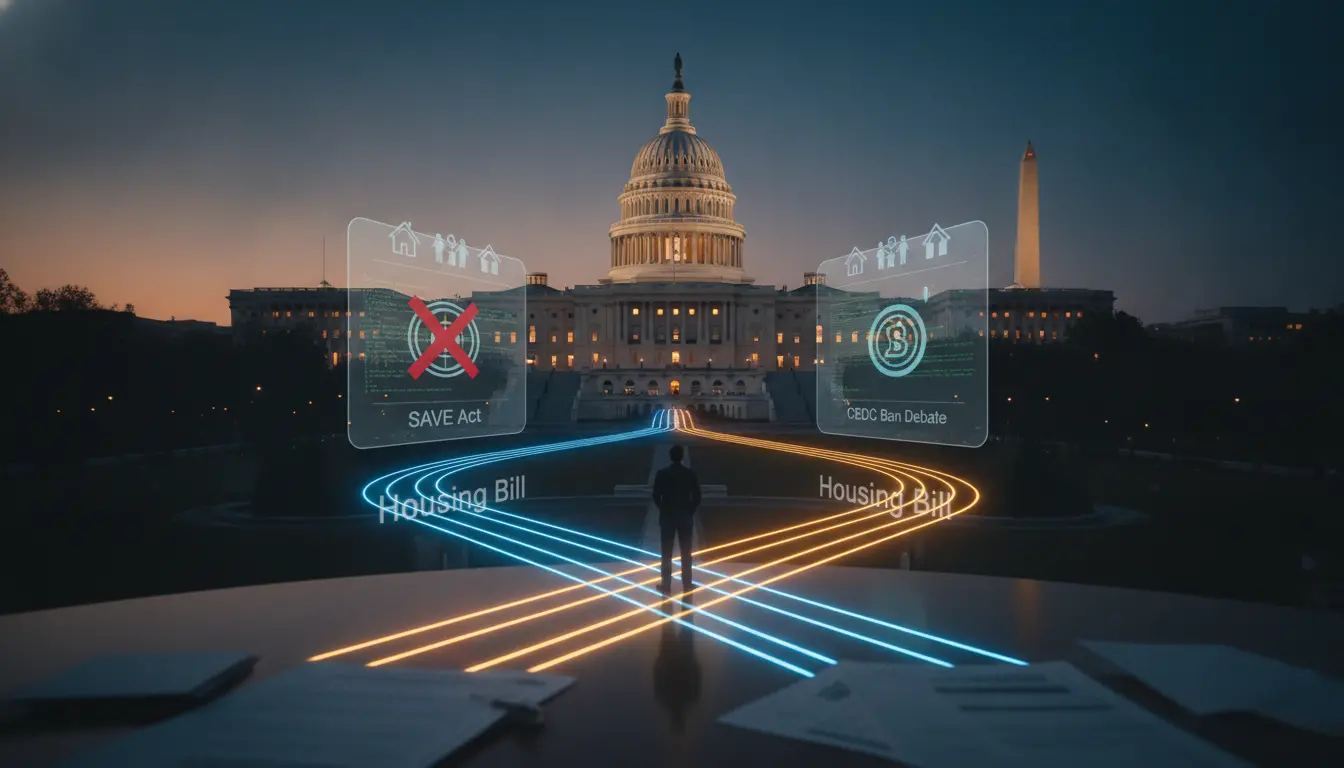
US 'SAVE Act' Housing Bill Navigates Path to Law Amidst Presidential Opposition and CBDC Ban Debate
Congressional Push to Ban TikTok Gains Momentum Amid Data Security Concerns

Outpoll Weekly Recap: Crypto (August 10 – 16, 2026)
Supreme Court Poised to Redefine Presidential Authority Over Federal Reserve Leadership
Supreme Court Weighs President's Power to Fire Federal Reserve Governors
Supreme Court Examines Presidential Authority Over Federal Reserve Governor Removals
Supreme Court Weighs Presidential Power to Remove Federal Reserve Governors
Supreme Court Set to Deliver Landmark Ruling on Presidential Authority Over Federal Reserve Governors