

- News
- Politics
- U.S. Supreme Court Deliberates Sweeping Presidential Immunity Claims Amidst Landmark Case
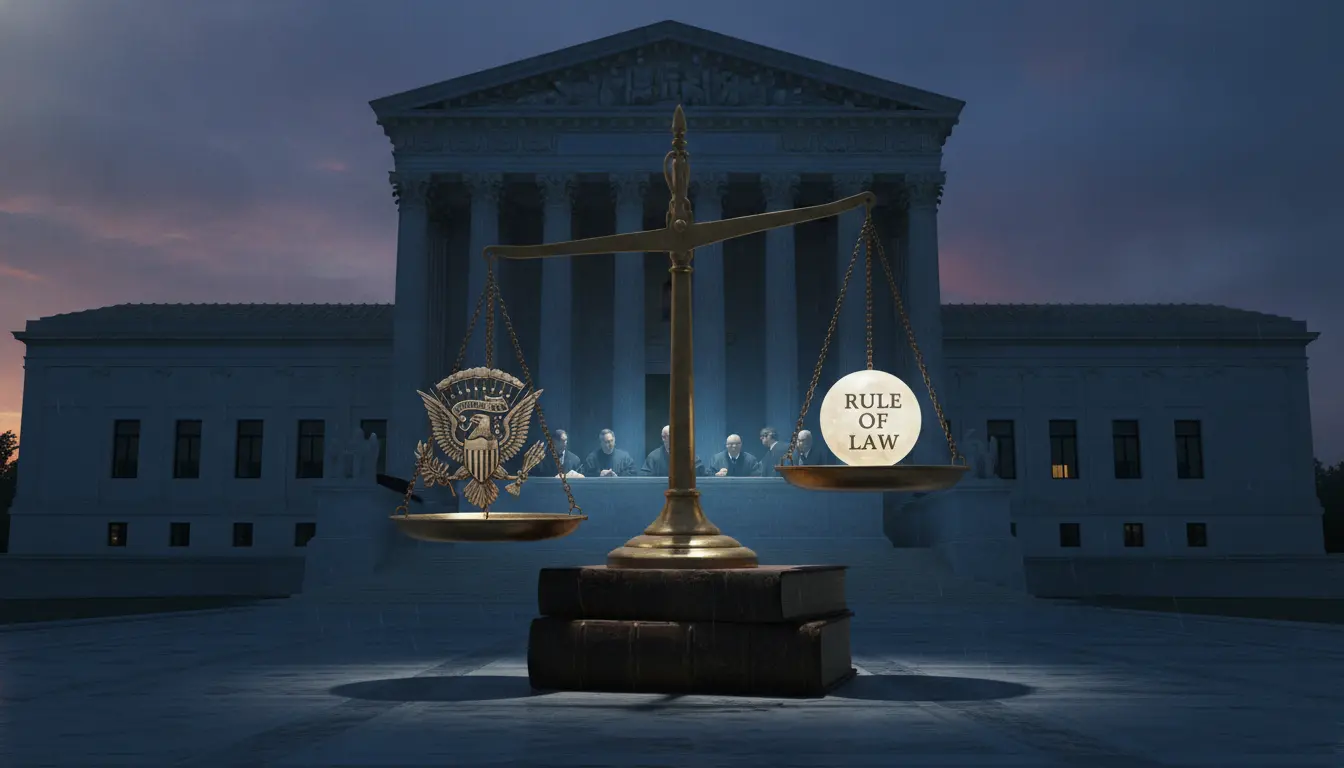
U.S. Supreme Court Deliberates Sweeping Presidential Immunity Claims Amidst Landmark Case
The U.S. Supreme Court is poised to issue one of its most consequential rulings in decades, currently deliberating the scope of presidential immunity for actions undertaken while in office. This highly anticipated decision, expected as the Court’s term draws to a close, carries profound implications for the balance of power, the accountability of future executives, and the very fabric of American democracy. The case stems from a challenge to an appellate court’s rejection of a former president’s claims that he is absolutely immune from criminal prosecution for official acts, a contention that, if upheld, could fundamentally reshape the legal landscape surrounding the presidency.
At the heart of the matter is the prosecution of former President Donald Trump on charges related to his efforts to overturn the 2020 election results. Special Counsel Jack Smith’s indictment has been met with a robust legal defense arguing that a former president cannot be prosecuted for official acts without prior impeachment and conviction by Congress. This argument posits that allowing such prosecutions would open the floodgates to politically motivated investigations, hamstringing a president’s ability to make difficult decisions without fear of retribution upon leaving office. Lower courts have largely rejected this expansive view of immunity, with the U.S. Court of Appeals for the D.C. Circuit unequivocally stating that "a former President can be prosecuted for official acts if the charges are otherwise valid."
During oral arguments, the justices grappled with establishing clear boundaries for presidential conduct. Attorneys for the former president argued that without robust immunity, the office would be rendered vulnerable to harassment and extortion, turning every post-presidency into a potential legal battleground. They invoked the principle of executive independence, suggesting that presidents need the freedom to act decisively without the constant specter of criminal charges. Conversely, the Special Counsel’s office, along with numerous legal scholars and amici curiae, contended that no one, not even a president, is above the law. They emphasized that unchecked immunity would grant a president license to commit crimes, effectively eroding the rule of law and endangering constitutional governance. The debate centered on hypothetical scenarios, from ordering assassinations to selling pardons, attempting to define where legitimate official conduct ends and criminal culpability begins.
The Court’s consideration draws heavily on historical precedent, particularly Nixon v. Fitzgerald (1982), which established civil immunity for presidents for official acts, but left open the question of criminal immunity. The current case forces the justices to directly confront that unresolved question, navigating the tension between protecting the presidency as an institution and ensuring accountability. The implications extend far beyond the immediate context of the current administration. A broad ruling in favor of absolute immunity could empower future presidents to engage in actions that might otherwise be considered criminal, confident that they would face no legal repercussions once out of office. Conversely, a narrow ruling, or one that upholds the lower court’s stance, would reinforce the principle that even the highest office is subject to the law, albeit with due consideration for the unique demands of the executive.
The political backdrop to this legal drama is undeniable. With a presidential election looming, the timing and nature of this decision are under intense scrutiny. The Court’s ruling will not only determine the immediate legal fate of a former president but will also send a powerful signal about the extent of executive power in a modern democracy. The justices face the daunting task of crafting a decision that can withstand intense political pressure and provide enduring clarity on a fundamental constitutional question. Their deliberations involve weighing the need for a functioning, independent executive against the paramount importance of deterring criminal behavior and upholding the principle of equal justice under the law.
Experts suggest the Court has several avenues it could pursue, from affirming the D.C. Circuit’s complete rejection of immunity to carving out a partial immunity that protects certain "core" presidential functions while allowing prosecution for others. It could also remand the case back to lower courts to develop a clearer standard, though this appears less likely given the urgency. Regardless of the specific framework adopted, the decision is guaranteed to be a landmark one, setting a precedent that will define presidential power and accountability for generations to come. The delicate balance between executive prerogative and the rule of law hangs in the balance as the nation awaits the Supreme Court’s definitive word.
Stay Informed. Act Smarter.
Get weekly highlights, major headlines, and expert insights — then put your knowledge to work in our live prediction markets.
Related News
Supreme Court Poised to Redefine Presidential Authority Over Federal Reserve Leadership
Supreme Court Deliberates Presidential Authority to Remove Federal Reserve Governors
Supreme Court Set to Deliver Landmark Ruling on Presidential Authority Over Federal Reserve Governors
Supreme Court Poised to Redefine Presidential Authority Over Federal Reserve Governors
Supreme Court Weighs Presidential Power to Remove Federal Reserve Governors
Supreme Court Examines Presidential Authority Over Federal Reserve Governor Removals
Supreme Court Expands Presidential Authority to Remove Independent Agency Heads, Redefining Executive Control
Supreme Court Weighs President's Power to Fire Federal Reserve Governors
Donald Trump's Manhattan Hush Money Trial Reaches Critical Phase Amidst Felony Allegations
Donald Trump Faces Looming Prospect of New Federal and State Indictments Amid Sweeping Investigations