

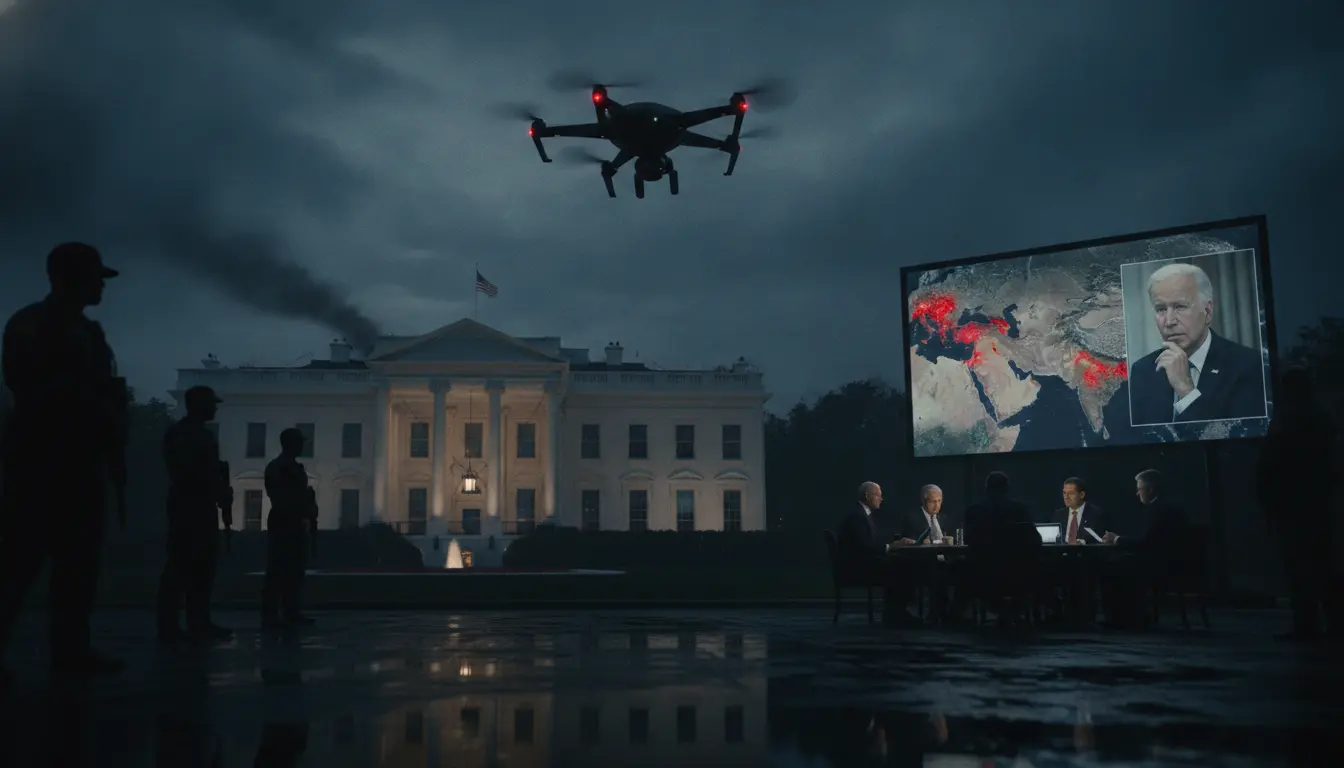
Biden Administration Navigates Calls for Broader Retaliatory Action Amid Iran Tensions
Tensions in the Middle East have reached a critical juncture as the United States grapples with intense pressure to deliver a robust response to recent attacks on its forces, specifically the deadly drone strike on Tower 22 in Jordan. This incident, which resulted in the deaths of three American soldiers and injured dozens more, has amplified calls within Washington and from key allies for a more direct and impactful deterrence strategy against Iran and its network of proxy groups. The Biden administration is currently navigating a complex geopolitical landscape, balancing the need to protect its personnel and interests with the urgent imperative to avoid a wider, uncontained regional conflict.
The attack on Tower 22, a logistics support base near the Syrian border, marked a significant escalation in a series of over 160 assaults on US and coalition forces across Iraq, Syria, and Jordan since the onset of the Israel-Hamas conflict in October. Attributed to the Islamic Resistance in Iraq, an umbrella group for Iran-backed militias, the strike crossed a critical threshold by resulting in American fatalities. In the immediate aftermath, the US launched retaliatory strikes against more than 85 targets in Iraq and Syria, hitting command and control centers, intelligence hubs, rocket and missile storage facilities, and drone sites associated with Iran's Islamic Revolutionary Guard Corps (IRGC) Quds Force and its affiliated militias. While these initial responses aimed to degrade capabilities and deter future aggression, they have not fully assuaged the clamor for a more decisive blow.
The political stakes for President Biden are exceptionally high. Domestically, he faces bipartisan criticism for what some perceive as a hesitant or insufficient response, emboldening adversaries and endangering American service members. Internationally, the administration must project strength to allies while simultaneously engaging in delicate diplomatic efforts to prevent the conflict from spiraling out of control. Iran, for its part, continues to deny direct involvement in the specific attack on Tower 22, maintaining a strategy of plausible deniability while overtly supporting and arming its regional proxies, known collectively as the “axis of resistance.” This strategic ambiguity allows Tehran to exert influence and challenge US presence without directly engaging in full-scale war, a perilous dance that keeps the region perpetually on edge.
Discussions within Pentagon and White House circles reportedly encompass a range of further options, from additional strikes against the same proxy groups to more direct actions targeting Iranian assets or even facilities within Iran itself. Each option carries its own set of risks and potential repercussions. Striking Iranian territory or naval assets, for example, would represent an unprecedented escalation and could provoke a direct military response from Tehran, leading to a tit-for-tat confrontation that neither side explicitly desires but both may find difficult to disengage from. Conversely, a perceived lack of forceful action risks further erosion of US deterrence credibility and could encourage more aggressive behavior from Iran-backed militias.
Several key factors weigh heavily on decision-makers. The proximity of the upcoming US presidential election introduces domestic political considerations into what would otherwise be purely national security calculations. Furthermore, the enduring humanitarian crisis and ongoing conflict in Gaza continue to fuel regional anger and provide a fertile ground for anti-US sentiment, complicating any de-escalation efforts. The ultimate challenge lies in finding a response that effectively re-establishes deterrence, protects US personnel, and sends an unequivocal message to Tehran and its proxies, without inadvertently triggering a broader war that would have devastating consequences for global stability and economic markets.
Diplomatic channels, though often strained, remain crucial. International actors, including European allies and even adversaries like China and Russia, have generally urged restraint from all parties, recognizing the potential for widespread instability. The coming days and weeks are expected to be marked by intense strategic deliberations, as Washington seeks to recalibrate its approach to a persistently volatile Middle East, striving to balance assertive military action with the urgent need for strategic patience and de-escalation.
The long-term implications of these developments are significant, not just for the immediate security of US forces but for the future of American foreign policy in the Middle East. The escalating cycle of attacks and retaliation threatens to reshape alliances, alter regional power dynamics, and potentially draw the United States into a prolonged and costly engagement, underscoring the gravity of the decisions currently facing the Biden administration.
Stay Informed. Act Smarter.
Get weekly highlights, major headlines, and expert insights — then put your knowledge to work in our live prediction markets.
Related News
US-Iran Escalation Fears Mount After Retaliatory Strikes Deepen Regional Crisis
Washington Weighs Escalation Amid Persistent Iranian-Backed Aggression in Middle East
US and Saudi Arabia Escalate Strikes Against Iran-Backed Militias in Iraq Following Missile Attack
United States Considers Direct Offensive Strikes Against Iranian Mainland Amid Heightened Regional Tensions

US and Iran Navigate Fragile Cease-Fire Amid Heightened Tensions

Heightened Geopolitical Tensions Spark Concerns Over Potential US-Iran Conflict

US and Iran Strive to Maintain Fragile De-escalation Amid Persistent Regional Tensions
US-Iran Tensions Soar Amid Escalating Strikes and Maritime Incidents in Gulf
Trump's 'Massive Attack' Rhetoric on Iran Stokes Fears of Renewed Middle East Conflict

US-Iran Tensions Simmer Amid Regional Flare-ups, Raising Fears of Direct Conflict