

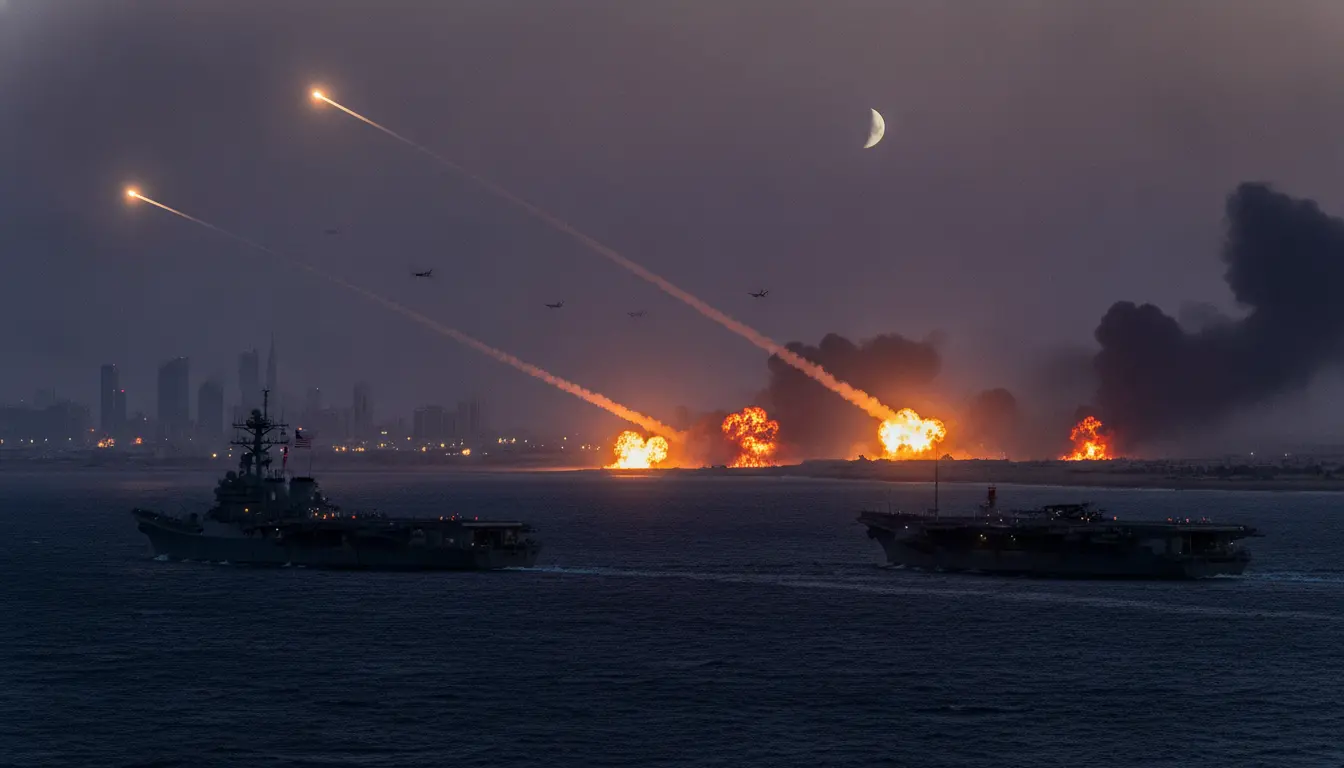
US-Iran Escalation Fears Mount After Retaliatory Strikes Deepen Regional Crisis
Tensions between the United States and Iran have reached a critical new inflection point following a series of retaliatory military actions, igniting widespread fears of a broader conflict across the already volatile Middle East. The immediate catalyst was a drone attack on a US military outpost in Jordan, which tragically killed three American service members. This unprecedented incident, attributed by Washington to Iran-backed militias operating in Iraq and Syria, prompted a robust response from the Pentagon, targeting dozens of sites associated with Iranian proxies in the region. However, Iran's swift condemnation and the continued operational freedom of its allied groups suggest a dangerous cycle of escalation is underway, threatening to unravel what little stability remains.
The current crisis is rooted in decades of animosity and a complex web of proxy conflicts that have long defined US-Iran relations. Following the 1979 Iranian Revolution, the two nations have been locked in a geopolitical struggle, punctuated by periods of direct confrontation and covert operations. The collapse of the 2015 Iran nuclear deal, reimposition of stringent US sanctions, and Iran's accelerated nuclear program further exacerbated mistrust. Both Washington and Tehran have consistently vied for influence across the Levant, Persian Gulf, and beyond, often through non-state actors like Hezbollah in Lebanon, the Houthis in Yemen, and various Shiite militias in Iraq and Syria. These groups, armed and trained by Iran's Islamic Revolutionary Guard Corps (IRGC), serve as key instruments of Tehran’s regional projection and asymmetric warfare capabilities.
Recent events have dramatically heightened the stakes. The ongoing conflict in Gaza, sparked by the October 7th attacks, has profoundly destabilized the entire region, creating fertile ground for these proxy forces to intensify their operations. The Houthis, for instance, have launched numerous missile and drone attacks against commercial shipping in the Red Sea, ostensibly in solidarity with Palestinians, leading to direct US and UK military intervention. Concurrently, Iraqi and Syrian militias have stepped up their assaults on US forces stationed in those countries, culminating in the fatal drone strike on Tower 22 in Jordan. This interconnected web of conflicts underscores the precarious balance, where a localized incident can rapidly trigger a wider confrontation involving major state actors.
In response to the Jordan attack, the US launched extensive airstrikes against over 85 targets across Iraq and Syria, including command and control centers, intelligence facilities, rocket and missile storage sites, and drone production facilities used by the IRGC-Quds Force and its affiliated militias. President Biden vowed that the response would be multi-layered and sustained, designed to degrade the capabilities of these groups and deter future aggression. While the US sought to avoid direct engagement with Iranian territory, the sheer scale and scope of the strikes represented a significant escalation. Iran, for its part, denied direct involvement in the Jordan attack but vowed a strong response to any aggression against its interests or proxies, signaling a dangerous game of tit-for-tat that carries immense risks.
The challenge for both Washington and Tehran lies in managing de-escalation without appearing weak or abandoning their strategic objectives. For the US, the imperative is to protect its forces, deter further attacks, and restore credibility, while simultaneously preventing a regional conflagration that could draw it into a full-blown war. For Iran, maintaining its network of proxies and its strategic depth across the Middle East is paramount, yet it must also weigh the severe economic and military consequences of direct confrontation with a global superpower. The international community, increasingly alarmed by the deteriorating situation, has called for restraint, recognizing that a miscalculation by either side could plunge the region into an even greater catastrophe, with far-reaching implications for global energy markets and international security.
Diplomatic channels, though often strained, remain crucial. However, the absence of direct, high-level dialogue between the US and Iran makes managing this crisis particularly difficult. Each side communicates largely through proxies, public statements, and military actions, increasing the potential for misinterpretation and unintended escalation. As long as the underlying geopolitical tensions persist and regional flashpoints like Gaza remain unresolved, the danger of a wider, more devastating conflict between these two formidable adversaries will continue to loom large over the Middle East.
Stay Informed. Act Smarter.
Get weekly highlights, major headlines, and expert insights — then put your knowledge to work in our live prediction markets.
Related News
Biden Administration Navigates Calls for Broader Retaliatory Action Amid Iran Tensions
US-Iran Tensions Soar Amid Escalating Strikes and Maritime Incidents in Gulf
Heightened Geopolitical Tensions Spark Concerns Over Potential US-Iran Conflict
Washington Weighs Escalation Amid Persistent Iranian-Backed Aggression in Middle East
Heightened US-Iran Tensions Fuel Fears of Formal Conflict Declaration
US-Iran Tensions Simmer Amid Regional Flare-ups, Raising Fears of Direct Conflict

US-Iran Tensions Escalate Amid Renewed Rhetoric, Raising Specter of Direct Confrontation

US and Iran Navigate Fragile Cease-Fire Amid Heightened Tensions
U.S. and Iran Face Growing Risk of Direct Military Confrontation Beyond Gulf's Strategic Waterways
US-Iran De-escalation Accord Faces Precarious Future Amid Renewed Hostilities and Strait of Hormuz Tensions