

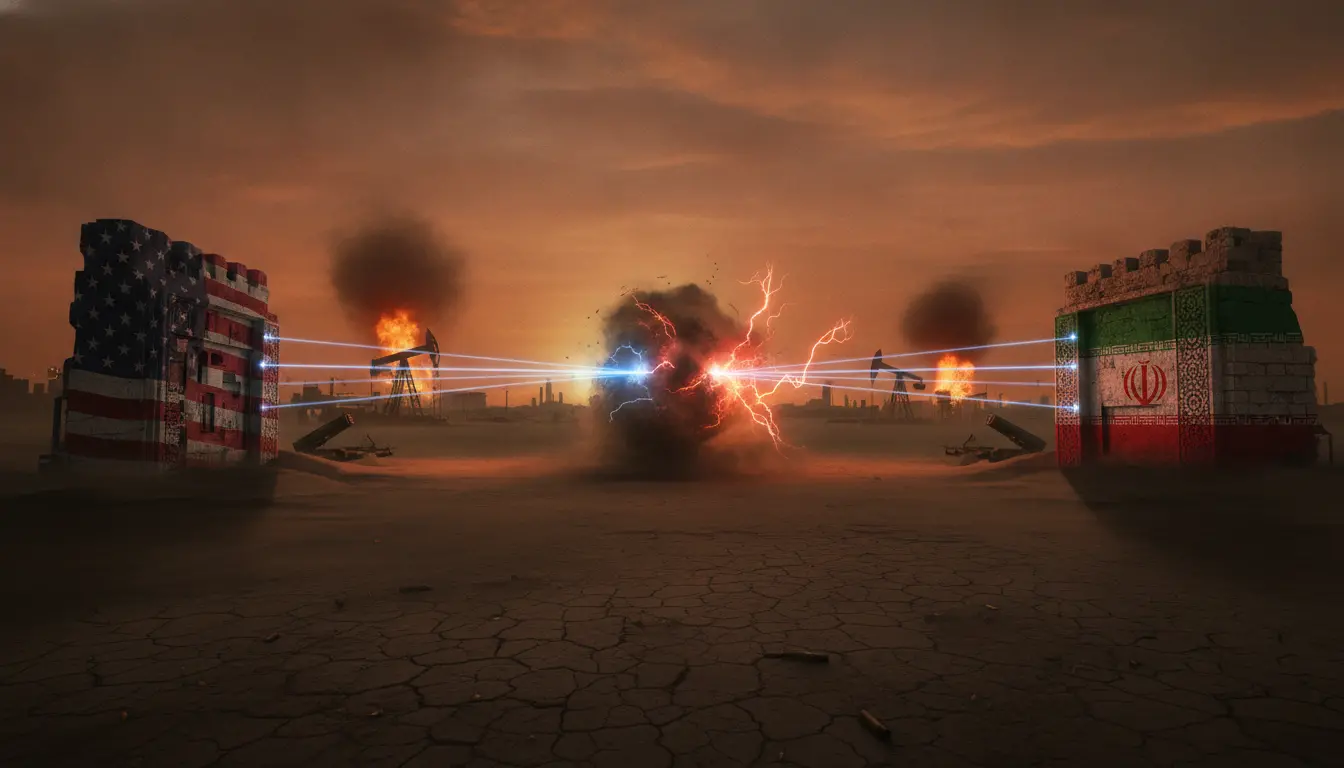
Protracted US-Iran Hostilities Raise Stakes for Middle East Stability
Six months into a period of heightened confrontation, the United States and Iran find themselves locked in a complex and undeclared conflict across the Middle East, with little immediate prospect for de-escalation or a formal cessation of hostilities. While no direct declaration of war has been made by either side, the ongoing exchange of attacks, proxy engagements, and military posturing has created a de facto state of conflict that continues to destabilize an already volatile region. The protracted nature of these hostilities underscores the deep-seated animosity and competing strategic interests that have defined relations between Washington and Tehran for decades, making any pathway to a comprehensive peace agreement exceptionally challenging.
The current phase of confrontation is rooted in a long history of distrust and escalating tensions, notably exacerbated by the 2018 US withdrawal from the Joint Comprehensive Plan of Action (JCPOA), commonly known as the Iran nuclear deal. This move, coupled with the subsequent re-imposition of crippling sanctions under the "maximum pressure" campaign, significantly heightened economic pressure on Iran and prompted a retaliatory shift in its regional strategy. Tehran has since increasingly relied on its network of allied militias and proxy groups—ranging from Hezbollah in Lebanon to the Houthis in Yemen and various factions in Iraq and Syria—to project power, deter perceived threats, and challenge US influence. These groups have often targeted US assets, personnel, and allies in the region, leading to counter-strikes and a dangerous cycle of escalation.
Recent months have seen a surge in flashpoints across multiple fronts. In Iraq and Syria, US forces have repeatedly faced drone and rocket attacks from Iran-backed militias, prompting retaliatory airstrikes against their infrastructure and personnel. The Red Sea has emerged as another critical theater, where Houthi rebels, supported by Iran, have launched numerous attacks on international shipping lanes, ostensibly in solidarity with Palestinians in Gaza. These actions have drawn significant US and allied military responses, including naval deployments and strikes on Houthi targets in Yemen, further broadening the scope of the regional crisis. Concurrently, the shadow war between Iran and its regional adversaries, particularly Israel, continues unabated, with cyberattacks, covert operations, and occasional kinetic engagements contributing to the overall instability.
Key players on both sides face immense domestic and international pressures that complicate any move towards reconciliation. In Washington, the Biden administration has sought to deter Iranian aggression while avoiding a direct, large-scale conflict, balancing commitments to regional allies with a desire to refocus on other global challenges. However, the sustained attacks on US interests and personnel have fueled calls for a more robust response. On the Iranian side, the leadership remains defiant, viewing its regional actions as defensive measures against perceived US and Israeli encirclement. The Islamic Revolutionary Guard Corps (IRGC) and its Quds Force play a central role in orchestrating Iran's regional strategy, ensuring continued support for proxy groups and maintaining a posture of resistance.
The human cost and geopolitical implications of this prolonged confrontation are substantial. Civilian populations in conflict zones like Yemen, Iraq, and Syria bear the brunt of the violence, while regional economies suffer from disrupted trade routes and investment uncertainty. For the broader international community, the risk of a miscalculation leading to a wider conflict remains a grave concern, with potential ramifications for global energy markets and international security. Diplomatic channels between Washington and Tehran remain largely nonexistent or severely constrained, relying heavily on intermediaries and back-channel communications, which are insufficient to navigate the current level of animosity and distrust.
Looking ahead, the path to a ceasefire or a durable peace agreement appears fraught with obstacles. Iran’s increasing confidence in its regional power projection, coupled with its advancing nuclear program, gives it significant leverage but also raises the stakes. For the US, disengagement without addressing underlying security concerns or abandoning allies is untenable. Any potential breakthrough would likely require a fundamental shift in strategic priorities from both nations, a renewed commitment to direct, high-level diplomatic engagement, and credible assurances that each side’s core security interests would be respected. Without such shifts, the current state of protracted hostilities is likely to persist, further entrenching the cycle of violence and instability across the Middle East.
The current dynamic suggests that while neither side may desire a full-scale war, the absence of effective de-escalation mechanisms means that the region will continue to grapple with the fallout from an active and undeclared conflict for the foreseeable future, making the prospect of a near-term ceasefire a distant hope.
Stay Informed. Act Smarter.
Get weekly highlights, major headlines, and expert insights — then put your knowledge to work in our live prediction markets.
Related News

US and Iran Face Complex Path Toward Formal Ceasefire Amid Deep-Seated Regional Tensions
US and Iran Navigate Fragile Cease-Fire Amid Heightened Tensions

Heightened Geopolitical Tensions Spark Concerns Over Potential US-Iran Conflict

US-Iran Tensions Simmer Amid Regional Flare-ups, Raising Fears of Direct Conflict

Escalating US-Iran Tensions Stoke Fears of Formal Conflict Declaration

Diplomatic Efforts Mount to Salvage US-Iran De-escalation Agreement Amid Rising Regional Tensions
Heightened US-Iran Tensions Fuel Fears of Formal Conflict Declaration
Escalating US-Iran Military Confrontation Spurs Calls for Formal Ceasefire

US and Iran Strive to Maintain Fragile De-escalation Amid Persistent Regional Tensions

US and Iran Agree to Extend Ceasefire Until August 2026 Amid Persistent Tensions