

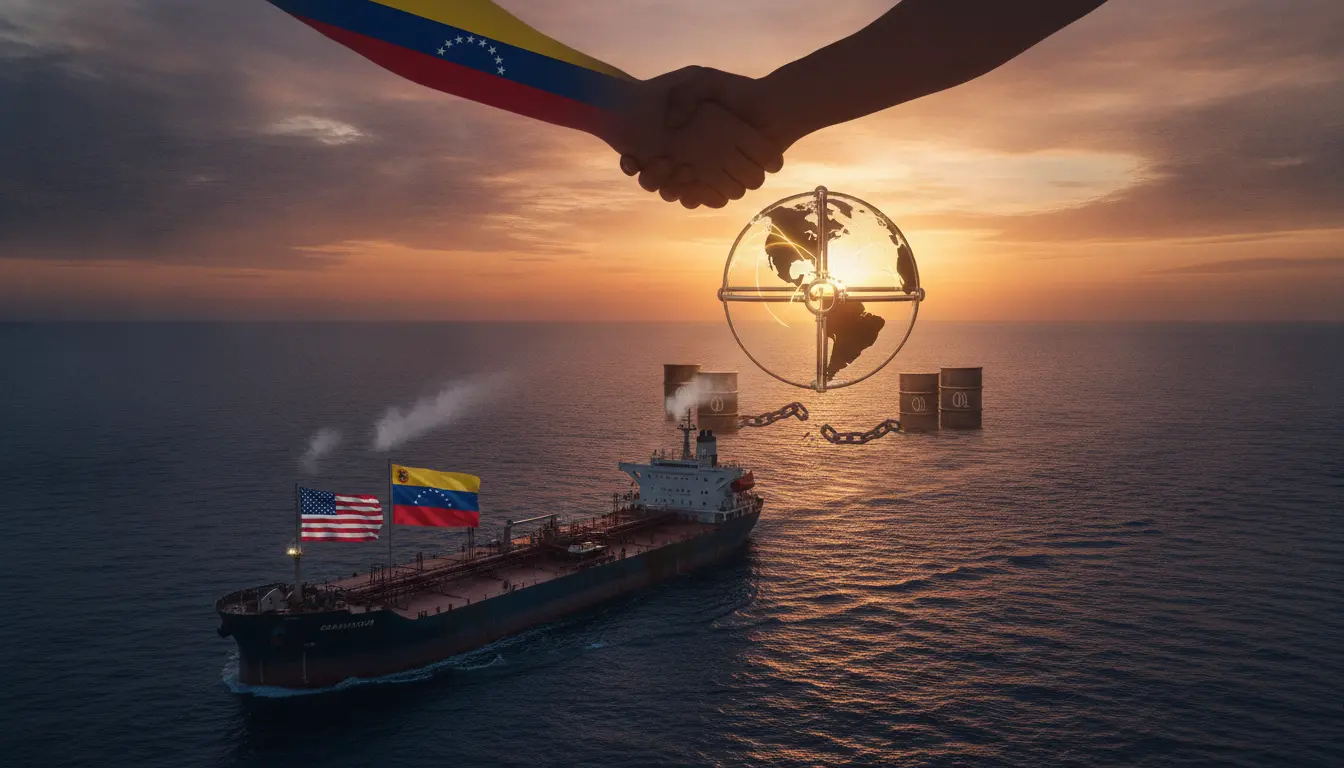
US Explores Major Oil Trade Pact with Venezuela Amid Sanctions Relief Talks
The United States is actively pursuing a comprehensive trade agreement with Venezuela that could significantly reshape global energy markets and the geopolitical landscape of South America. Reports indicate that discussions are underway for a substantial deal involving Venezuelan oil fields, potentially signaling a dramatic shift in Washington's long-standing policy of economic pressure against the Nicolás Maduro regime. This development comes as the Biden administration seeks to navigate a complex energy environment and address humanitarian concerns within Venezuela, while also balancing calls for democratic reform.
For years, U.S. policy towards Venezuela has been characterized by stringent sanctions aimed at isolating the Maduro government and pressuring it towards democratic elections. These measures, particularly those targeting Venezuela's vital oil sector, were initially intensified under the Trump administration and broadly maintained by President Biden, following years of escalating political and economic crisis in the South American nation. The sanctions had a profound impact, crippling Venezuela's once-booming oil industry, exacerbating a severe economic contraction, and contributing to a massive exodus of Venezuelan citizens. Despite the economic hardship, the Maduro government has remained entrenched, necessitating a reevaluation of U.S. strategy.
The impetus for this potential shift gained momentum against a backdrop of global energy volatility, particularly following Russia's invasion of Ukraine. The subsequent disruption to global oil supplies prompted a renewed focus on diversifying energy sources and stabilizing international markets. Venezuela, possessing the world's largest proven oil reserves, represents a significant untapped resource that, if brought back online, could offer a substantial boost to global crude supplies. However, any deal would be fraught with political complexities, requiring Washington to reconcile its energy security interests with its stated commitment to human rights and democratic principles in Venezuela.
Key to any agreement would be concessions from the Maduro government regarding political prisoners, electoral conditions, and adherence to democratic norms. Previous attempts at dialogue between the U.S. and Venezuela have often faltered over these very issues. The Biden administration has previously offered limited sanctions relief in exchange for commitments from Caracas to engage in good-faith negotiations with the opposition. A "massive" oil deal would undoubtedly demand far more significant and verifiable steps towards a return to democratic governance and respect for fundamental freedoms. Such a pact would likely involve U.S. and international oil companies, potentially including Chevron, expanding their operations and investments in Venezuela, contingent on a stable political and legal framework.
The stakes are high for all parties involved. For Venezuela, an opening to U.S. markets and the potential for foreign investment and technical expertise could be a lifeline for its struggling economy and dilapidated oil infrastructure. Rebuilding the country's oil production capacity would be a monumental task, requiring billions in investment and years of effort, but it offers a path to economic recovery and stability. For the United States, securing a new source of oil could help mitigate inflationary pressures and reduce reliance on other less stable regions. It also presents an opportunity to exert diplomatic influence and potentially steer Venezuela away from its increasingly close ties with Russia and China.
However, significant challenges remain. Critics of engagement argue that lifting sanctions without concrete, irreversible democratic reforms would legitimize an authoritarian regime and undermine the broader goals of U.S. foreign policy. There are also concerns about the capacity of Venezuela's national oil company, PDVSA, to manage a rapid increase in production efficiently and transparently. Furthermore, the fragmented nature of Venezuela's political opposition and the deep mistrust between the government and its adversaries pose formidable hurdles to establishing the necessary conditions for a lasting agreement. The ongoing negotiations reflect a delicate balance between pragmatic energy needs and principled diplomatic objectives, with the eventual outcome poised to redefine the future of U.S.-Venezuelan relations and global energy dynamics.
As discussions continue, the international community will be closely watching for signs of progress on both the economic and political fronts. Any final agreement would require careful crafting to ensure that it genuinely benefits the Venezuelan people, contributes to regional stability, and aligns with broader U.S. strategic interests without compromising core democratic values. The potential for a significant trade deal underscores a critical juncture in U.S. foreign policy, demonstrating a willingness to adapt its approach in response to evolving global realities and domestic priorities.
Stay Informed. Act Smarter.
Get weekly highlights, major headlines, and expert insights — then put your knowledge to work in our live prediction markets.
Related News
Trump Signals Intent for Major Oil Deal with Venezuela, Prompting Scrutiny Over Sanctions and Geopolitics
President Trump Unveils Major Deal to Secure Venezuelan Oil Reserves

Trump-Backed Venezuela Oil Agreement Faces Stiff Congressional Resistance

U.S. and Venezuela Explore Path to Renewed Diplomatic Ties Amid Easing Tensions
US Weighs Sanctions Relief on Iranian Oil Amid Ongoing Diplomatic Initiatives

Prospects for Significant U.S. Sanctions Relief on Iran Under Scrutiny
Reports Indicate Potential Full Lifting of US Oil Sanctions on Iran by Late 2026
US and Iran Face High-Stakes Negotiations Amidst Pressures to Secure Strait of Hormuz
Washington Considers Full Reinstatement of Iran Oil Sanctions Amid Deepening Regional Tensions
U.S. Government Deliberates Over Substantial Humanitarian Aid Package for Venezuela's Earthquake Crisis