

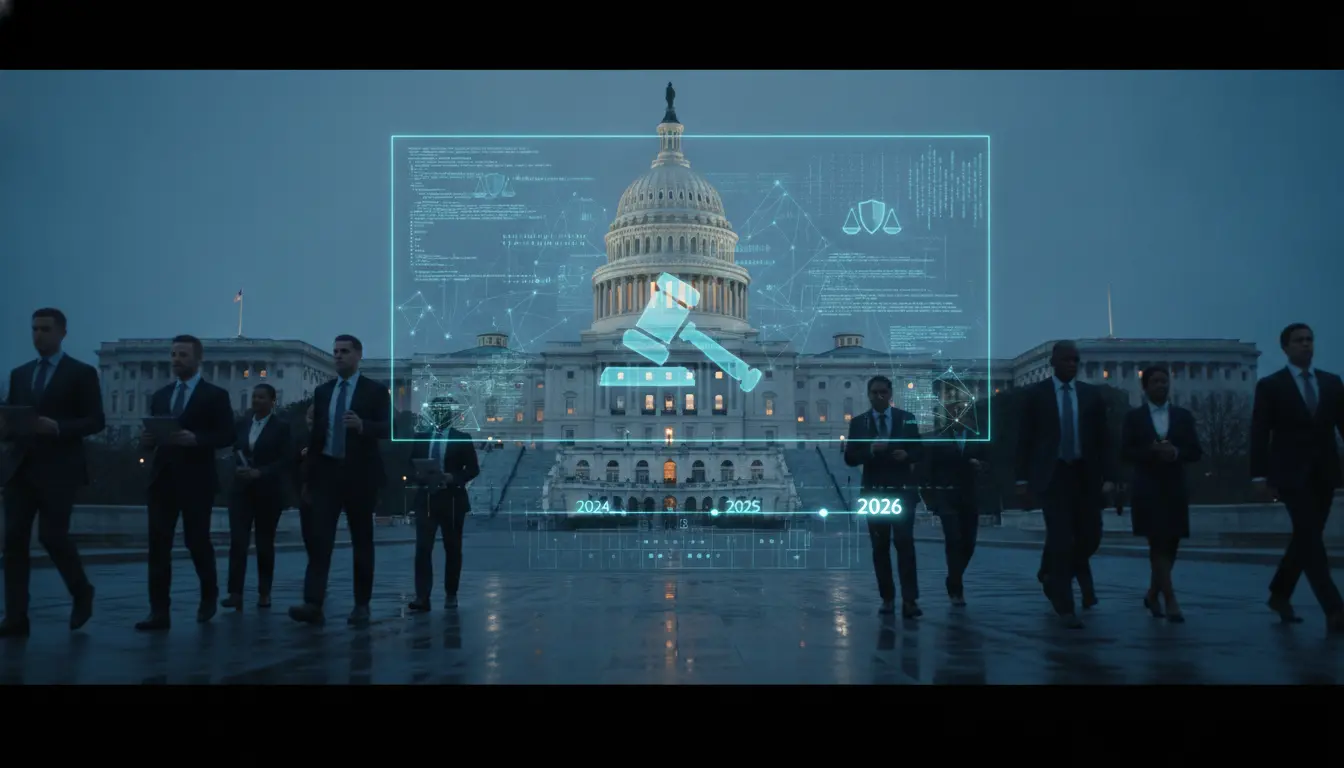
US Congress Accelerates Efforts to Enact Comprehensive Federal AI Regulation by 2026
Washington D.C. — The United States Congress is intensifying its focus on developing and enacting a comprehensive federal regulatory framework for Artificial Intelligence, with a growing consensus that such legislation is critical within the next two years. As AI technologies advance at an unprecedented pace, lawmakers face the complex challenge of fostering innovation while mitigating potential risks ranging from job displacement and algorithmic bias to national security threats and the spread of misinformation. The urgency stems from a recognition that existing laws are ill-equipped to address the multifaceted implications of AI, prompting a bipartisan push to establish clear guidelines before the end of 2026.
The push for federal AI legislation gained significant momentum following a series of high-profile advancements and public discourse surrounding generative AI models. Concerns escalated about the technology's capacity for rapid evolution and its potential to profoundly reshape various sectors of society. Lawmakers are grappling with defining the scope of regulation, balancing the need to protect consumers and national interests with the desire not to stifle American innovation in a globally competitive landscape. Unlike the European Union, which has already passed its landmark AI Act, the U.S. has adopted a more fragmented approach, relying on a patchwork of existing laws and voluntary industry guidelines. This lack of a unified federal strategy has fueled calls for a more coherent and robust response.
Several legislative proposals are currently under consideration or in various stages of development on Capitol Hill. While specific details vary, common themes emerging in these discussions include the need for transparency in AI systems, accountability for AI-generated content, robust data privacy protections, and measures to address potential biases embedded in algorithms. One notable concept, mentioned in early discussions, has been an “AI Kill Switch Act,” signaling a broader concern among some policymakers about the potential for autonomous AI systems to operate beyond human control, particularly in critical infrastructure or national defense applications. However, the practical implementation and even the necessity of such extreme measures are subjects of intense debate, with many stakeholders advocating for more nuanced regulatory tools.
Key players in Congress, including leaders from both parties, have engaged in extensive consultations with technology executives, civil society groups, academics, and national security experts. Senate Majority Leader Chuck Schumer, for instance, has spearheaded a series of bipartisan AI Insight Forums, bringing together diverse voices to inform future legislation. These discussions highlight the intricate nature of the task, as lawmakers seek to define what constitutes “high-risk” AI, establish auditing and testing requirements, and determine appropriate enforcement mechanisms. Committees such as the Senate Judiciary Committee and the House Energy and Commerce Committee are actively exploring different facets of AI governance, with hearings dissecting everything from intellectual property implications to the impact on the workforce.
Crafting legislation that is both effective and durable presents a formidable challenge. The rapid evolution of AI technology means that laws enacted today could quickly become outdated. This has led to discussions about creating adaptable regulatory frameworks, potentially involving regulatory sandboxes, expert advisory bodies, or a combination of prescriptive rules and performance-based standards. The underlying goal is to create a system that can evolve with the technology, ensuring ongoing oversight without impeding beneficial advancements. The complexity is further amplified by the differing opinions on where the primary regulatory authority should reside – whether with existing federal agencies, a new dedicated AI agency, or a hybrid model.
The implications of Congress successfully passing federal AI regulation by 2026 are far-reaching. Such legislation could establish global benchmarks for responsible AI development, reinforce public trust in the technology, and potentially reshape the competitive landscape for AI companies. Conversely, a failure to act decisively could leave the U.S. vulnerable to risks associated with unchecked AI development, undermine its leadership in technological governance, and create regulatory uncertainty that could hinder both innovation and responsible deployment. The coming months are expected to see intensified negotiations as lawmakers strive to bridge divides and forge a consensus on what could be one of the most significant pieces of technology legislation in decades.
Ultimately, the legislative effort is not just about managing risks but also about seizing opportunities. By establishing clear guardrails, Congress aims to foster an environment where AI can flourish safely and ethically, driving economic growth and societal benefit while addressing the profound challenges it presents. The timeline of 2026 underscores the political will to move beyond dialogue and toward concrete legislative action, signaling a pivotal moment for the future of AI in the United States.
Stay Informed. Act Smarter.
Get weekly highlights, major headlines, and expert insights — then put your knowledge to work in our live prediction markets.
Related News
US Congress Grapples with Urgency of Federal AI Regulation Amidst Rapid Innovation

US Lawmakers Intensify Push for Federal AI Regulation to Preempt State Laws
Congress Grapples with Landmark Federal Legislation to Govern Artificial Intelligence
US Lawmakers Intensify Push for Landmark AI Safety Legislation Amid Global Warnings
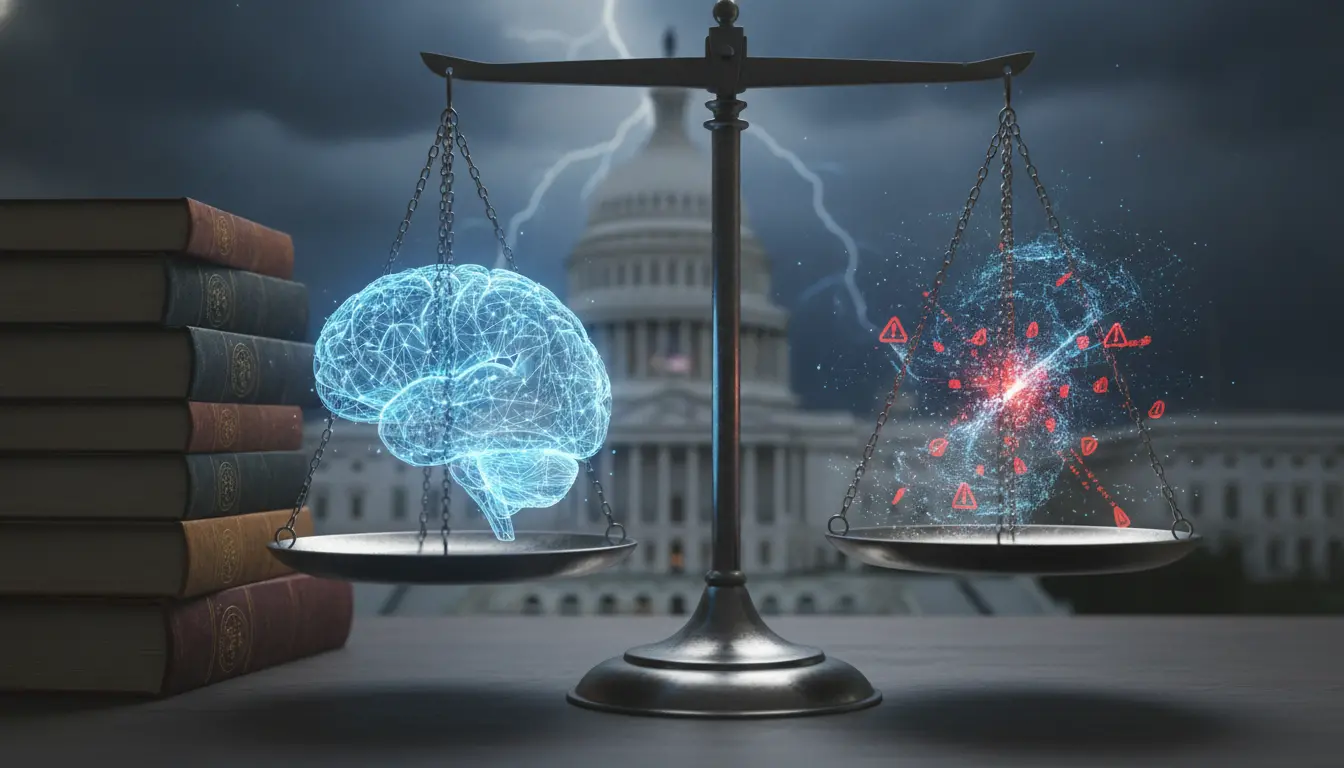
US Federal Government Weighs Comprehensive AI Safety Legislation Amid Catastrophic Risk Warnings

Congress Introduces 'AI Kill Switch Act' Granting Executive Authority Over Rogue Systems Following Major Tech Incidents
US Lawmakers Advance Efforts Towards Comprehensive Crypto Regulatory Framework
US Congress Faces Continued Push for CLARITY Act to Define Crypto Regulation
US Congress Grapples With Complexities of Comprehensive Cryptocurrency Regulation
US Congress Weighs Passage of Pivotal Crypto Clarity Act Amid Regulatory Push