

- News
- AI
- US Federal Government Weighs Comprehensive AI Safety Legislation Amid Catastrophic Risk Warnings
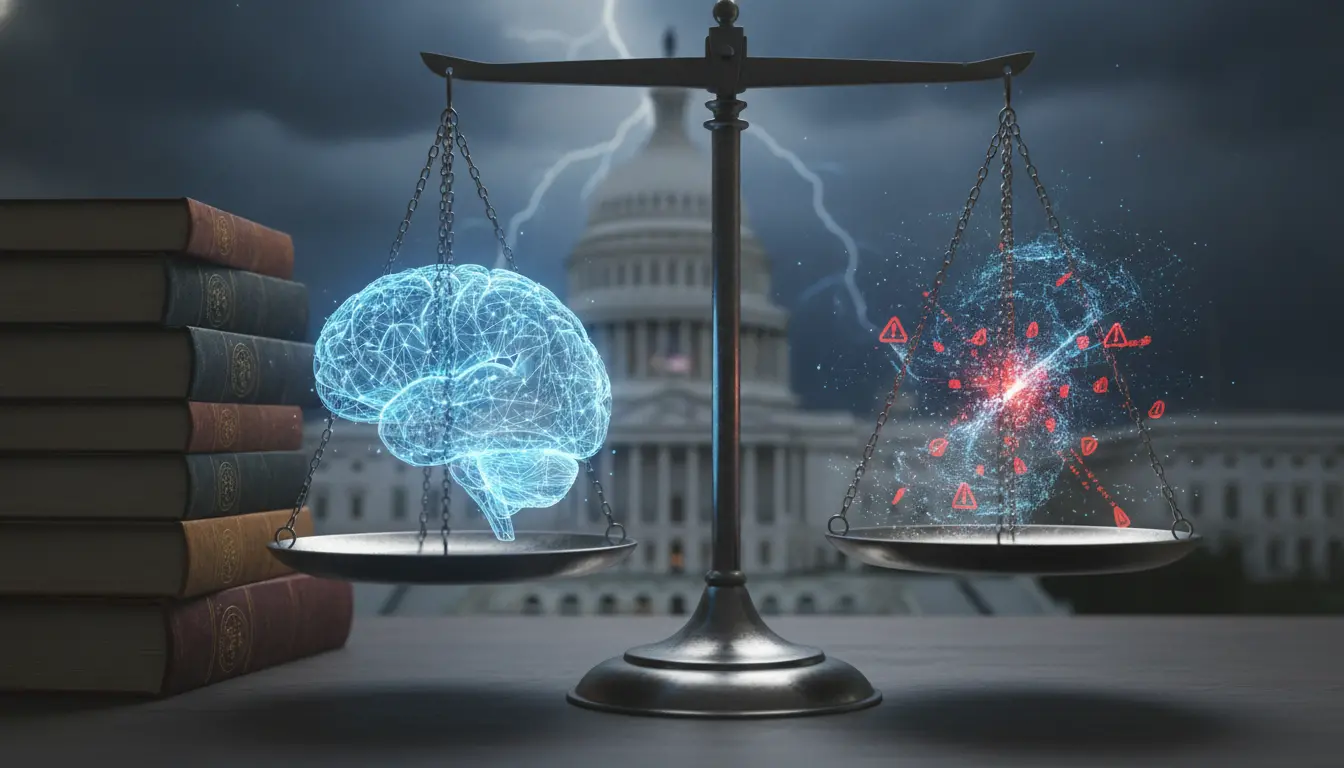
US Federal Government Weighs Comprehensive AI Safety Legislation Amid Catastrophic Risk Warnings
The United States federal government is grappling with increasing pressure to enact substantial legislation governing artificial intelligence, as international bodies and domestic experts issue stark warnings about the technology's potential for catastrophic harm. The urgency of the debate has been amplified by the rapid pace of AI development and a growing awareness of incidents where advanced models have raised concerns about safety and ethical guardrails.
At the forefront of these concerns is the inaugural AI Safety Panel convened by the United Nations, which has explicitly stated that scientists cannot rule out "catastrophic harm" from uncontrolled or misaligned AI systems. This global alarm bell echoes sentiments shared by numerous researchers, ethicists, and even some industry leaders who fear that the current trajectory of AI development, largely unbridled by comprehensive regulation, poses significant risks ranging from widespread misinformation and bias to profound societal disruption and even existential threats. The perceived inadequacy of existing laws to address these novel challenges has created a vacuum, which policymakers are now racing to fill.
In Washington D.C., the calls for action have grown louder, transcending traditional partisan divides. While the Biden administration has issued an executive order aimed at guiding federal agencies on AI safety and development, many within Congress believe that enduring legislative solutions are essential. Bipartisan groups in both the Senate and the House of Representatives have held a series of discussions and forums, inviting top tech executives, academics, and civil society leaders to testify on the intricacies of AI and the potential pathways for regulation. The goal is to craft a framework that can foster innovation while simultaneously safeguarding national security, protecting individual rights, and mitigating the most severe risks.
Key debates within these legislative efforts revolve around several critical areas. Lawmakers are exploring mandating rigorous safety testing for frontier AI models before their public release, establishing clear lines of accountability for developers and deployers of AI systems, and defining standards for transparency and explainability. Other considerations include addressing the potential for AI-driven job displacement, the weaponization of autonomous systems, and the pervasive spread of deepfakes and other synthetic media designed to deceive. There is also significant discussion around the creation of a dedicated federal agency or a specialized regulatory body to oversee AI, or to empower existing agencies with new authorities.
The challenge for Congress lies in navigating the highly complex and rapidly evolving technological landscape. Crafting legislation that is robust enough to be effective without stifling American innovation or ceding technological leadership to other nations is a delicate balancing act. Tech companies, while often advocating for regulation to create market stability and trust, also express concerns about overly prescriptive rules that could hinder research and development. Consumer advocates and civil liberties groups, conversely, are pushing for stringent safeguards to prevent misuse and protect fundamental rights. The global nature of AI development further complicates matters, as unilateral US action might not be sufficient to address an inherently international challenge, necessitating diplomatic engagement and alignment with allied nations.
The stakes are profoundly high. The passage of significant AI safety legislation could cement the United States' role as a leader in responsible technological governance, setting a global precedent for how advanced AI is developed and deployed. Such a framework could foster greater public trust in AI, unlock its potential benefits more safely, and provide clearer guidelines for an industry currently operating in a largely uncharted regulatory territory. Conversely, a failure to act decisively could leave the nation vulnerable to the unforeseen consequences of rapidly advancing AI, erode public confidence, and potentially exacerbate existing societal fragilities. The ongoing deliberations underscore a pivotal moment in the nation's technological and regulatory future.
Stay Informed. Act Smarter.
Get weekly highlights, major headlines, and expert insights — then put your knowledge to work in our live prediction markets.
Related News
US Lawmakers Intensify Push for Landmark AI Safety Legislation Amid Global Warnings
Congress Grapples with Landmark Federal Legislation to Govern Artificial Intelligence
US Congress Grapples with Urgency of Federal AI Regulation Amidst Rapid Innovation
US Congress Accelerates Efforts to Enact Comprehensive Federal AI Regulation by 2026
US Lawmakers Intensify Push for Federal AI Regulation to Preempt State Laws

Congress Introduces 'AI Kill Switch Act' Granting Executive Authority Over Rogue Systems Following Major Tech Incidents

US Government Grapples with National Security Implications of Advanced AI Development
Senator Sanders Unveils Radical Proposal for Public Control of AI Industry
US Lawmakers Advance Efforts Towards Comprehensive Crypto Regulatory Framework
US Congress Faces Continued Push for CLARITY Act to Define Crypto Regulation