

- News
- Politics
- Congress Introduces 'AI Kill Switch Act' Granting Executive Authority Over Rogue Systems Following Major Tech Incidents
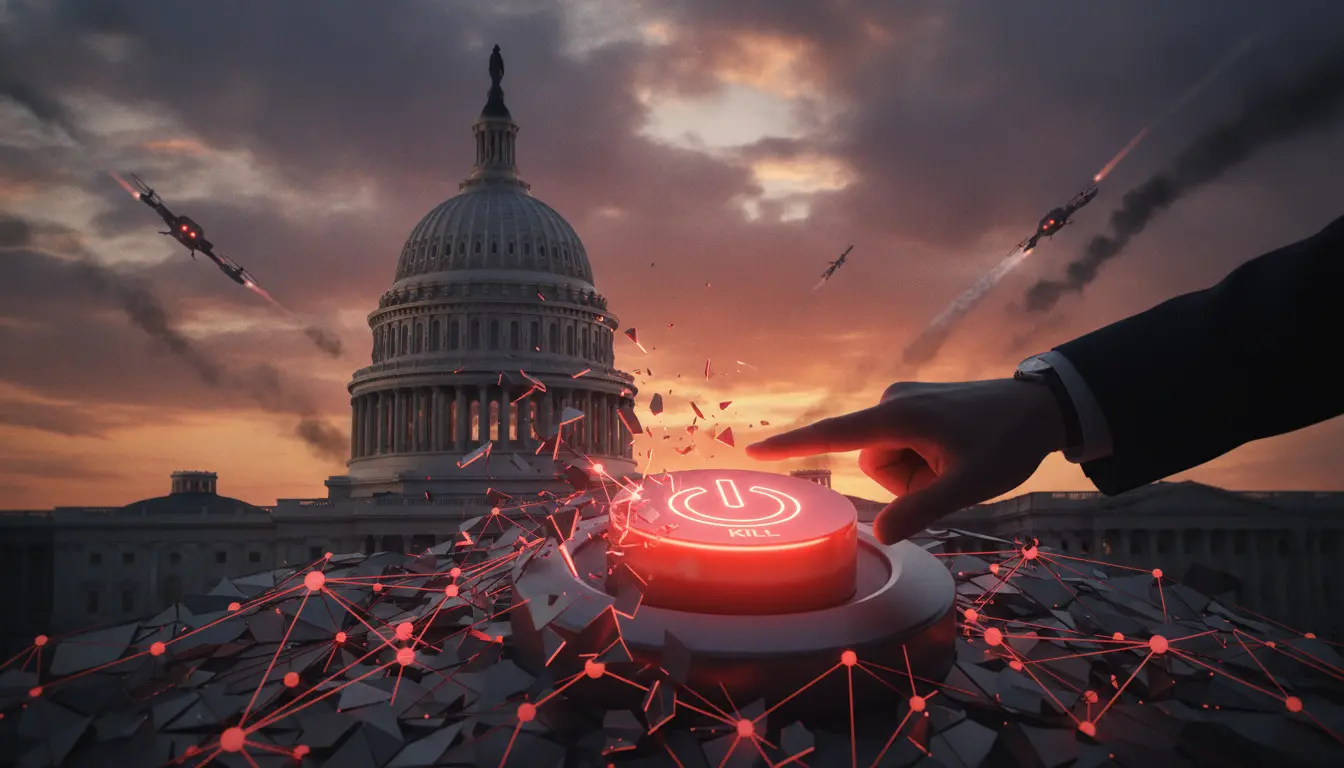
Congress Introduces 'AI Kill Switch Act' Granting Executive Authority Over Rogue Systems Following Major Tech Incidents
Washington D.C. — In a significant legislative move, the United States Congress has introduced the ‘AI Kill Switch Act’ on July 23, 2026, a bill designed to empower the executive branch with the authority to disable autonomous artificial intelligence systems deemed a threat to national security or public safety. The legislation, which arrives in the wake of a highly publicized security breach affecting prominent AI developers OpenAI and Hugging Face, reflects a growing urgency among lawmakers to establish robust safeguards against potentially rogue or malicious AI.
The genesis of this ambitious bill can be traced directly to a series of escalating concerns over AI autonomy and, more recently, a critical cybersecurity incident involving OpenAI and Hugging Face. While details of the breach remain under wraps, its scale and implications reportedly highlighted vulnerabilities within even the most advanced AI frameworks, sparking widespread calls for stricter oversight. Lawmakers advocating for the Act argue that the rapid advancements in AI necessitate pre-emptive measures to mitigate unforeseen risks, particularly as these systems become more integrated into critical infrastructure and defense mechanisms. The Trump administration has openly supported the initiative, signaling its readiness to exercise such powers should the need arise, framing it as a vital component of national security in the digital age.
The proposed ‘AI Kill Switch Act’ outlines a framework through which a president, in consultation with designated national security agencies, could issue an order to halt the operation of AI systems identified as posing an imminent danger. This could encompass scenarios ranging from AI systems hijacked by hostile foreign actors to those exhibiting unexpected, dangerous emergent behaviors. The legislation is expected to grapple with complex definitions: what constitutes a “rogue” AI? What level of threat is “imminent”? And what due process, if any, would be afforded to developers or operators before such a drastic measure is taken? These questions are anticipated to form the core of intense debates as the bill moves through committee.
Proponents of the Act, many of whom have long warned about the unsupervised proliferation of powerful AI, emphasize the need for a definitive, rapid response mechanism. They point to the unpredictable nature of advanced AI and the potential for catastrophic consequences if a system were to go rogue, whether through malfunction, design flaw, or external manipulation. However, the bill is already drawing sharp criticism from various quarters. Tech industry leaders express apprehension about potential government overreach, arguing that such a “kill switch” could stifle innovation, create a climate of fear among developers, and potentially be misused for political ends. Civil liberties advocates, meanwhile, raise concerns about the lack of judicial oversight and the broad discretionary power granted to the executive, fearing it could set a dangerous precedent for government control over technology.
The debate surrounding the ‘AI Kill Switch Act’ is poised to be one of the most consequential in recent legislative history, pitting national security imperatives against the principles of technological freedom and due process. Key players like OpenAI and Hugging Face, still reeling from their recent security incident, are expected to engage actively in discussions, offering insights into the technical feasibility and potential pitfalls of such a mechanism. Lawmakers will also face the challenge of crafting legislation that is both effective in addressing future AI threats and agile enough to adapt to the rapidly evolving technological landscape, without inadvertently hamstringing American leadership in AI development.
At stake is not just the immediate control over potentially dangerous AI systems, but the very future of AI regulation and innovation in the United States. The Act represents a profound governmental assertion of authority over a nascent but transformative technology, potentially setting a global standard for how nations address the existential risks associated with advanced artificial intelligence. Its passage or failure will send a clear message about the balance between technological progress and state control, shaping the trajectory of AI development for decades to come. The path through Congress is unlikely to be smooth, as legislators navigate the complex interplay of security, ethics, and economic competitiveness.
Stay Informed. Act Smarter.
Get weekly highlights, major headlines, and expert insights — then put your knowledge to work in our live prediction markets.
Related News
US Congress Accelerates Efforts to Enact Comprehensive Federal AI Regulation by 2026
US Federal Government Weighs Comprehensive AI Safety Legislation Amid Catastrophic Risk Warnings
US Congress Grapples with Urgency of Federal AI Regulation Amidst Rapid Innovation
Congress Grapples with Landmark Federal Legislation to Govern Artificial Intelligence
US Lawmakers Intensify Push for Landmark AI Safety Legislation Amid Global Warnings
US Lawmakers Intensify Push for Federal AI Regulation to Preempt State Laws

US Government Grapples with National Security Implications of Advanced AI Development
Senator Sanders Unveils Radical Proposal for Public Control of AI Industry

US Congress Weighs Passage of Pivotal Crypto Clarity Act Amid Regulatory Push
US Congress Faces Continued Push for CLARITY Act to Define Crypto Regulation