

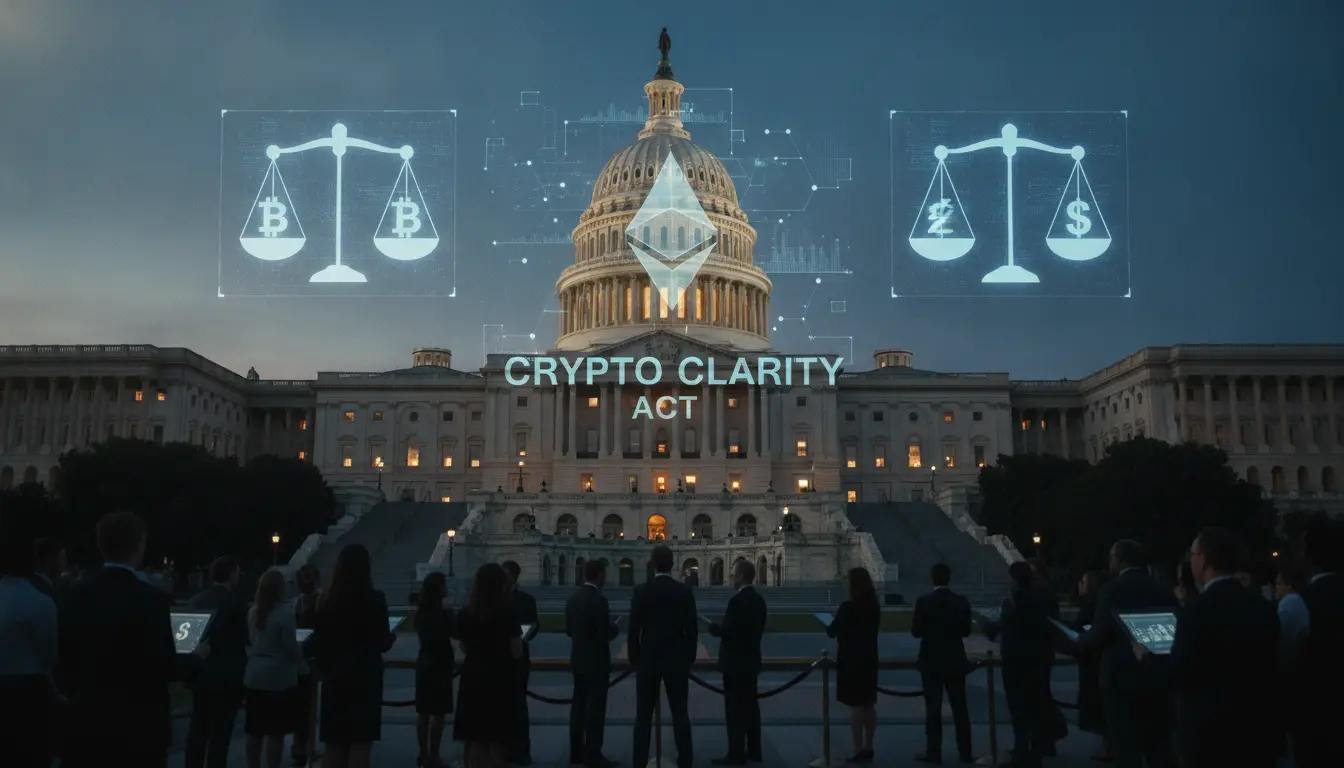
US Congress Weighs Passage of Pivotal Crypto Clarity Act Amid Regulatory Push
Washington D.C. is witnessing a renewed legislative push to establish a comprehensive framework for cryptocurrency regulation, with the proposed Clarity Act emerging as a central point of contention and discussion. Aiming to provide much-needed legal definitions and jurisdictional clarity for digital assets, the bill's potential passage before the end of 2026 has become a focal point for industry stakeholders, lawmakers, and federal agencies alike. The debate underscores a critical juncture for the United States, as it grapples with how to foster innovation in the rapidly evolving digital asset space while simultaneously safeguarding investors and maintaining market integrity. The outcome of this legislative endeavor could profoundly reshape the landscape for cryptocurrency businesses and users across the nation.
The genesis of the Clarity Act lies in the persistent regulatory ambiguity that has plagued the U.S. cryptocurrency sector for years. Currently, digital assets often find themselves in a jurisdictional tug-of-war between the Securities and Exchange Commission (SEC), which primarily views many cryptocurrencies as securities, and the Commodity Futures Trading Commission (CFTC), which categorizes some as commodities. This lack of a unified regulatory approach has created an environment of uncertainty, hindering innovation, pushing companies overseas, and leaving investors vulnerable to varying interpretations of existing laws. Proponents of the Clarity Act argue that it would definitively delineate which federal agency has oversight over specific types of digital assets, thereby providing a clear rulebook for development, trading, and investment within the U.S. market.
Several iterations of similar legislation have been introduced in Congress over recent years, reflecting a growing bipartisan consensus on the necessity for a clearer path forward. However, disagreements persist on the specifics of how to classify various tokens, the scope of consumer protection measures, and the enforcement powers of regulatory bodies. Key committees in both the House and Senate have held numerous hearings, soliciting input from industry leaders, legal experts, consumer advocates, and financial regulators. The challenge lies in crafting a bill that is robust enough to address complex technological advancements, flexible enough to adapt to future innovations, and palatable enough to garner sufficient political support in a deeply divided legislative body. The delicate balance between encouraging technological growth and preventing illicit activities remains a constant tension.
Recent political developments have injected a new dynamic into the legislative calculus surrounding the Clarity Act. Reports of shifting political alignments, particularly involving prominent figures like former President Donald Trump, have added a layer of speculation regarding the bill’s prospects. Observers are keenly watching how evolving stances from influential political leaders, especially during an election cycle, might impact the legislative appetite for tackling complex, bipartisan issues such as comprehensive digital asset regulation. A perception of greater political alignment or a clearer executive branch direction could potentially open pathways for legislation that has previously stalled, though the path to consensus for a bill as significant as the Clarity Act remains fraught with challenges.
The stakes are exceptionally high for all parties involved. For the cryptocurrency industry, the passage of the Clarity Act could unlock significant investment, foster a more robust ecosystem, and cement the U.S. as a leader in digital asset innovation. Without such clarity, the risk of businesses relocating to more crypto-friendly jurisdictions persists, potentially stifling economic growth and job creation domestically. For consumers, a clear regulatory framework promises enhanced protections against fraud and market manipulation, building greater trust in digital asset markets. Conversely, a failure to pass comprehensive legislation by the 2026 deadline would likely perpetuate the current state of regulatory limbo, prolonging uncertainty and potentially allowing the U.S. to fall further behind other nations that have already begun implementing their own digital asset frameworks.
Achieving consensus on the Clarity Act will require significant political will and compromise. The bill's trajectory will hinge on continued bipartisan cooperation, effective lobbying from industry and advocacy groups, and a willingness from federal agencies to adapt to a new regulatory paradigm. As the clock ticks towards the 2026 target, the eyes of the global digital asset community will remain fixed on Washington, watching to see if the U.S. can finally establish the clarity needed to navigate the future of finance and technology.
Stay Informed. Act Smarter.
Get weekly highlights, major headlines, and expert insights — then put your knowledge to work in our live prediction markets.
Related News
US Congress Faces Continued Push for CLARITY Act to Define Crypto Regulation
US Lawmakers Advance Efforts Towards Comprehensive Crypto Regulatory Framework
CLARITY Crypto Bill Poised for US Senate Vote, Senator Scott Confirms
US Congress Grapples With Complexities of Comprehensive Cryptocurrency Regulation
Momentum Builds for Landmark Crypto Bill as Bipartisan Push Faces Uphill Battle in Congress

Outpoll Weekly Recap: Crypto (August 3 – 9, 2026)

Senate Democrats Urge Formal Hearings on Donald Trump's Cryptocurrency Holdings

U.S. SEC Poised to Unveil Sweeping 'Reg Crypto' Framework for Digital Assets

US Congress Accelerates Efforts to Enact Comprehensive Federal AI Regulation by 2026

US Lawmakers Intensify Push for Federal AI Regulation to Preempt State Laws