

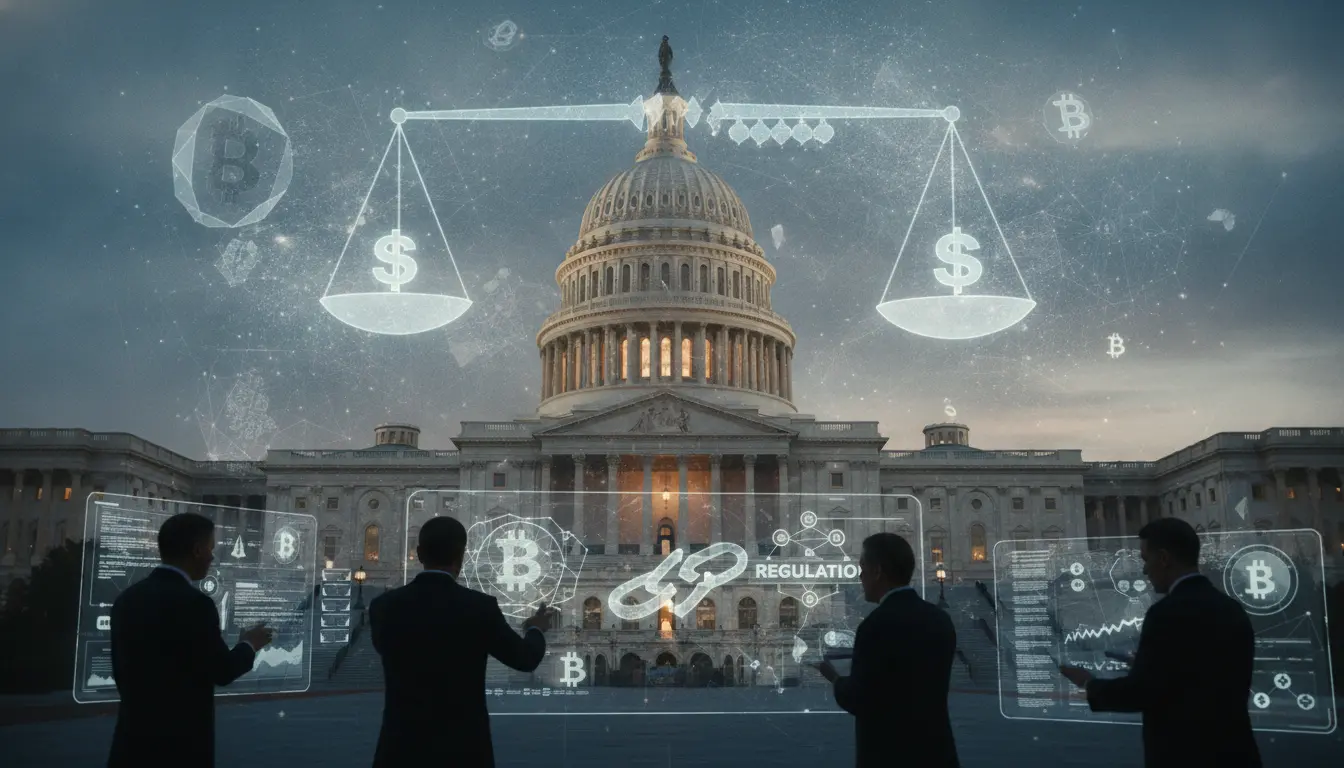
US Congress Grapples With Complexities of Comprehensive Cryptocurrency Regulation
The United States Congress remains locked in a protracted debate over establishing a comprehensive federal regulatory framework for cryptocurrencies, a legislative quagmire that has left the digital asset industry clamoring for clarity. Despite numerous proposals and intense lobbying efforts, a unified approach to govern the rapidly evolving sector has yet to materialize, leaving stakeholders to navigate a patchwork of existing rules and agency interpretations. The urgency for a clearer pathway intensifies as global competitors advance their own regulatory regimes, raising concerns about the US maintaining its leadership in financial innovation.
For years, the cryptocurrency industry has argued that the lack of clear, uniform federal guidelines stifles innovation, drives talent and capital offshore, and creates an environment ripe for scams and market manipulation. Currently, various federal agencies—including the Securities and Exchange Commission (SEC) and the Commodity Futures Trading Commission (CFTC)—assert jurisdiction over different aspects of the digital asset market, often leading to conflicting signals and enforcement actions rather than preventative clarity. While the SEC views many digital assets as unregistered securities, the CFTC sees others as commodities, creating a regulatory vacuum for many novel applications and technologies.
Several legislative initiatives have attempted to bridge this divide. Notable among these is the bipartisan Lummis-Gillibrand Responsible Financial Innovation Act, which aimed to classify digital assets, clarify agency jurisdictions, and establish consumer protections. More recently, the Financial Innovation and Technology for the 21st Century Act (FIT21) passed the House of Representatives, marking a significant, albeit contentious, step. This bill seeks to define the roles of the SEC and CFTC more explicitly, particularly concerning crypto assets deemed commodities. However, its path through the Senate remains uncertain, facing opposition from some Democrats and SEC Chair Gary Gensler, who argue it could undermine investor protections.
Key players in Washington are deeply divided. Proponents of clearer legislation, often found on both sides of the aisle, emphasize the need to foster innovation within the US, ensure national security through transparent markets, and protect consumers from bad actors without stifling technological progress. They point to the vast economic potential of digital assets and blockchain technology. Critics, however, voice concerns about market volatility, illicit finance risks, and the speculative nature of many cryptocurrencies, advocating for stringent oversight and robust consumer safeguards that some proposed frameworks might not adequately address.
The legislative calendar leading up to 2026 presents a formidable challenge. Midterm elections and presidential cycles tend to disrupt legislative momentum, especially on complex, nascent issues like cryptocurrency regulation. Crafting a framework that satisfies both industry demands for flexibility and regulators' calls for oversight requires intricate negotiation and a deep understanding of the technology itself—a knowledge base that many lawmakers are still developing. The sheer pace of technological change within the crypto space further complicates efforts to enact durable legislation.
Without a comprehensive federal framework, the US risks falling behind jurisdictions like the European Union, which has already implemented its landmark Markets in Crypto-Assets (MiCA) regulation. This divergence could lead to a less competitive US market, as businesses seek more predictable environments abroad. The stakes are high: the outcome will not only determine the future trajectory of the multi-trillion-dollar digital asset industry within the United States but also impact global financial innovation and the country's economic standing in the digital age. The industry continues to push for a resolution, hoping that by the end of 2026, a clearer regulatory landscape will finally emerge.
Stay Informed. Act Smarter.
Get weekly highlights, major headlines, and expert insights — then put your knowledge to work in our live prediction markets.
Related News
Momentum Builds for Landmark Crypto Bill as Bipartisan Push Faces Uphill Battle in Congress
US Lawmakers Advance Efforts Towards Comprehensive Crypto Regulatory Framework
US Congress Faces Continued Push for CLARITY Act to Define Crypto Regulation
US Congress Weighs Passage of Pivotal Crypto Clarity Act Amid Regulatory Push

U.S. SEC Poised to Unveil Sweeping 'Reg Crypto' Framework for Digital Assets
US Congress Accelerates Efforts to Enact Comprehensive Federal AI Regulation by 2026
CLARITY Crypto Bill Poised for US Senate Vote, Senator Scott Confirms

Outpoll Weekly Recap: Crypto (August 3 – 9, 2026)
US Congress Grapples with Urgency of Federal AI Regulation Amidst Rapid Innovation
Congress Grapples with Landmark Federal Legislation to Govern Artificial Intelligence