

- News
- Politics
- NATO's Collective Defense Clause Tested as Russian Military Actions Escalate Tensions at Border
NATO's Collective Defense Clause Tested as Russian Military Actions Escalate Tensions at Border
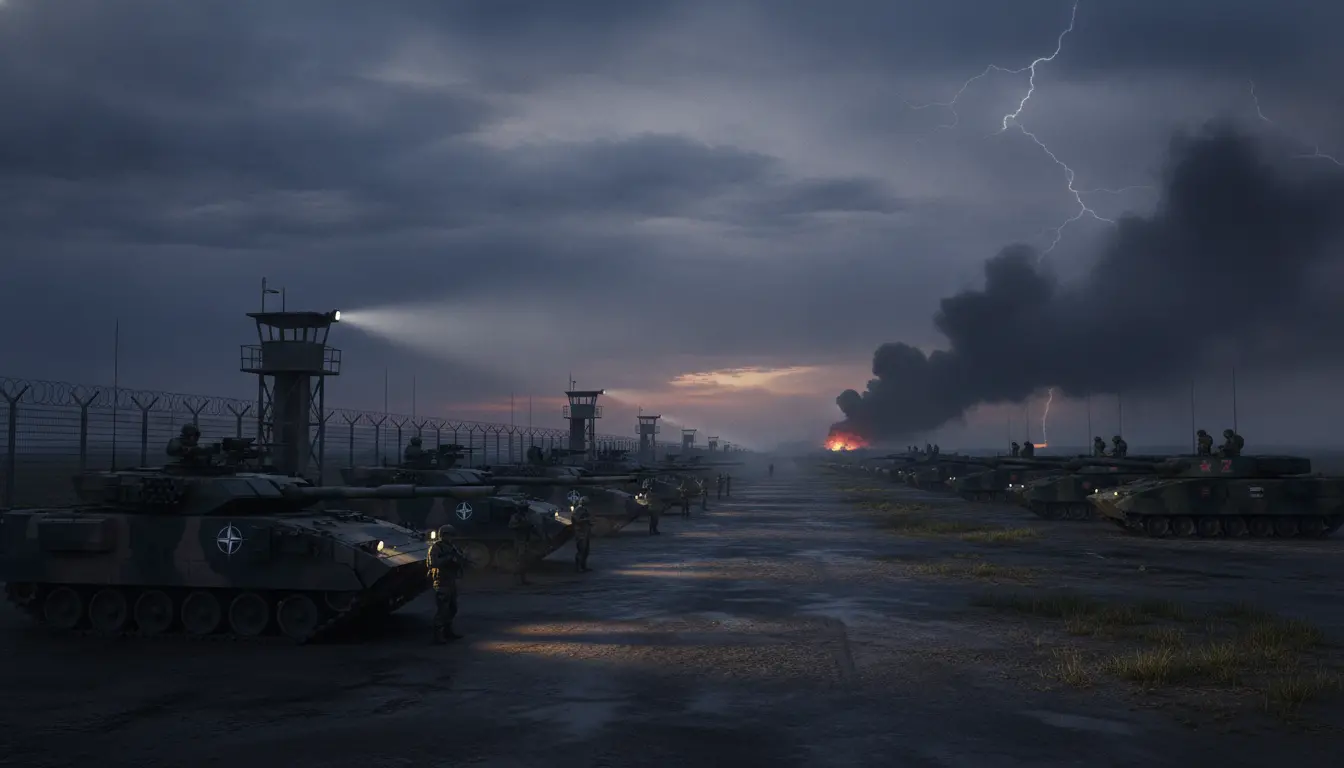
The North Atlantic Treaty Organization is facing one of the most sustained and complex tests of its 75-year history, as a pattern of Russian provocations along its eastern flank forces a continuous and nerve-wracking re-evaluation of the alliance’s ultimate red line: Article 5. While a full-scale conventional attack remains a low-probability, high-impact scenario, a series of incidents—ranging from stray missiles landing in member territory to aggressive cyber operations and orchestrated migrant crises—is fueling a high-stakes debate within NATO capitals about what truly constitutes an “armed attack” and at what point the collective defense mechanism must be triggered.
The foundation of NATO’s security guarantee lies in Article 5 of the Washington Treaty, the principle that an attack against one member is considered an attack against all. Invoked only once in the alliance's history, in response to the September 11, 2001 attacks on the United States, its activation is the most significant decision NATO can make, effectively committing all 32 members to a collective military response. The gravity of this commitment, particularly in a confrontation with a nuclear-armed Russia, means the threshold for its use is deliberately high and subject to intense political consultation. This strategic ambiguity, designed to provide flexibility, is now being systematically probed by Moscow in the gray zone just below the level of overt warfare.
The most alarming recent examples have highlighted the potential for rapid, unintended escalation. A missile entering Polish airspace and landing near the village of Przewodów in November 2022, initially feared to be a direct Russian strike, sent shockwaves through the alliance before it was assessed to be a stray Ukrainian air-defense missile. Since then, however, multiple Russian missiles targeting western Ukraine have violated Polish airspace, forcing the Polish Air Force to scramble fighter jets. Beyond these kinetic incidents, Russia has been accused of widespread GPS jamming across the Baltic Sea region, disrupting civilian aviation, and has engaged in what officials in Finland, Estonia, and Latvia call “hybrid warfare” by weaponizing migration, pushing thousands of asylum seekers to their borders to strain resources and sow internal division.
In response, NATO has significantly bolstered its defensive posture. The alliance’s Enhanced Forward Presence has placed multinational battlegroups in the Baltic States and Poland, acting as a “tripwire” to guarantee a collective response to any aggression. Air policing missions have been intensified, and large-scale military exercises, such as the recent Steadfast Defender, have demonstrated the alliance's capability to rapidly reinforce its eastern flank. Yet, these military preparations are only one part of the equation. The more pressing challenge is political cohesion. While frontline states like Estonia and Poland advocate for a more robust and clearly defined response to hybrid attacks, larger members such as Germany and France, along with the United States, remain cautious, prioritizing de-escalation to avoid a direct conflict with Russia that could spiral out of control.
NATO Secretary General Jens Stoltenberg has repeatedly stated that the alliance is prepared to “defend every inch of NATO territory,” but has also emphasized that the decision to invoke Article 5 would be a political one, made by consensus among all members based on the specifics of any given situation. This leaves a critical question unanswered: would a debilitating cyberattack on a member’s critical infrastructure, a Russian-instigated sabotage operation on European soil, or the death of a border guard during an orchestrated border crisis meet the threshold? Moscow’s strategy appears predicated on the belief that it can continue to operate in this gray area, destabilizing its neighbors and testing NATO's resolve without triggering a unified, overwhelming response.
The current environment is one of heightened alert and strategic adaptation. The alliance is working to develop new playbooks for responding to hybrid threats that fall short of a formal military assault. For NATO, the challenge is twofold: it must effectively deter Russian aggression by demonstrating unwavering resolve, while simultaneously managing escalation risks to prevent a regional conflict from becoming a global catastrophe. The coming years will be a persistent test of this delicate balancing act, as every incident along the alliance’s eastern edge forces a renewed debate on the meaning and application of its foundational security guarantee.
Stay Informed. Act Smarter.
Get weekly highlights, major headlines, and expert insights — then put your knowledge to work in our live prediction markets.
Related News

NATO's Article 5 Defense Pact Under Intensified Scrutiny Amid Geopolitical Flashpoints and US Political Uncertainty
NATO Members Weigh Explicit 'Adversary' Label for Russia Ahead of 2026 Summit

NATO Considers Further Expansion Amid European Security Concerns

Trump's 'America First' Doctrine Casts Shadow Over NATO's Future Ahead of Ankara Summit

European Union Pushes for Landmark Common Defense Policy by 2026 Amid Geopolitical Shifts

Eyes on Ankara as NATO Prepares Landmark Military Aid Package for Ukraine Amid Renewed Russian Offensives
Succession Discussions Intensify for NATO's Top Post as 2026 Deadline Approaches

Allies Express Alarm as Trump Signals Potential US Troop Reductions in Europe

Trump's Renewed Threats to Withdraw US Troops from Europe Spark Alarm Among NATO Allies

2026 NATO Summit in Turkey Prepares for Potential Trump Return Amid Defense Spending Pressure