


Allies Express Alarm as Trump Signals Potential US Troop Reductions in Europe
Former President Donald Trump’s renewed warnings regarding potential significant reductions in U.S. military presence in Europe have sent ripples of concern across the continent and within the NATO alliance. Speaking at a recent event, Trump reiterated his long-standing criticism of European defense spending, suggesting that a future administration under his leadership might scale back Washington’s commitments unless allies drastically increase their contributions. The remarks underscore a deep-seated apprehension among European leaders about the durability of American security guarantees, especially at a time of heightened geopolitical instability and ongoing conflict in Ukraine.
The prospect of a substantial drawdown, potentially by as much as 10% or more, revives anxieties that characterized Trump’s previous term, during which he frequently questioned the value of NATO and threatened to withdraw the U.S. from the alliance. European capitals, particularly those in Eastern Europe bordering Russia, view the U.S. troop presence as an indispensable deterrent against Russian aggression. The roughly 100,000 American service members currently stationed across Europe, primarily in Germany, Italy, and Poland, represent a tangible commitment to collective defense under Article 5 of the NATO treaty, and their potential reduction would necessitate a radical rethinking of continental security architecture.
Historically, the U.S. military footprint in Europe has evolved significantly since the Cold War peak, adapting to changing geopolitical realities while consistently providing a bedrock of security. Post-Cold War reductions were followed by strategic adjustments, including reinforcements in response to Russia’s annexation of Crimea in 2014 and the full-scale invasion of Ukraine in 2022. The Biden administration, in stark contrast to Trump’s rhetoric, has reinforced European defenses, dispatching additional troops and equipment to bolster NATO’s eastern flank. A reversal of this policy would not only be logistically complex but would also carry immense symbolic weight, signaling a profound shift in Washington’s strategic priorities away from multilateral defense alliances.
European leaders, including German Chancellor Olaf Scholz and French President Emmanuel Macron, have publicly stressed the importance of transatlantic unity and called for greater European strategic autonomy, in part to prepare for a potential future where U.S. engagement might be less predictable. Efforts are already underway to boost defense spending across the continent, with many nations striving to meet or exceed NATO’s 2% of GDP target. However, achieving a level of military capability that could fully compensate for a significant U.S. withdrawal, particularly in areas like air defense, logistics, and intelligence, would require sustained investment and coordination over many years, if not decades.
The debate over troop levels is intrinsically linked to broader questions about burden-sharing within NATO. Critics of current European defense expenditures argue that many wealthy European nations have historically free-ridden on U.S. security provisions. Proponents of continued U.S. engagement counter that American presence in Europe also serves U.S. strategic interests by projecting power globally, fostering stability in a critical economic region, and deterring adversaries. The future of this delicate balance hinges significantly on the outcome of upcoming political cycles, particularly the U.S. presidential election, which is now being watched with intense scrutiny from Brussels to Berlin.
The stakes for international security are considerable. A substantial U.S. troop reduction could embolden Russia, complicate ongoing support for Ukraine, and potentially destabilize regions already grappling with various security challenges. It would also force Europe to confront the reality of greater self-reliance in defense, accelerating efforts toward a more integrated and capable European defense identity, but potentially under circumstances of significant strain and uncertainty. As the political rhetoric intensifies, the future of the transatlantic alliance and the security of Europe hang in the balance, prompting urgent strategic reassessments across the globe.
Stay Informed. Act Smarter.
Get weekly highlights, major headlines, and expert insights — then put your knowledge to work in our live prediction markets.
Related News
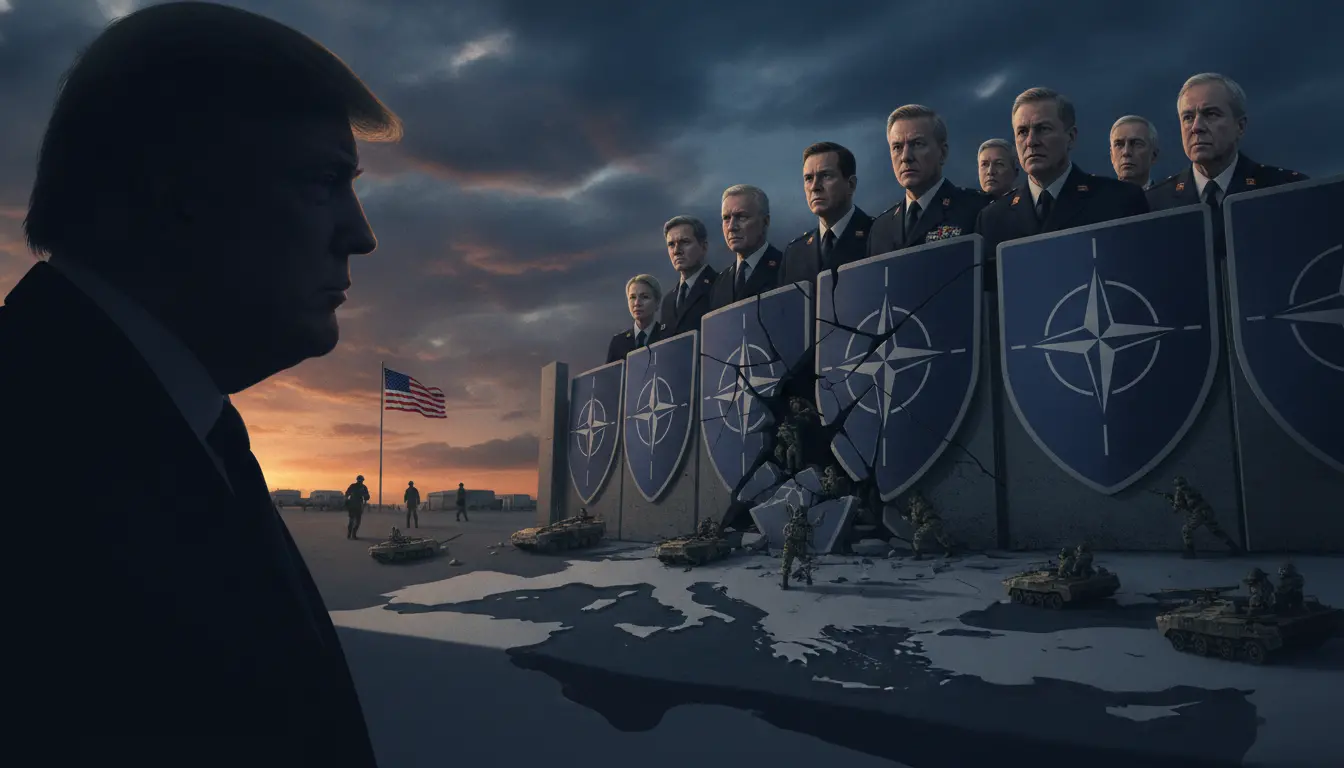
Trump's Renewed Threats to Withdraw US Troops from Europe Spark Alarm Among NATO Allies

Trump's 'America First' Doctrine Casts Shadow Over NATO's Future Ahead of Ankara Summit
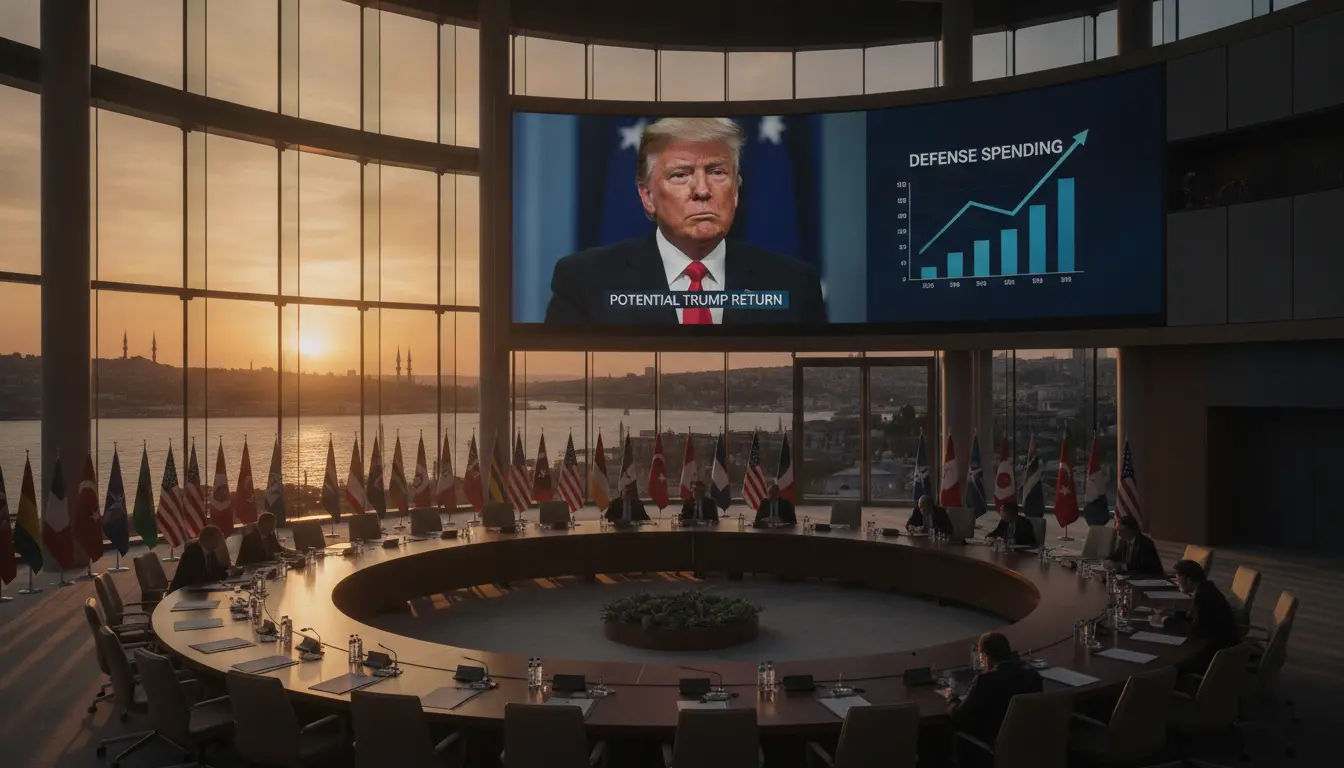
2026 NATO Summit in Turkey Prepares for Potential Trump Return Amid Defense Spending Pressure
NATO's Article 5 Defense Pact Under Intensified Scrutiny Amid Geopolitical Flashpoints and US Political Uncertainty

Trump's Threat of 100% Tariffs on Europe Stokes Fears of a New Transatlantic Trade War

Trump's Tariffs Threat Rekindles US-EU Digital Tax Tensions
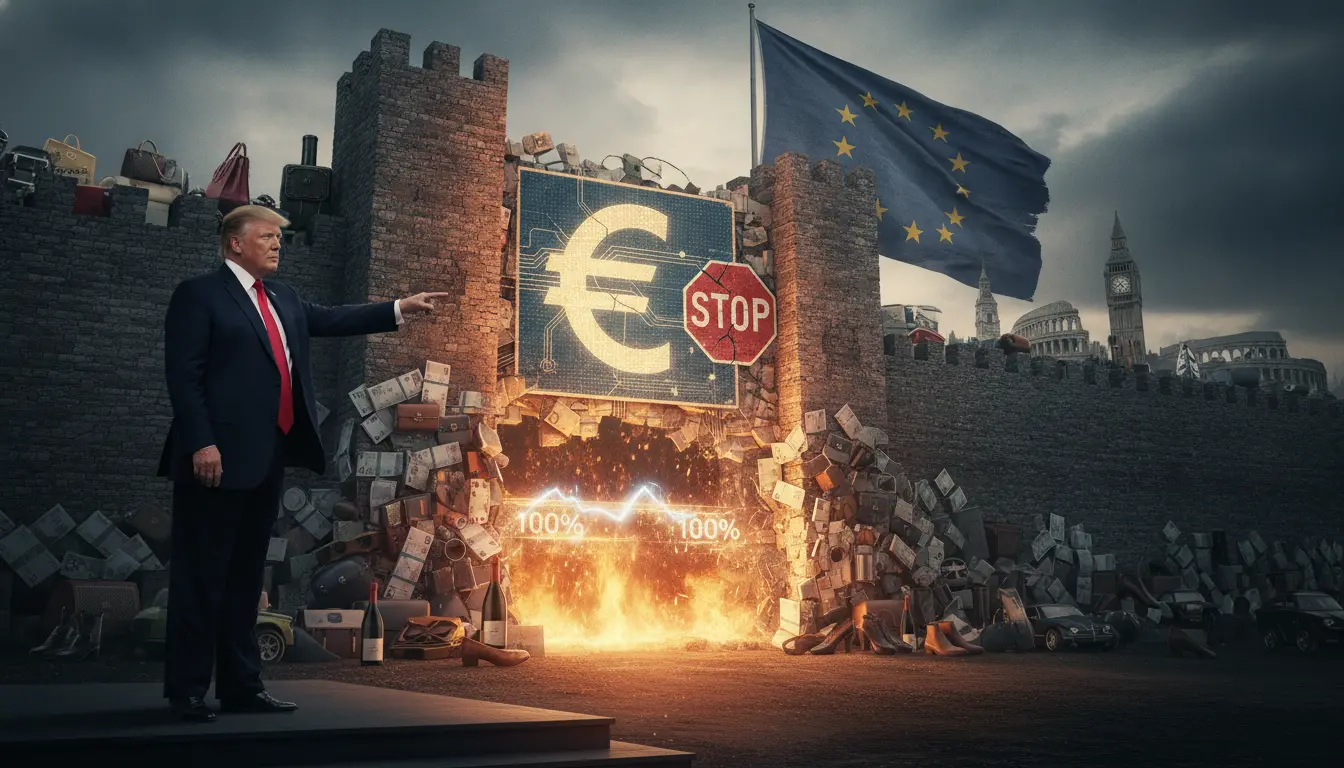
Trump Vows 100% Tariffs on Europe Over Digital Taxes, Threatening New Trade War

US Considers Reviving 100% Tariffs on European Digital Services, Sparking Transatlantic Trade Concerns

Former President Trump's Tariff Threat on European Digital Services Looms Ahead of US Election
Trump's 'Massive Attack' Rhetoric on Iran Stokes Fears of Renewed Middle East Conflict