

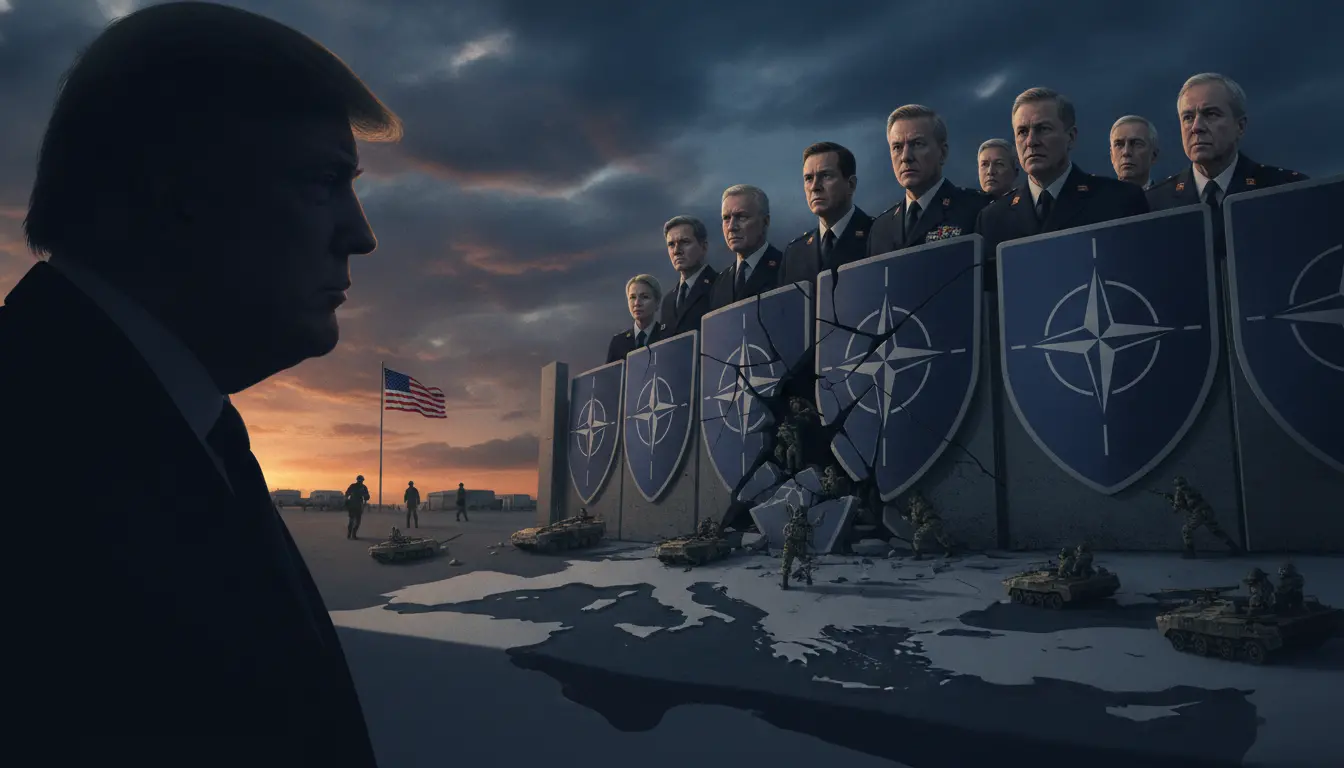
Trump's Renewed Threats to Withdraw US Troops from Europe Spark Alarm Among NATO Allies
Former President Donald Trump has once again sent ripples of apprehension across Europe and within NATO circles, reigniting concerns over a potential significant reduction of U.S. military personnel stationed on the continent. Speaking at recent high-level diplomatic gatherings, Trump renewed his long-standing criticism of alliance burden-sharing, suggesting a future presidency could see the withdrawal of thousands of American troops from Europe. These statements, delivered with characteristic bluntness, have prompted immediate alarm, forcing European leaders to confront the strategic implications of such a move, particularly against the backdrop of ongoing conflict in Ukraine.
Trump's skepticism toward the North Atlantic Treaty Organization is well-documented, a central tenet of his "America First" foreign policy during his previous term. He frequently lambasted member states for failing to meet the alliance's defense spending target of 2% of GDP, threatening to reduce U.S. commitments or even questioning the very premise of Article 5, NATO's collective defense clause. While no major withdrawals materialized during his first presidency beyond some troop redeployments from Germany, his rhetoric consistently sowed doubt and prompted European nations to begin recalibrating their own defense strategies. The current pronouncements are not new in sentiment but gain significant weight as he remains a formidable contender for the upcoming U.S. presidential election, raising the prospect that these threats could indeed transition into policy.
The implications of a substantial U.S. troop withdrawal — potentially exceeding 5,000 personnel, as has been speculated — would be profound. American forces in Europe are not merely symbolic; they represent a critical forward presence that underpins NATO's deterrent capabilities, especially along its eastern flank. Bases in Germany, Poland, Italy, and the United Kingdom serve as crucial logistical hubs, training grounds, and rapid-response units. A significant reduction would weaken NATO's operational readiness, complicate joint exercises, and potentially create security vacuums that adversaries could exploit. For countries like Poland and the Baltic states, which share borders with Russia or its ally Belarus, the presence of U.S. troops is a tangible assurance against aggression, and their removal would be seen as a direct erosion of their security.
European capitals are reacting with a mixture of public diplomacy and private contingency planning. Leaders from Germany and France have reiterated their commitment to strengthening Europe's own defense capabilities and increasing defense spending, recognizing the need for greater strategic autonomy regardless of who occupies the White House. However, building a genuinely independent European defense structure capable of fully replacing the U.S. security umbrella would be a monumental, multi-decade undertaking. Internally within the United States, any formal announcement of a large-scale withdrawal would likely face significant pushback from the Pentagon, national security advisors, and a bipartisan segment of Congress, many of whom view the U.S. military presence in Europe as essential for American national interests and global stability.
At stake is not only the future operational effectiveness of NATO but also the fundamental bedrock of transatlantic security that has endured for over 75 years. A perceived disengagement by Washington could embolden revisionist powers, most notably Russia, which continues its full-scale invasion of Ukraine and views NATO expansion as an existential threat. The current geopolitical climate, marked by intensifying great power competition and regional instability, makes any weakening of Western alliances a risky proposition with far-reaching consequences. The debate extends beyond troop numbers; it touches on the very definition of collective security and the shared commitment to upholding international norms.
While the specific timing and scale of any potential withdrawal remain speculative, the renewed threats have injected a significant degree of uncertainty into defense planning on both sides of the Atlantic. European nations are now forced to seriously consider a future where their primary security guarantor may choose a more isolationist path, accelerating efforts to bolster their own armed forces and seek alternative security arrangements. The period leading up to and following the U.S. presidential election will be critical in determining whether these pronouncements remain campaign rhetoric or translate into a fundamental reshaping of the international security landscape.
Stay Informed. Act Smarter.
Get weekly highlights, major headlines, and expert insights — then put your knowledge to work in our live prediction markets.
Related News

Allies Express Alarm as Trump Signals Potential US Troop Reductions in Europe

Trump's 'America First' Doctrine Casts Shadow Over NATO's Future Ahead of Ankara Summit
NATO's Article 5 Defense Pact Under Intensified Scrutiny Amid Geopolitical Flashpoints and US Political Uncertainty
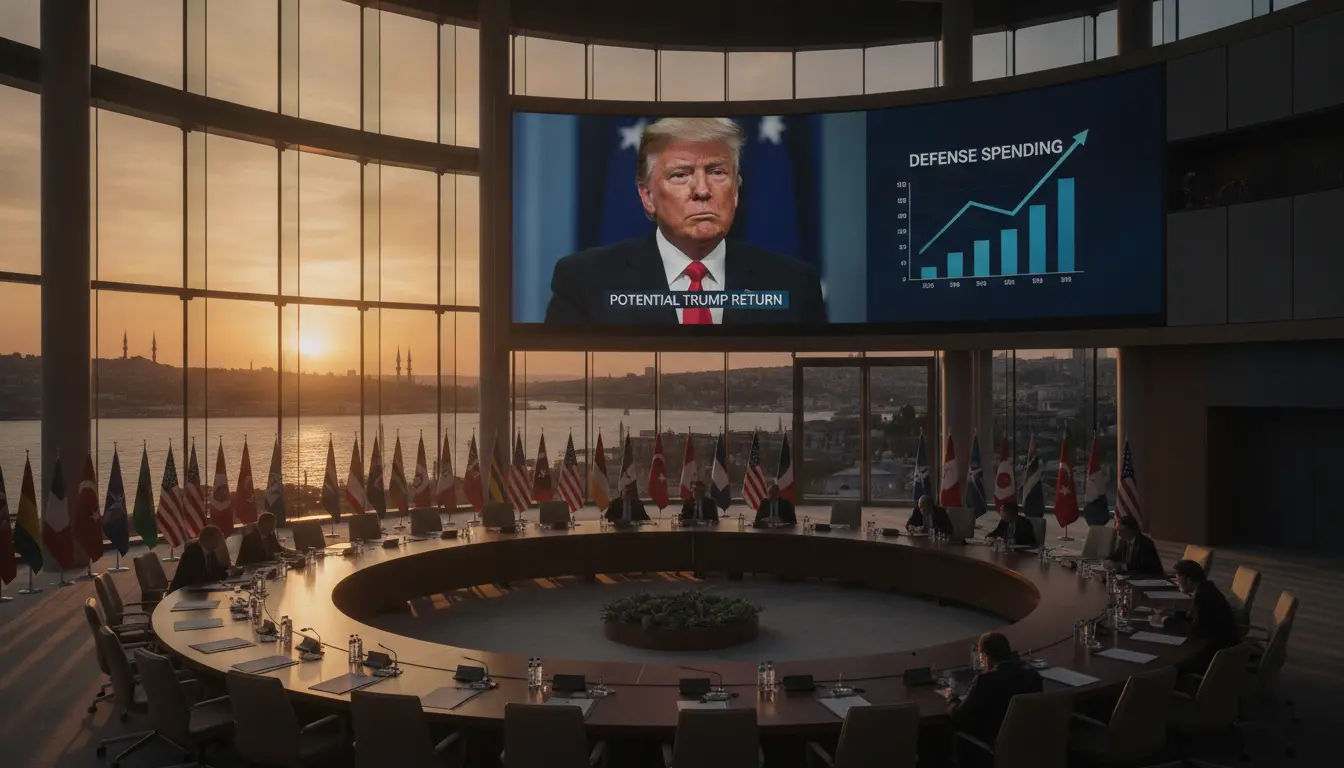
2026 NATO Summit in Turkey Prepares for Potential Trump Return Amid Defense Spending Pressure
Trump's Threat of 100% Tariffs on Europe Stokes Fears of a New Transatlantic Trade War

Trump's Tariffs Threat Rekindles US-EU Digital Tax Tensions
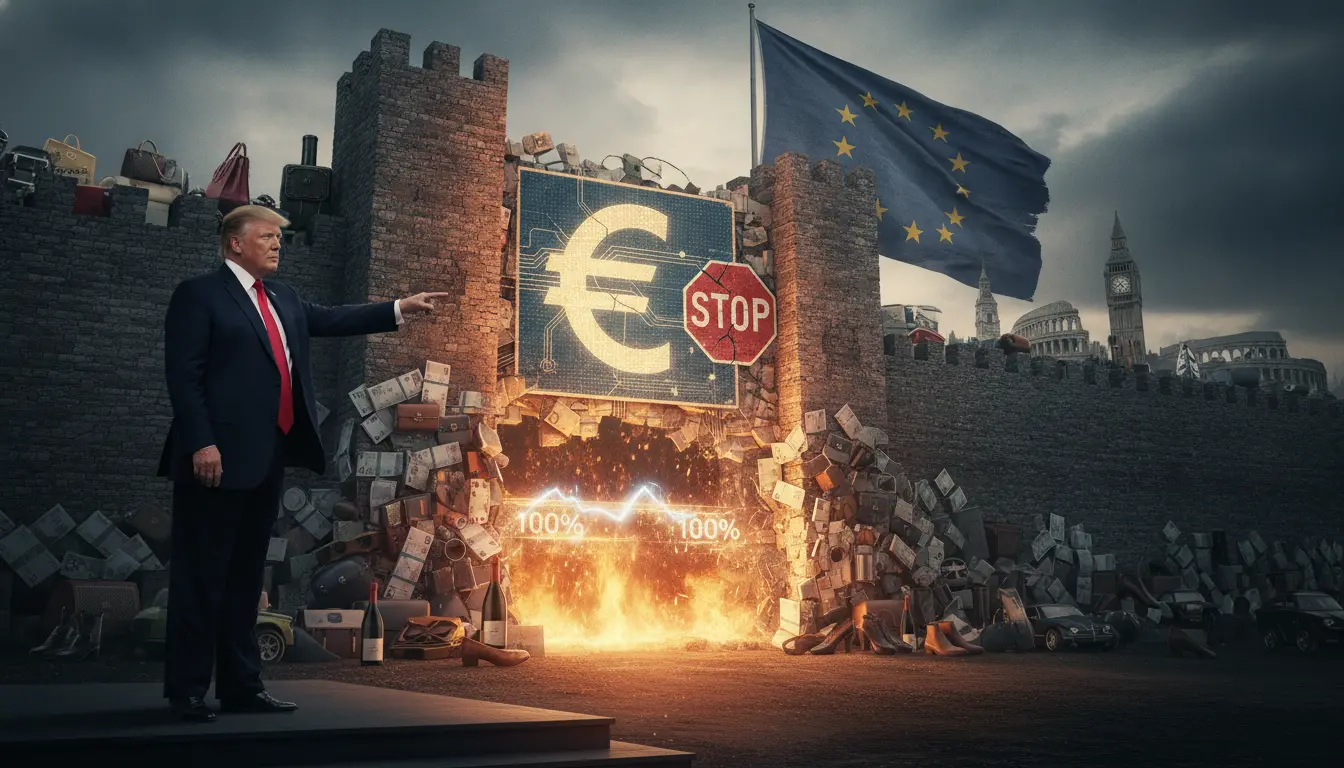
Trump Vows 100% Tariffs on Europe Over Digital Taxes, Threatening New Trade War
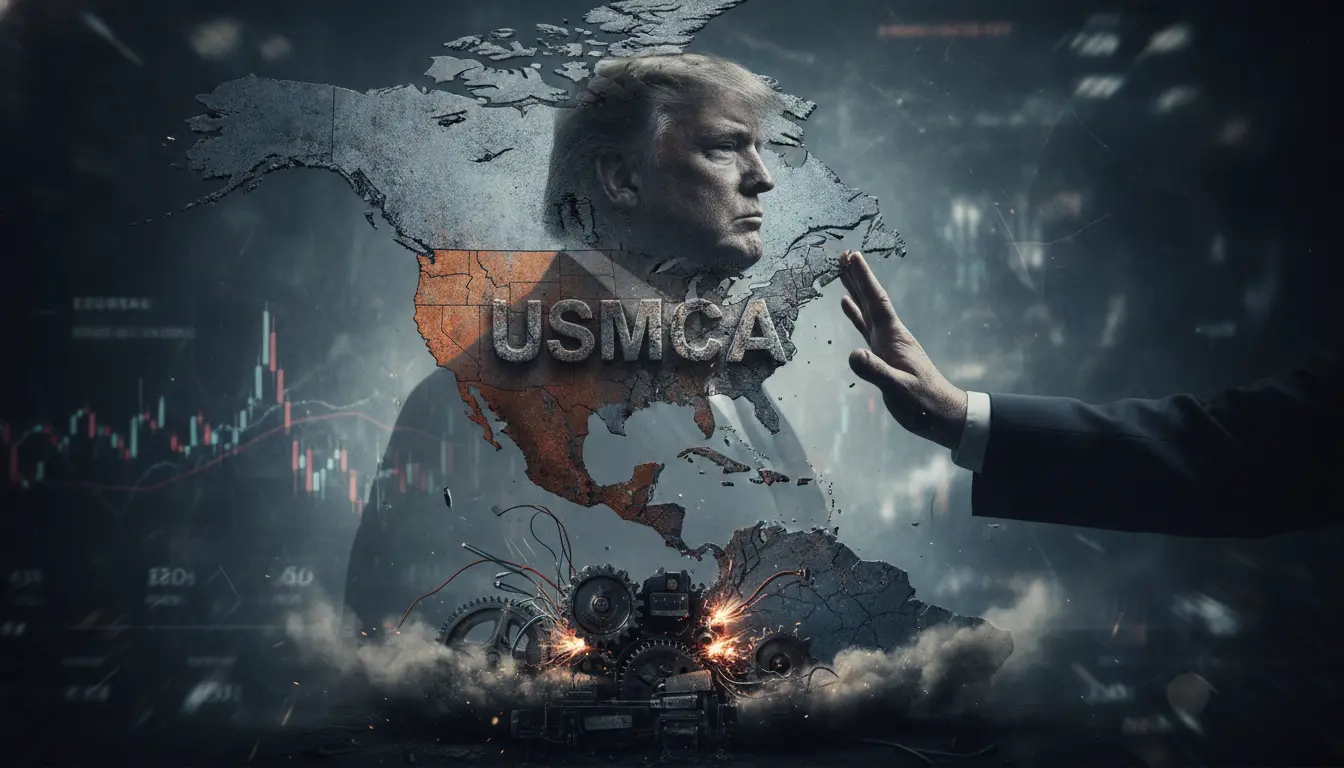
Trump Hints at Scrapping USMCA, His Own Signature Trade Deal, Sparking Economic Uncertainty

US Considers Reviving 100% Tariffs on European Digital Services, Sparking Transatlantic Trade Concerns

Former President Trump's Tariff Threat on European Digital Services Looms Ahead of US Election