

- News
- Politics
- 2026 NATO Summit in Turkey Prepares for Potential Trump Return Amid Defense Spending Pressure
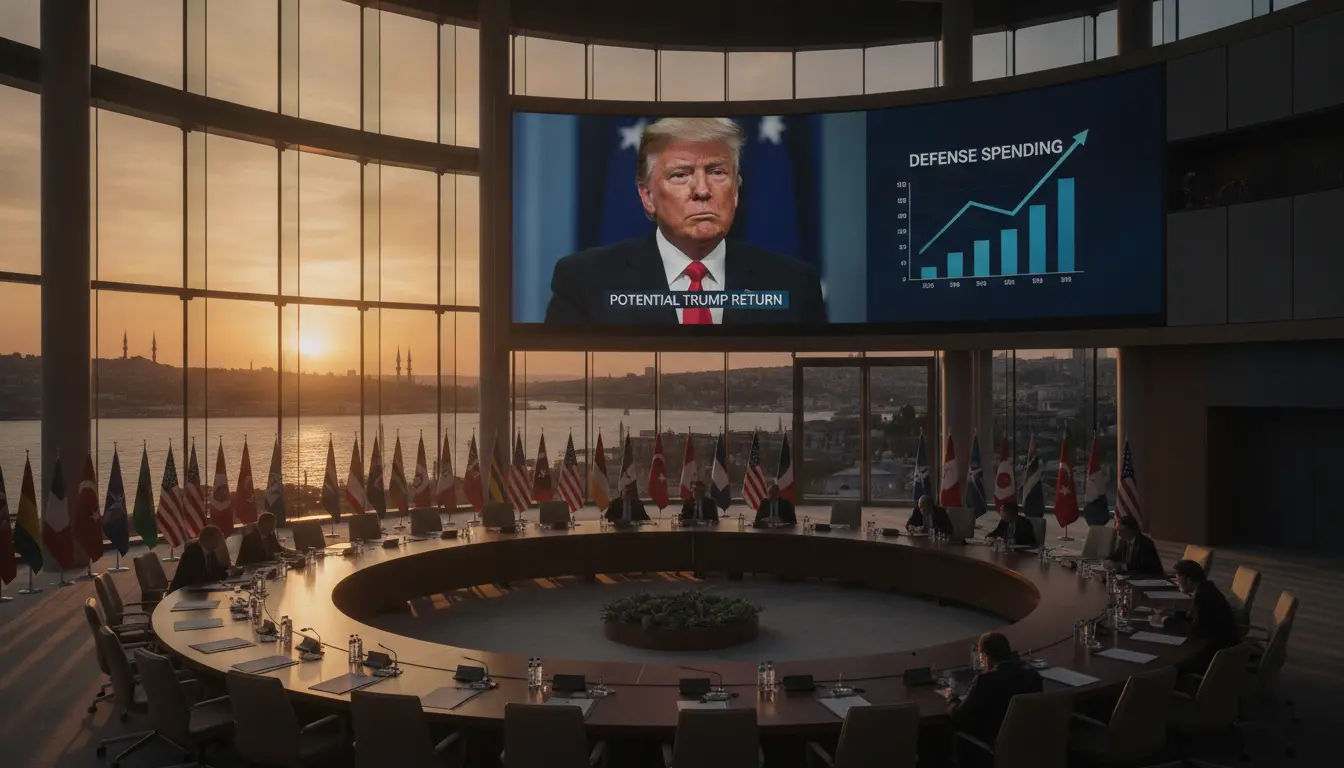
2026 NATO Summit in Turkey Prepares for Potential Trump Return Amid Defense Spending Pressure
As the 2026 NATO Summit in Turkey approaches, significant attention is converging on the anticipated attendance of former U.S. President Donald Trump, a presence that could dramatically reshape discussions around defense spending and the future trajectory of the transatlantic alliance. While official confirmation of his attendance will likely hinge on the outcome of the 2024 U.S. presidential election, the prospect alone has invigorated debate among member nations about their financial commitments and the very definition of collective security. His past rhetoric and actions have consistently challenged the foundational principles of NATO, making any potential involvement in 2026 a critical moment for the alliance.
Trump’s prior tenure was marked by persistent criticism of NATO members he deemed as not contributing their fair share to defense, often singling out countries for failing to meet the alliance’s target of spending at least two percent of their Gross Domestic Product (GDP) on defense. This pressure led to a tangible increase in military expenditures among some European nations, albeit often accompanied by considerable unease and accusations of undermining alliance unity. Should he return to the presidency, his re-engagement with NATO at a high-profile summit in Turkey would undoubtedly resurrect these demands, potentially with even greater intensity, forcing allies to re-evaluate their defense budgets and strategic priorities in a rapidly evolving geopolitical landscape.
The 2026 summit, set to take place in Turkey, offers a crucial platform for NATO leaders to address a multitude of pressing issues, including ongoing conflicts, emerging security threats, and the internal cohesion of the alliance. Turkey, a strategically vital NATO member, will serve as a significant host, placing it at the center of these high-stakes discussions. Beyond defense spending, the summit is expected to delve into matters such as continued support for Ukraine, the strategic challenges posed by Russia and China, and the adaptation of NATO's deterrence and defense posture. The alliance's ability to present a united front, particularly on issues of collective defense and burden-sharing, will be severely tested under the watchful eye of a potentially re-elected Trump administration.
Many European leaders have expressed concerns about the implications of a second Trump presidency for NATO. His “America First” approach previously led to questioning the very Article 5 mutual defense clause, which guarantees that an attack on one member is considered an attack on all. While such an extreme position might be tempered by the realities of a second term, the underlying sentiment of transactionalism in alliances persists. The expectation is that Trump would arrive in Turkey with a clear agenda: to push for immediate and substantial increases in defense spending from all member states, viewing this as a prerequisite for robust U.S. commitment to the alliance. The diplomatic challenges of navigating these demands while maintaining alliance solidarity will be immense.
For NATO members, preparing for such a scenario involves not only financial planning but also strategic reassessment. The alliance has already seen a significant uptick in defense spending post-2014, particularly following Russia's full-scale invasion of Ukraine, with more members now meeting or exceeding the 2% GDP target. However, Trump’s potential re-engagement could shift the focus from gradual progress to immediate, impactful increases, creating political and economic dilemmas for several nations. The summit in Turkey will thus become a crucial venue for determining whether NATO can reconcile its collective security ambitions with the demands for greater burden-sharing, especially if the United States' role is perceived as conditional.
The stakes for the 2026 NATO Summit are exceptionally high. The outcome of the U.S. presidential election and the subsequent foreign policy stance of the incoming administration will cast a long shadow over the proceedings. Should Donald Trump indeed attend, the summit will likely be dominated by intense negotiations and robust debate over defense spending, potentially redefining the terms of engagement within the world's most powerful military alliance. The ability of NATO members to navigate these complex dynamics will be critical for the alliance’s credibility and its future effectiveness in safeguarding global security in an increasingly volatile world.
Stay Informed. Act Smarter.
Get weekly highlights, major headlines, and expert insights — then put your knowledge to work in our live prediction markets.
Related News

Trump's 'America First' Doctrine Casts Shadow Over NATO's Future Ahead of Ankara Summit
Concerns Over US Political Dynamics Cloud Zelensky's Potential NATO Summit Address in Ankara
Ankara Prepares for Pivotal 2026 NATO Summit Amid Ukraine's Push for Formal Address
NATO Members Weigh Explicit 'Adversary' Label for Russia Ahead of 2026 Summit
Trump Eyes Separate Bilateral Meetings with Zelensky, Syrian Foreign Minister at NATO Summit

Allies Express Alarm as Trump Signals Potential US Troop Reductions in Europe

Eyes on Ankara as NATO Prepares Landmark Military Aid Package for Ukraine Amid Renewed Russian Offensives
Trump's High-Stakes NATO Summit: Pivotal Meetings with Ukrainian and Syrian Leaders Could Reshape Global Conflicts
Trump's Renewed Threats to Withdraw US Troops from Europe Spark Alarm Among NATO Allies
NATO's Article 5 Defense Pact Under Intensified Scrutiny Amid Geopolitical Flashpoints and US Political Uncertainty