

- News
- Politics
- Former President Trump's Tariff Threat on European Digital Services Looms Ahead of US Election

Former President Trump's Tariff Threat on European Digital Services Looms Ahead of US Election
The prospect of escalating trade tensions between the United States and the European Union is once again drawing international attention, fueled by the potential return of former President Donald Trump to the White House. Trump has previously vocalized intentions to impose a stringent 100% tariff on European digital services, a policy stance that, if implemented, could dramatically reshape transatlantic economic relations and trigger retaliatory measures from Brussels. The looming US presidential election has brought these discussions to the forefront, as businesses and governments on both sides of the Atlantic brace for potential disruptions to global trade flows.
The roots of this ongoing dispute trace back to the proliferation of Digital Services Taxes (DSTs) enacted by various European nations. Countries like France, Italy, and Spain introduced these taxes, arguing they were necessary to ensure tech giants, many of which are US-based, pay a fair share of tax on profits generated from their significant digital presence within European markets, irrespective of their physical domicile. These unilateral measures, often taxing revenues rather than profits, were designed to address the challenges of taxing highly digitalized businesses under traditional international tax rules. However, the US government, particularly under the Trump administration, viewed these taxes as inherently discriminatory against American technology companies such as Google, Apple, Meta, and Amazon, which dominate the digital landscape.
During his previous term, President Trump's administration initiated Section 301 investigations into several European countries, threatening punitive tariffs in response to their DSTs. While these investigations led to preliminary findings supporting the US claim of discrimination, a broader international effort, spearheaded by the Organization for Economic Co-operation and Development (OECD), sought a multilateral solution. This initiative aimed to create a unified global framework for taxing multinational corporations, including digital giants, thereby superseding the need for individual DSTs. Under President Biden, the US largely paused its tariff threats, opting to engage constructively in the OECD-led negotiations, which eventually yielded a two-pillar agreement to reform global corporate taxation.
Despite the multilateral progress, some European countries have maintained their DSTs or expressed reservations about fully implementing the OECD's Pillar One, which is designed to reallocate taxing rights to market jurisdictions. This lingering disparity, coupled with Trump's consistent "America First" trade rhetoric, suggests that a renewed focus on punitive tariffs could become a centerpiece of a future Trump administration's trade policy. A 100% tariff on digital services would not merely be symbolic; it would effectively double the cost of European digital services for American consumers and businesses, or conversely, make it prohibitive for American tech firms to operate certain services in Europe without incurring massive tax liabilities.
Such a policy would have profound implications for the global economy. European nations, highly dependent on digital trade, would likely suffer economic repercussions, potentially prompting them to impose their own retaliatory tariffs on American goods and services. This tit-for-tat dynamic could quickly escalate into a full-blown trade war, disrupting supply chains, increasing consumer costs, and hindering economic growth in both regions. Industries ranging from e-commerce and cloud computing to online advertising and data services would face immense uncertainty, forcing them to re-evaluate their operational strategies and potentially relocate investments.
The dispute also underscores a deeper ideological divide on international taxation and trade governance. While the US largely advocates for market-driven solutions and views tariffs as a tool to protect domestic industries and interests, many European nations prioritize tax fairness and the ability to tax profits generated within their borders, regardless of where the company is headquartered. The upcoming US election, therefore, represents a critical juncture, with the outcome potentially determining whether the transatlantic relationship moves towards greater cooperation on global taxation or descends into a period of heightened protectionism and trade friction. The international community watches closely, aware that the repercussions of such a trade conflict would extend far beyond the immediate economic impact, challenging the very foundations of multilateral trade agreements and global economic stability.
Stay Informed. Act Smarter.
Get weekly highlights, major headlines, and expert insights — then put your knowledge to work in our live prediction markets.
Related News

Trump's Tariffs Threat Rekindles US-EU Digital Tax Tensions

US Considers Reviving 100% Tariffs on European Digital Services, Sparking Transatlantic Trade Concerns
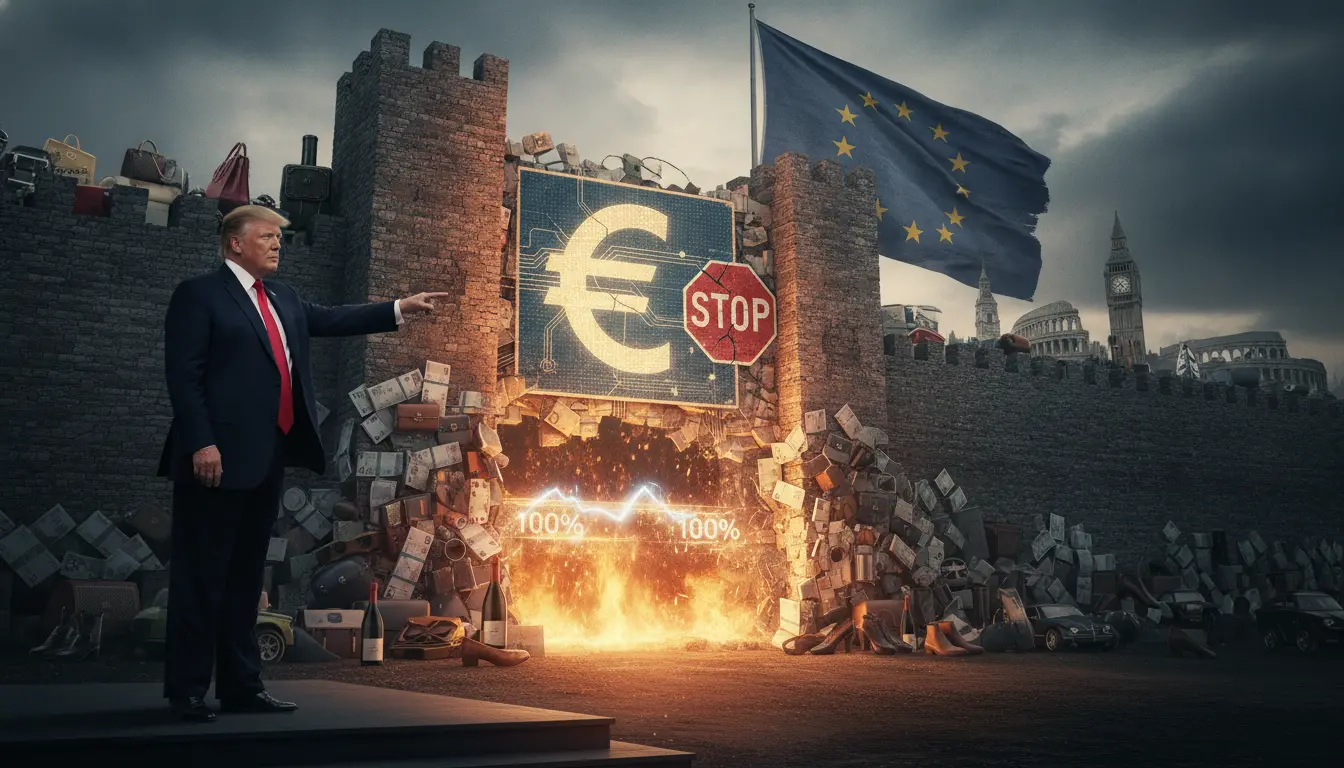
Trump Vows 100% Tariffs on Europe Over Digital Taxes, Threatening New Trade War

Trump's Threat of 100% Tariffs on Europe Stokes Fears of a New Transatlantic Trade War

Analysts Warn of Sweeping Global Tariff Expansion Under Potential Future Trump Administration

US-China Economic Standoff Intensifies Amidst Calls for New Tariffs by 2026

US Considers Imposing Fresh Tariffs on Chinese Goods Amid Persistent Trade Frictions
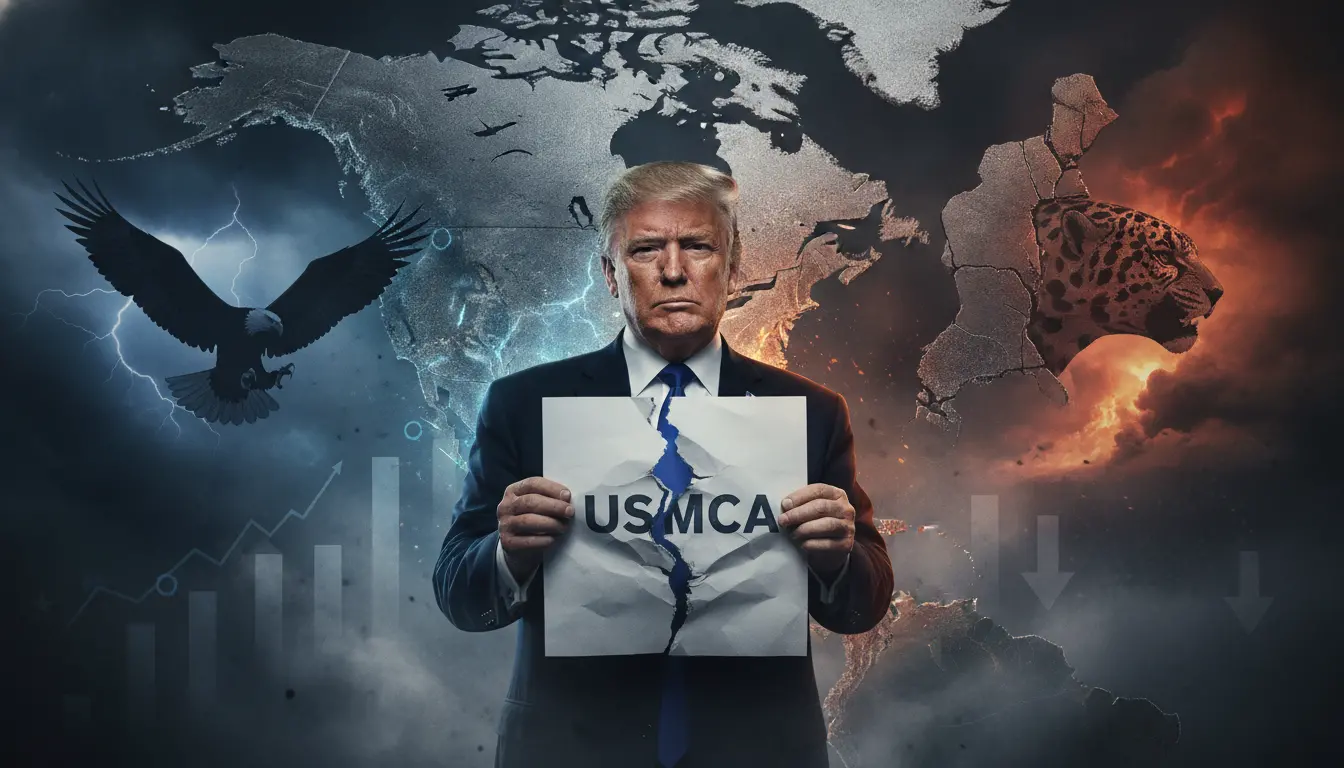
Trump's Stance on USMCA Sparks North American Trade Tensions, Setting Stage for Renegotiation

Allies Express Alarm as Trump Signals Potential US Troop Reductions in Europe

Washington Considers Imposing New Trade Tariffs on Spain Amid Diplomatic Rifts