

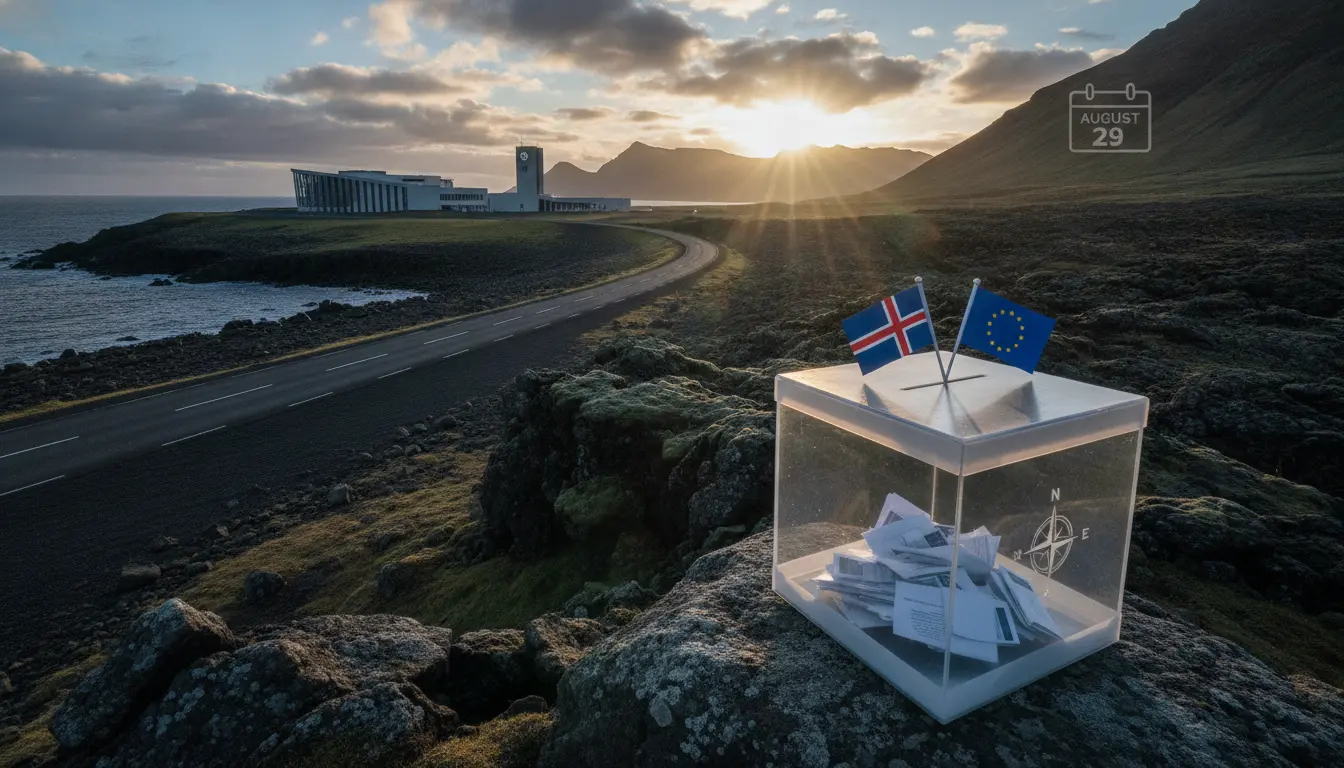
Icelanders to Vote on Future of EU Accession Path in August 2026
Iceland is set to hold a nationwide referendum on August 29, 2026, a pivotal moment that will determine the future course of the island nation's relationship with the European Union. Voters will be asked to decide whether the country should continue its long-stalled accession talks with the powerful economic and political bloc. This upcoming vote marks a significant juncture in Iceland's foreign policy, potentially reshaping its economic landscape, trade agreements, and overall geopolitical standing in Europe.
The question of EU membership has been a recurring and often divisive topic in Icelandic politics for decades. Iceland first formally applied for EU membership in July 2009, largely driven by the severe economic and financial crisis that crippled the country's banking system in 2008. At the time, proponents argued that joining the EU and adopting the Euro would provide much-needed economic stability and a more secure framework for the nation's financial future. Negotiations proceeded for several years, covering a wide array of policy chapters from free movement of goods to environmental regulations. However, progress slowed considerably, primarily due to fundamental disagreements over critical areas such as fisheries management, agriculture, and the protection of Iceland's sovereign control over its abundant natural resources, particularly its highly lucrative fishing grounds.
Opposition to joining the EU has historically been strong, particularly among those concerned about the potential loss of sovereignty and the impact on Iceland's vital fishing industry. Many Icelanders cherish their nation's independence and fear that acceding to the EU’s Common Fisheries Policy (CFP) would compromise their ability to manage their exclusive economic zone. Agricultural concerns, too, have played a significant role, with fears that Icelandic farmers would struggle to compete with subsidized European counterparts. On the other hand, advocates for membership point to the benefits of deeper integration into the EU’s single market, increased political influence as part of a larger bloc, and the potential for greater economic stability and diversification beyond the traditional pillars of fishing and tourism.
In 2013, a new centre-right government came to power, pledging to halt accession negotiations without holding a referendum. This decision effectively froze the talks, although Iceland’s application was never formally withdrawn. The move sparked considerable domestic debate and protests, with many arguing that the public should have the final say on such a monumental decision. Over the ensuing years, various political factions and public opinion polls have reflected a fluctuating but often cautious stance towards the EU, with the question of whether to resume or definitively end the accession process remaining a persistent undercurrent in national discourse.
The upcoming referendum, therefore, represents a renewed attempt to definitively address this long-standing issue and provide clarity on Iceland's European trajectory. While specific details surrounding the campaign and the exact wording of the ballot question are yet to be fully crystallized, the underlying stakes are clear. A 'yes' vote would signal a mandate to re-engage with Brussels and restart the complex and demanding negotiation process, potentially leading to further rounds of public consultations or another referendum on full membership. Such a path would require significant political will and a willingness from both sides to find compromises on the contentious issues that derailed previous efforts.
Conversely, a 'no' vote would likely close the door on EU membership for the foreseeable future, solidifying Iceland's position outside the Union. This would mean a continued reliance on existing agreements, such as the European Economic Area (EEA), which grants Iceland access to the EU's single market but without a direct say in EU policymaking. Regardless of the outcome, the 2026 referendum will undoubtedly have profound implications for Iceland's national identity, its economic model, and its strategic alignment on the global stage. The debate leading up to the vote is expected to be vigorous, touching upon deeply held beliefs about national sovereignty, economic prosperity, and the best path forward for the vibrant island nation.
Stay Informed. Act Smarter.
Get weekly highlights, major headlines, and expert insights — then put your knowledge to work in our live prediction markets.
Related News

Iceland Schedules Landmark Referendum on European Union Membership for August 2026
Sweden's 2026 Election Looms as Political Blocs Grapple for Governing Mandate

New Zealand's Political Landscape Gears Up for Highly Contested 2026 General Election

ECB Navigates Persistent Inflation and Growth Headwinds Ahead of Future Rate Adjustments
Likud Gears Up for High-Stakes 2026 Israeli Knesset Election Amid Deepening Political Divides

European Union Prepares for Intensifying Threat of Simultaneous 'Red' Heatwave Alerts

UEFA-FIFA Power Struggle Intensifies, Casting Doubt on European Participation in 2026 World Cup
Brazil Braces for Contentious 2026 Presidential Election as Lula Eyes Re-election Bid

Haiti Faces Mounting Challenges Ahead of Scheduled 2026 Presidential Election

Speculation Intensifies Over United Kingdom General Election Date as Deadline Nears