

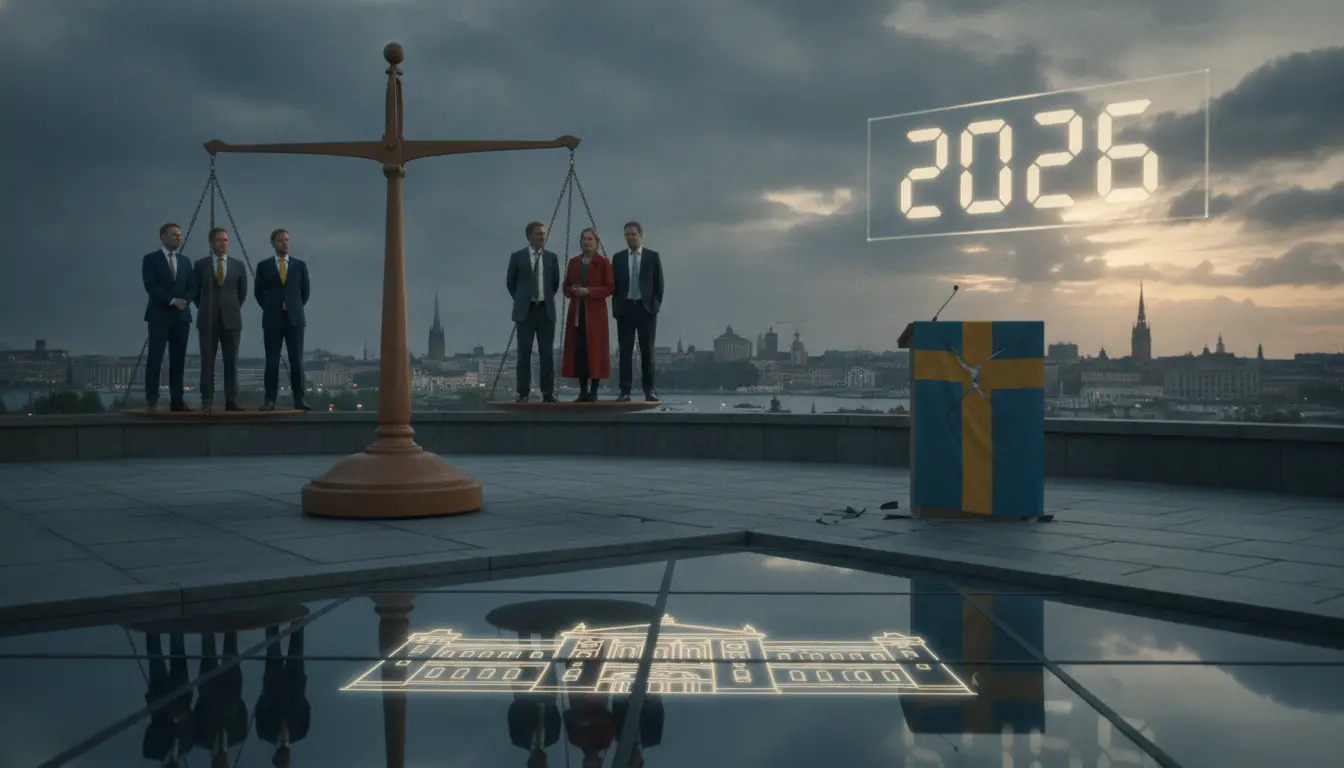
Sweden's 2026 Election Looms as Political Blocs Grapple for Governing Mandate
Sweden is preparing for a pivotal parliamentary election in September 2026, a vote widely anticipated to determine the nation's political direction amid persistent challenges in forming stable governing coalitions. With the political landscape increasingly fragmented, the question of which bloc or constellation of parties will ultimately secure the mandate to govern has become a central point of national debate, setting the stage for an intense period of campaigning and negotiation over the next two years.
The current government, a center-right minority led by Prime Minister Ulf Kristersson of the Moderate Party, relies on a formal cooperation agreement with the nationalist Sweden Democrats. This arrangement, brokered after the closely contested 2022 election, marked a significant shift in Swedish politics, as it formally brought the Sweden Democrats – once ostracized by mainstream parties – into the realm of government influence. This historical deviation from Sweden's traditional two-bloc system (Social Democrats-led left vs. Moderate-led right) highlights the difficulties parties face in achieving outright majorities, forcing unprecedented compromises and alliances.
On the left, the Social Democrats, traditionally Sweden's dominant political force, are working to consolidate their position and present a unified alternative. Led by Magdalena Andersson, the party aims to regain the momentum lost in the last election and capitalize on any public discontent with the current government's performance on issues like inflation, crime, and welfare. They face the task of uniting smaller left-leaning parties—the Left Party and the Green Party—under a common banner, a task made complex by varying policy priorities and past electoral disagreements.
Conversely, the right-leaning bloc, comprised primarily of the Moderates, Christian Democrats, and Liberals, alongside their parliamentary partner, the Sweden Democrats, faces its own set of challenges. While the Sweden Democrats have seen a steady rise in support, their integration into government cooperation has been met with internal friction among the traditional center-right parties, particularly the Liberals, who historically maintained a firm distance. Maintaining cohesion within this diverse group, balancing ideological differences, and crafting policies that appeal to a broad spectrum of voters will be crucial for their electoral prospects.
The election is expected to be fought on a range of critical issues that resonate deeply with Swedish voters. Economic stability, particularly in light of ongoing inflation and a global economic slowdown, will be paramount. Immigration and integration policies, an area where the Sweden Democrats hold considerable sway, will undoubtedly remain central. Additionally, healthcare, education, climate action, and addressing rising crime rates are all likely to feature prominently in party manifestos and public discourse. The ability of parties to articulate clear, credible solutions to these challenges will largely determine their appeal.
The prospect of another hung parliament or a minority government is a significant concern, as it could lead to prolonged periods of political uncertainty and difficult policy implementation. The current government's reliance on external parliamentary support has demonstrated both the opportunities and limitations of such arrangements. As the 2026 election approaches, the political parties will be under immense pressure to not only win votes but also to demonstrate a clear and viable path to forming a stable and effective government, capable of leading Sweden through complex domestic and international waters. The outcome will shape not only the composition of the Riksdag but also the very nature of Swedish political governance for years to come.
Stay Informed. Act Smarter.
Get weekly highlights, major headlines, and expert insights — then put your knowledge to work in our live prediction markets.
Related News

New Zealand's Political Landscape Gears Up for Highly Contested 2026 General Election
Brazil Braces for Contentious 2026 Presidential Election as Lula Eyes Re-election Bid

Likud Gears Up for High-Stakes 2026 Israeli Knesset Election Amid Deepening Political Divides

Iceland Schedules Landmark Referendum on European Union Membership for August 2026

Mounting Political Tensions Raise Prospects of Early Canadian Federal Election

Icelanders to Vote on Future of EU Accession Path in August 2026

Anticipation Builds for 2026 European Women's Volleyball Championship as Co-Hosts Prepare

Forecasting TIME Magazine's 2026 Person of the Year: The Annual Gauge of Global Influence

ECB Navigates Persistent Inflation and Growth Headwinds Ahead of Future Rate Adjustments

Speculation Intensifies Over United Kingdom General Election Date as Deadline Nears