

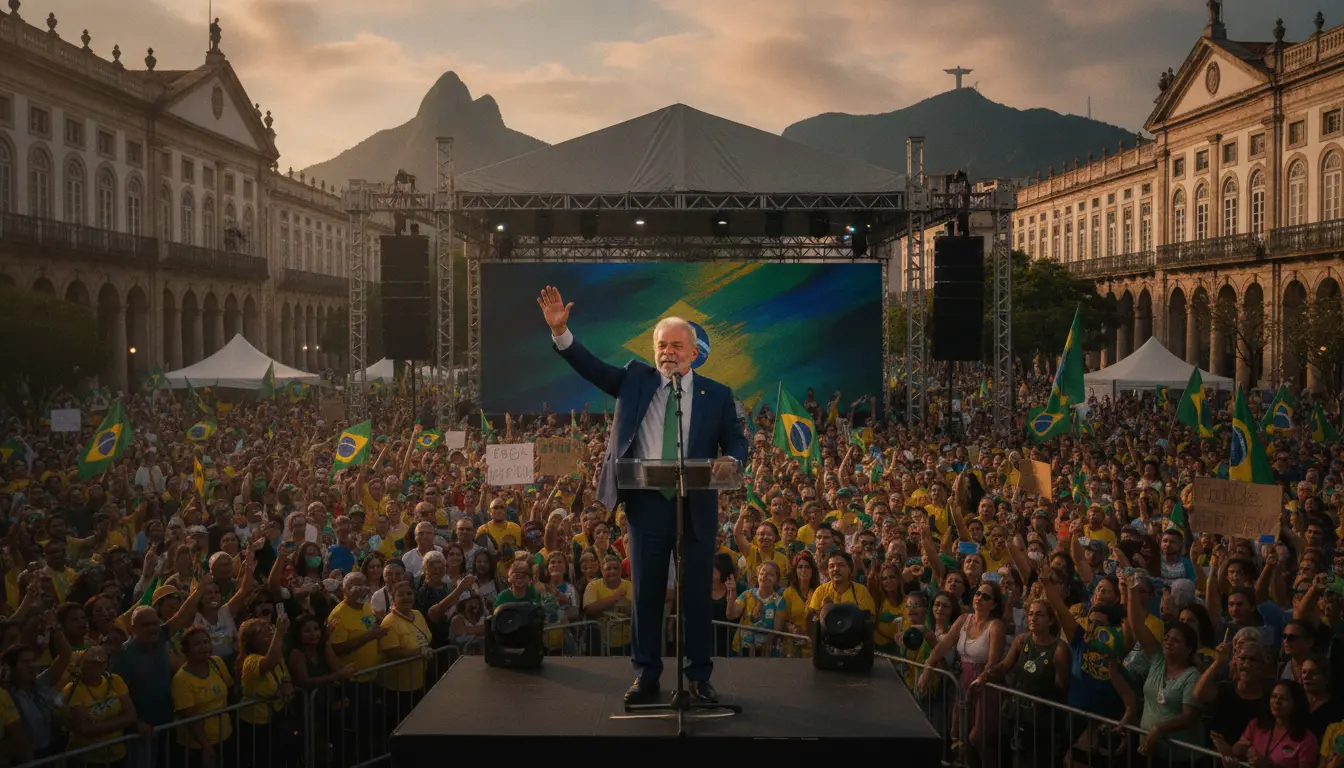
Brazil Braces for Contentious 2026 Presidential Election as Lula Eyes Re-election Bid
Brazil is already laying the groundwork for a highly anticipated and potentially tumultuous general election in October 2026, which will determine the nation's next president. Incumbent President Luiz Inácio Lula da Silva, widely known as Lula, is eligible to seek a second consecutive term, setting the stage for a contest that is expected to be deeply polarized and fiercely fought. With just over two years until voters head to the polls on October 4, the political landscape is buzzing with speculation, strategic maneuvering, and the nascent formation of alliances as both the ruling coalition and a fragmented opposition begin to position themselves for what many predict will be a defining moment for the South American giant.
Lula's return to the presidency in 2022 marked a remarkable political comeback after a period of incarceration and the subsequent annulment of his convictions. His third non-consecutive term has seen a renewed focus on social programs, environmental protection, and a more assertive role for Brazil on the international stage, particularly within BRICS and in global climate discussions. Domestically, his administration has grappled with the persistent challenges of economic growth, inflation, and a deeply divided Congress. Despite these hurdles, Lula's approval ratings have remained resilient, buoyed by his base and the perception of a return to stability after a period of intense political turmoil. His Workers' Party (PT) is expected to fully back his re-election bid, presenting a unified front.
The opposition, however, presents a far more complex and fractured picture. The conservative and right-wing forces, largely coalescing around the legacy of former President Jair Bolsonaro, face the challenge of finding a viable candidate to unite their diverse factions. Bolsonaro himself, despite his enduring popularity among a significant segment of the electorate, is currently barred from running for public office until 2030 due to a ruling by the Superior Electoral Court (TSE) over abuse of power allegations during the 2022 campaign. This disqualification leaves a substantial void, forcing the right to identify a successor capable of galvanizing the pro-Bolsonaro movement while also appealing to a broader center-right electorate. Names like São Paulo Governor Tarcísio de Freitas and Minas Gerais Governor Romeu Zema are frequently cited as potential contenders, but none have yet demonstrated the widespread appeal or unified backing necessary to pose a definitive challenge.
The upcoming election is not merely about personalities; it will be a referendum on Brazil's future direction, touching upon critical issues ranging from economic policy to social justice and environmental stewardship. The nation continues to navigate global economic headwinds, with concerns over fiscal stability, interest rates, and the sustainable management of its vast natural resources. Poverty and inequality remain pervasive, making social welfare programs a central theme. Moreover, the enduring scars of political polarization, exacerbated by social media and cultural wars, mean that the campaign is likely to be fought not just on policy, but on deeply held ideological beliefs and values, further testing the resilience of Brazil's democratic institutions.
As the 2026 election draws closer, the pre-campaign landscape will be characterized by intense internal debates within opposition parties and a flurry of exploratory trips and public appearances by potential candidates. Governors and prominent political figures will use their current positions to build national profiles, test the waters for support, and forge crucial alliances. The coming year will likely see a scramble for endorsements from key political heavyweights, including Bolsonaro himself, whose influence on the right-wing vote remains undeniable, even from outside formal office. The ability of the opposition to coalesce around a single, electable candidate will be paramount; a fragmented field risks splitting the anti-Lula vote, potentially paving a smoother path for the incumbent.
The stakes for Brazil are exceptionally high. The election outcome will dictate the country's trajectory on issues ranging from its economic model and foreign policy alignment to its approach to climate change and human rights. It will also serve as a barometer for the strength of its democratic processes in a region that has seen considerable political volatility. With a long and complex campaign ahead, marked by intense media scrutiny and public debate, the 2026 Brazilian General Election promises to be a gripping political saga, shaping not just the nation's future, but potentially its standing on the global stage for years to come.
Stay Informed. Act Smarter.
Get weekly highlights, major headlines, and expert insights — then put your knowledge to work in our live prediction markets.
Related News

Brazilian Senate Weighs Landmark Constitutional Amendment to Rein in Supreme Court Powers
New Zealand's Political Landscape Gears Up for Highly Contested 2026 General Election
Likud Gears Up for High-Stakes 2026 Israeli Knesset Election Amid Deepening Political Divides

Sweden's 2026 Election Looms as Political Blocs Grapple for Governing Mandate
Haiti Faces Mounting Challenges Ahead of Scheduled 2026 Presidential Election

Forecasting TIME Magazine's 2026 Person of the Year: The Annual Gauge of Global Influence

Mounting Political Tensions Raise Prospects of Early Canadian Federal Election

UEFA-FIFA Power Struggle Intensifies, Casting Doubt on European Participation in 2026 World Cup

ECB Navigates Persistent Inflation and Growth Headwinds Ahead of Future Rate Adjustments

Key Teams Position Themselves for Dominance in Anticipated 2026 F1 Constructors' Championship