

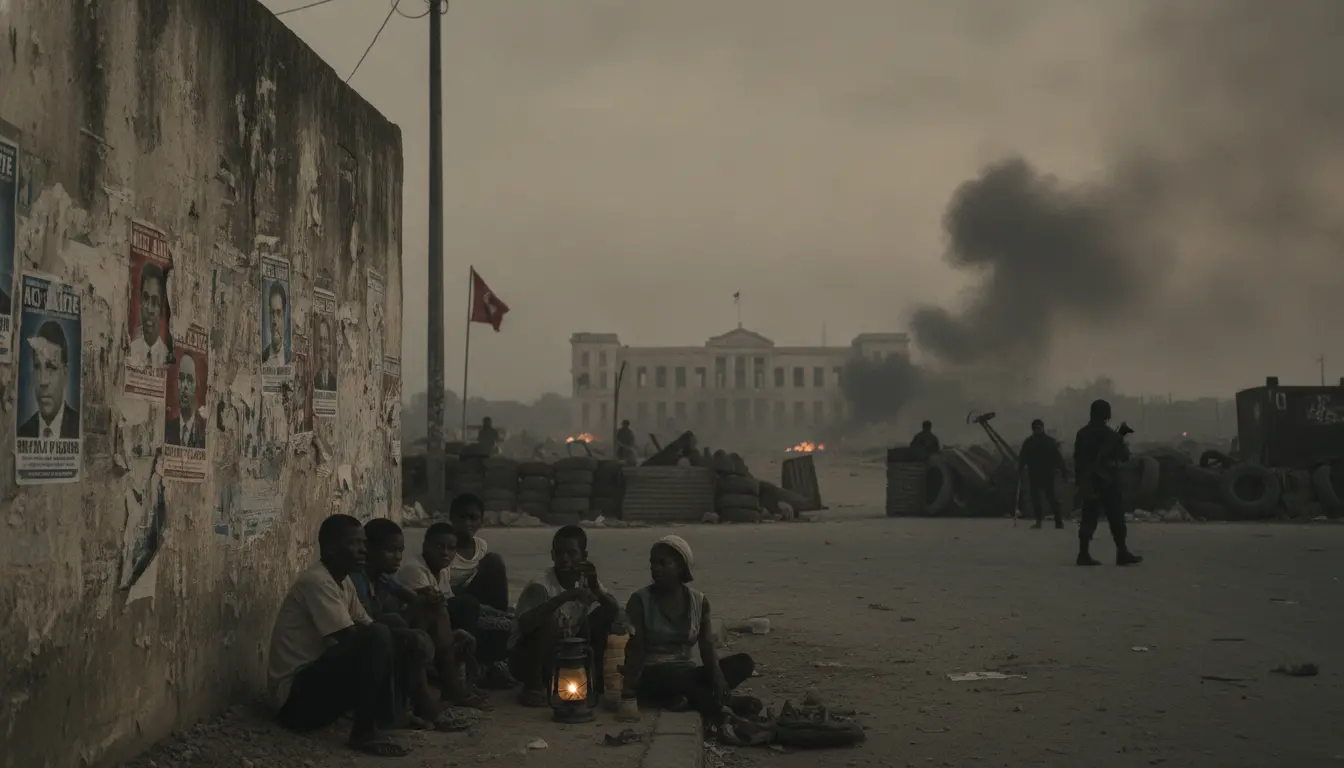
Haiti Faces Mounting Challenges Ahead of Scheduled 2026 Presidential Election
Haiti is grappling with profound uncertainty regarding the feasibility of its scheduled presidential election, currently slated for August 2026. The Caribbean nation remains mired in a multifaceted political, security, and humanitarian crisis, casting a long shadow over any efforts to restore democratic order. With the August 30, 2026, date for the first round of voting approaching, a confluence of deeply entrenched obstacles continues to challenge the very foundations required for a free, fair, and secure electoral process.
The country has been without a democratically elected head of state since the assassination of President Jovenel Moïse in July 2021, plunging Haiti into a prolonged political vacuum. This institutional void has been compounded by the dissolution of its parliament and judiciary, leaving a transitional presidential council to navigate an increasingly complex landscape. Tasked with restoring stability and paving the way for elections, the council faces immense pressure from within Haiti and from the international community to re-establish a semblance of constitutional governance and national sovereignty, a goal that appears more distant with each passing day.
The most immediate and debilitating threat to any electoral aspirations is the rampant and escalating gang violence that has brought the capital, Port-au-Prince, to a near standstill. Armed groups, including the powerful G9 Family and Allies coalition, exert de facto control over large swathes of the city and critical infrastructure, including the port and key roadways. This pervasive violence has not only disrupted daily life, severely impacting access to essential services and goods, but also poses an insurmountable logistical and security challenge for any nationwide electoral campaign, voter registration efforts, or the secure establishment of polling stations. The sheer danger to candidates, electoral officials, and voters makes the prospect of a legitimate and inclusive process seem exceedingly remote.
Beyond the security concerns, Haiti's state institutions, including the Provisional Electoral Council (CEP), are severely under-resourced, deeply fractured, and lack the capacity to organize a complex national election. The technical and logistical hurdles, from creating accurate voter rolls to ensuring the secure distribution and tabulation of ballots across a fragmented and often inaccessible territory, are immense. International efforts, notably the proposed United Nations-backed Multinational Security Support (MSS) mission led by Kenya, aim to help stabilize the country and create an environment conducive to elections. However, its deployment has faced repeated delays due to legal challenges and logistical complexities, leaving its potential impact and timing uncertain. Without a robust and impartial security presence, the integrity and fairness of any election would be severely compromised.
Adding to the political and security quagmire is a dire humanitarian crisis that has left millions facing acute food insecurity and hundreds of thousands internally displaced. The relentless violence has forced people from their homes, shattered livelihoods, and made large areas of the country virtually inaccessible for humanitarian aid. This protracted crisis not only diverts critical resources but also creates a population that is traumatized, disengaged, and deeply skeptical of political processes. For an election to be truly legitimate, it requires broad civic participation, which is difficult to foster among a populace struggling for basic survival and fearing for their lives.
The stakes for Haiti and the wider region are exceptionally high. A failure to hold the presidential election by the scheduled date, or a process that is widely perceived as illegitimate, would further entrench the nation's profound political paralysis, exacerbate its humanitarian catastrophe, and potentially trigger further waves of migration. Both the international community and Haitian civil society organizations are urgently advocating for a credible, inclusive, and transparent electoral process as the only viable path to establishing a legitimate government capable of addressing the nation's myriad and deep-seated challenges. The coming months will be crucial in determining whether Haiti can overcome these monumental obstacles and take a decisive step towards democratic renewal.
Stay Informed. Act Smarter.
Get weekly highlights, major headlines, and expert insights — then put your knowledge to work in our live prediction markets.
Related News
Brazil Braces for Contentious 2026 Presidential Election as Lula Eyes Re-election Bid
Likud Gears Up for High-Stakes 2026 Israeli Knesset Election Amid Deepening Political Divides

Sweden's 2026 Election Looms as Political Blocs Grapple for Governing Mandate

Mounting Political Tensions Raise Prospects of Early Canadian Federal Election

New Zealand's Political Landscape Gears Up for Highly Contested 2026 General Election

Icelanders to Vote on Future of EU Accession Path in August 2026

Brazilian Senate Weighs Landmark Constitutional Amendment to Rein in Supreme Court Powers

Speculation Intensifies Over United Kingdom General Election Date as Deadline Nears

Barbados Intensifies Global Push for Slavery Reparations, Eyes Formal UN or ICC Demand

Iceland Schedules Landmark Referendum on European Union Membership for August 2026