


Madrid Considers Troop Deployment to Ceuta Following Renewed Border Pressures
The Spanish government is currently deliberating the potential deployment of military forces to Ceuta, one of its two autonomous cities on the North African coast, in response to escalating migratory pressures and mass border breaches. This consideration underscores the persistent challenges faced by Madrid in securing its southern frontier, which also serves as an external border of the European Union. Such a move, while not unprecedented in terms of military support for civilian authorities, would signify a heightened level of concern over the stability and security of the strategically vital enclave.
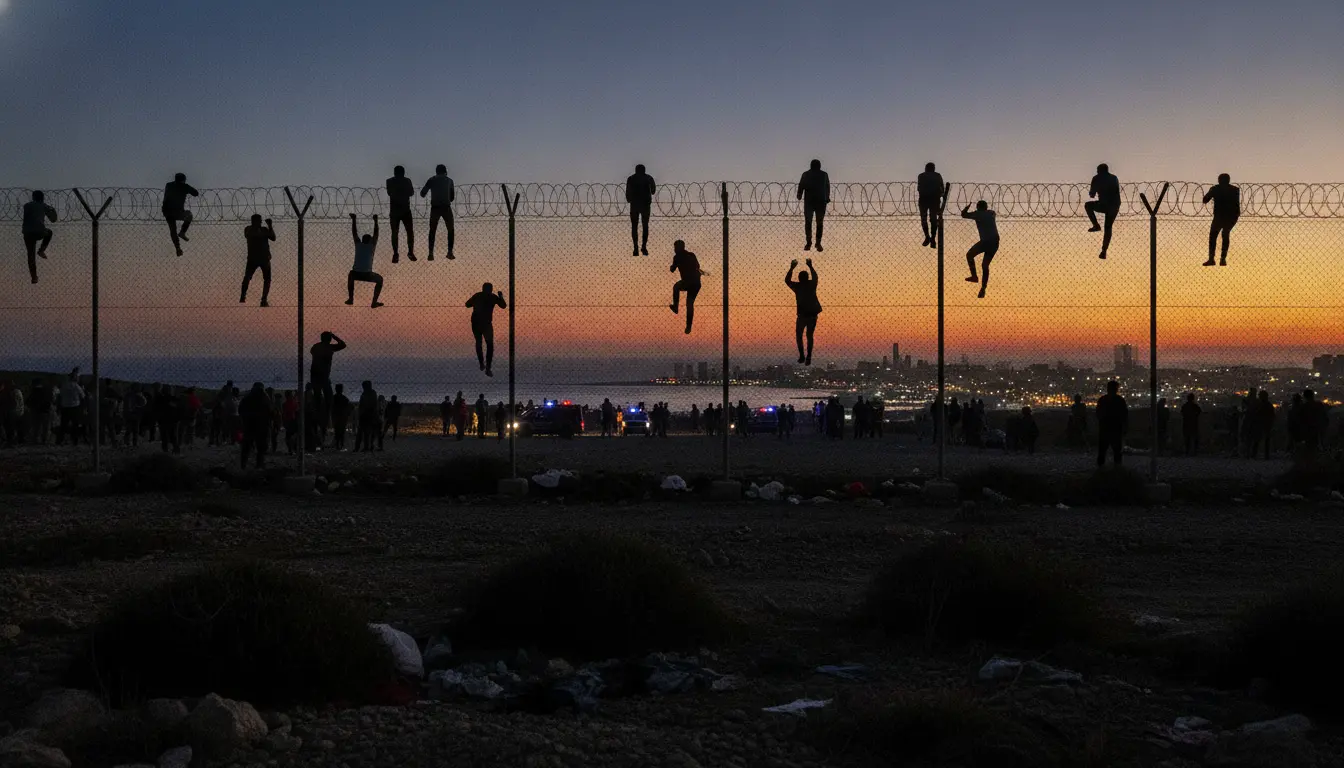
Ceuta, alongside Melilla, holds a unique and often contentious position, physically located on the African continent but unequivocally part of Spain. These enclaves have long been magnets for migrants and asylum seekers from sub-Saharan Africa and Morocco seeking entry into Europe. The border separating Ceuta from Morocco is heavily fortified with multi-layered fences, razor wire, and advanced surveillance systems, yet it remains a flashpoint for desperate attempts to cross. The recurring nature of these mass attempts often overwhelms the capabilities of the Guardia Civil and National Police forces tasked with maintaining order and border integrity, forcing the government to explore more robust measures.
The most recent wave of mass incursions has reignited debates within Spain regarding the appropriate response to these complex challenges. While specific details of the latest breach remain under review, past incidents have seen thousands of individuals attempting to storm the fences simultaneously, creating chaotic scenes and posing significant logistical and security dilemmas for Spanish authorities. The sheer scale and coordination of some of these attempts suggest a sophisticated network of human traffickers, further complicating an already delicate situation. In previous crises, military units have been mobilized to provide logistical support or reinforce police presence, but a full deployment specifically for border control duties would mark a significant escalation.
Spain’s legal framework allows for the use of military personnel to support civilian authorities in specific circumstances, particularly when national security or public order is at risk. Such deployments typically involve tasks like perimeter control, logistical assistance, and humanitarian aid, rather than direct engagement in policing. The rationale behind considering military intervention in Ceuta would be multi-faceted: to reinforce the physical barrier, to deter future large-scale incursions, and to provide a visible show of strength and commitment to maintaining Spain’s territorial integrity. However, any such decision would be weighed carefully against its potential impact on civil liberties and the international perception of the situation.
The geopolitical implications of deploying military troops to Ceuta are substantial. Relations between Spain and Morocco, while often cooperative on migration issues, have historically been fraught with tensions over the sovereignty of the enclaves. A significant military presence could be perceived differently by Rabat, potentially reigniting diplomatic disputes. Furthermore, Ceuta's status as an EU external border means that any Spanish action has broader European ramifications, drawing scrutiny from Brussels and fellow member states. The delicate balance between national sovereignty, border security, and international diplomacy makes this a highly sensitive matter.
Looking ahead, the Spanish government faces a critical decision that will have long-term consequences for Ceuta, its national security posture, and its relationship with Morocco and the European Union. Factors influencing this decision will likely include the persistence and scale of future migratory pressures, the effectiveness of existing civilian forces, and ongoing diplomatic efforts with Morocco to manage migration flows more effectively. The debate highlights the enduring challenge for European nations in balancing humanitarian responsibilities with the imperative of securing their borders in an increasingly interconnected and volatile world. The question is not merely one of deployment, but of finding a sustainable solution to a deeply entrenched humanitarian and geopolitical crisis.
Stay Informed. Act Smarter.
Get weekly highlights, major headlines, and expert insights — then put your knowledge to work in our live prediction markets.
Related News
Spain Calls for Urgent EU Meeting Amid Escalating Ceuta Migrant Influx

Humanitarian Crisis Deepens at Ceuta Border as Migrant Death Toll Mounts

Washington Considers Imposing New Trade Tariffs on Spain Amid Diplomatic Rifts

NATO Considers Further Expansion Amid European Security Concerns

European Union Pushes for Landmark Common Defense Policy by 2026 Amid Geopolitical Shifts
United States Weighs Permanent Policy for Immediate Asylum Expulsion at Southern Border

Allies Express Alarm as Trump Signals Potential US Troop Reductions in Europe

European Union Grapples with Potential Trade Sanctions on Israeli West Bank Settlements

Trump's Renewed Threats to Withdraw US Troops from Europe Spark Alarm Among NATO Allies
Future US Administration Poised to Reimplement Immediate Asylum Expulsions at Southern Border