

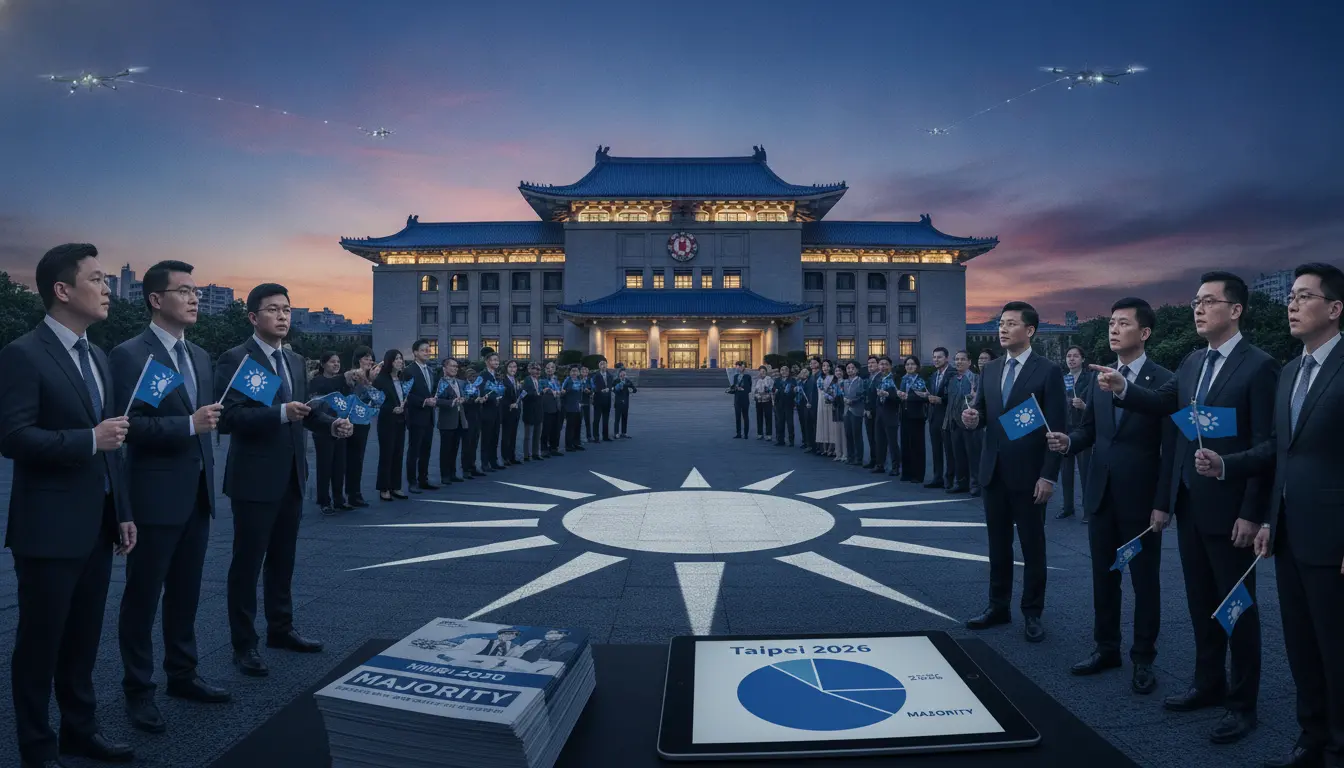
Kuomintang Eyes Taipei City Council Majority Ahead of 2026 Local Elections
As Taiwan looks towards its 2026 local elections, the contests for the Taipei City Council are emerging as a pivotal battleground, with the Kuomintang (KMT) actively strategizing to secure a majority of seats. These elections, traditionally seen as a barometer of public sentiment and a crucial precursor to national polls, will test the KMT's organizational strength and its appeal to urban voters in the nation's capital. Taipei, a political and economic powerhouse, often sets the tone for broader political trends across the island, making its city council races intensely scrutinized and fiercely contested by all major parties.
The significance of Taipei cannot be overstated in Taiwan's complex political landscape. While the KMT recently reclaimed the Taipei mayoralty with Chiang Wan-an in 2022, securing a legislative majority in the city council would represent a substantial consolidation of power, allowing the party greater leverage in local governance and policy implementation. Such a victory would provide a strong platform for the KMT to push its agenda, whether on urban development, infrastructure projects, or public services, potentially enhancing its image as a capable governing force. Conversely, a failure to achieve this goal, despite holding the mayor's office, could expose underlying weaknesses and invite questions about the party's broader electoral appeal, particularly against the backdrop of a changing electorate.
The political dynamics in Taipei are intricate, involving not only the traditional rivalry between the KMT and the ruling Democratic Progressive Party (DPP) but also the growing influence of the Taiwan People's Party (TPP). The TPP, founded by former Taipei Mayor Ko Wen-je, has carved out a niche, particularly among younger and independent voters, and is expected to field competitive candidates. This three-way competition could lead to vote splitting, making a clear majority for any single party more challenging. The KMT’s strategy will likely involve leveraging its established party structure, mobilizing its loyal base, and presenting a compelling vision for Taipei's future, focusing on pragmatic solutions to local issues rather than solely national political narratives.
For the DPP, the 2026 Taipei City Council elections represent an opportunity to regain lost ground and demonstrate resilience in the face of KMT's renewed presence. After losing the mayoralty, the DPP will be keen to prevent a complete KMT dominance in the city's legislative body. Their campaign will likely highlight policy achievements at the national level, critique the KMT's local performance, and appeal to voters with progressive social policies and a commitment to Taiwan's democratic identity. The outcome in Taipei will inevitably be viewed through the lens of national politics, influencing perceptions of the DPP's overall strength as the ruling party.
The road to a city council majority is fraught with challenges. Voters in Taipei are known for their discerning nature, often weighing candidates on their individual merits, policy stances, and local engagement rather than strictly party lines. Issues such as housing affordability, public transportation, environmental protection, and economic growth will likely dominate the campaign discourse. Furthermore, the national political climate, including cross-strait relations and Taiwan's international standing, could indirectly sway voter sentiment, even in local contests. Unforeseen events or shifts in public opinion could dramatically alter the electoral landscape, demanding agility and adaptability from all political contenders.
The stakes extend beyond mere administrative control. A KMT majority in the Taipei City Council would not only empower the mayor's office but also serve as a crucial morale booster for the party ahead of the 2028 presidential and legislative elections. It would signal a successful rebound from past electoral setbacks and demonstrate the KMT's capacity to connect with urban voters. Conversely, a fragmented council or a strong showing by the DPP and TPP would force the KMT to engage in complex negotiations and coalition-building, reflecting the increasingly diverse and competitive nature of Taiwan's democratic process. As 2026 approaches, the political temperature in Taipei is set to rise, promising an engaging and consequential electoral season.
Ultimately, the 2026 Taipei City Council elections will be a critical test of political strategy, voter engagement, and the evolving dynamics of Taiwan's multi-party system. For the KMT, securing a majority would be a significant step towards reinforcing its position as a dominant force in Taiwanese politics, particularly in its most symbolically important city. The results will offer invaluable insights into the direction of Taiwanese politics, shaping the narratives and strategies of all major parties in the years to come.
Stay Informed. Act Smarter.
Get weekly highlights, major headlines, and expert insights — then put your knowledge to work in our live prediction markets.
Related News
Berlin Gears Up for Pivotal 2026 State Parliament Election Amid Tight Political Contest
South Africa's 2026 Local Elections: ANC Faces Defining Challenge Amid Shifting Political Landscape

Democrats Face Uphill Battle to Maintain Senate Majority in 2026 Midterm Elections

Strategic Battle Lines Drawn for Control of U.S. Senate Ahead of 2026 Elections
South Africa's ANC Faces Significant Challenge to Retain Major Metro Control in 2026 Municipal Elections

Israel Gears Up for Pivotal 2026 General Election Amid Deepening Political Cracks

Philippine Lawmakers Deliberate Potential Postponement of 2026 Barangay and Sangguniang Kabataan Elections

Netanyahu's Coalition Faces Significant Hurdles Ahead of Israel's 2026 General Election
Control of US Senate Hangs in Balance as 2026 Midterm Elections Loom

Cook Islands Sets Stage for Highly Anticipated 2026 General Election