

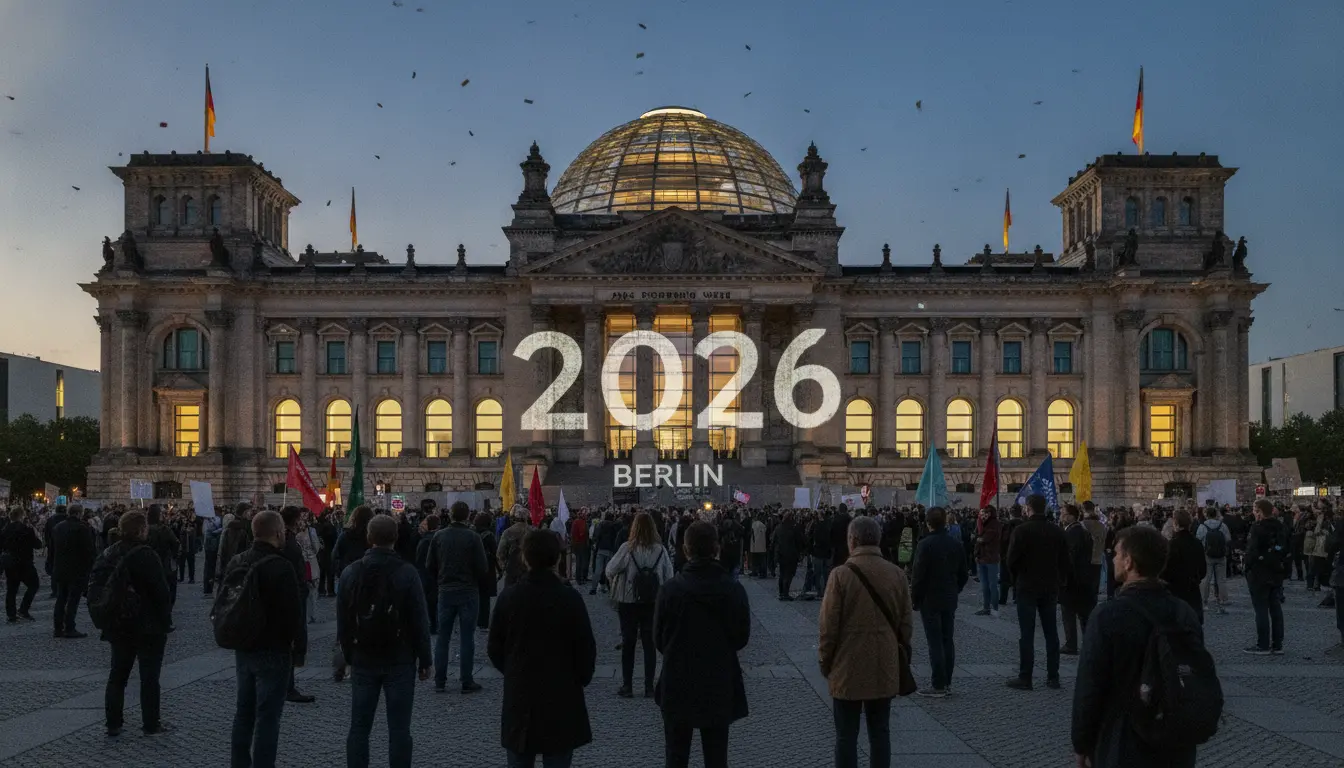
Berlin Gears Up for Pivotal 2026 State Parliament Election Amid Tight Political Contest
Berlin is already beginning to cast its gaze towards September 2026, when the city-state will hold its next crucial state parliament election. The contest to determine the composition of the Abgeordnetenhaus, Berlin’s legislative assembly, is widely anticipated to be a tight race, with the Christian Democratic Union (CDU) and the Social Democratic Party (SPD) expected to lead the field in a battle for governing power. This election will not only shape the future direction of Germany's vibrant capital but also serve as a critical barometer for national political sentiment, particularly given Berlin's recent turbulent electoral history.
The upcoming election carries significant weight, following the unprecedented re-run of the 2021 election in February 2023 due to severe organizational failures. That re-run fundamentally reshaped Berlin's political landscape, seeing the CDU emerge as the strongest force for the first time in over two decades, ending a long period of SPD-led governance. The subsequent formation of a grand coalition between the CDU and SPD, with Kai Wegner of the CDU as Governing Mayor, marked a significant shift. The 2026 election will be the first regular test of this new political constellation and whether the incumbent parties can maintain voter confidence in a city known for its diverse and often volatile electorate.
Key political figures and their respective parties are already strategizing for the campaign ahead. The CDU, under Mayor Wegner, will aim to consolidate its newfound leadership, focusing on themes of public order, economic stability, and improved administration. For the SPD, currently the junior partner in the governing coalition, the election presents an opportunity to reclaim its historical dominance. While Franziska Giffey, the former Governing Mayor, remains a prominent figure, the party may also look to new faces to energize its base and counter the CDU's momentum. Beyond the two major parties, the Greens, Die Linke (The Left Party), and the Free Democratic Party (FDP) will vie for influence, alongside the Alternative for Germany (AfD), which has seen fluctuating support across Germany but maintains a presence in Berlin's diverse districts.
Several pressing issues are expected to dominate the campaign discourse. Berlin continues to grapple with an acute housing crisis, characterized by soaring rents and a shortage of affordable accommodation, making it a perennial top concern for residents. Integration and migration policies, the quality of public services including education and public transport, and the city’s ambitious climate protection targets will also be central. Crime rates and the need for robust public safety measures, particularly after recent incidents, are likely to feature prominently in debates. Each party will seek to offer distinct solutions to these complex challenges, attempting to resonate with a electorate that often feels disconnected from the political establishment.
The outcome of the 2026 election will have profound implications for Berlin's governance and its unique position as both a federal state and the national capital. Coalition formation in Berlin is historically complex, often requiring multi-party alliances due to the city's proportional representation system and fractured political landscape. The ability of parties to forge stable and effective governing coalitions will be paramount in addressing the city's numerous challenges. The results will not only determine who steers Berlin for the next legislative period but will also provide crucial insights into broader shifts within German politics, potentially signaling trends that could impact federal elections.
As the campaign draws closer, the rhetoric will intensify, and the parties will begin to unveil their manifestos and key promises. Voter engagement, particularly among younger demographics and the city's significant international population, will be a critical factor. The election is set to be a significant test of the current political alignment and a crucial moment for Berlin’s democratic future, underscoring the dynamic and often unpredictable nature of urban politics in one of Europe’s most important capitals.
Stay Informed. Act Smarter.
Get weekly highlights, major headlines, and expert insights — then put your knowledge to work in our live prediction markets.
Related News
Swedish Political Blocs Intensify Preparations Ahead of Pivotal 2026 General Election

Israel Gears Up for Pivotal 2026 General Election Amid Deepening Political Cracks

Lula's Political Future Dominates Discussion Ahead of Brazil's 2026 Presidential Election
Sweden's Social Democrats Maintain Lead in Early Polls for 2026 Parliamentary Election

Netanyahu's Coalition Faces Significant Hurdles Ahead of Israel's 2026 General Election
German Presidency Succession Looms as Federal Assembly Prepares for 2027 Vote
South Africa's 2026 Local Elections: ANC Faces Defining Challenge Amid Shifting Political Landscape

UK Labour Party Poised for Leadership Transition as 2026 Ballot Deadline Approaches

Morocco's Next General Election Firmly Scheduled for September 23, 2026
South Africa's ANC Faces Significant Challenge to Retain Major Metro Control in 2026 Municipal Elections