

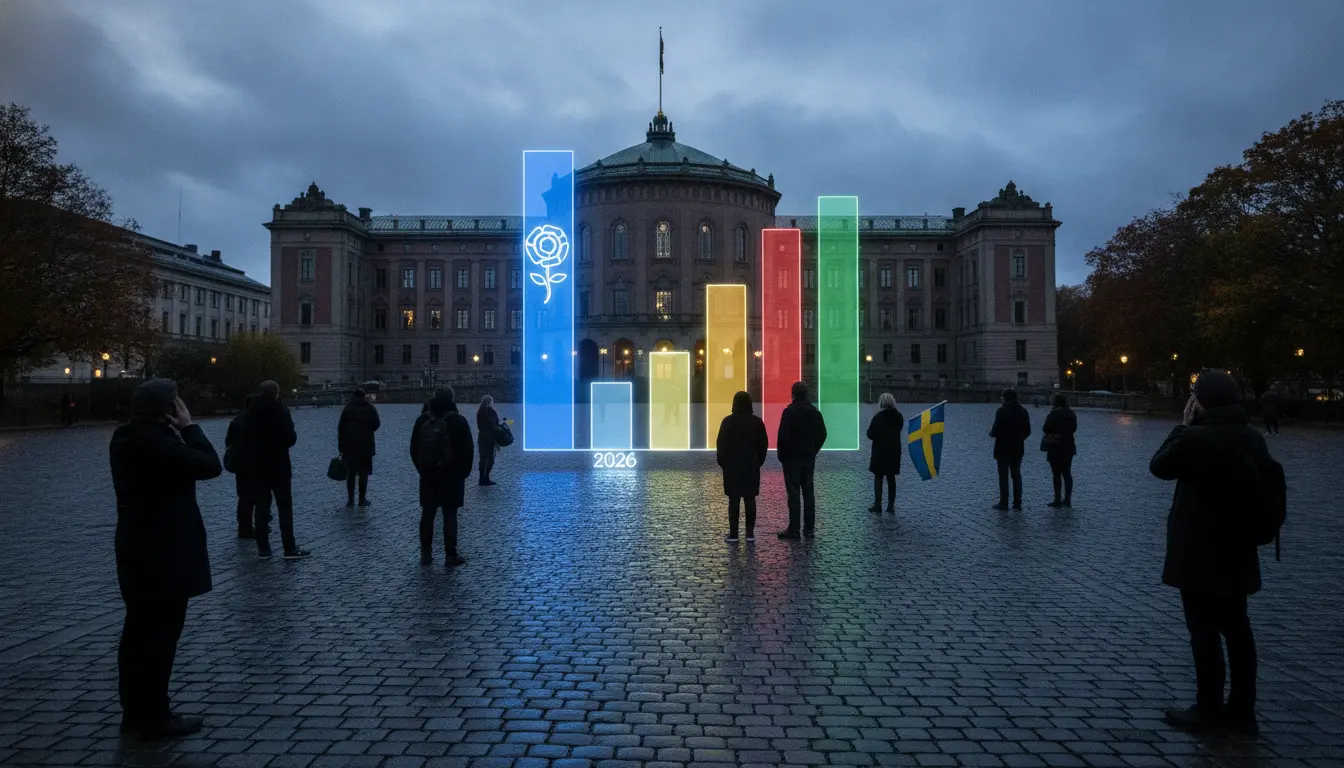
Sweden's Social Democrats Maintain Lead in Early Polls for 2026 Parliamentary Election
As Sweden looks towards its next parliamentary election scheduled for September 2026, the political landscape is already a subject of intense scrutiny, with early polling data consistently placing the Social Democrats in a leading position. This development signals a potentially significant shift from the current center-right minority government, which has navigated a complex domestic and international agenda since the last election in 2022. The upcoming election is poised to be a pivotal moment for the Nordic nation, testing the resilience of its political alliances and the public's appetite for change amidst evolving challenges.
The 2022 election resulted in a narrow victory for the right-wing bloc, leading to the formation of a government comprising the Moderate Party, Christian Democrats, and Liberals, supported by the Sweden Democrats. This coalition, led by Prime Minister Ulf Kristersson, marked a historic turn, bringing the nationalist Sweden Democrats into an unprecedented position of influence. Since then, the government has grappled with a multifaceted array of issues, including persistent concerns over crime and gang violence, the ongoing cost-of-living crisis driven by inflation, and the transformative implications of Sweden's recent accession to NATO. These challenges have provided fertile ground for political debate and have shaped public sentiment, with many Swedes closely evaluating the effectiveness and direction of the current administration.
Despite being in opposition, the Social Democrats, under the leadership of former Prime Minister Magdalena Andersson, have managed to consolidate support and consistently outperform the governing parties in various opinion surveys. Their strategy has largely focused on highlighting social welfare, strengthening public services, and addressing economic inequality, areas traditionally central to their platform. Andersson, a respected figure, has effectively positioned her party as a stable and experienced alternative, often criticizing the current government's handling of core issues and its reliance on the Sweden Democrats, whose policies on immigration and social matters remain contentious among a significant portion of the electorate. The Social Democrats' ability to connect with voters on bread-and-butter issues appears to be a key factor in their sustained poll lead.
The fragmented nature of Swedish politics continues to pose challenges for forming stable governing majorities. The traditional red-green and center-right blocs have been increasingly strained, with the rise of the Sweden Democrats fundamentally reshaping parliamentary dynamics. While the current government has successfully pushed through key legislation, including aspects related to crime and energy policy, it has also faced internal disagreements and external pressure, particularly concerning its immigration stances. The Liberals, in particular, have often found themselves at odds with their conservative partners and the Sweden Democrats, underscoring the delicate balance required to maintain the current coalition, especially as the next election cycle draws closer.
Looking ahead to 2026, the campaign is expected to revolve around several critical themes. National security will undoubtedly be a prominent topic, given Sweden's new role within NATO and the geopolitical situation in Europe. Economic stability, particularly managing inflation and ensuring job growth, will remain a top priority for voters. Debates on healthcare, education, and climate policy are also expected to feature prominently, as parties seek to differentiate themselves and present credible solutions to long-standing societal challenges. The outcome of the election will not only determine Sweden's domestic policy trajectory but also its approach to international cooperation and its place within the European Union and the broader global community, making the stakes exceptionally high for all political actors.
The period leading up to the 2026 vote will be characterized by intense political maneuvering, strategic alliance-building, and a keen focus on public opinion. With the Social Democrats currently holding a strong position in early polls, the onus will be on the incumbent government and its supporting parties to articulate a compelling vision and demonstrate tangible results that can sway undecided voters. Conversely, the Social Democrats will need to sustain their momentum, solidify their platform, and address any potential vulnerabilities as they aim to return to power. The next two years promise a dynamic and closely watched political contest in Sweden.
Stay Informed. Act Smarter.
Get weekly highlights, major headlines, and expert insights — then put your knowledge to work in our live prediction markets.
Related News
Swedish Political Blocs Intensify Preparations Ahead of Pivotal 2026 General Election
Berlin Gears Up for Pivotal 2026 State Parliament Election Amid Tight Political Contest

Lula's Political Future Dominates Discussion Ahead of Brazil's 2026 Presidential Election

Morocco's Next General Election Firmly Scheduled for September 23, 2026

Israel Gears Up for Pivotal 2026 General Election Amid Deepening Political Cracks

Polarization Deepens in Brazil as Lula and Flavio Bolsonaro Emerge as Early Frontrunners for 2026 Race

G7 Nations Brace for Potential Leadership Shifts Ahead of 2026

Macron Government Navigates Instability Amid Persistent Early Election Speculation

UK Labour Party Poised for Leadership Transition as 2026 Ballot Deadline Approaches
Quebec Liberal Party Prepares Major Challenge to CAQ in 2026 Provincial Election