

- News
- Politics
- Polarization Deepens in Brazil as Lula and Flavio Bolsonaro Emerge as Early Frontrunners for 2026 Race
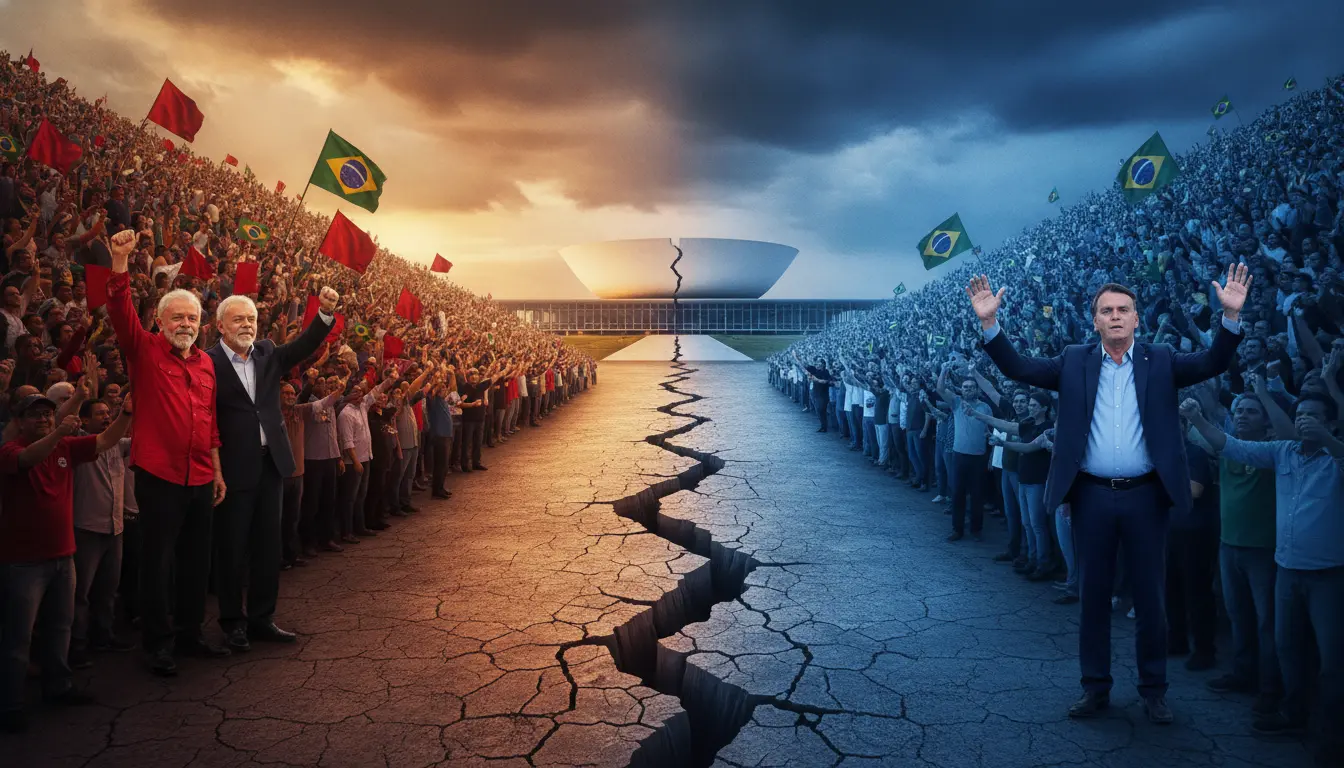
Polarization Deepens in Brazil as Lula and Flavio Bolsonaro Emerge as Early Frontrunners for 2026 Race
BRASÍLIA – With more than two years still to go, Brazil's political landscape is already being shaped by the contours of the 2026 general election, with early indicators pointing toward a dramatic and deeply polarizing contest. The nation appears headed for a familiar clash of titans, pitting incumbent President Luiz Inácio Lula da Silva against the powerful political dynasty of his predecessor, Jair Bolsonaro. As the elder Bolsonaro remains legally barred from running, his son, Senator Flávio Bolsonaro, is increasingly seen as a leading standard-bearer for the country's conservative movement, setting the stage for a potential runoff that would once again cleave the nation along stark ideological lines.
The political atmosphere in Brazil remains charged following the razor-thin 2022 election, which saw Lula narrowly defeat Jair Bolsonaro to secure a historic third term. That contest, decided by less than two percentage points, was the tightest presidential race since the country's return to democracy and left behind a legacy of division that has defined Lula's current administration. President Lula's government has navigated a complex political environment, grappling with economic headwinds, a fragmented Congress, and persistent opposition from a well-organized conservative base. Despite these challenges, the 78-year-old leader has signaled his intention to seek a fourth term, framing it as a continuation of his mission to bolster social programs and protect Brazil’s democratic institutions.
On the other side of the political spectrum, the Bolsonaro family continues to wield immense influence despite Jair Bolsonaro's official ineligibility. In 2023, the Superior Electoral Court banned the former president from holding public office until 2030 for abusing his presidential power and casting unfounded doubts on the country's electronic voting system. This ruling has effectively turned the leadership of Brazil's potent right-wing movement into a dynastic succession battle. While former first lady Michelle Bolsonaro is also a popular figure, Senator Flávio Bolsonaro, the eldest son, has emerged as a formidable political operator and a likely heir. He has maintained a high public profile, championing his father's agenda and working to consolidate the conservative base in anticipation of the 2026 campaign.
The prospect of a Lula-Bolsonaro runoff underscores the enduring polarization of Brazilian society. The electorate is starkly divided between two competing visions for the country's future. Lula's Workers' Party (PT) and its allies advocate for a state-led economic model, robust social welfare policies, and a stronger focus on environmental protection, particularly in the Amazon. Conversely, the Bolsonarista movement champions economic liberalism, social conservatism, and a nationalist agenda that resonates deeply with Brazil's agribusiness sector, evangelical Christians, and law-and-order proponents. This fundamental ideological chasm makes it exceedingly difficult for any single candidate to secure the 50% plus one vote required for a first-round victory, making a second-round showdown almost inevitable.
While the two political poles are well-defined, the path to 2026 is not without its complexities. Other significant figures are positioning themselves to challenge the dominance of the two major factions. São Paulo Governor Tarcísio de Freitas, a former minister in Jair Bolsonaro's government, is considered a major contender on the right and could potentially rival Flávio Bolsonaro for the movement's nomination. His more pragmatic and less confrontational style could appeal to a broader base of conservative and centrist voters. Similarly, figures from the center-right, such as Minas Gerais Governor Romeu Zema, may attempt to carve out a third way, appealing to Brazilians exhausted by the incessant political warfare. The performance of these alternative candidates will be critical in determining the final composition of the electoral ballot.
As the political maneuvering intensifies, the coming months will be crucial for both camps. For President Lula, the focus will be on improving economic indicators and maintaining his governing coalition to build momentum for his re-election bid. For the Bolsonaro clan and their allies, the challenge lies in unifying their base behind a single candidate while fending off legal challenges and internal rivalries. Ultimately, Brazil appears to be on a trajectory toward another high-stakes, two-round election, a contest that will not only decide its next leader but also serve as a referendum on the nation's deeply divided soul.
Stay Informed. Act Smarter.
Get weekly highlights, major headlines, and expert insights — then put your knowledge to work in our live prediction markets.
Related News
Lula's Political Future Dominates Discussion Ahead of Brazil's 2026 Presidential Election

G7 Leaders Grapple with Widespread Political Volatility and Looming Electoral Challenges
PAICV Seeks to Capture Cabo Verde Presidency in Highly Anticipated 2026 Election

G7 Nations Brace for Potential Leadership Shifts Ahead of 2026
Swedish Political Blocs Intensify Preparations Ahead of Pivotal 2026 General Election
Berlin Gears Up for Pivotal 2026 State Parliament Election Amid Tight Political Contest
Political Turmoil and Electoral Pressures Challenge G7 Leaders Ahead of 2026

Outpoll Weekly Recap: Politics (August 17 – 23, 2026)

Political Headwinds Batter G7 Leaders, Threatening Major Shakeup by 2026
Ideological Battle for French Left Heats Up as Mélenchon, Glucksmann, and Roussel Eye 2026 Primary