

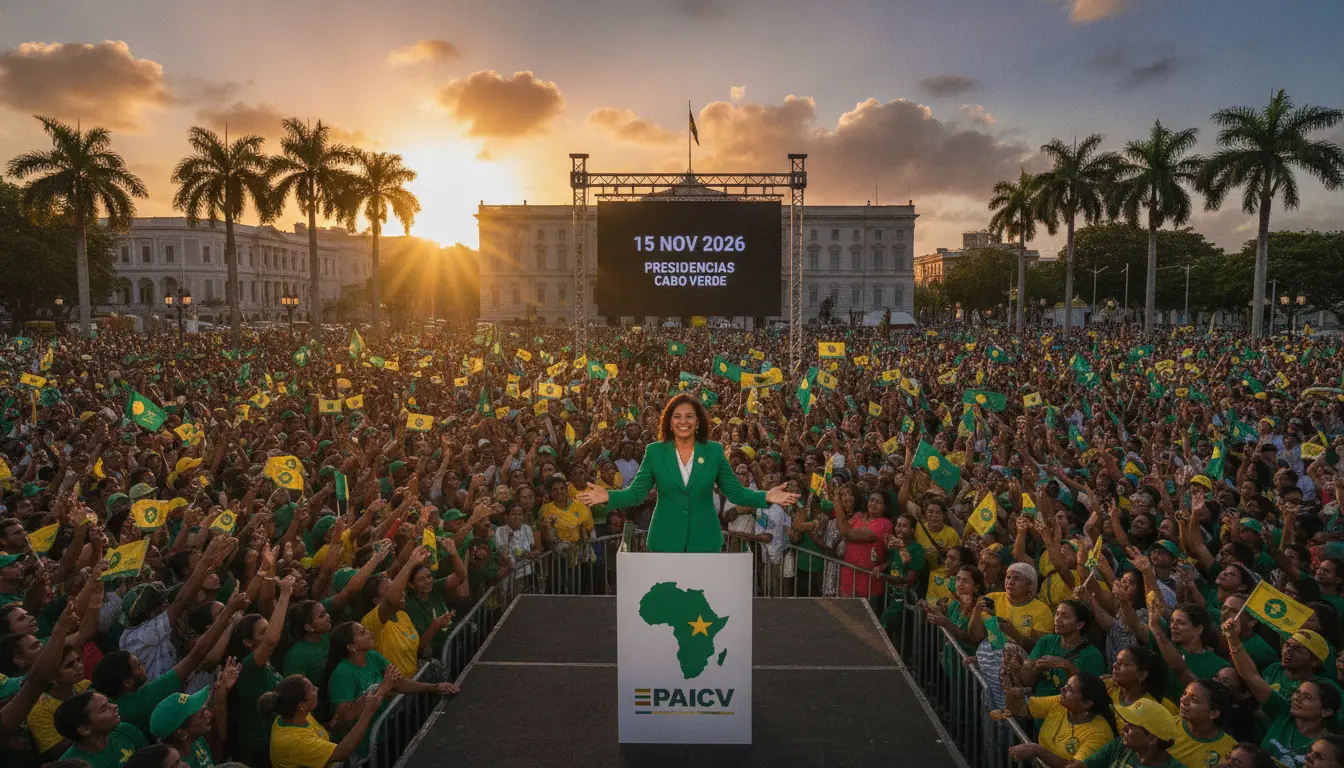
PAICV Seeks to Capture Cabo Verde Presidency in Highly Anticipated 2026 Election
Cabo Verde is set to hold its next presidential election on November 15, 2026, a contest that will significantly shape the nation's political trajectory and future governance. The African Party for the Independence of Cape Verde (PAICV), currently holding a majority in the National Assembly, is poised to mount a robust campaign to reclaim the presidency, a position it lost in the most recent presidential cycle. With the country grappling with economic recovery, climate change vulnerabilities, and the ongoing push for sustainable development, the stakes for the upcoming election are exceptionally high, making the PAICV's performance a central focus for both domestic and international observers.
The political landscape of Cabo Verde has historically been dominated by two major parties: the PAICV and the Movement for Democracy (MpD). Since gaining independence from Portugal in 1975, the PAICV initially governed as a one-party state before the introduction of multiparty democracy in the early 1990s. The party, a successor to the liberation movement, generally champions social democratic principles, focusing on state intervention for social welfare, economic diversification beyond tourism, and strengthening ties within the African continent. Its electoral successes have often been built on a strong grassroots network and a historical narrative of national liberation, resonating particularly with older generations and those in rural areas.
The upcoming presidential election follows a period of significant political shifts. In the 2021 presidential election, José Maria Neves, an independent candidate supported by the PAICV, successfully secured the presidency. However, the PAICV's primary challenge lies in consolidating its influence across both the legislative and executive branches. The party's strong showing in the 2021 legislative elections, where it secured a parliamentary majority, demonstrates its enduring appeal and organizational strength. This legislative dominance positions the PAICV well to implement its policy agenda, but controlling the presidency would provide a more unified governmental direction, potentially accelerating reforms and policy execution.
Several critical issues are expected to define the 2026 election campaign. Cabo Verde, an archipelago nation heavily reliant on tourism, was severely impacted by the global pandemic. Economic recovery, diversification, and job creation will undoubtedly be top priorities. Furthermore, as a Small Island Developing State (SIDS), Cabo Verde faces acute vulnerabilities to climate change, including rising sea levels, coastal erosion, and water scarcity. A presidential candidate's stance and proposed solutions on environmental sustainability, blue economy initiatives, and international partnerships for climate resilience will be crucial. The role of the vast Cabo Verdean diaspora, a significant source of remittances and investment, will also be a key campaign focus, with parties vying to engage this influential demographic.
The PAICV's strategy will likely involve highlighting its legislative achievements and presenting a clear vision for the country's future, centered on inclusive growth, social equity, and robust public services. Identifying a charismatic and unifying candidate capable of appealing to a broad electorate, including younger voters and those less tethered to traditional party loyalties, will be paramount. The party will also need to articulate how it plans to work with other political forces and civil society to address complex national challenges, moving beyond partisan divides to foster national consensus on crucial development goals.
Conversely, the MpD, currently holding the presidency, will be working to defend its executive power. The performance of the incumbent administration, particularly in navigating economic headwinds and managing key national projects, will be heavily scrutinized. Their ability to present a compelling alternative vision and mobilize their base will be critical. The 2026 election is not merely a contest for the highest office; it is a referendum on the direction Cabo Verde will take in the latter half of the decade, with implications for its economy, social fabric, and standing on the international stage. The outcome will determine whether the PAICV can complete its bid for comprehensive political control, or if a divided government will persist, necessitating continued cross-party cooperation for national progress.
As the election approaches, political discourse in Cabo Verde is anticipated to intensify, with debates focusing on a range of policy issues from education and healthcare reform to infrastructure development and international relations. The PAICV's quest for the presidency is more than an internal party ambition; it represents a pivotal moment in Cabo Verdean democracy, testing the strength of its institutions and the enduring appeal of its political parties in a rapidly evolving global context. The world will be watching to see how this small, stable African democracy navigates its electoral choices and solidifies its path forward.
Stay Informed. Act Smarter.
Get weekly highlights, major headlines, and expert insights — then put your knowledge to work in our live prediction markets.
Related News

Lula's Political Future Dominates Discussion Ahead of Brazil's 2026 Presidential Election
South Africa's ANC Faces Significant Challenge to Retain Major Metro Control in 2026 Municipal Elections
Berlin Gears Up for Pivotal 2026 State Parliament Election Amid Tight Political Contest

South Africa's 2026 Local Elections: ANC Faces Defining Challenge Amid Shifting Political Landscape

Cook Islands Sets Stage for Highly Anticipated 2026 General Election

Morocco's Next General Election Firmly Scheduled for September 23, 2026

Quebec Liberal Party Prepares Major Challenge to CAQ in 2026 Provincial Election

Swedish Political Blocs Intensify Preparations Ahead of Pivotal 2026 General Election

Polarization Deepens in Brazil as Lula and Flavio Bolsonaro Emerge as Early Frontrunners for 2026 Race

Democrats Face Uphill Battle to Maintain Senate Majority in 2026 Midterm Elections