

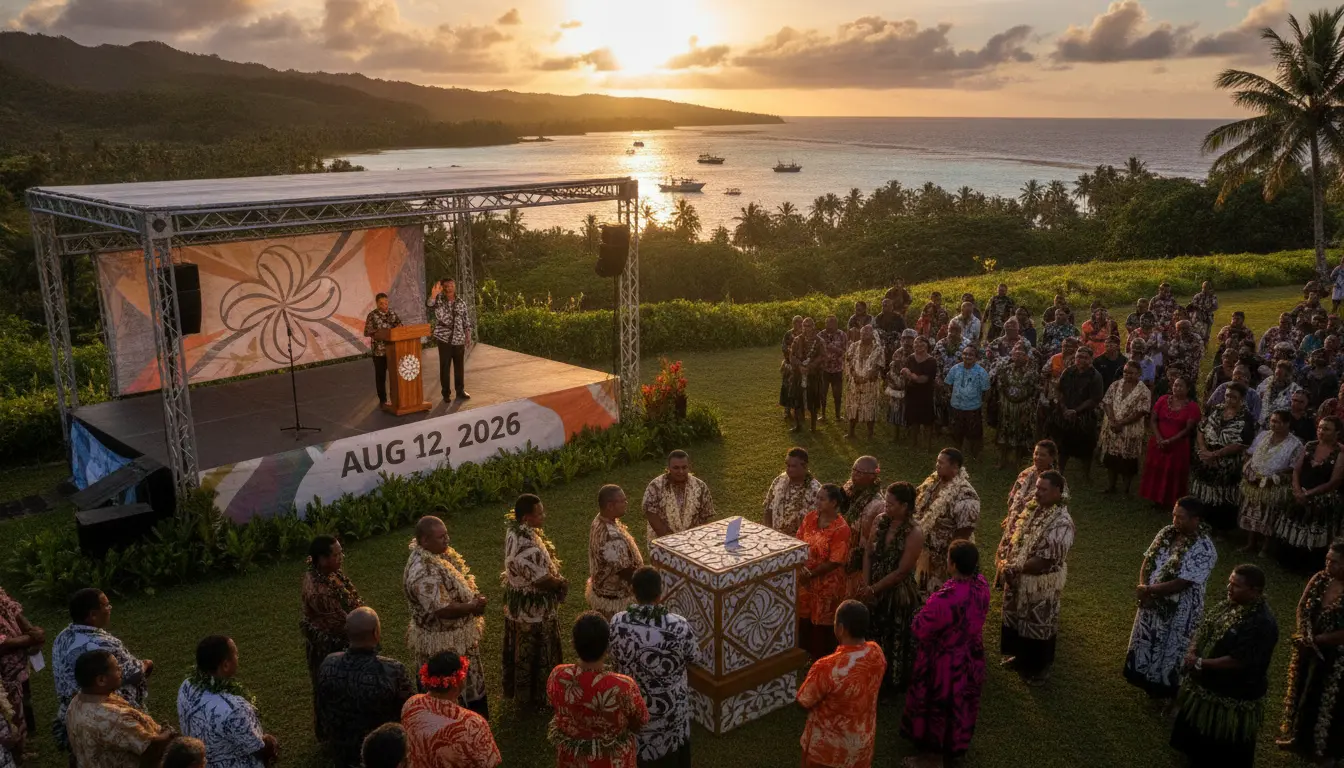
Cook Islands Sets Stage for Highly Anticipated 2026 General Election
The Cook Islands is preparing for its next general election on August 12, 2026, an event that will determine the nation's leadership for the subsequent term. Prime Minister Mark Brown is poised to seek re-election, leading his Cook Islands Party (CIP) in what is anticipated to be a closely watched contest. The upcoming vote is set against a backdrop of evolving socio-economic challenges and strategic priorities for the Pacific island nation, with the potential for a significant shift in government driving early political speculation.
Mark Brown assumed the premiership in 2020, succeeding long-serving leader Henry Puna. His administration, largely dominated by the Cook Islands Party, has navigated the unprecedented economic fallout from the global pandemic, which severely impacted the country's tourism-dependent economy. Under his leadership, efforts have focused on economic recovery, the establishment of stringent border reopening protocols, and securing vital international aid and partnerships to cushion the national budget. Supporters credit his government with maintaining stability and spearheading recovery efforts, while critics point to ongoing economic vulnerabilities and the need for more diversified growth strategies.
As the 2026 election approaches, several key issues are expected to define the political discourse and shape the electoral outcome. Economic diversification beyond the dominant tourism sector, particularly into areas like sustainable agriculture, fisheries, and marine resources, will likely feature prominently in party platforms. Climate change, a persistent existential threat to low-lying island nations, will demand continued attention regarding adaptation strategies, coastal protection, and international advocacy for climate financing. Infrastructure development across the scattered islands, improving access to essential services such as healthcare and education, and fostering greater youth engagement are also perennial concerns that all candidates will need to address convincingly.
The main opposition, primarily the Democratic Party, led by its current parliamentary leader, will undoubtedly present a strong challenge to the incumbent government. Historically, Cook Islands politics has often seen a dynamic interplay between the CIP and the Democratic Party, with governments occasionally formed through intricate coalition agreements due to the fragmentation of seats across the nation's 24 constituencies. The relatively small size of the parliament means that even a few swing seats can significantly alter the balance of power, making every constituency contest crucial and intensifying local campaigning. The unique political culture of the Cook Islands often emphasizes strong local representation, sometimes leading to influential independent candidates playing kingmaker roles in close elections.
Beyond domestic policies, the election will also be influenced by and have implications for the Cook Islands' regional and international standing. The nation maintains a unique self-governing relationship in free association with New Zealand, which provides a significant backdrop to its foreign policy and security considerations. In an increasingly competitive geopolitical landscape across the wider Pacific, the new government will be tasked with continuing to balance relationships with traditional partners while navigating emerging interests from larger global powers. Securing sustainable development funding, protecting sovereign interests in its vast marine territories, and upholding regional stability will remain paramount foreign policy objectives.
With over two years until the election, both the ruling party and the opposition are expected to intensify their groundwork, engaging with communities across the main island of Rarotonga and the outer islands. Voter sentiment, often influenced by local issues, the perceived responsiveness of their elected representatives, and broader economic conditions, will be a critical factor in determining the next government. The upcoming electoral cycle underscores the democratic process at play in the Cook Islands, as citizens prepare to weigh the performance of the current administration against the alternative visions presented by the opposition for the nation's future direction. The run-up to August 2026 promises a period of robust political debate and engagement.
Stay Informed. Act Smarter.
Get weekly highlights, major headlines, and expert insights — then put your knowledge to work in our live prediction markets.
Related News

Israel Gears Up for Pivotal 2026 General Election Amid Deepening Political Cracks
Lula's Political Future Dominates Discussion Ahead of Brazil's 2026 Presidential Election

Morocco's Next General Election Firmly Scheduled for September 23, 2026

Netanyahu's Coalition Faces Significant Hurdles Ahead of Israel's 2026 General Election
PAICV Seeks to Capture Cabo Verde Presidency in Highly Anticipated 2026 Election

UK Labour Party Poised for Leadership Transition as 2026 Ballot Deadline Approaches
Swedish Political Blocs Intensify Preparations Ahead of Pivotal 2026 General Election
Berlin Gears Up for Pivotal 2026 State Parliament Election Amid Tight Political Contest
Quebec Liberal Party Prepares Major Challenge to CAQ in 2026 Provincial Election

Strategic Battle Lines Drawn for Control of U.S. Senate Ahead of 2026 Elections