

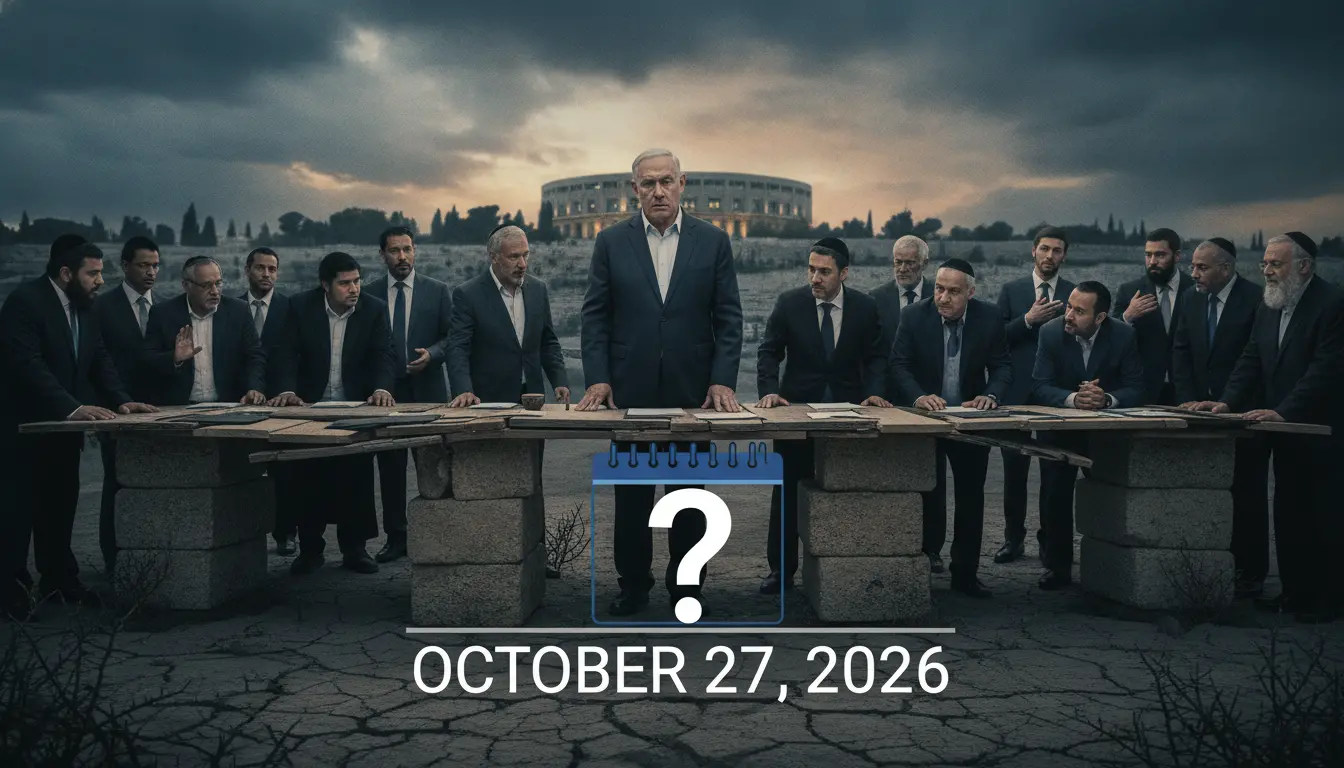
Netanyahu's Coalition Faces Significant Hurdles Ahead of Israel's 2026 General Election
Israel is gearing up for its next legislative election, scheduled for October 27, 2026, a contest that is already shaping up to be one of the most consequential in the nation’s history. The upcoming poll will determine the composition of the Knesset and, critically, who will form the next government, with Prime Minister Benjamin Netanyahu’s long-standing political career and his current coalition facing unprecedented challenges. The period leading up to this election is expected to be marked by intense political maneuvering, shifts in public sentiment, and a deep reckoning with the nation's recent crises, particularly the ongoing conflict in Gaza and its far-reaching domestic implications.
The backdrop to the 2026 election is a country grappling with profound internal divisions and external pressures. Netanyahu’s current government, formed after five elections in less than four years, has been characterized by its narrow religious-nationalist composition and its ambitious, often controversial, legislative agenda. The proposed judicial overhaul, which sparked months of unprecedented mass protests across the country, exposed deep fissures within Israeli society, pitting secularists against religious factions, and liberals against conservatives. While the overhaul efforts were largely paused following the October 7 attacks, the underlying tensions and distrust between different segments of the population remain potent and are likely to heavily influence voter behavior in the next election cycle.
The October 7 attacks and the subsequent war in Gaza have irrevocably altered Israel’s political landscape, creating a de facto unity government that brought opposition figures into the war cabinet. While this provided a temporary reprieve from internal bickering, it also placed immense pressure on the existing coalition, particularly Netanyahu’s Likud party. Public approval ratings for the prime minister and his government plummeted in the aftermath of the attacks, with many Israelis holding the leadership accountable for security failures. The calls for early elections, though currently resisted by the coalition, underscore the widespread desire for a fresh mandate and a leadership perceived as more unified and capable of navigating the complex security and diplomatic challenges.
Key political players beyond Netanyahu are already positioning themselves for the next contest. Benny Gantz, a former military chief and leader of the National Unity party, who joined the war cabinet, has seen his popularity surge, emerging as a significant challenger. Yair Lapid, leader of the Yesh Atid party and former prime minister, also remains a prominent voice in the opposition, advocating for a return to a more centrist and liberal governing approach. The fragmentation of the political spectrum, with a multitude of parties representing diverse ideological and religious viewpoints, suggests that forming a stable government post-election will likely involve intricate coalition negotiations, potentially leading to another hung parliament and prolonged political uncertainty.
Beyond the domestic political rivalries, the stakes in the 2026 election are remarkably high. The next government will inherit the immense task of reconstruction, addressing the long-term security implications of the Gaza conflict, managing complex regional dynamics, and restoring trust in public institutions. Economic recovery, stemming from the disruption caused by the war, will also be a top priority. Furthermore, the role of ultra-Orthodox parties, traditionally kingmakers in coalition formations, will continue to be a focal point, particularly concerning issues of military conscription and state-funded religious institutions, which often fuel secular-religious tensions.
The two-year lead-up to the election will undoubtedly be a period of intense public debate, policy proposals, and political maneuvering. The outcomes of the war, the handling of international relations, and the government’s response to ongoing domestic issues will all play a critical role in shaping voter sentiment. As Israel navigates a volatile regional environment and its own internal struggles, the 2026 legislative election stands as a pivotal moment that will determine the country’s direction for years to come, with the potential for either continuity or a significant paradigm shift in its governance and societal fabric.
Stay Informed. Act Smarter.
Get weekly highlights, major headlines, and expert insights — then put your knowledge to work in our live prediction markets.
Related News
Israel Gears Up for Pivotal 2026 General Election Amid Deepening Political Cracks

Israel's Scheduled 2026 Legislative Elections Under Spotlight Amid Political Flux

Morocco's Next General Election Firmly Scheduled for September 23, 2026
Will Benjamin Netanyahu remain Prime Minister of Israel until at least December 31, 2026?
Lula's Political Future Dominates Discussion Ahead of Brazil's 2026 Presidential Election

Diplomatic Efforts Intensify for Permanent Gaza Ceasefire Amid Protracted Conflict
Berlin Gears Up for Pivotal 2026 State Parliament Election Amid Tight Political Contest

Swedish Political Blocs Intensify Preparations Ahead of Pivotal 2026 General Election
Quebec Liberal Party Prepares Major Challenge to CAQ in 2026 Provincial Election

European Union Grapples with Potential Trade Sanctions on Israeli West Bank Settlements