

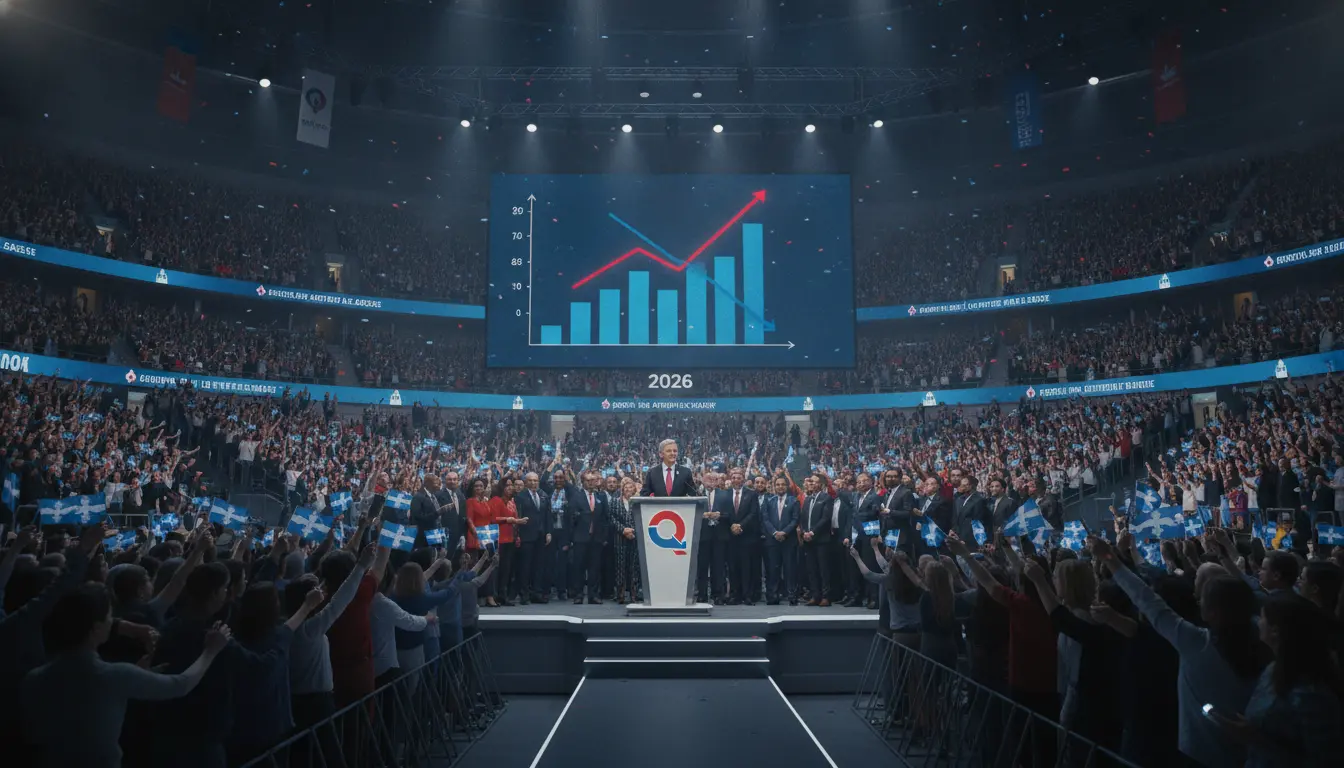
Quebec Liberal Party Prepares Major Challenge to CAQ in 2026 Provincial Election
As Quebec casts its gaze towards October 5, 2026, the political landscape is already beginning to take shape for what promises to be a pivotal provincial general election. At the forefront of the challenge to the incumbent Coalition Avenir Québec (CAQ) is the Quebec Liberal Party (PLQ), which is actively strategizing to regain power after a period of significant electoral setbacks. The upcoming contest will not only test the resilience of the traditional political forces in the province but also determine the direction of key policy areas, from language and identity to healthcare and the economy.
The Coalition Avenir Québec, led by Premier François Legault, secured a dominant victory in the 2022 election, obtaining 90 out of 125 seats in the National Assembly. This strong mandate was built on a platform emphasizing Quebec nationalism, a pragmatic approach to economic development, and promises of improvements in healthcare and education. The CAQ's ability to appeal to both francophone and anglophone voters, particularly outside the traditional Liberal strongholds of Montreal, has been a hallmark of its success. However, two years out from the next election, the party will face the natural challenges of governing, including public scrutiny over policy implementation, economic fluctuations, and the enduring debate over Quebec's place within Canada.
For the Quebec Liberal Party, the road back to power is steep but not insurmountable. Once a dominant force in Quebec politics, the PLQ has struggled to regain its footing since its defeat in 2018. The party is currently in a rebuilding phase, grappling with leadership questions, defining a coherent platform that resonates across diverse segments of the electorate, and revitalizing its grassroots support. Historically known for its federalist stance and economic liberalism, the PLQ's challenge lies in expanding its appeal beyond its traditional Anglophone and allophone base in Montreal, particularly among francophone voters who have increasingly gravitated towards the CAQ or the Parti Québécois. The search for a charismatic leader who can articulate a compelling vision for Quebec’s future will be critical to their efforts.
Beyond the CAQ and the PLQ, other significant players are poised to influence the 2026 outcome. The Parti Québécois (PQ), under its leader Paul St-Pierre Plamondon, has shown signs of rejuvenation, particularly by appealing to a younger generation of sovereigntist voters. Québec Solidaire (QS), a left-leaning party, continues to advocate for social justice, environmental protection, and progressive policies, maintaining a loyal base, especially in urban centers. The performances of these parties could split the vote in various ridings, creating complex electoral dynamics and potentially leading to a more fragmented National Assembly. Key issues expected to dominate the campaign include the ongoing debates surrounding the French language and cultural identity, the rising cost of living, the state of the healthcare system, and the province's transition to a green economy.
The political climate leading up to 2026 will undoubtedly be shaped by how the CAQ navigates current and emerging challenges, including the implementation of its ambitious healthcare reforms, its response to economic pressures, and its management of intergovernmental relations. Public sentiment can shift rapidly, influenced by unforeseen events or the emergence of new leaders and policy proposals. The nearly two-year campaign period offers ample time for all parties to refine their messages, engage with voters, and attempt to build momentum.
Ultimately, the 2026 provincial election will be a critical juncture for Quebec. For the CAQ, it represents an opportunity to consolidate its hold on power and further implement its nationalist and economic agenda. For the Quebec Liberal Party, it is a chance to reassert its relevance and reclaim its historical role as a leading political force. The outcome will shape not only the immediate policy landscape but also the long-term political trajectory of a province at the heart of Canada's identity debates, with significant implications for its social fabric, economic direction, and relationship with the rest of the country.
Stay Informed. Act Smarter.
Get weekly highlights, major headlines, and expert insights — then put your knowledge to work in our live prediction markets.
Related News

Israel Gears Up for Pivotal 2026 General Election Amid Deepening Political Cracks

Lula's Political Future Dominates Discussion Ahead of Brazil's 2026 Presidential Election

Ideological Battle for French Left Heats Up as Mélenchon, Glucksmann, and Roussel Eye 2026 Primary

Netanyahu's Coalition Faces Significant Hurdles Ahead of Israel's 2026 General Election

UK Labour Party Poised for Leadership Transition as 2026 Ballot Deadline Approaches
Swedish Political Blocs Intensify Preparations Ahead of Pivotal 2026 General Election

Morocco's Next General Election Firmly Scheduled for September 23, 2026
Berlin Gears Up for Pivotal 2026 State Parliament Election Amid Tight Political Contest

Strategic Battle Lines Drawn for Control of U.S. Senate Ahead of 2026 Elections

Democrats Face Uphill Battle to Maintain Senate Majority in 2026 Midterm Elections