


Israel's Scheduled 2026 Legislative Elections Under Spotlight Amid Political Flux
While Israel’s next legislative election is officially slated for October 27, 2026, the nation’s volatile political landscape, exacerbated by ongoing conflicts and deep internal divisions, ensures that the timing of this crucial vote remains a constant subject of intense speculation. The fixed date, set by the Knesset's four-year term, often serves as a theoretical anchor in a political system where early elections have become a frequent mechanism for resolving coalition crises or seeking renewed mandates, especially in times of profound national challenge. As the country grapples with unprecedented security, social, and political strains, the possibility of a vote occurring before its scheduled date looms large, a recurring pattern in Israeli democratic life.
The Israeli parliamentary system, based on proportional representation, inherently leads to coalition governments, as no single party has ever secured an outright majority in the 120-seat Knesset. This structure, while designed to ensure diverse representation, often results in fragile alliances that are susceptible to collapse over policy disagreements, budget disputes, or personal rivalries. Historically, this has translated into a high frequency of early elections, with many governments failing to serve their full term. The current administration, a right-wing religious-nationalist coalition led by Prime Minister Benjamin Netanyahu, has navigated a particularly tumultuous period, facing widespread public dissent even before the October 7 attacks, primarily over its proposed judicial overhaul.
The aftermath of the Hamas assault and the subsequent war in Gaza have profoundly reshaped Israel's domestic politics. While the initial phase saw a degree of national unity, the prolonged conflict, the ongoing hostage crisis, and significant military and civilian casualties have reignited fierce debates within the country. Public approval ratings for the government and its handling of the war have fluctuated, with significant segments of the population expressing frustration and a lack of confidence in the current leadership. The unity government formed shortly after October 7, which brought opposition figures into the war cabinet, has also seen its internal tensions rise, raising questions about its long-term viability and cohesion.
Key political figures and parties are already maneuvering, anticipating potential shifts. The Likud party, led by Prime Minister Netanyahu, faces internal and external pressures, while opposition blocs, including figures like Benny Gantz and Yair Lapid, frequently call for an immediate return to the polls, citing a crisis of public trust and the need for a fresh mandate to navigate the nation's profound challenges. These calls reflect a deep ideological chasm within Israeli society regarding security policy, the future of judicial reform, and the broader direction of the country, all of which are amplified by the current national crisis. The ongoing military operations and regional diplomatic efforts further complicate the political calculus, with any significant development having the potential to either solidify or destabilize the existing coalition.
An early election would carry significant implications for Israel's domestic and foreign policy. A change in government could lead to different approaches to the war in Gaza, the handling of the hostage negotiations, relations with international allies, and the Palestinian issue. Economically, prolonged political uncertainty or an extended election campaign could deter investment and impact public spending, at a time when the economy is already under strain from the war. Socially, the country remains deeply polarized, and an election would likely intensify these divisions, forcing a reckoning on critical national questions that extend far beyond traditional party lines.
As the calendar inches closer to the official date, political analysts and citizens alike will be closely watching for any signs of cracks within the ruling coalition, shifts in public opinion, or major security developments that could trigger an accelerated election cycle. While October 27, 2026, remains the target, the inherent dynamism of Israeli politics suggests that the journey to the next legislative election will likely be anything but predictable, underscoring the profound challenges and choices that lie ahead for the nation.
Stay Informed. Act Smarter.
Get weekly highlights, major headlines, and expert insights — then put your knowledge to work in our live prediction markets.
Related News
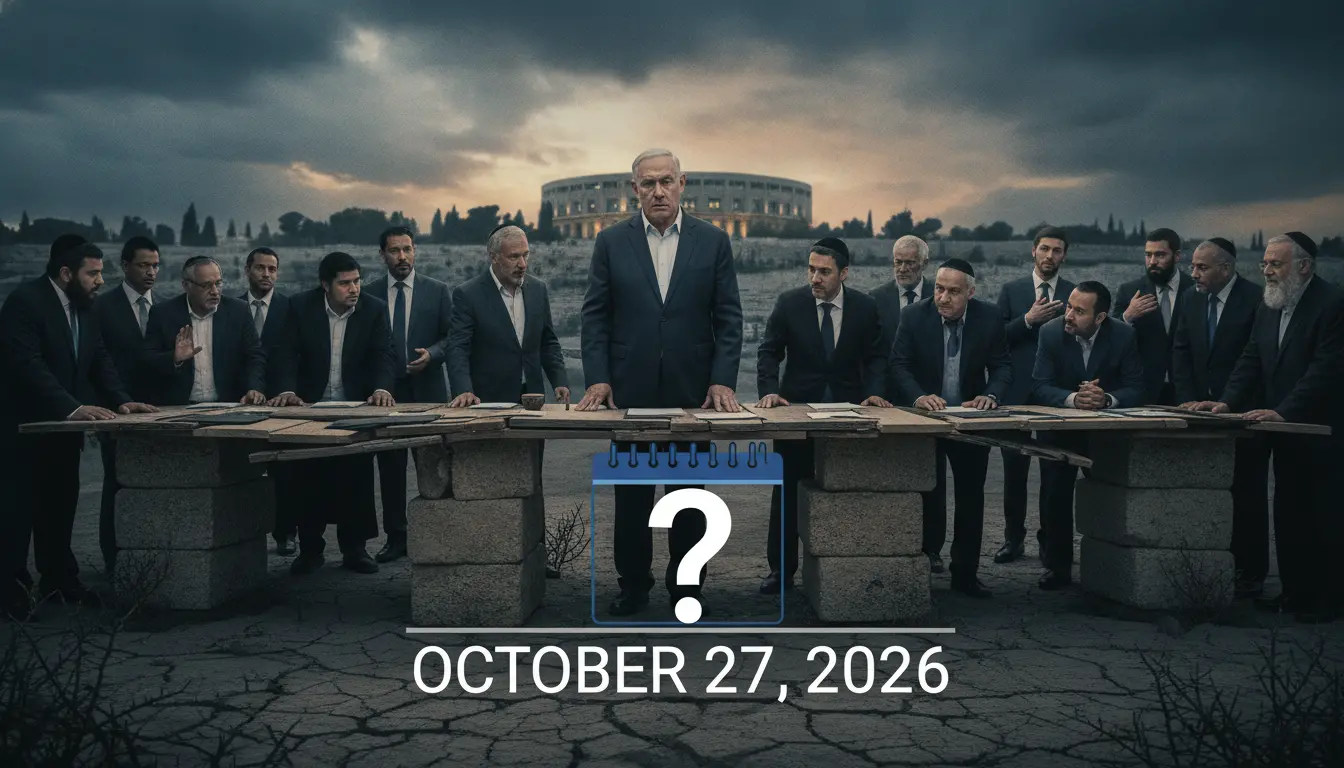
Netanyahu's Coalition Faces Significant Hurdles Ahead of Israel's 2026 General Election
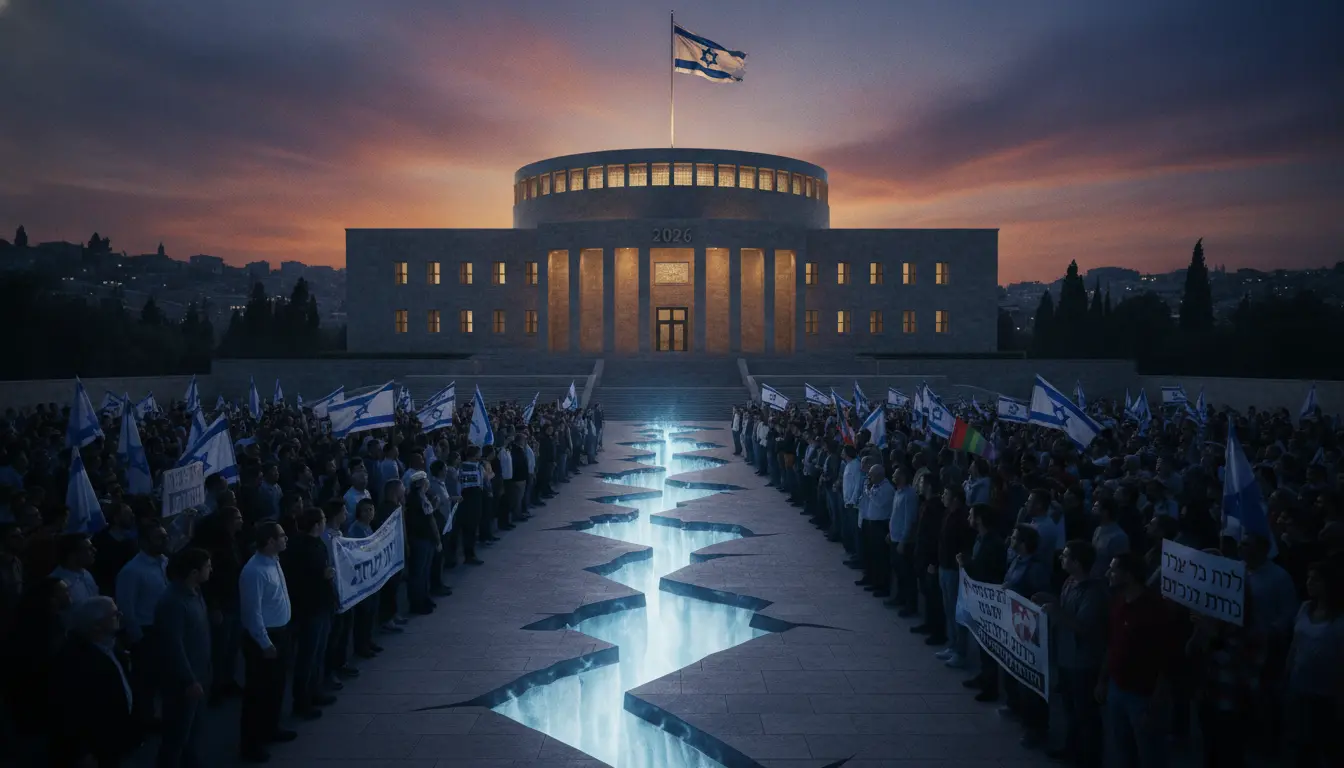
Israel Gears Up for Pivotal 2026 General Election Amid Deepening Political Cracks

Diplomatic Efforts Intensify for Permanent Gaza Ceasefire Amid Protracted Conflict
Will Benjamin Netanyahu remain Prime Minister of Israel until at least December 31, 2026?

Macron Government Navigates Instability Amid Persistent Early Election Speculation

Global Diplomacy Intensifies Efforts for Enduring Gaza Ceasefire Amid Humanitarian Crisis
Morocco's Next General Election Firmly Scheduled for September 23, 2026
Outpoll Weekly Recap: Politics (August 3 – 9, 2026)

European Union Grapples with Potential Trade Sanctions on Israeli West Bank Settlements
Fragile Israel-Hezbollah Ceasefire Under Intense International Scrutiny