

German Presidency Succession Looms as Federal Assembly Prepares for 2027 Vote
As Germany navigates a complex domestic and international landscape, the nation is quietly beginning to look towards the selection of its next head of state. With incumbent President Frank-Walter Steinmeier's second term set to conclude in early 2027, the process of finding a successor who can command broad political consensus and represent Germany on the world stage is already a subject of informal discussion within political circles. Steinmeier, a Social Democrat, has served as Federal President since 2017 and, having been re-elected for a second five-year term in 2022, is constitutionally barred from seeking a third term, setting the stage for a pivotal decision by the Federal Assembly.
The German Federal President, while largely holding a ceremonial role, carries significant moral authority and acts as a unifying figure above partisan politics. The president signs laws, represents Germany abroad, and can play a crucial moderating role in times of political crisis, such as mediating government formation talks. Unlike many other nations, Germany’s president is not directly elected by popular vote but by the Federal Assembly (Bundesversammlung). This special constitutional body convenes for this sole purpose and is comprised of all members of the Bundestag, the federal parliament, and an equal number of delegates chosen by the 16 state parliaments. The composition of this assembly reflects the political strengths of both the federal and state levels, making the selection a complex calculus of party alliances and cross-party appeal.
Frank-Walter Steinmeier's tenure has been marked by a steadfast commitment to democratic values, social cohesion, and a thoughtful engagement with pressing global issues. His experience as a former Foreign Minister provided him with a unique vantage point on international affairs, which he leveraged to advocate for diplomacy and multilateralism, particularly in an era of geopolitical turbulence. Domestically, he has been a consistent voice for unity, often appealing for calm and dialogue amid societal divisions and crises, from the COVID-19 pandemic to the economic fallout of international conflicts. His departure will leave a significant void, necessitating a successor who can emulate his gravitas and unifying presence.
Potential candidates for the presidency will emerge from across the political spectrum, though the individual chosen typically possesses a strong track record of public service and a non-partisan temperament. While specific names are yet to formally surface, speculation will inevitably center on prominent figures from major parties such as the Christian Democratic Union (CDU), the Social Democratic Party (SPD), Alliance 90/The Greens, and the Free Democratic Party (FDP). The current governing coalition's configuration in the Bundestag, combined with the various state parliamentary majorities, will heavily influence which party or political alliance has the most sway in the Federal Assembly. The choice will require extensive backroom negotiations to identify a candidate capable of securing a majority, often a person with proven appeal beyond their party lines.
The electoral cycle leading up to 2027 will also play a crucial role in shaping the presidential race. Upcoming federal elections, preceding the presidential vote, could significantly alter the balance of power within the Bundestag and, consequently, the Federal Assembly. This dynamic ensures that the presidential succession is not merely about an individual but also about the political climate and the overarching vision for Germany's future. Parties will be keen to put forward a candidate who embodies national values and can inspire confidence at a time when Europe and the world face profound challenges.
The election in early 2027 will therefore be more than just a procedural vote; it will be a reflection of Germany's political priorities and its aspirations for leadership. The selection process will require careful consideration of who can best uphold the dignity of the office, foster national unity, and articulate Germany's voice on the international stage. As the countdown to Steinmeier's departure begins, the informal jockeying for position and the search for a unifying figure will intensify, ultimately culminating in a decision that helps define the country's direction for the latter half of the decade.
Stay Informed. Act Smarter.
Get weekly highlights, major headlines, and expert insights — then put your knowledge to work in our live prediction markets.
Related News
Berlin Gears Up for Pivotal 2026 State Parliament Election Amid Tight Political Contest

G7 Nations Brace for Potential Leadership Shifts Ahead of 2026

G7 Nations Face Heightened Prospects of Leadership Changes by End of 2026
G7 Leaders Navigate Tumultuous Political Landscape Ahead of Key Electoral Tests
G7 Leaders Grapple with Widespread Political Volatility and Looming Electoral Challenges
Global Diplomatic Scramble Intensifies for Next UN Secretary-General
Political Turmoil and Electoral Pressures Challenge G7 Leaders Ahead of 2026
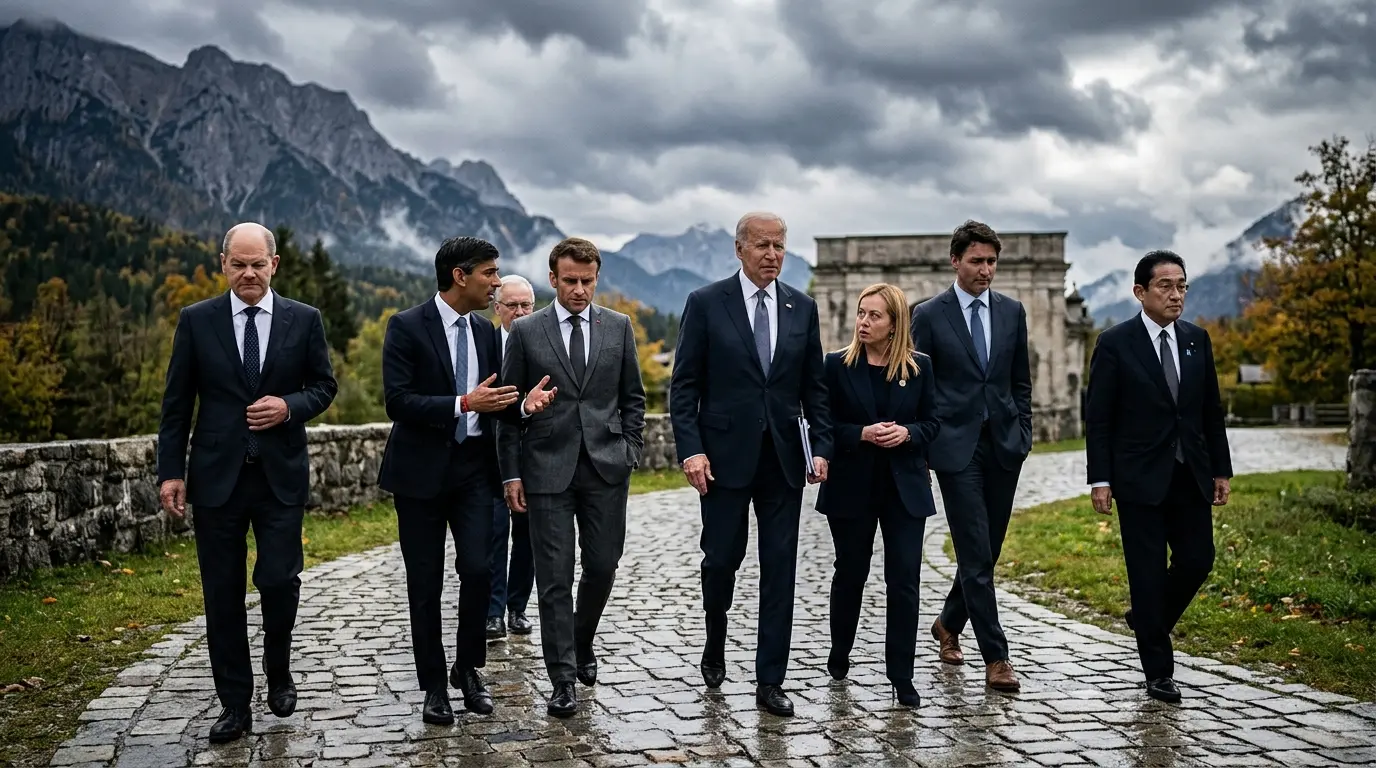
G7 Leaders Navigate Tumultuous Political Landscape Amidst Domestic Pressures and Upcoming Elections
G7 Leaders Face Intensifying Political Pressures and Electoral Challenges Through 2026
G7 Leaders Face Heightened Scrutiny Amid Turbulent Political Landscape Through 2026